
1 Michelin Star
Our verdict
In Kyoto's Kita-ku, MUBE takes its name from the fruit of the Japanese staunton vine, a Shiga talisman of longevity that signals the chef-owner's regional identity from the first moment. The kitchen centres on fermentation traditions native to Shiga prefecture, narezushi, fish sauce, and miso, deployed with enough restraint to speak to contemporary palates. The result is a counter that treats dashi and fermentation-derived umami as a living dialogue rather than a historical exercise.

Pearl is the En Primeur Club membership app, where members save venues, book tables and use the concierge.
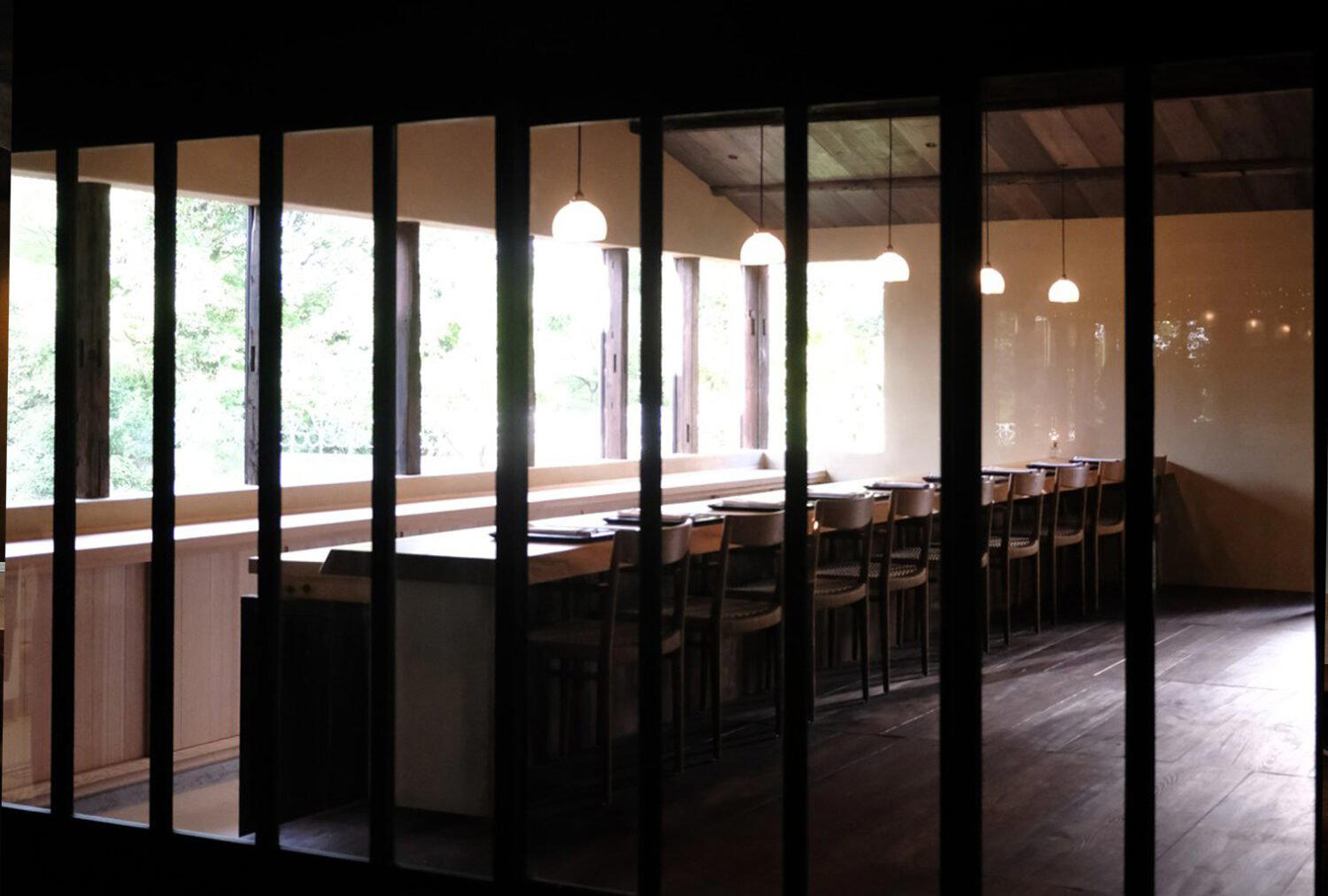
A Room Built Around Restraint
Kyoto's Kita-ku sits well north of the tourist corridors that funnel visitors between Gion and Arashiyama. The address at 11-1 Omiya Gentakukitamachi places MUBE in a quieter residential register of the city, the kind of block where the absence of signage is itself a statement of intent. In the broader ecology of Kyoto dining, where rooms at Kikunoi Honten and Hyotei carry centuries of institutional weight, a newer counter in Kita-ku can operate with a different kind of freedom: it answers to a culinary argument rather than a dynasty.
That argument, here, is structured around fermentation. Not as a trend borrowed from Scandinavian kitchens, but as a practice rooted in the food culture of Shiga prefecture, the landlocked region that borders Kyoto to the east. The physical space at MUBE serves that argument: counter dining formats in Kyoto, from kaiseki rooms at Gion Sasaki to the precision interiors at Mizai, are built to direct attention to the kitchen and to the sequence of courses. At MUBE, the logic is the same. The room is a container for a conversation about umami, and everything spatial follows from that.
The Name as Programme
In Japanese culinary culture, naming conventions carry weight. The word mube refers to the fruit of the staunton vine, Stauntonia hexaphylla, a plant with a long folkloric association with longevity. It is also a product specifically identified with Shiga, which makes the name doubly functional: it signals both a philosophical orientation toward durability and continuity and a geographical commitment to a particular regional larder.
That dual signal is not incidental. Across Japan's regional dining scene, from giueme in Akita to Goh in Fukuoka, the most considered restaurants are increasingly framing their identity through a specific prefecture's ingredients rather than through a national or generic Japanese idiom. MUBE positions itself within that movement by making Shiga's fermentation traditions the structural logic of the menu, not a footnote to it.
Fermentation as Architecture
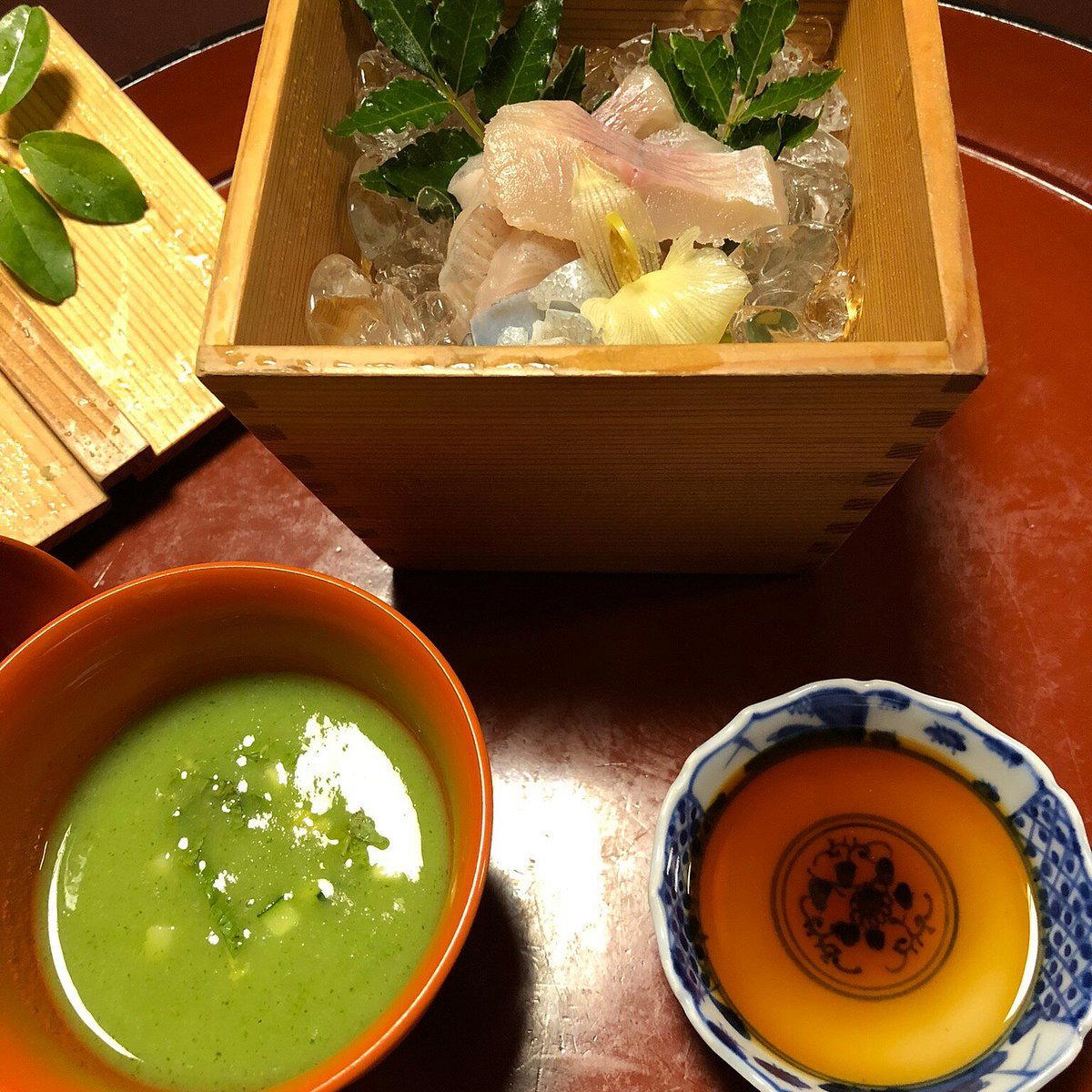
The technical centre of MUBE's kitchen is the relationship between dashi and fermentation-derived umami. These are two of Japanese cuisine's foundational flavour mechanisms, and the question of how they interact, whether they amplify or complicate each other, is one that the chef-owner treats as an ongoing inquiry. Narezushi, the traditional preparation of fish preserved with salt and rice over extended periods, is among the preparations the kitchen makes in-house, alongside fish sauce and miso.
What distinguishes the approach from an antiquarian exercise is restraint. Fermented ingredients in their fully expressed form carry intense, sometimes confrontational flavour profiles. The chef-owner's stated method is to deploy fermentation's characteristic umami depth in deference to contemporary palates, keeping the contribution below the threshold where it announces itself and above the threshold where it disappears into background. The analogy in other cuisines might be the way a skilled cook at Le Bernardin in New York City treats reduction: ever-present as structural support, rarely the loudest thing on the plate.
Rooms like Isshisoden Nakamura operate within a codified kaiseki grammar. MUBE is working from a more personal regional archive, one in which the grammar is Shiga's fermentation culture rather than Kyoto's established seasonal sequence. The comparison is useful not to rank one above the other but to clarify the different questions each type of counter is trying to answer.
Where MUBE Sits in Kyoto's Dining Structure
Kyoto's premium dining market has a pronounced institutional character. Several of the city's most prominent restaurants have been operating for generations, and their authority rests partly on lineage and partly on the accumulated signals of Michelin recognition. MUBE's position is structurally different. It operates as a chef-owner counter with a strong regional identity, which places it closer in type to venues like akordu in Nara or Bleston Court Yukawatan in Nagano than to Kyoto's multi-generational kaiseki houses.
That structural position matters for how the room reads. Counter restaurants with a single chef-owner at their centre tend to have less institutional buffer between the diner and the creative argument being made. There is less ceremony in the service model and more direct exposure to what the kitchen is actually thinking about. For diners already familiar with the Kyoto kaiseki register through visits to Kikunoi Honten or Hyotei, MUBE offers a different register: more particular, more contingent on a specific prefectural tradition, and more explicitly engaged with what fermentation can and cannot do in a contemporary Japanese kitchen.
For context on how this counter fits within Kyoto's broader restaurant scene, see our full Kyoto restaurants guide. Those planning a longer stay in the city will also find relevant recommendations in our full Kyoto hotels guide, our full Kyoto bars guide, and our full Kyoto experiences guide. MUBE is also a reasonable reference point when comparing regional fermentation-focused cooking with high-technique approaches elsewhere in Japan, such as HAJIME in Osaka or Harutaka in Tokyo.
Planning a Visit
MUBE's location in Kita-ku places it north of central Kyoto, making it a deliberate destination rather than a stop within a dense dining district. The address at 11-1 Omiya Gentakukitamachi is accessible by the Karasuma subway line, with Kita-Oji station providing a practical point of entry for the neighbourhood. Given the counter format and the chef-owner model, seat availability is limited and advance planning is advisable. Direct contact with the restaurant or an approach through a hotel concierge familiar with Kyoto's smaller counters is the most reliable route to a booking. For those visiting Kyoto's Kita-ku area, our full Kyoto wineries guide provides additional reference for the region's broader beverage scene.
Frequently asked questions
Where exactly is MUBE?
MUBE is located at 11-1 Omiya Gentakukitamachi, Kita-ku, Kyoto.
What awards or recognition does MUBE have?
MUBE has received recognition including: ‘Mube’ refers to the fruit of the Japanese staunton vine. The owner-chef adopted the name because it is considered a talisman of longevity and a famous product of his native Shiga. His use of that prefecture’s fermented foods reflects his p….
What's the best thing to order at MUBE?
The kitchen's defining work is narezushi, the ancient fermented preparation of fish, salt, and rice that predates the pressed and nigiri styles familiar elsewhere. The chef also produces in-house fish sauce and miso, making these fermented foundations worth seeking across the menu rather than treating any single dish as the centrepiece. The throughline is the chef's controlled use of fermentation-derived umami alongside dashi, applied with deliberate restraint rather than intensity.
What's the best way to book MUBE?
No phone number or booking website is listed in the public record for MUBE, and the restaurant's address in Kita-ku at 11-1 Omiya Gentakukitamachi places it outside the central Kyoto dining districts where concierge networks are densest. Guests staying at a Kyoto hotel with a dedicated concierge desk will likely have the most direct route to a reservation. Arriving without a booking is not advisable given the format.
What's MUBE best at?
MUBE's particular strength is the technical and philosophical relationship between dashi and fermentation-derived umami, two foundations of Japanese cuisine that the kitchen treats as a single architectural system rather than separate elements. The chef draws on Shiga prefecture's fermented food traditions, including narezushi and fish sauce, but applies their characteristic depth with restraint calibrated to contemporary palates. That balance between ancestral technique and modern editing is what separates the kitchen from restaurants that lean either on heritage or on novelty alone.
Can MUBE adjust for dietary needs?
The kitchen's core framework is built around fermented fish preparations, dashi, and traditional Shiga ingredients, meaning that guests with fish or seafood restrictions will face structural limitations rather than minor substitutions. No dietary accommodation policy is documented in the public record. Communicating restrictions at the time of booking is the standard approach at Japanese restaurants of this format, and doing so in Japanese or through an intermediary is advisable given the solo chef-owner structure.
What is narezushi and why does MUBE serve it?
Narezushi is one of Japan's oldest preserved foods, made by layering fish with salt and fermented rice over an extended period, producing an intensely savoury result that bears little resemblance to modern sushi. The chef at MUBE, who comes from Shiga prefecture, prepares it as a direct expression of that region's food culture, where the tradition has been maintained longer and more continuously than in most of Japan. Serving narezushi in Kyoto frames MUBE within a lineage of fermentation practice that the chef treats as both personal identity and culinary programme.
Reputation Context
Comparable venues nearby, for context on price, style, and recognition.
| Venue | Cuisine | Price | Awards | Notes |
|---|---|---|---|---|
| MUBEThis venue (the venue you are viewing) | Modern Fermentation Japanese Cuisine | $200–300 | 1 Michelin Star | Not listed |
| Oryori Hayashi | Traditional Kaiseki | $200–300 | La Liste Top Restaurants | Kamigyō |
| Gion Endo | Kyoto-style Tempura Kaiseki | $200–300 | Tabelog Bronze #84 | Higashiyama |
| Tsukioka | Traditional Japanese Kaiseki & Tempura | $200–300 | Tabelog Bronze #486 | Higashiyama |
| Pontocho Sushi Ishiya | Traditional Japanese Omakase Sushi | $50–100 | Michelin Plate | Nakagyō |
| Ryoriya EN | Traditional Kyoto Kaiseki | $150–200 | Michelin Plate | Shimogyō |
Recognition history
Dated appearances from independent guides and award organizations, with the underlying list record or original source where available.
Michelin 1 Star
Michelin
Continue exploring
More in Kyoto
Restaurants in Kyoto
All restaurants in Kyoto →
Bars in Kyoto
All bars in Kyoto →
Hotels in Kyoto
All hotels in Kyoto →
Wineries in Kyoto
Browse all →
Details
- Quiet
- Elegant
- Cozy
- Intimate
- Scenic
- Special Occasion
- Garden
- Chefs Counter
- Sake Program
- Garden
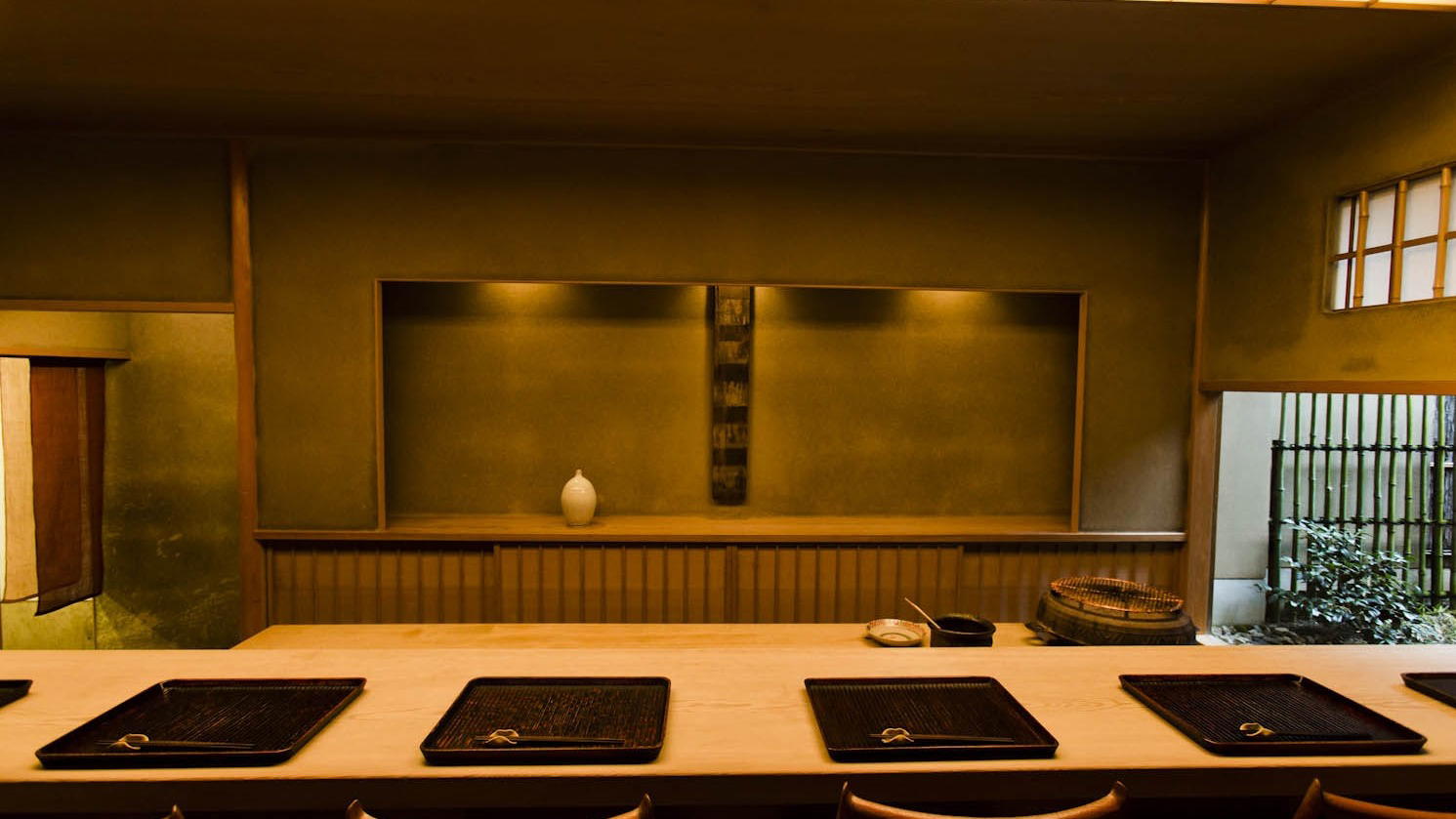
Calm and quiet atmosphere with high open ceilings, garden views fostering reflection, and a serene, nature-breathing space.