
Tabelog Bronze #290
Our verdict
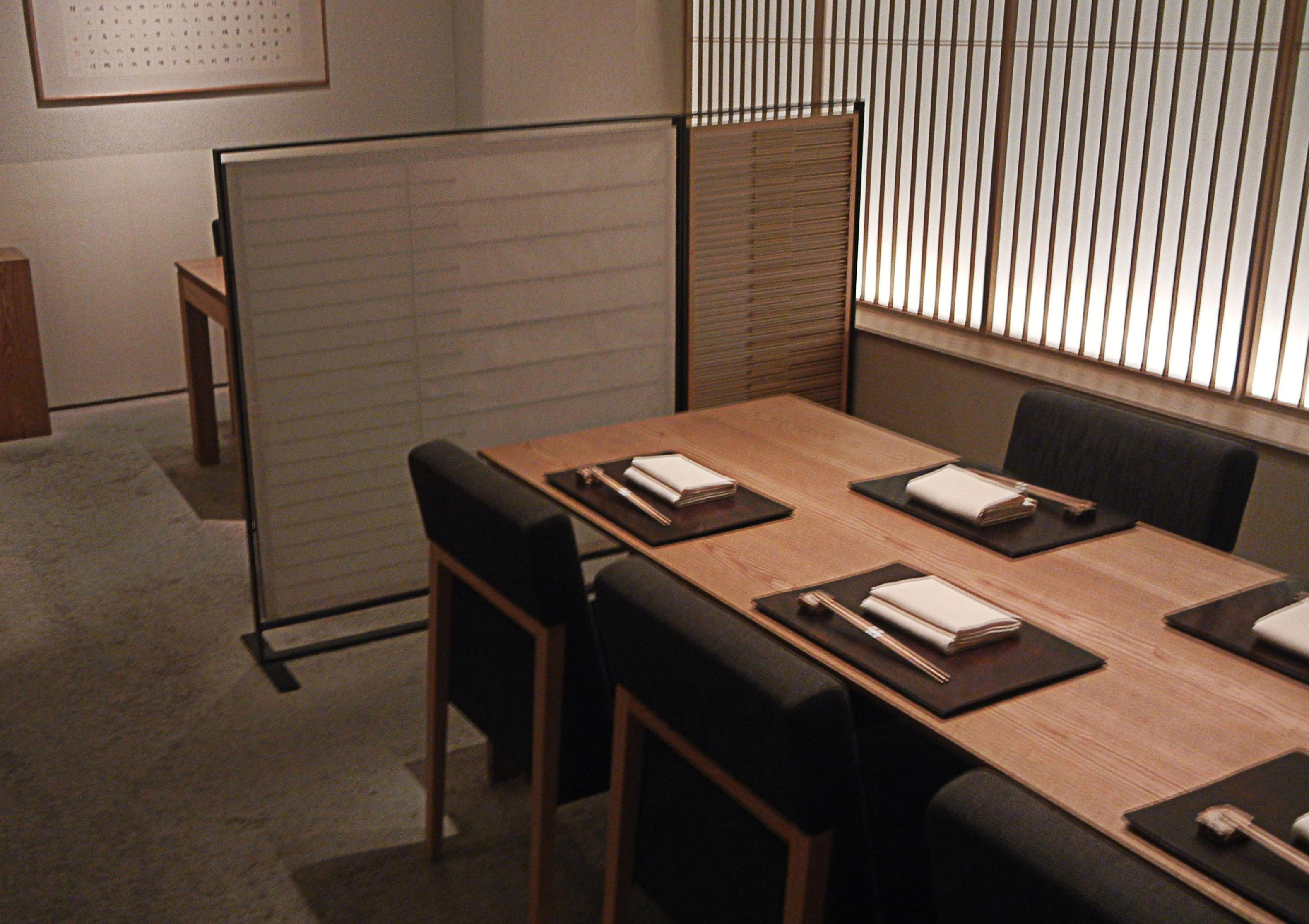
Morifuji occupies a ground-floor space in Shinjuku's Nandomachi district, operating on a referral system with just 11 seats split between a five-seat counter and a private room for six. A Tabelog Bronze Award winner in both 2025 and 2026, with a score of 4.12 and selection for the Tabelog Japanese Cuisine Tokyo 100 in 2023 and 2025, it sits in Tokyo's tier of serious, low-volume Japanese cuisine houses where access is earned rather than booked.

Pearl is the En Primeur Club membership app, where members save venues, book tables and use the concierge.

Eleven Seats in Shinjuku's Quiet Quarter
Tokyo's premium Japanese cuisine scene has long operated on a gradient between visibility and exclusivity. At one end sit the multi-floor kaiseki institutions whose names appear in international press; at the other are small rooms in residential pockets where word of mouth functions as the only reservation channel. Morifuji belongs firmly to the latter category. Located on the ground floor of a residential building in Nandomachi, a quieter part of Shinjuku Ward closer to Ushigome-Kagurazaka than to the area's commercial centre, it holds eleven seats total: five at the counter and six in a private room available by advance reservation. The room configuration shapes the entire dynamic of an evening here, in the way that only genuinely small formats can.
The neighbourhood context matters. Kagurazaka and the streets running west from it toward Ichigaya have supported a particular kind of refined dining for decades, one less reliant on foot traffic or signage than on sustained reputation within Tokyo's dining community. This is the part of the city where discreet French bistros, long-running Japanese cuisine specialists, and private-room-only counters coexist in low-rise buildings without so much as a lit exterior sign. Morifuji fits that pattern precisely. Its Tabelog listing describes it as both a "hideout" and a "house restaurant," which in Tokyo restaurant taxonomy signals a deliberate orientation away from walk-in accessibility and toward a guest base that already knows where it is going.
Where Morifuji Sits in Tokyo's Japanese Cuisine Tier
The Tabelog scoring system, while imperfect as all aggregated review platforms are, functions as a reasonably reliable proxy for sustained peer and diner consensus at the upper end of the market. Morifuji carries a 4.12 score for 2026 and was awarded Tabelog Bronze in both 2025 and 2026, placing it in a competitive bracket that sits below Gold and Silver but above the threshold for the Tabelog Japanese Cuisine Tokyo 100, to which it was selected in both 2023 and 2025. That combination of awards, score, and repeat selection over multiple years signals consistency rather than a single strong run.
In practical terms, this positions Morifuji in the same general price and prestige band as other serious Japanese cuisine counters in central Tokyo, though the format is considerably smaller and more private than venues like RyuGin, which operates across multiple floors with a larger brigade and international Michelin recognition. The Tabelog-listed price range for dinner is JPY 30,000 to JPY 39,999, while review-based spending data suggests the actual average lands between JPY 40,000 and JPY 49,999 once the 10% service charge is added. That positions it at the serious end of the market without reaching the upper ceiling set by the city's most formally recognised institutions.
For comparison, Tokyo's premium sushi counters such as Harutaka occupy a broadly similar price tier while operating in a different culinary register. French-leaning contemporaries like L'Effervescence and Sézanne sit in the same dinner spend range but bring entirely different room scales and institutional structures. Morifuji's eleven seats make the cost-per-seat economics of running a competitive program here considerably tighter, which tends to concentrate the cooking focus sharply.
Access, Format, and the Referral Layer
The detail that distinguishes Morifuji most clearly from other venues in its award tier is structural: access is by referral. This is not a supplementary reservation note but the primary mechanism. Tabelog records the venue under "Remarks" as operating a referral system, which in Tokyo typically means that a prospective guest must be introduced by an existing patron before a reservation is accepted. This model is not unusual in the city's most exclusive dining tier, but it remains relatively rare in the JPY 30,000 to JPY 50,000 band compared to venues at or above JPY 60,000 per head. Morifuji's deployment of it at this price point reinforces the sense that the guest relationship, not volume throughput, is the operating priority.
For international visitors, the practical implication is significant. Unlike Crony or other well-documented Tokyo addresses that accept reservations through public-facing booking systems, Morifuji requires an established introduction. Planning a visit without a Tokyo-based contact already in the guest network means building that connection in advance, either through a concierge with verified relationships in this segment or through someone who has already dined there. There is no public phone number listed, and there is no official website. Credit cards are accepted; electronic money and QR code payments are not.
The venue opened in October 2019, which means it established its current reputation across a period that included the full disruption of COVID-19's impact on Tokyo's dining scene. Earning Tabelog 100 selection in both 2023 and 2025 from that starting point is a meaningful signal about how the kitchen has performed under the kind of sustained pressure that filters out less serious operators. Across Japan, the parallel to this kind of small-format, quietly-earned recognition exists in venues like Gion Sasaki in Kyoto and HAJIME in Osaka, each operating in a different register but sharing the same resistance to visibility as a measure of quality.
Drink Program and the Private Room
Morifuji's drink list draws from sake, shochu, and wine, with Tabelog noting a particular focus on all three categories. Sake and shochu selections at this level of Japanese cuisine house are typically chosen to complement seasonal kaiseki progressions, where matching intensity, regional provenance, and fermentation style to each course requires a curation logic distinct from a Western wine pairing approach. The emphasis on all three drink categories simultaneously is somewhat less common than a sake-only or wine-primary focus, and positions the drink program as a genuine parallel to the food rather than an afterthought.
The private room accommodates six guests and requires advance reservation. For group dinners at this price point, having a fully enclosed space within an eleven-seat restaurant means the room effectively becomes its own service unit, which has implications for pacing, noise level, and the degree of interaction with the counter. This format is better suited to business entertaining or a dinner among existing friends than to the solo or paired traveller experience that a five-seat counter more naturally supports.
Planning a Visit
Morifuji takes reservations only, operates on a referral system, and has no publicly listed phone number or website. The nearest station is Ushigome-Kagurazaka, approximately 325 metres from the address. A coin parking facility is available nearby for those arriving by car, though taxis from central Tokyo are the more practical option. The 10% service charge applies to all dining. Credit cards are accepted. Private room bookings for up to six guests require advance arrangement and cannot be made on arrival.
For visitors building a Tokyo itinerary around serious Japanese cuisine, the city's broader options are mapped across our full Tokyo restaurants guide, alongside hotels, bars, and experiences. Those extending travel beyond Tokyo will find comparable precision-focused dining in akordu in Nara and Goh in Fukuoka, while 1000 in Yokohama and 6 in Okinawa represent the form at different ends of Japan's geographic and culinary range. For those drawing comparisons to international parallels in the small-counter, high-precision register, Le Bernardin and Atomix in New York City offer reference points in Western and Korean-rooted cuisines respectively, though the operating models differ substantially from Morifuji's referral-based structure. Tokyo's winery scene is mapped at our Tokyo wineries guide.
Frequently asked questions
Does Morifuji have a Michelin star or similar recognition?
Morifuji has received recognition including:
What's the address for Morifuji?
Morifuji is located at ザ・フィガロ市ヶ谷, 1F, 32-3 Nandomachi, Shinjuku City, Tokyo 162-0837, Japan, Tokyo.
What do regulars order at Morifuji?
At JPY 30,000–49,000 per head, Morifuji almost certainly runs a fixed course rather than an à la carte menu, that format is standard across Tokyo's Japanese cuisine venues operating in this price tier. No specific dishes are publicly documented. The kitchen's focus, per Tabelog's category listing, sits within traditional Japanese cuisine, with drinks drawn from sake, shochu, and wine, all of which the venue specifies a particular focus on.
How far ahead should I plan for Morifuji?
Plan for at least several months of lead time. Morifuji holds eleven seats in total, five at the counter, six in the private room, accepts reservations only, and requires a referral before any booking can be made. Securing an introduction from someone already in the network is the first constraint; availability is the second. There is no public phone number or website, so the referral pathway is the only route in.
What's the standout thing about Morifuji?
The referral-only access structure at this scale. An eleven-seat room earning Tabelog Bronze Awards in both 2025 and 2026, alongside consecutive inclusion in the Tabelog Japanese Cuisine Tokyo Top 100 (2023 and 2025), is notable in itself. What sets Morifuji apart from other venues with comparable recognition is that it maintains a closed-door entry policy, no website, no public phone listing, which keeps the room genuinely private rather than performatively so.
Can Morifuji accommodate dietary restrictions?
No public documentation covers dietary accommodation at Morifuji. The referral structure is actually useful here: whoever provides your introduction likely has direct contact with the restaurant and can raise dietary requirements before any booking is confirmed. Given the eleven-seat format and reservation-only policy, the kitchen is not running a high-volume operation, specific requests made well in advance have a reasonable chance of being addressed.
The Short List
| Venue | Cuisine | Price | Awards | Notes |
|---|---|---|---|---|
| MorifujiThis venue (the venue you are viewing) | Traditional Japanese Conger Eel | $50–100 | Tabelog Bronze #290 | Not listed |
| Harutaka | Edo-Style Omakase Sushi | $200–300 | 3 Michelin Stars · World's 50 Best #76 | Sushi |
| RyuGin | Modern Kaiseki | $500+ | 3 Michelin Stars · World's 50 Best #41 | Kaiseki, Japanese |
| L'Effervescence | Modern French with Japanese Influences | $200–300 | 3 Michelin Stars · World's 50 Best #69 | French |
| HOMMAGE | Modern French with Japanese Influences | $150–200 | 2 Michelin Stars · World's 50 Best #78 | Innovtive French, French |
| MAZ | Innovative Peruvian-Japanese Fusion | $150–200 | 2 Michelin Stars · World's 50 Best #28 | Innovative |
Recognition history
Dated appearances from independent guides and award organizations, with the underlying list record or original source where available.
Tabelog Bronze #290
Tabelog
Full recognition history (3 entries)
Tabelog Bronze
Tabelog
Tabelog 100 #18 · No. 18
Tabelog · Tabelog 100 - Japanese cuisine - TOKYO - 2025
Continue exploring
More in Tokyo
Restaurants in Tokyo
All restaurants in Tokyo →


Bars in Tokyo
All bars in Tokyo →




Details
- Classic
- Cozy
- Family
- Casual Hangout
- Local Sourcing
- A La Carte
Casual yet refined with an inviting atmosphere emphasizing authenticity and craftsmanship.