

Tabelog 100 #16
Our verdict
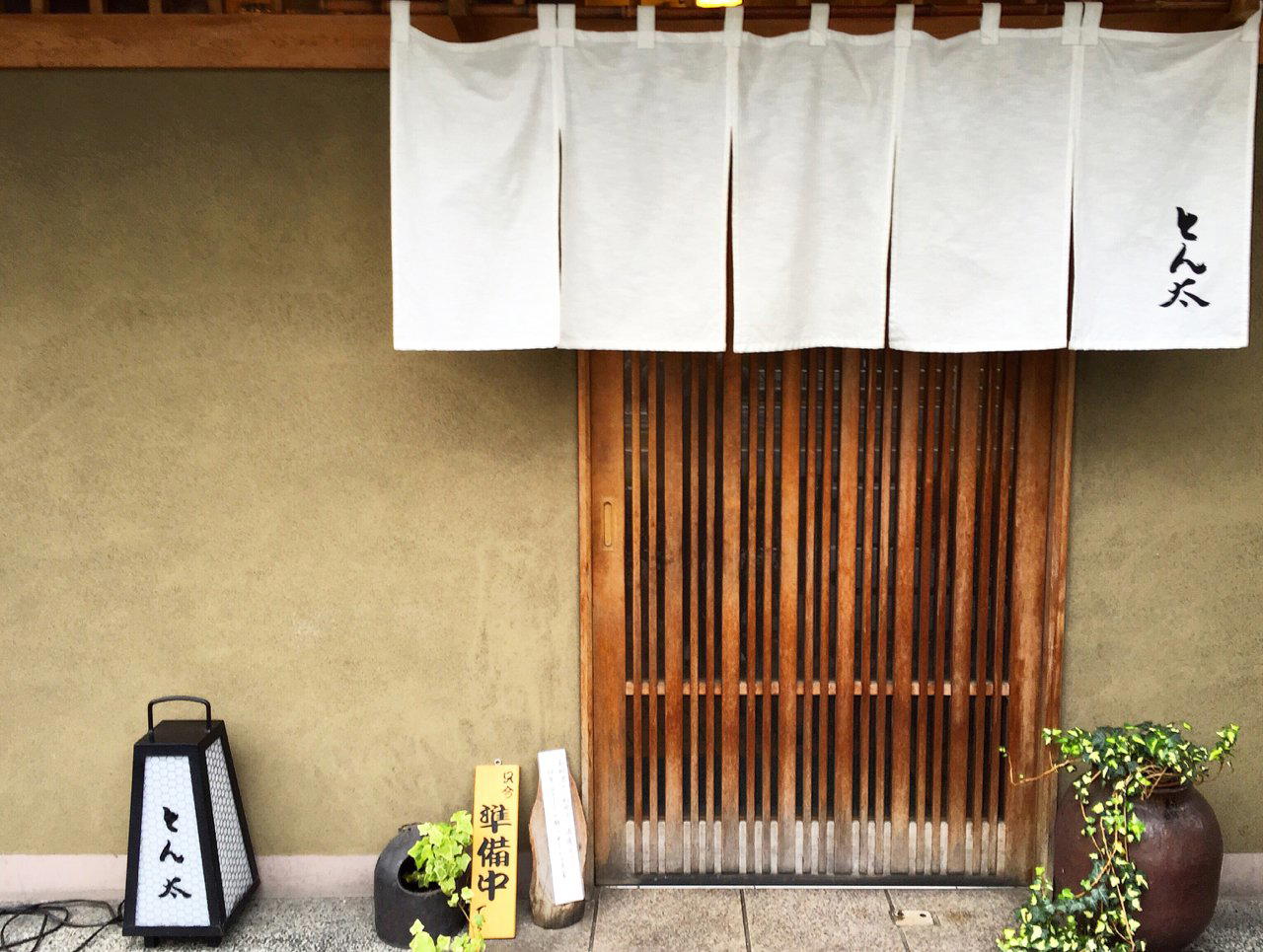
Tonta operates out of Toshima City's Takada neighbourhood, serving tonkatsu three evenings a week to a tight, repeat-booking crowd. Ranked #5 in Opinionated About Dining's Casual Japan list in 2024 and holding steady in the top 20 since 2023, it sits at the serious end of a category Tokyo takes seriously. Chef Yuzo Takahashi's approach places it in a different tier from the city's casual fry counters.

Pearl is the En Primeur Club membership app, where members save venues, book tables and use the concierge.
The menu
What to order
- Toku (Special) Loin Tonkatsu
- Toku (Special) Fillet Tonkatsu
Where Tokyo's Tonkatsu Tradition Gets Rigorous
Tonkatsu occupies an unusual position in Tokyo's dining order. It is, on its surface, a casual format: breaded pork cutlet, shredded cabbage, a pot of miso. Yet the category has produced some of the city's most discussed specialists, and the gap between a neighbourhood fry shop and a counter like Tonta is as wide as the gap between a bowl of soba and a kaiseki progression. What separates them is sourcing discipline, oil temperature management, the quality of the panko, and a precision of timing that turns a simple cut of pork into something worth ranking on a national list.
Tonta operates in Takada, Toshima City, a residential pocket north of Ikebukuro that carries none of the signalling weight of Ginza or Minami-Aoyama. That address is relevant context: the venues that earn sustained critical recognition in off-pitch Tokyo neighbourhoods tend to do so on the food alone, without the structural advantages of a high-traffic dining district or the branding lift of a luxury hotel address.
What the Rankings Say About the Format
Opinionated About Dining, which tracks casual dining in Japan with a granularity that Michelin largely bypasses, has ranked Tonta consistently since 2023: #8 that year, #5 in 2024, and #19 in 2025. A three-year consecutive presence in OAD's Casual Japan list is a signal worth reading carefully. The list covers the full country, running from ramen counters to kushikatsu specialists to tonkatsu rooms, and its methodology weights critic visits and peer opinion rather than popularity metrics alone.
For context on where tonkatsu specialists sit within Tokyo's broader ranking culture: the city's most discussed fry counters, including Butagumi, Fry-ya, Ginza Katsukami, Katsusen, and Katsuyoshi, each occupy a distinct position in a category that has fractured in interesting ways. Some lean into premium heritage breeds and theatrical plating. Others maintain the discipline of the traditional shokudo format while tightening every variable that affects the fry. Tonta's sustained OAD placement suggests it belongs to the second group: quiet, precise, and more interested in the cutlet than in the room around it.
At that volume, a rating in the upper tier of Tokyo dining reflects repeat visitors and sustained execution rather than a single strong season.
The Technique at the Core of the Category
The editorial angle that makes tonkatsu interesting in 2025 is the intersection of classical Japanese ingredient culture with a technique that arrived from the West. Katsu, the word itself is a transliteration of the French côtelette, entered Japanese cooking in the Meiji period as part of the yoshoku tradition, the deliberate adoption of Western culinary methods into a domestic framework. What happened over the following century was a process of refinement so intensive that the original Western model is barely recognisable in what Tokyo's serious tonkatsu counters now produce.
The specifics matter here. Japanese pork breeding has developed distinct regional strains, some raised on specific feed regimes, that produce intramuscular fat profiles suited to high-heat frying. The panko used at serious counters is produced to a coarser, airier crumb specification than Western breadcrumbs, creating a crust that traps steam without absorbing oil. Oil choice, temperature maintenance, and the resting period after frying are all variables that the leading counters treat with the same seriousness that a sushi chef applies to rice seasoning. This is not a case of Western technique applied to Japanese ingredients; it is a case of a Western technique being rebuilt from first principles using Japanese materials and Japanese standards of craft.
Chef Yuzo Takahashi works within that tradition at Tonta. The venue's operation across only three evenings per week, Friday, Saturday, and one additional weekday window between 5:30 and 8:30 pm, suggests a format built around controlled volume rather than throughput. That kind of scheduling is a structural choice: fewer covers per week means tighter sourcing cycles, better oil management, and a kitchen that is not running on exhaustion by the end of service.
Getting There and Planning Around the Schedule
Tonta's address in Toshima City places it in the northern residential band of central Tokyo. Takada is accessible from Ikebukuro, one of the city's major interchange stations, making the logistics manageable even if the neighbourhood itself is not a dining destination in the way that Shibuya or Shinjuku's satellite areas have become. The venue runs three evening services per week: Wednesday (though the listed hours mark Wednesday as operating 5:30–8:30 pm while other sources mark Monday, Tuesday, and Thursday as closed), Friday, and Saturday, all with the same 5:30–8:30 pm window. The operating calendar is narrow enough that planning ahead is the only sensible approach. Given the OAD ranking trajectory, walk-in availability at prime service times is unlikely to be reliable.
For visitors building a Tokyo itinerary around serious dining, Tonta sits in a different tier and neighbourhood from the city's fine-dining concentration in Ginza, Azabu, and Minami-Aoyama. It pairs logistically with Ikebukuro-area exploration rather than with a night moving between high-end kaiseki counters. Those looking to extend the evening into Tokyo's drinking culture can find guidance in our full Tokyo bars guide.
Tonta in the National Tonkatsu Context
Tokyo holds the densest concentration of serious tonkatsu counters in Japan, but the category has strong regional expressions elsewhere. Jukuseibuta Kawamura in Kyoto and Kyomachibori Nakamura in Osaka represent the Kansai approach to the format, where presentation and pork sourcing differ in notable ways from Tokyo practice. A reader building a Japan itinerary around the category would find those venues worth setting against Tonta as reference points for how regional identity inflects what is nominally a single dish.
For broader Japan coverage, the EP Club editorial team tracks dining rooms at every price point and format. HAJIME in Osaka, Gion Sasaki in Kyoto, akordu in Nara, Goh in Fukuoka, 1000 in Yokohama, and 6 in Okinawa all sit within the EP Club network. Tokyo readers can also access our full Tokyo restaurants guide, alongside dedicated coverage in hotels, wineries, and experiences.
Frequently asked questions
What is the signature dish at Tonta?
What do critics highlight about Tonta?
| Venue | Cuisine | Price | Awards | Notes |
|---|---|---|---|---|
| TontaThis venue (the venue you are viewing) | Tonkatsu Specialist | $20–30 | Tabelog 100 #16 | Not listed |
| Harutaka | Edo-Style Omakase Sushi | $200–300 | 3 Michelin Stars · World's 50 Best #76 | Sushi |
| RyuGin | Modern Kaiseki | $500+ | 3 Michelin Stars · World's 50 Best #41 | Kaiseki, Japanese |
| L'Effervescence | Modern French with Japanese Influences | $200–300 | 3 Michelin Stars · World's 50 Best #69 | French |
| HOMMAGE | Modern French with Japanese Influences | $150–200 | 2 Michelin Stars · World's 50 Best #78 | Innovtive French, French |
| MAZ | Innovative Peruvian-Japanese Fusion | $150–200 | 2 Michelin Stars · World's 50 Best #28 | Innovative |
Recognition history
Dated appearances from independent guides and award organizations, with the underlying list record or original source where available.
Opinionated About Dining Casual in Japan Ranked #132
Opinionated About Dining
Tabelog 100 #16 · No. 16
Tabelog · Tabelog 100 - Tonkatsu - 2026
Full recognition history (5 entries)
Opinionated About Dining Casual in Japan Ranked #19
Opinionated About Dining
Opinionated About Dining Casual in Japan Ranked #5
Opinionated About Dining
Opinionated About Dining Casual in Japan Ranked #8
Opinionated About Dining
Continue exploring
More in Tokyo
Restaurants in Tokyo
All restaurants in Tokyo →



Bars in Tokyo
All bars in Tokyo →


Details
- Cozy
- Classic
- Intimate
- Casual Hangout
- A La Carte
Current opening hours
- Monday
- Closed
- Tuesday
- Closed
- Wednesday
- 5:30–8:30 PM
- Thursday
- Closed
- Friday
- 5:30–8:30 PM
- Saturday
- 5:30–8:30 PM
- Sunday
- Closed
Hours can change for holidays and private events. Hours as of .
Cozy, homey atmosphere with counter seating around the kitchen and tatami rooms, filled with enthusiastic diners of all ages enjoying a casual, no-frills dining experience.