Tabelog 100 #73
Our verdict
Sushi Tsu in Nishiazabu sits in the mid-to-upper tier of Tokyo's omakase scene, earning consecutive Opinionated About Dining recognition from 2023 through 2025. Under chef Nobutoshi Takahashi, the counter operates with the focused discipline characteristic of Tokyo's serious edomae houses, making it a considered choice for occasion dining away from the city's most publicised addresses.

Pearl is the En Primeur Club membership app, where members save venues, book tables and use the concierge.
Nishiazabu and the Quiet End of Tokyo's Omakase Spectrum
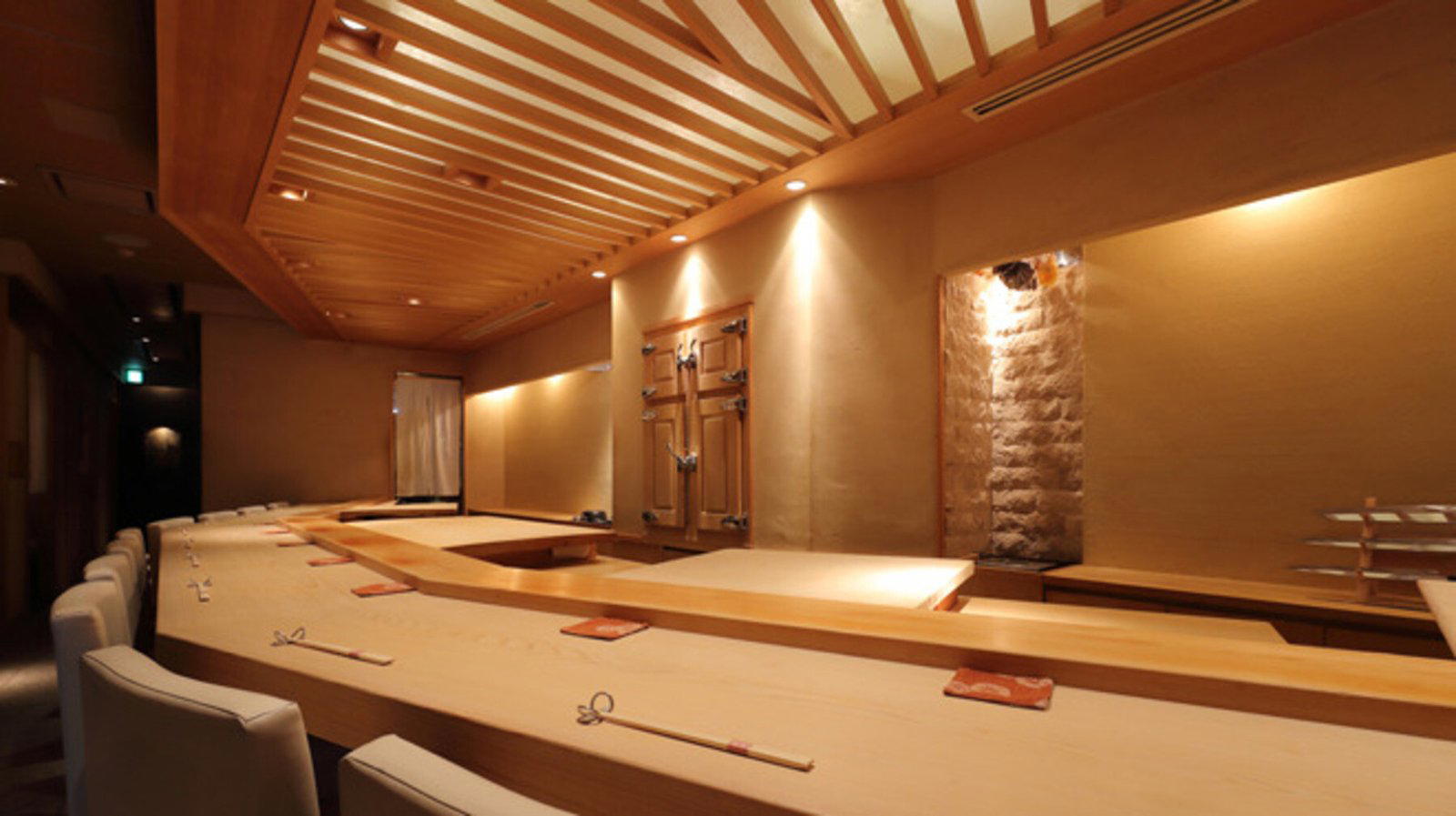
Tokyo's sushi scene divides, broadly, into two registers. The first is highly visible: three-Michelin-star counters in Ginza and Roppongi whose names circulate internationally, where reservations function more like allocations and price points reflect global prestige as much as the fish itself. The second register is less visible but arguably more instructive about the city's depth. These are neighbourhood-anchored counters, serious, technically disciplined, booked primarily by locals and well-travelled regulars, that accumulate recognition through sustained quality rather than media positioning. Nishiazabu, the quieter residential pocket of Minato Ward tucked behind the noise of Roppongi, has long hosted this second type. Sushi Tsu operates from a basement space on Nishiazabu 3-chome, and that address alone signals something about its orientation: this is not a counter built for visibility.
A Track Record Built Incrementally
Opinionated About Dining, the crowd-sourced critical platform that aggregates assessments from serious diners rather than professional reviewers, has tracked Sushi Tsu across three consecutive years. The trajectory moves from a Recommended listing in 2023 to a ranked position of #475 in Japan in 2024, then to #487 in 2025. That slight numerical shift reflects the competitive density of Tokyo's sushi scene as much as any change at the counter itself, OAD's Japan list encompasses hundreds of entries, and maintaining a ranked position in that field over multiple years is a more meaningful signal than a single-year placement.
For context, counters such as Harutaka and Sukiyabashi Jiro Roppongiten operate at the upper end of Tokyo's sushi hierarchy, carrying Michelin recognition and international name recognition that push both price and booking difficulty to their limits. Sushi Tsu sits in a different but coherent tier: acknowledged by specialist critics, anchored in a residential neighbourhood, and accessible to diners who have done the research rather than those following the broadest recommendations.
The Occasion Case for a Counter Like This
Tokyo's most celebrated sushi counters, the category anchored by names like Sushi Kanesaka, are legitimate choices for milestone occasions, but they come with friction: multi-month booking windows, intermediary reservation services for non-Japanese speakers, and price points that require deliberate financial commitment. For many visitors and Tokyo residents, that friction is part of the occasion. For others, it tips the experience toward stress rather than ceremony.
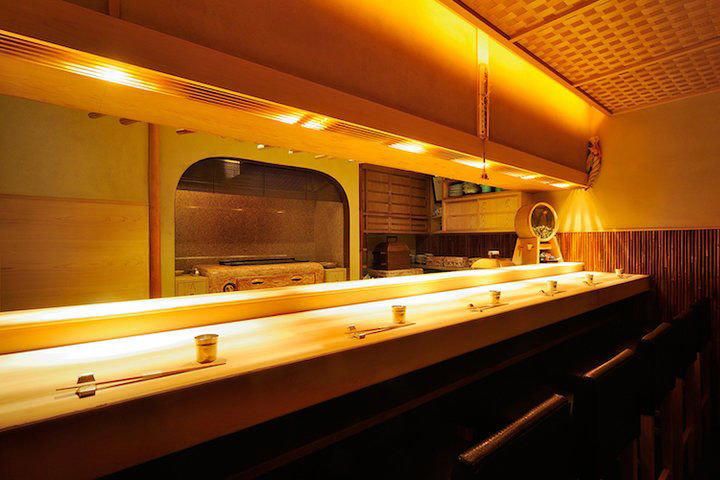
Counters in Sushi Tsu's tier offer a different proposition for occasion dining. The intimacy of a basement counter in a residential district, chef Nobutoshi Takahashi presiding over the service, and the absence of the tourist-circuit infrastructure that surrounds the city's most famous addresses, these factors can produce an evening that feels less staged and more genuinely personal. An anniversary dinner or a celebration among people who care about the food rather than the optics often lands better here than at a venue where the prestige is part of the product being sold.
The operating hours reinforce this positioning. Evening service runs until 11 pm on most days, giving occasion meals the room to breathe that shorter service windows don't allow. The Wednesday and Friday evening-only format means the kitchen's attention is less divided on those nights. Sunday closure follows standard practice for serious counters in this tier.
Chef Nobutoshi Takahashi and the Edomae Tradition
Edomae sushi, the Tokyo-origin tradition of curing, aging, and preparing fish with technique rather than serving it raw from the nearest market, is the standard against which every serious Tokyo counter is measured. The form privileges the itamae's judgment: how long to age a fish, when to apply vinegar, how to balance the seasoning of the rice. The counter format, where the chef works directly in front of diners, makes that judgment visible in a way that kitchen-separated restaurant formats cannot replicate.
Chef Takahashi operates within this tradition. Counters like Edomae Sushi Hanabusa and Hiroo Ishizaka operate in a comparable register, each maintaining specialist recognition without occupying the Michelin-starred tier that dominates international coverage of Tokyo sushi.
Placing Sushi Tsu Within the Broader Japan Scene
Tokyo remains the gravitational centre of Japan's high-end sushi scene, but serious diners increasingly treat a Japan trip as a multi-city programme. Osaka's kaiseki-dominant fine dining, represented by venues like HAJIME, occupies different culinary territory. Kyoto's offering, anchored by establishments such as Gion Sasaki, reflects the capital's preference for refined kaiseki over sushi. Outside the main cities, akordu in Nara, Goh in Fukuoka, 1000 in Yokohama, and 6 in Okinawa each represent regional interpretations of Japanese fine dining that reward the effort of travelling beyond Tokyo.
For visitors interested specifically in the sushi counter format beyond Japan, Sushi Shikon in Hong Kong and Shoukouwa in Singapore represent how Tokyo-trained itamae have transplanted the counter tradition to other Asian cities, each operating at the Michelin-starred level that commands export premiums on both price and prestige.
Within Tokyo itself, the city's full dining picture extends well beyond sushi. Our full Tokyo restaurants guide maps the broader range. For planning the rest of a Tokyo visit, our Tokyo hotels guide, bars guide, wineries guide, and experiences guide cover the complementary territory.
Planning a Visit
Sushi Tsu operates from the basement level at 3-1-15 Nishiazabu, Minato City, a walk from Roppongi or Hiroo stations, in a neighbourhood where taxis are the practical choice for late-evening departures. Lunch service runs on Monday, Tuesday, and Thursday (11:30 am to 2 pm); dinner service operates until 11 pm on Monday through Saturday, with Wednesday and Friday reserved for evening only. The counter is closed on Sundays. No website or phone number is listed in the public record; reservation approach should be confirmed through current booking channels.
Quick reference: Nishiazabu, Minato City, Tokyo (B1F) | OAD Ranked #487 Japan (2025) | Dinner to 11 pm Mon–Sat | Closed Sun
Frequently asked questions
What type of food is Sushi Tsu known for?
How do I find Sushi Tsu?
Sushi Tsu is located at Japan, 〒106-0031 Tokyo, Minato City, Nishiazabu, 3 Chome−1−15 B1F, Tokyo.
Has Sushi Tsu won any awards?
Sushi Tsu has received recognition including: Opinionated About Dining Top Restaurants in Japan Ranked #487 (2025); Opinionated About Dining Top Restaurants in Japan Ranked #475 (2024); Opinionated About Dining Top Restaurants in Japan Recommended (2023).
What should I order at Sushi Tsu?
Sushi Tsu runs as a pure omakase counter, so the decision sits entirely with chef Nobutoshi Takahashi. There is no à la carte selection; the sequence reflects what Takahashi judges to be in peak condition on a given day, following the edomae tradition of curing and ageing fish rather than serving it unworked. Arriving with specific requests is not how the format operates.
What are the operating hours at Sushi Tsu?
Hours at Sushi Tsu: Hours: Monday 11:30 am–2 pm, 6–11 pm Tuesday 11:30 am–2 pm, 6–11 pm Wednesday 6–11 pm Thursday 11:30 am–2 pm, 6–11 pm Friday 6–11 pm Saturday 6–11 pm Sunday Closed.
Who is the chef at Sushi Tsu?
The chef associated with Sushi Tsu is Nobutoshi Takahashi.
What is Sushi Tsu known for?
Sushi Tsu is a serious edomae counter in the basement of a Nishiazabu address, operating outside Tokyo's more visible Ginza circuit. Opinionated About Dining, which aggregates assessments from experienced diners rather than professional reviewers, has recognised it consecutively: Recommended in 2023, ranked #475 in Japan for 2024, and #487 for 2025. That trajectory puts it in a credible mid-tier of Tokyo's omakase scene, below the three-Michelin-star flagships but tracked by the same diners who frequent them.
Just the Basics
| Venue | Cuisine | Price | Awards | Notes |
|---|---|---|---|---|
| Sushi TsuThis venue (the venue you are viewing) | Edomae Omakase Sushi | $100–150 | Tabelog 100 #73 | Not listed |
| Harutaka | Edo-Style Omakase Sushi | $200–300 | 3 Michelin Stars · World's 50 Best #76 | Sushi |
| RyuGin | Modern Kaiseki | $500+ | 3 Michelin Stars · World's 50 Best #41 | Kaiseki, Japanese |
| L'Effervescence | Modern French with Japanese Influences | $200–300 | 3 Michelin Stars · World's 50 Best #69 | French |
| HOMMAGE | Modern French with Japanese Influences | $150–200 | 2 Michelin Stars · World's 50 Best #78 | Innovtive French, French |
| MAZ | Innovative Peruvian-Japanese Fusion | $150–200 | 2 Michelin Stars · World's 50 Best #28 | Innovative |
Recognition history
Dated appearances from independent guides and award organizations, with the underlying list record or original source where available.
Opinionated About Dining Top Restaurants in Japan Recommended
Opinionated About Dining
Tabelog 100 #73 · No. 73
Tabelog · Tabelog 100 - Sushi - TOKYO - 2025
Full recognition history (5 entries)
Opinionated About Dining Top Restaurants in Japan Ranked #487
Opinionated About Dining
Opinionated About Dining Top Restaurants in Japan Ranked #475
Opinionated About Dining
Opinionated About Dining Top Restaurants in Japan Recommended
Opinionated About Dining