
Kichijoji’s curry-and-kissa culture rewards modest rooms with serious regulars, and Mamezou sits squarely in that tradition. Its Tabelog Curry TOKYO “Tabelog 100” selections across 2019, 2020, 2022, 2023, and 2024 place it in a recognized Tokyo curry bracket rather than the city’s luxury dining conversation.
Pearl is the En Primeur Club membership app — saves, bookings, and concierge access live there. Same editors, same standards.
- Address
- Japan, 〒180-0004 Tokyo, Musashino, Kichijoji Honcho, 2 Chome−18−15 武蔵野カントリーハイツ
- Phone
- +81 422-21-7901
- Website
- p390500.gorp.jp
 Saves & bookings on Pearl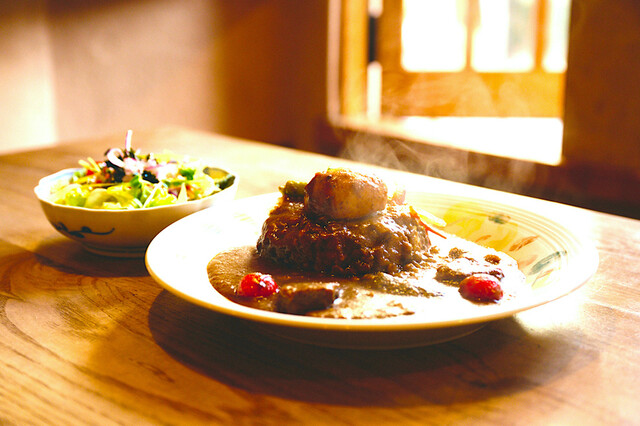
Approaching a small curry shop in Kichijoji is a different Tokyo ritual from queuing for Ginza sushi or chasing a hotel dining room above the skyline. The clues are quieter: a neighborhood address, a kissa-adjacent rhythm, and curry as everyday meal rather than chef’s manifesto. Mamezou belongs to that register, where reputation builds through repeat use, compact service, and a category Tokyo takes more seriously than many visitors expect.
Tokyo curry is not one lane. It runs from old-school yoshoku gravies to spice-led counters, coffee-shop curries, lunch sets, and specialist rooms that feel like neighborhood institutions. Kichijoji suits that middle ground: enough foot traffic for destination eating, enough residential gravity to keep casual formats honest. A curry room here must work for locals, students, families, shoppers, and people crossing town for a name repeated in rankings.
Kichijoji curry with kissa DNA, not tasting-menu theatre
The useful way to read Mamezou is through format. It is categorized as curry and kissa, a pairing that says more than a long menu description. In Tokyo, kissa tradition brings its own tempo: low-key interiors, daytime regulars, coffee-shop familiarity, and food closer to habit than ceremony. Curry in that setting is not diminished by informality. It gains another kind of authority, especially when the room draws diners beyond its neighborhood.
That matters because Tokyo restaurant culture is often flattened into omakase counters, Michelin rooms, and tasting-menu economics. Curry runs on another axis. The price tier is low by Tokyo destination-dining standards, the service is casual, and the judgment is harsher in its own way: the dish must justify itself without linen, spectacle, or imported luxury cues. The comparison is with everyday specialists that attract serious attention while staying accessible.
Within that frame, the Tabelog Curry TOKYO “Tabelog 100” 2024 selection is the key signal. The listing places the restaurant in a curated Tokyo curry group, with prior selections in 2019, 2020, 2022, and 2023. That run suggests durable recognition, not a one-season spike. Tabelog’s scoring culture is famously conservative, so a 3.74 score is meaningful within Japan’s review ecosystem, especially for a casual curry address rather than a luxury room with international press machinery behind it.
Kichijoji’s dining map sharpens the point. The area includes old coffee halls, bakeries, Chinese rooms, spice shops, and casual specialists. Comparison venues such as Sabo Musashino Bunko, LITTLE SPICE, COFFEE HALL Kugutsusou, Chinese Sai Yunron, and Liberte Patisserie Boulangerie Tokyo honten・kichijoji show how it splits between affordable daily dining and slightly higher-spend outings. Mamezou sits closer to the everyday end, but repeated curry recognition gives it destination weight within that modest price band.
What the recognition actually tells a traveller
Awards around casual Japanese dining need careful interpretation. They do not make a curry shop a grand restaurant or promise luxury. Their value is comparative. For visitors with limited Tokyo meals, repeated selection in a category-specific list helps separate durable neighborhood specialists from places that simply photograph well. Here, the signal is less rarity than reliability inside a crowded field.
This is not a table to lock months ahead; it is a meal to build into a Kichijoji day with room to wait or pivot. That suits travellers who want one Tokyo meal outside the central luxury circuit without losing editorial confidence. The restaurant’s compact scale and no-reservation format keep it closer to local dining rhythm than concierge-managed itinerary.
For broader Tokyo planning, place it alongside casual specialists rather than fine-dining anchors. Readers mapping a restaurant-heavy trip can use Our full Tokyo restaurants guide for the wider city, then contrast this neighborhood curry stop with izakaya, yakitori, and café formats such as . 鮪と炭火焼き うお炭 秋葉原店, 12/10 Shinjuku ten, 124. KAGURAZAKA (Yakitori), 2D Cafe, and 3 Chome no Curry Ya San. The broader trip scaffolding sits elsewhere: Our full Tokyo hotels guide, Our full Tokyo bars guide, Our full Tokyo wineries guide, and Our full Tokyo experiences guide frame the city beyond lunch and dinner.
Japan’s casual dining depth also rewards cross-city comparison. A curry specialist in Sapporo such as [Curry Senmon Ten] Maruyama Kyoju. in Sapporo, a Kyoto address like [ki:] in Kyoto, or regional rooms such as -Grilled beef Sukiyaki- KAMAKURA TANUKIAN 鎌倉 たぬき庵 in Kamakura.cafe in Osaka.know in Kumamoto, and (Shoku) Vietnam in Kawasaki underline a broader truth: Japan’s lower-priced specialists often carry as much cultural information as formal dining rooms. Even outside Japan, formats like Jōdo Saké Bar in Los Angeles and Onigiri Time in Pasadena show how casual Japanese categories travel, though Tokyo’s neighborhood curry culture remains its own discipline.
How to place it in a Tokyo itinerary
Mamezou makes sense when Kichijoji is already part of the day, especially for travellers pairing food with the area’s shops, cafés, and park-side wandering. Treat the meal as a neighborhood anchor, not a destination that must carry an evening. The practical appeal is clear: recognized curry, casual spend, compact room, non-smoking setting, English menu availability, takeaway, and a family-friendly stance with caveats around stroller access. Those details point to steady throughput, not ceremony.
The editorial verdict is narrow but firm: this is a strong pick for understanding how Tokyo rewards humble formats when execution and reputation align. It is not for travellers seeking a chef-led tasting menu, wine-pairing theatre, or a long seated occasion. It is for a Kichijoji meal where curry, coffee-shop culture, and category-specific recognition intersect at a price level that leaves room for another stop later in the day.
At a Glance
Comparable venues at a similar level for quick context.
| Venue | Cuisine | Price | Notes |
|---|---|---|---|
| MamezouThis venue — the venue you are viewing | Kichijoji, Classic Japanese curry house | $ | Not listed |
| Arry 8Bites | Tokyo, Japanese Small Bites | $ | Not listed |
| Ganso Stamina Manten Ramen Suzuki | Mitaka, Stamina-style ramen & soba | $ | Not listed |
| Amai Ko | Not listed | $ | Suginami, Japanese sweets & kakigori cafe |
| Tsukushi | Not listed | $ | Meguro, Traditional Japanese Wagashi & Daifuku Shop |
| Tsukemen Gonokami Seisakujo | Shibuya, Shrimp Tsukemen Ramen Shop | $ | Not listed |
Recognition history
Dated appearances from independent guides and award organizations, with the underlying list record or original source where available.
Tabelog 100 #19 · No. 19
Tabelog · Tabelog 100 - Curry - TOKYO - 2024
Continue exploring
More in Tokyo
Restaurants in Tokyo
Browse all →



Bars in Tokyo
Browse all →


Hotels in Tokyo
Browse all →



Wineries in Tokyo
Browse all →
At a Glance
- Cozy
- Classic
- Intimate
- Solo
- Casual Hangout
- After Work
- Family
- Standalone
- Design Destination
Current opening hours
- Monday
- 11 AM–9 PM
- Tuesday
- 11 AM–9 PM
- Wednesday
- 11 AM–9 PM
- Thursday
- 11 AM–9 PM
- Friday
- 11 AM–9 PM
- Saturday
- 11 AM–3:30 PM, 5–9 PM
- Sunday
- 11 AM–3:30 PM, 5–9 PM
Hours can change for holidays and private events. Last verified .
A small, nostalgic‑modern curry shop tucked in a Kichijoji back street, with a cozy café‑like feel, warm casual service, and the intimate buzz of a classic neighborhood hideout rather than a formal restaurant.