Le Klok Bistro
Our verdict
A bistro address on one of Petrovaradin's quieter residential streets, Le Klok sits in a town whose culinary identity is shaped by proximity to Novi Sad and the Vojvodina agricultural plain. The bistro format here signals a middle register between Serbian kafana tradition and the more polished modern dining now moving across the Danube from Novi Sad's centre.

Pearl is the En Primeur Club membership app — saves, bookings, and concierge access live there. Same editors, same standards.
- Address
- Prote Mihaldžića 6, Petrovaradin 21000, Serbia
- Phone
- +381648867667
- Hours
- Daily 12–11 PM
- Website
- leklok.rs
- Directions
- Get directions
The menu
What to order
- French Onion Soup
- Beef Tartare
- Duck Breast
- Oxtail
- Filet Mignon
- Creme Brûlée
- Pork Rillette
- Goat Cheese Soufflé
Petrovaradin's Dining Position and Where Le Klok Fits
Petrovaradin occupies an interesting culinary position for a town of its size. Separated from Novi Sad by the Danube and the fortress walls that make this area one of the most visited in northern Serbia, it draws a different crowd than the city across the water: more local, more residential, and considerably less filtered through the expectations of international tourism. The bistro format that has taken hold on streets like Prote Mihaldžića reflects that character. These are neighbourhood operations, not destination restaurants engineered for weekend visitors or festival overflow. Le Klok Bistro, at number 6 on that street, belongs to this quieter tier of Petrovaradin dining — addresses that function primarily for the people who live within walking distance, rather than those crossing the bridge for a table. For a broader sense of what the region offers, our full Petrovaradin restaurants guide maps the wider picture.
The Vojvodina Sourcing Context
To understand what drives the better bistro kitchens in this part of Serbia, it helps to understand Vojvodina's agricultural position. The province is flat, fertile, and productive in ways that most of Europe's celebrity food regions would envy if they paid closer attention. Wheat, corn, sunflower, paprika, pig farming, and freshwater fish from the Danube and Tisa river systems have defined the regional larder for centuries. Hungarian, Slovak, Romanian, and Ottoman culinary influences layered over that agricultural base create a cuisine that is richer in variation than its international reputation suggests.
Bistro kitchens in towns like Petrovaradin sit at the practical end of this tradition. They are not invoking terroir as a marketing concept — the sourcing is local by default, because local producers are accessible and often cheaper than imported alternatives. Paprika-cured meats, freshwater fish preparations, and pork-driven mains have remained at the centre of Vojvodina home cooking and, by extension, the neighbourhood restaurants that serve versions of it. Where a bistro kitchen differs from a kafana is in degree of formality and menu structure rather than in the fundamental relationship with regional ingredients. For comparable regional approaches in other Serbian towns, Etno Kuća Dinar in Vrsac and Lovački dom in Valjevo both frame their menus around local agricultural supply chains.
The Street and the Setting
Prote Mihaldžića is not a thoroughfare. It is the kind of street that rewards knowing about it rather than stumbling upon it, residential in feel, removed from the main pedestrian routes that funnel visitors toward the fortress. Approaching Le Klok, the context is domestic rather than commercial: the scale of the buildings, the pace of foot traffic, and the absence of tourist-facing signage all signal that the place operates on local terms. That is not a criticism. In many Serbian towns, the addresses that have lasted are precisely those that never needed to perform for an outside audience.
The bistro name itself, Le Klok, carries a slight French inflection that places it in the post-Yugoslav bistro tradition: a generation of smaller restaurant formats that adopted Western European naming conventions while continuing to cook from a regional base. This pattern is visible across Serbia's mid-tier cities and towns, from Kafe Restoran Maša in Novi Sad to Windmill in Pancevo, formats that signal contemporary ambition without departing entirely from the familiar.
Petrovaradin's Competitive Set
Compared to the modern dining now developing across the Danube in Novi Sad, where addresses like Langouste in Belgrade represent the direction that Serbia's most ambitious kitchens are moving, Petrovaradin operates at a more grounded register. There is no equivalent here of the tasting-menu format or the wine-list depth that defines the upper tier of Serbian urban dining. What exists instead is a cluster of neighbourhood addresses where the value proposition is consistency, local familiarity, and a menu calibrated to the eating habits of the surrounding community rather than to arriving visitors.
That positioning is not incidental. In smaller Serbian towns, the kafana remains the dominant format, with its open-ended menus, long tables, and social rather than gastronomic function. A bistro like Le Klok occupies the space between that tradition and the more structured restaurant experience: shorter menus, a clearer kitchen identity, and a setting that is comfortable without being formal. For reference points at the kafana end of that spectrum, KAFANA DUKAT in Pirot and Kafana Studenac in Bajina Basta illustrate the format in its more traditional expression. At the other end of Serbian regional dining, ETNO PODRUM BRKA in Nis and Koliba Etno Restoran in Leskovac show how the ethnographic restaurant concept has developed in southern Serbia.
Planning Your Visit
Le Klok Bistro is located at Prote Mihaldžića 6 in Petrovaradin, 21000, Serbia. No current booking platform data, phone number, or website is available through EP Club's records, which means walk-in is likely the most reliable approach, consistent with how neighbourhood bistros of this type tend to operate in Serbian towns of this size. Petrovaradin is accessible directly from Novi Sad, which has rail and bus connections from Belgrade; the fortress area is a short walk or taxi ride from the main Novi Sad transport hub.
For readers building a wider Serbian itinerary, the country's regional dining range extends from Vojvodina's agricultural north down through the kafana culture of central Serbia. Kod Brana in Cacak, Aleksandar Gold in Uzice, Kafana Pećinar Ljubiš in Cajetina, and Kod poštara in Aran Elovac map that range across the country's interior. For those whose Serbian trip includes a mountain leg, Grand **** in Kopaonik covers the resort dining tier. And for a sense of how Serbian dining compares to international reference points at the top of the spectrum, Le Bernardin in New York City and Atomix in New York City represent the global standard against which ambitious Serbian kitchens are increasingly measuring themselves. The Vojvodina end of that spectrum, grounded, ingredient-led, and operating without ceremony, is a different kind of value, but not a lesser one. The bistros of Petrovaradin, Le Klok among them, are part of a dining tradition that deserves more attention than it receives from visitors who cross the bridge only to look at the fortress and return. Also worth noting for the Danube region: ČARDA ZLATNA KRUNA in Apatin represents the riverfront čarda format that is specific to Vojvodina's waterways.
Frequently asked questions
Can I bring kids to Le Klok Bistro?
Le Klok Bistro sits on Prote Mihaldžića, a residential-scale street in Petrovaradin that tends toward a relaxed neighbourhood pace rather than a high-volume service model. That setting is generally comfortable for families, though no formal children's menu data is available. Contacting the venue directly before visiting with young children is the practical approach.
Is Le Klok Bistro better for a quiet night or a lively one?
The address on Prote Mihaldžića — a low-traffic residential street in Petrovaradin, away from the main fortress tourist flow — points toward a quieter register. This is not the kind of street that draws a late-night crowd by accident. Expect a setting more suited to conversation than celebration, though the precise atmosphere will depend on the evening and the size of your group.
Is Le Klok Bistro a good option for dining near the Petrovaradin Fortress?
Le Klok Bistro at Prote Mihaldžića 6 in Petrovaradin places it within the residential streets below and around the fortress, making it one of the few sit-down dining options in the immediate Petrovaradin area rather than across the Danube in Novi Sad. For visitors spending time at the fortress who want to eat locally rather than cross the bridge, Le Klok is a logical address to have in hand.
What should I order at Le Klok Bistro?
No specific menu data is currently available for Le Klok Bistro. What is documented is that the better bistro kitchens in this part of Serbia draw heavily on Vojvodina's agricultural output, which means seasonal produce and locally sourced ingredients typically anchor the menu. Asking staff what is running that day is the most reliable way to eat well here.
Where is Le Klok Bistro in Petrovaradin?
Le Klok Bistro is located at Prote Mihaldžića 6, Petrovaradin 21000, Serbia, Petrovaradin.
Quick Comparison
Comparable venues nearby, for context on price, style, and recognition.
| Venue | Cuisine | Price | Notes |
|---|---|---|---|
| Le Klok BistroThis venue — the venue you are viewing | French Bistro with Serbian Influences | $30–50 | Not listed |
| Pivnica Gusan | Traditional Serbian Beer Pub | $10–20 | City Center |
| CUBO | Modern European / International | $20–30 | near Danube Quay |
| SOKAČE | Traditional Serbian Grill | $10–20 | City Centre (Pap Pavla Street) |
| TORO LATIN GASTROBAR | Pan-Latin Gastrobar | $30–50 | Beton Hala |
| Plava Ruža | Traditional Serbian with Fish Specialties | $20–30 | Apatin |
Continue exploring
More in Petrovaradin
Restaurants in Petrovaradin
Browse all →
Bars in Petrovaradin
Browse all →

Details
- Cozy
- Romantic
- Classic
- Elegant
- Intimate
- Date Night
- Special Occasion
- Celebration
- Standalone
- Historic Building
- Open Kitchen
- Local Sourcing
- A La Carte
- Set Menu
- Wine
- Vegetarian Friendly
- Vegan Options
Current opening hours
- Monday
- 12–11 PM
- Tuesday
- 12–11 PM
- Wednesday
- 12–11 PM
- Thursday
- 12–11 PM
- Friday
- 12–11 PM
- Saturday
- 12–11 PM
- Sunday
- 12–11 PM
Hours can change for holidays and private events. Last verified .
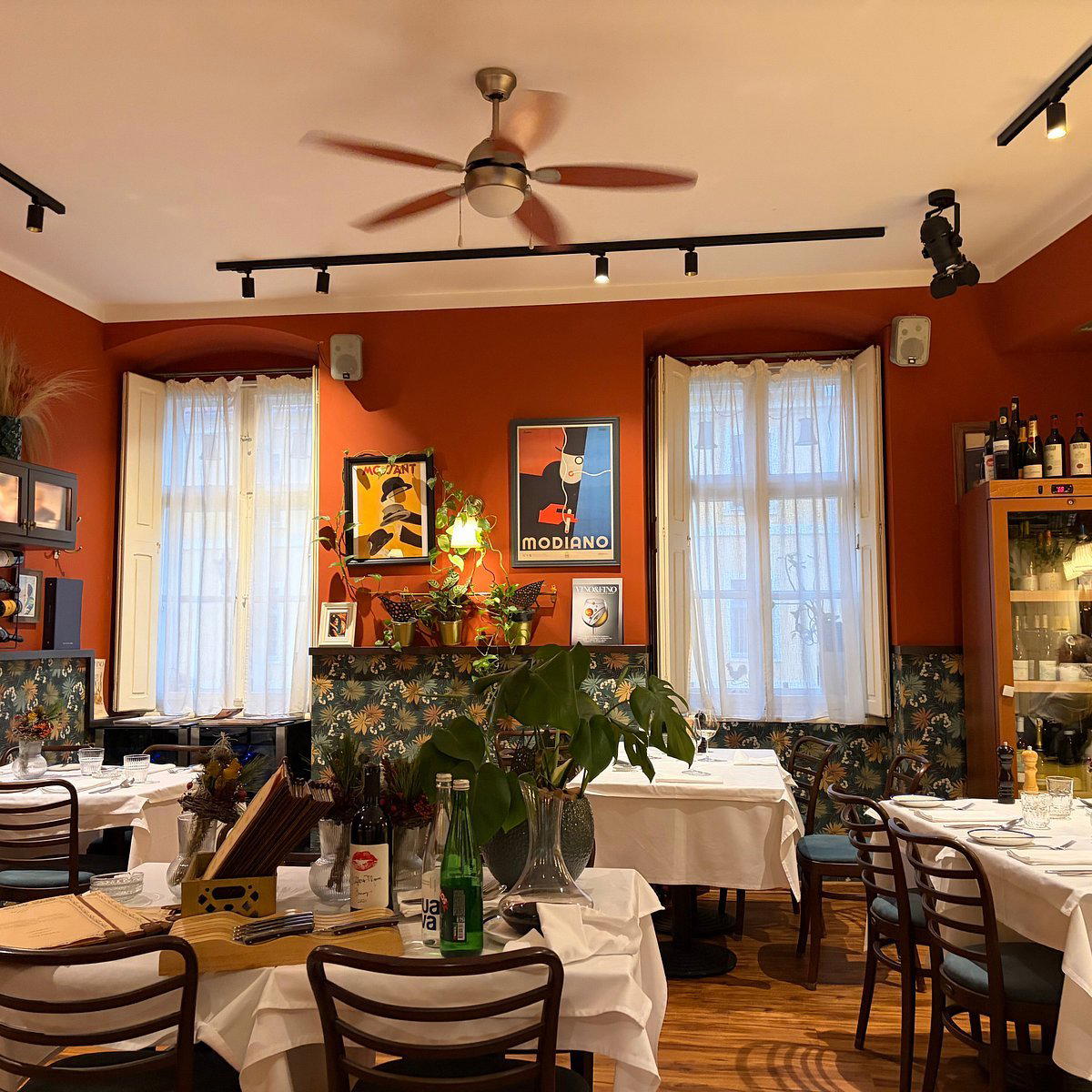
Warm, intimate atmosphere with classic Parisian-style interior featuring vivid colors, vintage posters, delicate lighting, flowers, and French music that evokes a bygone era.