Traditional Serbian Mountain Cuisine at Kafana Pećinar Ljubiš pairs grilled trout, gibanica, and ceramic-pot meats with beer service in a conversational, leisurely room.
Pearl is the En Primeur Club membership app — saves, bookings, and concierge access live there. Same editors, same standards.
- Address
- Unnamed Rd, Ljubis, Serbia
- Phone
- +381313801170
- Website
- facebook.com
- Directions
- Get directions
 Saves & bookings on Pearl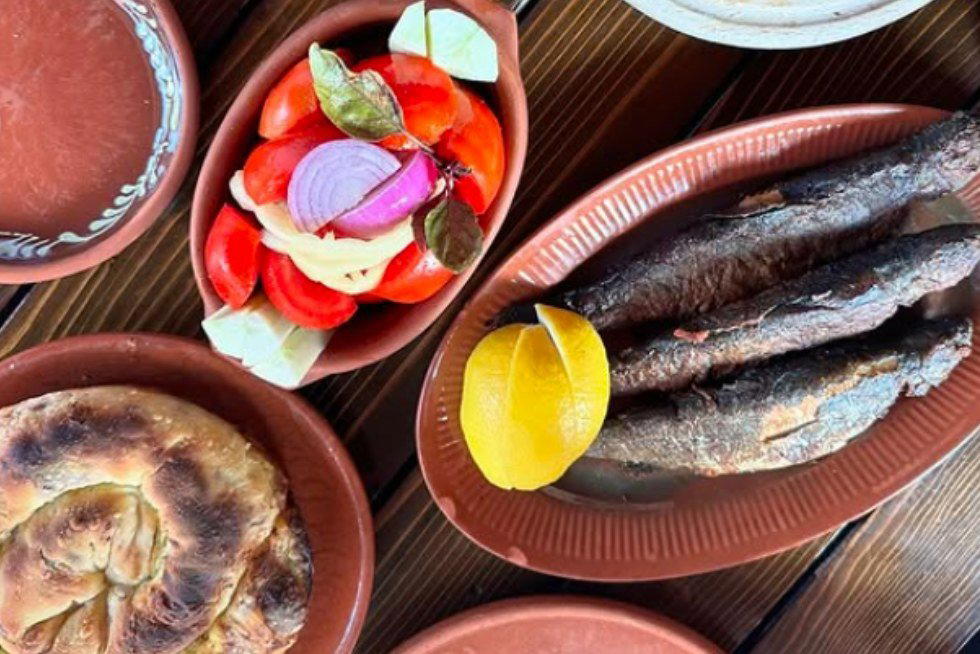
Where the Mountain Begins
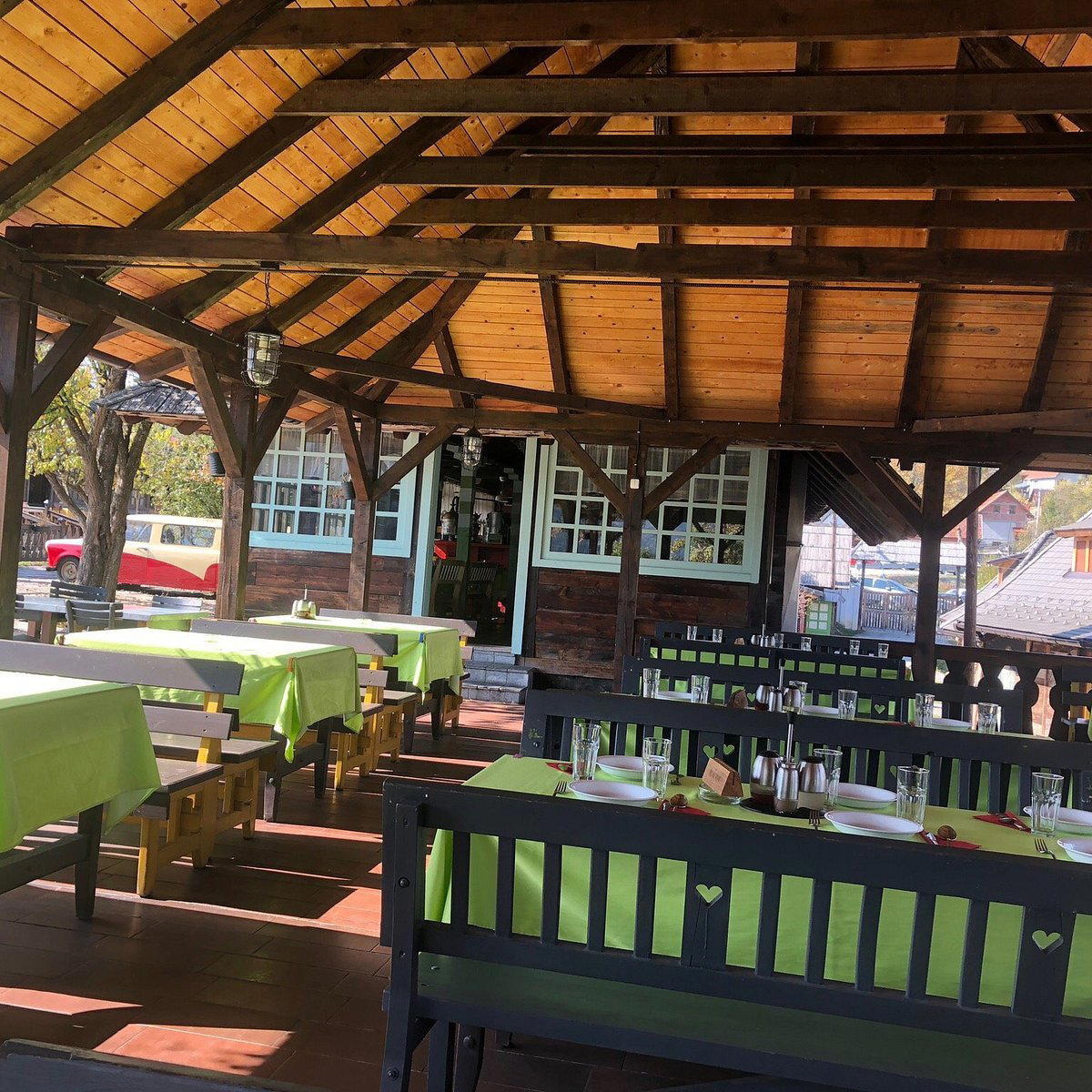
Kafana Pećinar Ljubiš is a casual restaurant in Ljubiš, Serbia, serving Traditional Serbian Mountain Cuisine and averaging about $15 per person. Kafana Pećinar Ljubiš sits along this unnamed stretch at the edge of Cajetina municipality, a building that looks as though it grew from the hillside rather than was placed upon it. Before you reach the door, you register woodsmoke, the distant sound of water, and the particular quiet of high western Serbia, a silence broken only by the occasional vehicle descending toward Užice or climbing toward the plateau.
This is kafana country in its least performative form. The kafana tradition across Serbia covers a wide range of registers, from city-centre institutions with printed wine lists to roadside rooms where the kitchen and the clientele have a working relationship that needs no menu. Ljubiš belongs firmly to the latter type. The physical environment signals exactly what kind of eating is on offer: thick walls, surfaces worn smooth by use, and a room temperature set by a wood-burning stove rather than a thermostat. For visitors accustomed to the modern Serbian restaurant circuit, where places like Langouste in Belgrade operate at the precision-driven urban end of the spectrum, a kafana like this one represents a different logic entirely, older, less curated, and more directly connected to the land surrounding it.
The Source Is the Point
In western Serbia, the argument for local sourcing is not an ethical positioning statement, it is simply geography. The Zlatibor highlands produce particularly referenced raw materials in Serbian food culture: mountain lamb grazed on high meadows, pork from households that still run traditional pig-keeping operations, dairy from small producers whose cheese and kajmak carry the flavor characteristics of altitude and grass rather than industrial feed. A kafana in this environment does not need to import its credentials. The ingredients arrive from the immediate surroundings, often through relationships that predate the current owners.
This sourcing reality shapes what appears on tables at establishments across the Cajetina area. The broader comparison set, Kafana Studenac in Bajina Bašta, Etno Podrum Brka in Niš, and Koliba Etno Restoran in Leskovac, all draw on regional supply chains to varying degrees, but the Zlatibor-Zlatar corridor carries a specific premium in the Serbian popular imagination. Zlatibor kajmak is protected as a distinct product. Mountain lamb from this region commands a price differential at Belgrade butchers. When a kafana in Ljubiš serves these items, the sourcing is not marketing copy, it is the inherited operating model.
Roasting techniques at establishments of this type have remained largely unchanged for decades. Lamb on a spit, pork roasted in a peka (the cast-iron or clay-lid vessel buried under coals), and slow-cooked bean dishes represent the technical vocabulary of the region. The craft lies in timing and fire management rather than in knife skills or sauce reductions. It is a different kind of precision, and one that the mountain kafana format has preserved when many urban interpretations have simplified or abandoned it. For a wider view of how Serbian kafana cooking translates into other regional contexts, the KAFANA DUKAT in Pirot and Etno Restoran Fijaker in Sombor offer useful points of comparison across Serbia's geographic range.
The Zlatibor Kafana in Its Competitive Set
Cajetina's restaurant offer is not wide. The municipality functions primarily as a gateway, to Zlatibor resort, to the Tara National Park corridor, and to the Mokra Gora narrow-gauge railway that draws visitors from across the region. The eating establishments that persist along these routes tend to survive on a combination of local regulars and passing traffic from drivers who know what to look for. In that context, a kafana on an unnamed road outside the main resort infrastructure occupies a specific niche: it is not competing with the resort hotels or the busier spots directly on Zlatibor's commercial strip. Its peer group is other roadside mountain kafanas, places where the room is secondary to what comes out of the kitchen, and where the kitchen's authority derives from proximity to the source.
Compared to the ethno-restaurant category that has expanded across Serbia, Etno Kuća Dinar in Vršac is a representative example of the more designed end of this spectrum, Ljubiš operates without the folkloric staging. There is no costumed service, no reconstructed interior meant to signal rurality to urban visitors. The rurality is actual rather than performed, which places it in a smaller and more interesting category for anyone who has already worked through the curated ethno-restaurant circuit.
Other comparable regional operations at the working-kafana end of the spectrum include Kod Brana in Čačak, Lovački dom in Valjevo, and Kod poštara in Aran Đelovac, each anchored to a specific regional identity. The Zlatibor variant, with its altitude-specific produce and its position within one of Serbia's most-visited natural areas, draws a visitor base broader than most of these equivalents.
Getting There and Practical Considerations
Ljubiš is a small settlement in Cajetina municipality, reachable by road from Užice (approximately 30 kilometres to the north) or from the Zlatibor resort area, which sits at a similar distance. A car is necessary, there is no public transport serving this route at a frequency useful to visitors. The address resolves to an unnamed road in Ljubiš, so GPS navigation to the settlement name is more reliable than searching for a street address. Drivers coming from Belgrade typically approach via the E761 motorway toward Užice, then take local roads toward Zlatibor and Cajetina. The journey from Belgrade runs roughly 3.5 hours depending on route and traffic. Walk-ins are welcome, and the restaurant is open daily from 12 to 10 PM. Aleksandar Gold in Užice, which operates with more urban service conventions.
- corn bread with cheese and kaymak
- smoked ham and sausage
- cheese pie (gibanica)
- beef and lamb in ceramic pots
- grilled trout
- tufahija
- baklava
In Context: Similar Options
Comparable venues nearby, for context on price, style, and recognition.
| Venue | Cuisine | Price | Notes |
|---|---|---|---|
| Kafana Pećinar LjubišThis venue — the venue you are viewing | Traditional Serbian Mountain Cuisine | $ | Not listed |
| Viv Pizza & Gelato Sladoled Zlatibor | Italian Pizza & Artisan Gelato | $$ | Zlatibor |
| Kod Bore | Traditional Serbian BBQ | $ | Valjevo |
| Znak pitanja (?) | Traditional Serbian Kafana | $$ | Stari Grad |
| Beogradski Čevap | Serbian Cevapi Grill | $ | City of Belgrade |
| Kafana Kod Laze | Serbian Kafana | $ | Dolici |
At a Glance
- Rustic
- Cozy
- Classic
- Family
- Group Dining
- Casual Hangout
- Standalone
- Beer Program
- Local Sourcing
Current opening hours
- Monday
- 12–10 PM
- Tuesday
- 12–10 PM
- Wednesday
- 12–10 PM
- Thursday
- 12–10 PM
- Friday
- 12–10 PM
- Saturday
- 12–10 PM
- Sunday
- 12–10 PM
Hours can change for holidays and private events. Last verified .
Rustic, family-run establishment in harmony with the natural mountain environment, offering a warm and welcoming atmosphere typical of traditional Serbian kafanas.