
Michelin Bib Gourmand
Our verdict
A Michelin Bib Gourmand–recognised Spanish kitchen in Setagaya, LANBRoA channels the food culture of the Basque Country and broader Spain through a menu shaped by the chef's training in San Sebastián. Pintxos, piquillo pepper stuffed with salt cod, and squid in ink sit alongside dishes drawn from every Spanish region. The ¥¥ price tier makes it one of the more accessible entry points into serious Spanish cooking in Tokyo.

Pearl is the En Primeur Club membership app, where members save venues, book tables and use the concierge.
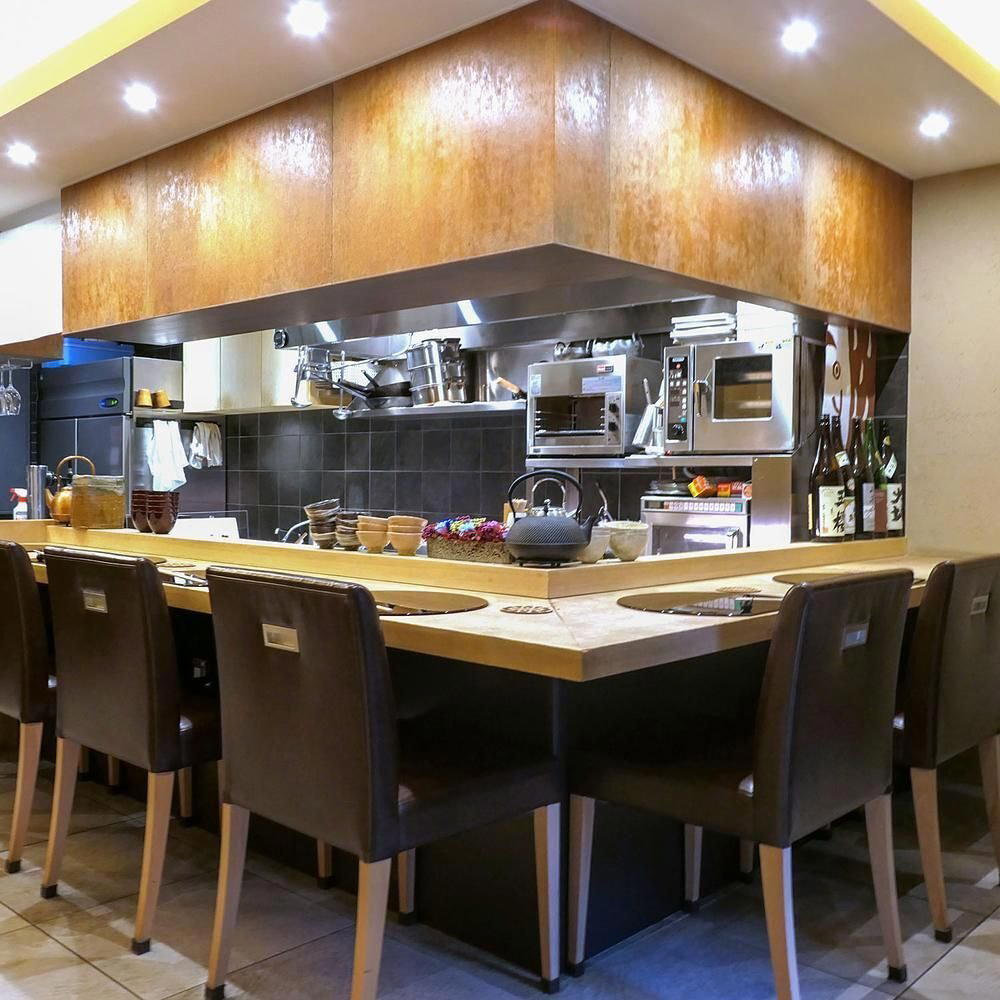
The menu
What to order
- Basque cheesecake
- Piquillo peppers stuffed with bacalao
- Bacalhau
Where Basque Training Meets Tokyo's Spanish Scene
Tokyo's Spanish restaurant scene is more layered than most visitors expect. At the upper end, places like ENEKO Tokyo and ZURRIOLA compete in the same premium bracket as the city's French and Japanese tasting-menu counters. Below that tier, a smaller group of neighbourhood-rooted kitchens carries serious regional knowledge at prices that don't require tasting-menu commitment. LANBRoA, in Setagaya's Yoga district, sits in that second cohort and holds a Michelin Bib Gourmand (2024) to confirm its position: high cooking intelligence at a ¥¥ price point.
Yoga is not a restaurant destination in the way Ginza or Nishi-Azabu are. It is a residential quarter, quiet streets, local shops, the kind of neighbourhood where a well-run Spanish bar can develop a loyal regular crowd rather than depending on tourist footfall. That setting shapes the atmosphere at LANBRoA, which reads more like a Spanish pub than a formal dining room, and the pintxo-led opening of the meal is exactly the right call for that register.
A Menu Drawn from Every Corner of Spain
Spanish regional cooking is among the most geographically diverse in Europe, and menus that attempt to represent it honestly tend to be built by cooks who have moved through multiple regions rather than settled into a single house style. At LANBRoA, the menu explicitly covers dishes from across Spain, with the Basque Country weighted most heavily. That weighting is not arbitrary: the chef completed formal training at a cooking school in San Sebastián and went on to apprentice at a restaurant there, which means the Basque dishes on the menu carry the kind of specificity that comes from direct, sustained exposure rather than research.
San Sebastián's cooking culture is among the most studied in the world. The city has produced a disproportionate share of the chefs who redefined Spanish fine dining from the 1970s onward, and its pintxo bars operate at a technical level that sits well above what the casual format might suggest. A kitchen trained in that environment approaches even simple preparations, squid in its ink, salt cod with piquillo pepper, with the understanding that the ingredient relationships are load-bearing. These dishes have been refined over decades across hundreds of bars and restaurants in the Basque Country; any version that departs from the logic of those combinations registers immediately as a shortcut.
The menu at LANBRoA begins with pintxos, which is structurally appropriate for the atmosphere the room is designed to create. Piquillo peppers stuffed with dried and salted cod (bacalao) and squid simmered in its own ink are among the Basque-country preparations represented, and the broader menu extends outward to cover other Spanish regions. Chef Cédric Béchade's background anchors the kitchen's authority in the Basque material specifically, with the wider Spanish dishes giving the menu range and making the comparison across regions part of the experience.
The Bib Gourmand Signal and What It Means in This Context
Michelin's Bib Gourmand designation marks kitchens where quality-to-price ratio is the primary distinction. In Tokyo, where the guide covers more Michelin-starred restaurants than any other city, the Bib Gourmand list carries real weight: the inspectors are comparing against a very high baseline, and a restaurant earning that mark in 2024 is competing against a large and serious pool. For a Spanish kitchen operating at the ¥¥ price tier in a residential Setagaya address, the designation is a strong indicator that the cooking holds up against peer-set scrutiny rather than benefiting from novelty or scarcity positioning.
The sample size is modest enough to reflect a neighbourhood audience, which suggests the regulars are returning rather than a high-volume tourist crowd inflating the average.
For context, the comparison end of Tokyo's dining spectrum includes ¥¥¥¥ counters like Harutaka, RyuGin, and L'Effervescence, where the price tier is itself part of the proposition. LANBRoA operates in a different register entirely, closer in spirit to the neighbourhood Spanish bars that sustain the dining cultures of Madrid and Barcelona than to the city's high-end tasting rooms. That positioning is a choice, and the Bib Gourmand confirms it is being executed well.
Spanish Cooking in Japan: A Wider Conversation
Japan has a longer and more specific relationship with Spanish cuisine than many people realise. Basque culinary exchange has been particularly active, with chefs and techniques moving in both directions since at least the early 2000s. Beyond Tokyo, akordu in Nara represents another serious node of Spanish-Japanese culinary dialogue, with Basque training in its lineage as well. The pattern suggests that the Basque Country's emphasis on precise technique and ingredient-led cooking translates particularly well to Japanese culinary culture, where those values are deeply held across traditions.
Within Tokyo, the Spanish kitchen conversation includes ARROCERÍA La Panza and Arrocería Sal y Amor for rice-centred approaches, and eman for another take on Spanish technique in a Tokyo context. Each occupies a distinct segment of what is, across the city, a coherent and growing category. LANBRoA's contribution to that conversation is the neighbourhood-bar register at a price point that makes regular visits realistic, rather than the special-occasion positioning of the higher-tier houses.
For readers comparing notes internationally, the Spanish-outside-Spain conversation also surfaces in places like Arco by Paco Pérez in Gdańsk and BCN Taste & Tradition in Houston. Both operate from Catalan and broader Spanish traditions, and both demonstrate that serious regional Spanish cooking travels well when the kitchen has genuine regional credentials behind it. The Basque training at LANBRoA places it in the same credentialed tier, even if the format and price point differ.
Planning Your Visit
LANBRoA is located in Yoga, Setagaya City, at 3 Chome-11-15 Maison SF. The ¥¥ price tier puts it within range for most dining budgets in Tokyo. Hours were not available at time of writing, so confirming directly before travel is the sensible approach.
Yoga is accessible via the Den-en-toshi Line, and the residential character of the area means the experience from train station to table is substantially different from Tokyo's central dining districts. That distance from the tourist circuit is, for this kind of kitchen, a feature rather than a drawback.
For broader planning across the city, our full Tokyo restaurants guide covers the range from neighbourhood dining to starred counters. For hotels, bars, experiences, and wineries, see our Tokyo hotels guide, bars guide, experiences guide, and wineries guide. If your trip extends beyond Tokyo, HAJIME in Osaka, Gion Sasaki in Kyoto, Goh in Fukuoka, 1000 in Yokohama, and 6 in Okinawa are all worth considering as part of a wider Japan itinerary.
Frequently asked questions
Is LANBRoA award-winning?
LANBRoA has received recognition including: The menu lists dishes from every corner of Spain, every one a precious memory of the chef. The preponderance of Basque dishes reflects her attendance of a cooking school in San Sebastián and apprenticeship at a restaurant there. We start wi….
What should I order at LANBRoA?
Start with the pintxos: the piquillo pepper stuffed with dried and salted cod and the squid simmered in its ink are the clearest expressions of the kitchen's Basque training. Both dishes trace directly to the chef's time at a cooking school and restaurant in San Sebastián. The broader menu covers regional Spain, so the table rewards exploration, but the Basque section is where the 2024 Michelin Bib Gourmand is most legible on the plate.
What price level is LANBRoA?
Pricing at LANBRoA is listed as ¥¥.
Recognition Snapshot
| Venue | Cuisine | Price | Awards | Notes |
|---|---|---|---|---|
| LANBRoAThis venue (the venue you are viewing) | Authentic Basque Cuisine | $50–100 | Michelin Bib Gourmand | Not listed |
| Harutaka | Edo-Style Omakase Sushi | $200–300 | 3 Michelin Stars · World's 50 Best #76 | Sushi |
| RyuGin | Modern Kaiseki | $500+ | 3 Michelin Stars · World's 50 Best #41 | Kaiseki, Japanese |
| L'Effervescence | Modern French with Japanese Influences | $200–300 | 3 Michelin Stars · World's 50 Best #69 | French |
| HOMMAGE | Modern French with Japanese Influences | $150–200 | 2 Michelin Stars · World's 50 Best #78 | Innovtive French, French |
| MAZ | Innovative Peruvian-Japanese Fusion | $150–200 | 2 Michelin Stars · World's 50 Best #28 | Innovative |
Recognition history
Dated appearances from independent guides and award organizations, with the underlying list record or original source where available.
Michelin Bib Gourmand
Michelin
Full recognition history (2 entries)
Michelin Bib Gourmand
Michelin
Continue exploring
More in Tokyo
Restaurants in Tokyo
All restaurants in Tokyo →



Bars in Tokyo
All bars in Tokyo →






Details
- Intimate
- Cozy
- Elegant
- Date Night
- Special Occasion
- Sake Program
- Local Sourcing
- A La Carte
- Spanish Wine
Current opening hours
- Monday
- Closed
- Tuesday
- 6–9 PM
- Wednesday
- 6–9 PM
- Thursday
- 6–9 PM
- Friday
- 6–9 PM
- Saturday
- 6–9 PM
- Sunday
- 6–9 PM
Hours can change for holidays and private events. Hours as of .
Cozy and warm with rustic decor evoking Basque heritage, fostering conversation in an intimate setting.