

Michelin Plate · Tabelog 100 #26
Our verdict
A Michelin Plate-recognised Spanish restaurant in Kiyosumi Shirakawa, eman positions rice as a culinary bridge between Basque and Fukagawa traditions. Chef Satoru Kobayashi works seasonally with Japanese producers, offering squid-ink paella made with firefly squid alongside tapas and char-grilled dishes.

Pearl is the En Primeur Club membership app, where members save venues, book tables and use the concierge.
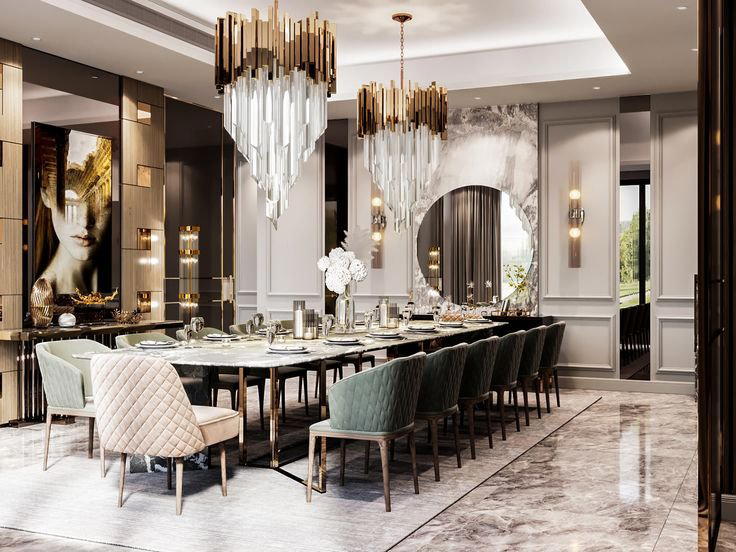
The menu
What to order
- Clams on Rice (Fukagawa-meshi style)
- Squid-ink Paella with Firefly Squid
- Iberico Pork with Binchotan
- Gazpacho with Clam Broth Foam
Where Kiyosumi Shirakawa Meets the Basque Country
Kiyosumi Shirakawa is better known for third-wave coffee and contemporary art than for Spanish cooking. The neighbourhood sits east of the Sumida River in Koto City, a stretch of Tokyo that has attracted independent, format-conscious operators rather than the prestige-branded restaurants that cluster in Ginza or Minami-Aoyama. Arriving at eman's address on Shirakawa's quieter residential edge, you are already in a different register from the city's high-visibility dining strip, which sets expectations correctly. This is a restaurant that earns attention through specificity rather than spectacle.
Rice as the Conversation Between Two Cuisines
Spanish tapas culture is built on a particular logic: a succession of small plates, each complete in itself, that together map a region's larder. That philosophy travels well to Japan, where the kaiseki tradition operates on a similar principle of procession and seasonal attentiveness. At eman, the overlap is literal. Chef Satoru Kobayashi treats rice not as a starch accompaniment but as the conceptual hinge of the menu, the ingredient where Japan and Spain most naturally intersect.
The clearest expression of this is the clams-on-rice dish: a Basque recipe rebuilt in the mode of Fukagawa-meshi, the historic Tokyo preparation in which asari clams are served in miso-seasoned broth poured over rice. The technique is recognisably local; the flavour logic comes from the coast of northern Spain. For the squid-ink paella, Kobayashi uses firefly squid, a distinctly Japanese seasonal ingredient that brings a softer, more delicate flavour profile than the Mediterranean cuttlefish typically found in Valencian kitchens. These are not novelty fusions, they are careful arguments about what the two rice traditions share at the level of ingredient, seasoning, and ritual.
Tokyo has a broader Spanish dining scene than most visitors expect. ZURRIOLA and ENEKO Tokyo operate at the more formal end of that spectrum, while LANBRoA represents a Basque-leaning approach. For rice specifically, ARROCERÍA La Panza and Arrocería Sal y Amor also make the grain their focal point. eman's distinction within that peer group is the Japanese producer relationship embedded at each stage: the seasonal ingredient choices and the local cooking vocabulary applied to Spanish regional frameworks.
The Tapas Architecture of an eman Meal
The ordering structure at eman follows the social architecture of Spanish bar culture: you build from lighter tapas through to more substantial preparations, with the rice dishes functioning as the meal's centre of gravity. Char-grilled dishes extend the range further, reflecting the asador tradition of northern Spain where live-fire cooking is treated as its own discipline rather than a side technique.
This format rewards a table willing to order broadly. Tapas eaten in isolation reduce to snacks; eaten as a sequence, they function as a kind of map, tracking the regional diversity of Spanish cooking as Kobayashi has absorbed it, filtered through the seasonal produce availability that defines any serious Japanese kitchen. The menu's stated breadth across tapas, rice, and grilled preparations is not a hedge; it reflects how Spanish regional cooking actually works, where a single meal might move from pintxos to a rice dish to a whole roasted protein without inconsistency.
Among Tokyo's mid-tier innovative restaurants, eman occupies a comparable price band to Den, both sit at ¥¥¥, though the cuisines and formats differ significantly. Den holds two Michelin stars for its inventive Japanese cooking; eman holds a Michelin Plate for 2024, which signals recognition without star elevation, a positioning that places it in a watchlist tier rather than at the established peak. For context, the ¥¥¥¥ restaurants in Tokyo's top-tier set, Harutaka, L'Effervescence, RyuGin, are operating in a different price register entirely.
Seasonal Thinking in a Spanish Frame
Japanese cooking is structured around the four-season calendar to a degree that has no precise equivalent in European tradition. The concept of shun, peak seasonal timing, shapes purchasing, menu design, and the relationship between kitchen and supplier. Kobayashi applies that seasonal discipline to Spanish regional cooking, sourcing from Japanese producers while working within the flavour logic of Catalonia, the Basque Country, Valencia, and other Spanish regions.
The firefly squid in the paella is a seasonal example: the species is available for a short spring window in Japan and carries a different sweetness than the squid used in a traditional Valencian paella. That substitution is not a compromise, it is the argument. The same Spanish technique, applied to the ingredient that Japanese seasonality actually offers, produces a dish that belongs to both traditions simultaneously.
This approach has resonances elsewhere in Japan's cross-cultural fine dining. akordu in Nara works within a Spanish framework using Nara's local producers. HAJIME in Osaka and Gion Sasaki in Kyoto represent what deep seasonal attentiveness looks like at the three-star level in Japanese and French traditions respectively. Outside Japan, Spanish cooking adapted to local produce logic appears in contexts as different as Arco by Paco Pérez in Gdańsk and BCN Taste & Tradition in Houston, a reminder that Spanish cuisine has proven unusually portable when approached with genuine regional knowledge rather than surface-level aesthetics.
Planning Your Visit
eman sits at 1 Chome-3-6 Shirakawa, Koto City, Tokyo 135-0021. The nearest access point is Kiyosumi-Shirakawa Station, served by the Toei Oedo and Tokyo Metro Hanzomon lines. The neighbourhood is navigable on foot from the station and is worth exploring before or after dining, with its concentration of independent galleries and coffee roasters.
| Venue | Cuisine | Price | Recognition | Format |
|---|---|---|---|---|
| eman | Spanish | ¥¥¥ | Michelin Plate 2024 | Tapas, rice, char-grill |
| ZURRIOLA | Spanish | Not listed | Not listed | Counter / tasting |
| ENEKO Tokyo | Spanish (Basque) | Not listed | Not listed | Tasting menu |
| ARROCERÍA La Panza | Spanish (rice) | Not listed | Not listed | Rice-focused |
| LANBRoA | Basque | Not listed | Not listed | À la carte / pintxos |
For a fuller picture of what Tokyo's dining scene offers across all categories and neighbourhoods, see our full Tokyo restaurants guide. For accommodation context, our full Tokyo hotels guide covers the city's hotel tiers. Bars and drinking venues are catalogued in our full Tokyo bars guide, with our full Tokyo wineries guide and our full Tokyo experiences guide rounding out the city picture. Beyond Tokyo, the Spanish-Japanese conversation continues in Nara at akordu, and Japanese regional dining at a higher recognition tier is documented at Goh in Fukuoka, 1000 in Yokohama, and 6 in Okinawa.
Questions About eman
- at eman?
- The rice dishes are the most direct expression of what eman is doing. The clams-on-rice preparation, a Basque recipe reframed as Fukagawa-meshi, is the clearest single plate for understanding how Kobayashi connects the two traditions. For those who want to read the full menu's range, ordering across tapas, a rice dish, and a char-grilled preparation gives the most complete picture of the Spanish regional breadth on offer.
- Is eman reservation-only?
- Tokyo at the ¥¥¥ tier generally rewards advance planning regardless of venue.
- What's the standout thing about eman?
- The rice programme is the most analytically interesting aspect of the menu, but the broader standout is the coherence of the concept: a Spanish regional kitchen that operates through Japanese seasonal ingredients and local culinary references rather than treating Spain as a fixed template to be reproduced. The Michelin Plate recognition for 2024 confirms that the approach has critical traction, placing eman on a tier where the technique and concept are acknowledged even if the volume of coverage remains lower than starred peers.
Frequently asked questions
Has eman won any awards?
eman has received recognition including: Drawing inspiration from Japan’s four seasons, the chef fuses ingredients with the cuisines of various regions of Spain. His choice to take the path of Spanish cuisine was set when he tried paella as a student. Obsessed with reproducing thi….
What's the best thing to order at eman?
The rice dishes are the defining reason to visit. Chef Satoru Kobayashi's clams on rice reframes a Basque recipe through the lens of Fukagawa-meshi, the local Tokyo tradition of asari clam miso soup over rice. The squid-ink paella, made with firefly squid, is a further example of how Japanese seasonal ingredients drive the Spanish format rather than simply decorate it.
What's the price range at eman?
Pricing at eman is listed as ¥¥¥.
Is eman reservation-only?
Given the address at 1 Chome-3-6 Shirakawa, Koto City, and the Michelin Plate recognition eman received in 2024, contacting the restaurant directly or via a concierge before visiting is the practical approach.
What's the standout thing about eman?
The Michelin Plate-recognised kitchen treats rice as a shared grammar between Spanish and Japanese cooking rather than a novelty crossover. Familiar dishes from the Basque Country and other Spanish regions are rebuilt using Japanese shun ingredients and local rice culture, producing a menu that functions as a serious argument for both cuisines at once.
Quick Comparison
| Venue | Cuisine | Price | Awards | Notes |
|---|---|---|---|---|
| emanThis venue (the venue you are viewing) | Spanish-Japanese Fusion Fine Dining | $150–200 | Michelin Plate · Tabelog 100 #26 | Not listed |
| Harutaka | Edo-Style Omakase Sushi | $200–300 | 3 Michelin Stars · World's 50 Best #76 | Sushi |
| RyuGin | Modern Kaiseki | $500+ | 3 Michelin Stars · World's 50 Best #41 | Kaiseki, Japanese |
| L'Effervescence | Modern French with Japanese Influences | $200–300 | 3 Michelin Stars · World's 50 Best #69 | French |
| HOMMAGE | Modern French with Japanese Influences | $150–200 | 2 Michelin Stars · World's 50 Best #78 | Innovtive French, French |
| MAZ | Innovative Peruvian-Japanese Fusion | $150–200 | 2 Michelin Stars · World's 50 Best #28 | Innovative |
Recognition history
Dated appearances from independent guides and award organizations, with the underlying list record or original source where available.
Michelin Plate
Michelin
Tabelog 100 #26 · No. 26
Tabelog · Tabelog 100 - Spanish cuisine - 2026
Full recognition history (4 entries)
Michelin Plate
Michelin
Michelin Plate
Michelin
eman
Featured Guides
Continue exploring
More in Tokyo
Restaurants in Tokyo
All restaurants in Tokyo →

Bars in Tokyo
All bars in Tokyo →








Details
- Elegant
- Intimate
- Sophisticated
- Modern
- Cozy
- Date Night
- Special Occasion
- Celebration
- Open Kitchen
- Chefs Counter
- Historic Building
- Design Destination
- Extensive Wine List
- Sommelier Led
- Sake Program
- Farm To Table
- Local Sourcing
- Tasting Menu
- Counter Dining
- Prix Fixe
- Spanish Wine
- Sake
- Sherry
- Vegetarian Friendly
- Allergy Accommodating
Current opening hours
- Monday
- Closed
- Tuesday
- 5:45–10 PM
- Wednesday
- 5:45–10 PM
- Thursday
- 5:45–10 PM
- Friday
- 12–3 PM, 6:30–10:30 PM
- Saturday
- 12–3 PM, 6:30–10:30 PM
- Sunday
- Closed
Hours can change for holidays and private events. Hours as of .
Warm, understated elegance in a 60-year-old renovated traditional Japanese house with wood and stone finishes, open kitchen theater, and soft lighting creating an intimate, focused dining environment.