Kyodaiya

Michelin Bib Gourmand
Our verdict
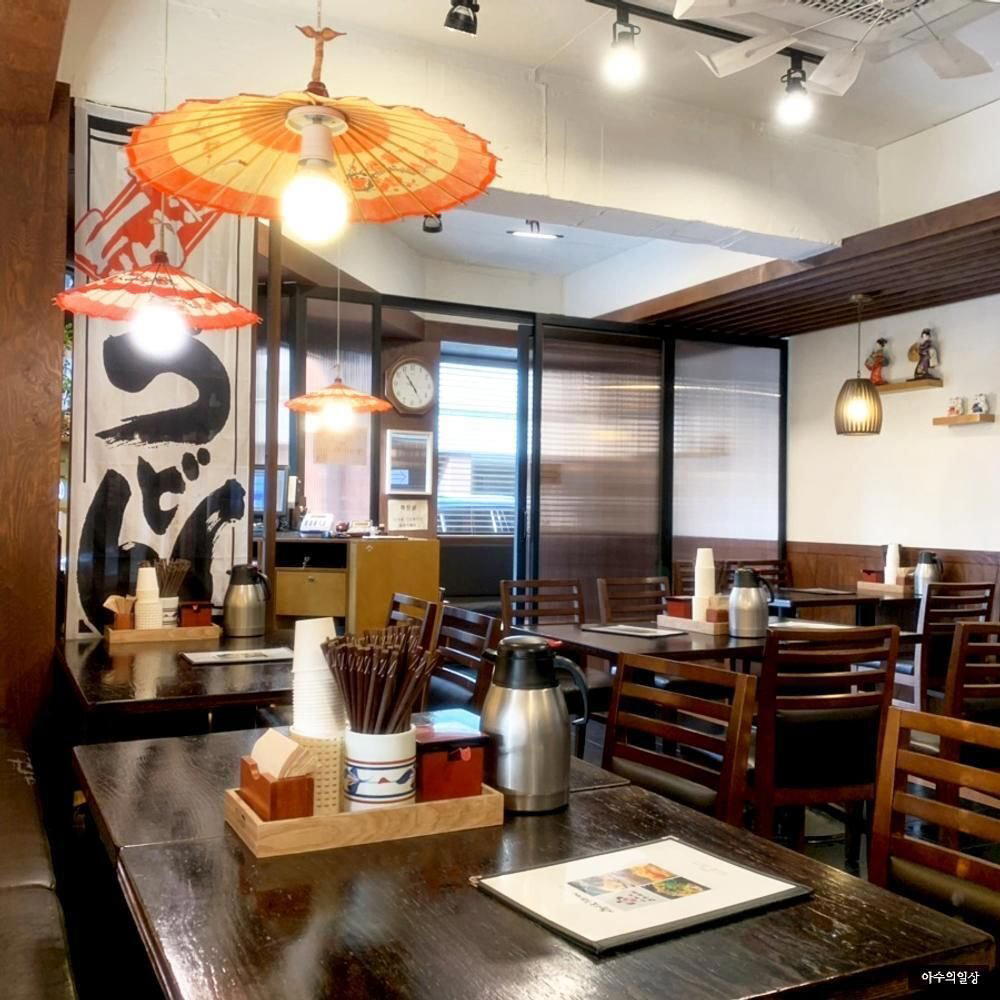
A Michelin Bib Gourmand recipient two years running (2024 and 2025), Kyodaiya brings Japanese udon to Mapo-gu at a price point that undercuts almost every comparable specialist in Seoul. For the single-dish udon format done with precision, this is where the neighbourhood comes first.

Pearl is the En Primeur Club membership app, where members save venues, book tables and use the concierge.
The menu
What to order
- Tempura Udon
- Niku Udon
- Oden Udon
Mapo-gu and the Case for Japanese Noodles in Seoul
Seongji-gil in Mapo-gu does not carry the same dining weight as Gangnam or Jongno, which is precisely what makes addresses like Kyodaiya worth tracking. The area sits west of the Han River, residential enough that the restaurants serving it tend to earn loyalty rather than foot traffic from tourists cycling through a list. That dynamic suits a single-discipline udon counter better than most formats: regulars drive the rhythm, the kitchen settles into consistency, and the Michelin Bib Gourmand, awarded in both 2024 and 2025, becomes confirmation of something the neighbourhood already knew.
Within Seoul's broader dining map, Kyodaiya occupies a tier that is less common than it looks. The city has no shortage of ramen imports and Japanese dining concepts at various price levels, but focused udon specialists, places where the noodle and the dashi are the entire argument, remain a smaller category. The ₩ price tier puts Kyodaiya in a different bracket from the multi-course Korean fine dining represented by venues like Mingles or Jungsik, but the Bib Gourmand signals that Michelin's inspectors found quality here that goes beyond the price. That combination, accessible pricing with documented critical recognition, is the format's core proposition.
Kansai vs. Kanto: Why the Regional Question Matters Here
Japanese udon is not a monolithic tradition, and the regional divide between Kansai and Kanto styles shapes everything from broth colour to noodle thickness. Kansai udon, associated with Osaka, Kyoto, and Kagawa, favours lighter, kelp-forward dashi and paler broths that let the noodle texture do most of the work. Kanto udon, centred on Tokyo, leans into darker soy-based broths with more pronounced bonito intensity, where the soup becomes as present as the noodle itself. The two approaches represent genuinely different philosophies about where flavour authority should sit in the bowl.
For a Korean udon specialist operating outside Japan, the question of which tradition to draw from, or how to hold both at once, is not purely stylistic. It reflects training lineage, ingredient sourcing, and the assumptions a kitchen makes about its audience. Seoul diners have increasingly documented exposure to both styles through travel and through Japan's own udon export venues, which means a kitchen cannot rely on unfamiliarity to smooth over stylistic choices. Places like Aozora blue in Osaka and Gion Yorozuya in Kyoto represent the Kansai reference points that Seoul diners with Japan exposure will carry into any comparable meal. Further afield, Kunitoraya in Paris shows how the format travels when anchored by technique rather than geography.
Kyodaiya's placement in this conversation is significant precisely because the Bib Gourmand, awarded twice, implies that whatever stylistic choices the kitchen has made, they are being executed with enough consistency and discipline that Michelin's inspectors returned and reached the same conclusion. That consistency across two separate annual cycles is the more useful signal here than any single visit.
The Udon Specialist Format in a City of Generalists
Seoul's Japanese dining scene has expanded considerably over the past decade, but it has skewed toward izakayas, multi-item menus, and omakase formats at the higher end. The single-discipline specialist, a place where the menu is essentially one thing done in several ways, is a rarer format and a harder one to sustain commercially. Hyun Udon is among the few Seoul addresses operating in the same specialist tier, and the existence of two Bib Gourmand recipients in this narrow category suggests Michelin's inspectors are paying attention to how Seoul's udon conversation is developing.
The economics of the ₩ tier matter in this context. At lower price points, a kitchen has less margin to absorb the cost of quality dashi ingredients, dried sardines, kombu, bonito flakes, dried shiitake, and the noodle production discipline that separates a focused specialist from a casual noodle house. The Bib Gourmand designation specifically recognises venues where the quality-to-price ratio is the editorial point.
Chef Chanchawee Skulkunt's name adds one more dimension worth noting. Thai-origin chefs operating Japanese-cuisine specialist restaurants in Korean cities represent a genuinely cross-cultural training and career path that reflects how porous the regional hospitality industry has become over the past two decades. The relevant question for the diner is not the chef's biography but what that cross-cultural fluency produces in the bowl, and the dual Bib Gourmand is the available answer.
Seoul's Broader Dining Range and Where Udon Fits
The distance between Kyodaiya's ₩ price point and Seoul's top-tier restaurants is considerable. Venues like alla prima, Kwonsooksoo, and 권숙수 in Gangnam-gu operate at a different register entirely, as does Gaon. The comparison is not competitive, a Bib Gourmand udon counter and a multi-starred Korean fine dining room are serving different needs at different moments. The more useful framing is that Seoul currently sustains a genuine dining range, from neighbourhood specialists earning Michelin recognition at accessible prices to destination restaurants drawing international visitors. Kyodaiya sits at one end of that range and makes a persuasive case for it.
For the broader picture of what Seoul's food scene offers across price tiers and cuisines, our full Seoul restaurants guide maps the range in detail. The city's hospitality infrastructure beyond dining is covered in our Seoul hotels guide, bars guide, wineries guide, and experiences guide. Elsewhere in South Korea, Mori in Busan and Baegyangsa Temple in Jangseong-gun illustrate how the country's dining conversation extends well beyond the capital. And for a different kind of contrast in Jeju, The Flying Hog in Seogwipo rounds out the regional picture.
Know Before You Go
- Address: 39 Seongji-gil, 1F, Mapo-gu, Seoul, South Korea
- Cuisine: Udon (Japanese noodle specialist)
- Price tier: ₩ (accessible; Bib Gourmand price range)
- Awards: Michelin Bib Gourmand 2024 and 2025
- Chef: Chanchawee Skulkunt
- Booking: Contact details not currently listed; check local platforms or walk-in
- Getting there: Mapo-gu is accessible via Seoul Metro; confirm the nearest station for Seongji-gil before travelling
What Do Regulars Order at Kyodaiya?
In a single-discipline udon format, the regulars' order is almost always the house broth udon in its standard presentation: the version the kitchen has optimised most fully and returns to most confidently. Whether that sits closer to a Kansai-style light dashi or a Kanto-inflected darker broth is the question worth asking on arrival, and it is also the question that will tell you most about where the kitchen's training and sourcing decisions have landed.
Frequently asked questions
Where is Kyodaiya located?
Kyodaiya is located at South Korea, Seoul, Mapo-gu, Seongji-gil, 39 1층, Seoul.
Does Kyodaiya have a Michelin star or similar recognition?
Kyodaiya has received recognition including: Michelin Bib Gourmand (2025); Michelin Bib Gourmand (2024).
What do regulars order at Kyodaiya?
Kyodaiya holds Michelin Bib Gourmand recognition for 2024 and 2025, which signals consistent execution across the menu rather than a single standout dish propping up the rating. As a udon specialist in a city that defaults to broader Japanese formats, the draw is the noodle work itself: broth calibration, noodle thickness, and the regional decisions that separate Kansai from Kanto styles.
Is Kyodaiya expensive?
Pricing at Kyodaiya is listed as ₩.
Who runs the kitchen at Kyodaiya?
The chef associated with Kyodaiya is Chanchawee Skulkunt.
Cuisine and Credentials
A short peer table to compare basics side-by-side.
| Venue | Cuisine | Price | Awards | Notes |
|---|---|---|---|---|
| KyodaiyaThis venue (the venue you are viewing) | Sanuki Udon | $10–20 | Michelin Bib Gourmand | Not listed |
| 7th Door | Modern Korean Fermentation Fine Dining | $100–150 | 1 Michelin Star · World's 50 Best #49 | Korean, Contemporary |
| Solbam | Contemporary Neo-Classical Korean | $200–300 | 1 Michelin Star · World's 50 Best #55 | Contemporary |
| Onjium | Modern Korean Royal Court Cuisine | Not listed | 1 Michelin Star · World's 50 Best #14 | Korean |
| L'Amitié | Classic French Fine Dining | $100–150 | 1 Michelin Star · La Liste Top Restaurants | French |
| Zero Complex | Modern French Neo-Bistro | $100–150 | 1 Michelin Star · La Liste Top Restaurants | Korean-French, Innovative |
Recognition history
Dated appearances from independent guides and award organizations, with the underlying list record or original source where available.
Michelin Bib Gourmand
Michelin
Full recognition history (3 entries)
Michelin Bib Gourmand
Michelin
Michelin Bib Gourmand
Michelin
Continue exploring
More in Seoul
Restaurants in Seoul
All restaurants in Seoul →
Bars in Seoul
All bars in Seoul →
Details
- Cozy
- Solo
- Casual Hangout
- Open Kitchen
- Sake Program
- A La Carte
Current opening hours
- Monday
- Closed
- Tuesday
- 11 AM–3 PM, 5–8:30 PM
- Wednesday
- 11 AM–3 PM, 5–8:30 PM
- Thursday
- 11 AM–3 PM, 5–8:30 PM
- Friday
- 11 AM–3 PM, 5–8:30 PM
- Saturday
- 11 AM–3 PM, 5–8:30 PM
- Sunday
- 11 AM–3 PM, 5–8:30 PM
Hours can change for holidays and private events. Hours as of .
Cozy small shop atmosphere centered around counter watching chefs craft noodles.