Our verdict
Kooriya Peace is a Tokyo dessert specialist operating in a city where the kakigōri tradition has been quietly refined into a high-attention craft. The format sits between casual kissaten culture and precision ingredient work, placing it in a distinct tier within Tokyo's broader sweets scene. Visitors come for shaved ice built around seasonal Japanese produce sourced with the seriousness more commonly associated with kaiseki.

Pearl is the En Primeur Club membership app, where members save venues, book tables and use the concierge.
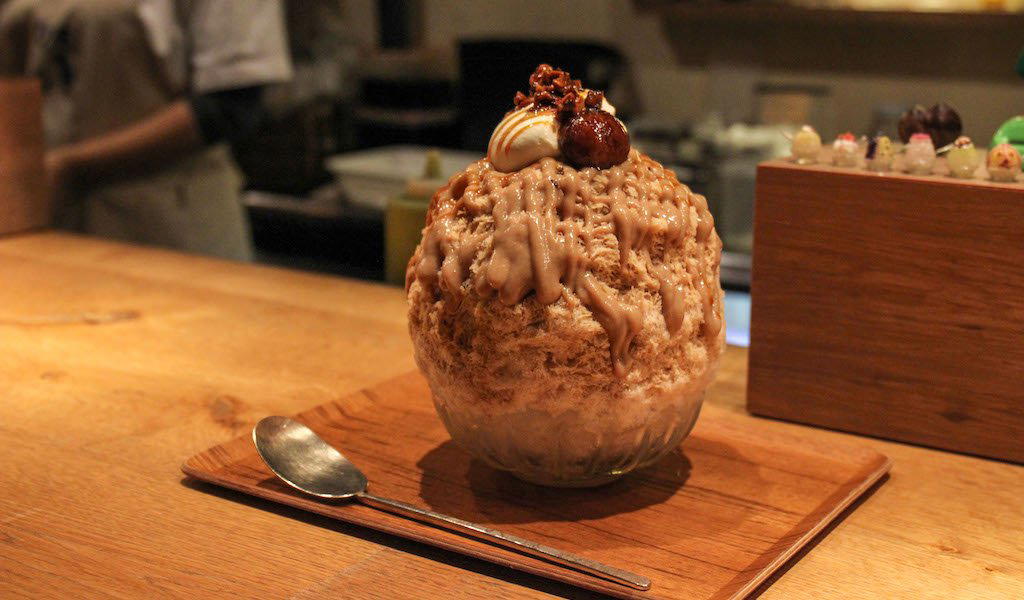
Where Shaved Ice Becomes Ingredient Work
Tokyo's kakigōri scene has undergone a slow but decisive transformation over the past decade. What was once a summer street-stall staple, coloured with artificial syrups and sold by volume, has splintered into a more considered tier of specialists who treat the format with the same sourcing rigour applied to ramen broths or seasonal kaiseki menus. In this upper bracket, the ice itself is a variable, the mineral content of the water, the temperature at which it is shaved, the density of the resulting texture, and the toppings trace back to specific farms, regions, and harvest windows. Kooriya Peace operates inside this movement, in a city that has quietly produced some of Japan's most technically attentive dessert culture.
The shift matters because it reframes what a bowl of shaved ice is actually asking of its ingredients. At the commodity end, syrup is a flavouring agent. At the specialist end, fruit purées, bean pastes, and dairy components are sourced for their own qualities, acidity, sugar content, aromatic profile, and the ice becomes a vehicle for showcasing them rather than diluting them. This approach connects kakigōri to a broader Japanese culinary logic, one visible in everything from the seasonal fish selection at counters like Harutaka to the produce-led menus at L'Effervescence, where ingredient origin is treated as a primary editorial point rather than a marketing footnote.
The Ingredient Logic Behind Specialist Kakigōri
Japan's geography makes seasonal sourcing unusually precise. Strawberries from Tochigi, yuzu from Kochi, white peaches from Yamanashi, matcha from Uji: each of these carries a regional identity that serious dessert kitchens in Tokyo have learned to use as a structural element rather than a garnish. The kakigōri specialists who belong to the same tier as Kooriya Peace tend to rotate their offerings in tight alignment with these harvest windows, which means a bowl available in early July may not exist by late August. That temporal specificity is part of what separates this category from the permanent, laminated-menu version of the format.
Condensed milk, azuki, and fresh fruit purées appear at multiple points in the kakigōri tradition, but the sourcing decisions behind each component vary enormously by operator. At the more deliberate end of the spectrum, the azuki may come from a single producer in Hokkaido, where the soil and climate produce a bean with lower bitterness and a more pronounced earthiness than commodity alternatives. This is the same logic that drives ingredient conversations at RyuGin in the kaiseki register, and at Sézanne in the French fine dining register, the conviction that a named, traceable origin improves the final result in ways a diner can actually taste.
Tokyo's Dessert Category and Where This Format Sits
Tokyo's sweets culture is unusually broad. The city supports everything from long-running wagashi houses producing namagashi aligned with the tea ceremony calendar, to Western pâtisserie at a technical level that competes with Paris, to younger formats like the kakigōri specialists that have attracted serious critical attention since roughly 2015. Within that spread, kakigōri sits in an interesting position: the format reads as casual and accessible, but the better operators price and source at a level that puts them closer to dessert-bar territory than to summer-festival stall culture.
This ambiguity is part of the appeal. Diners who might hesitate before committing to a ¥¥¥¥ tasting menu at Crony can engage with the same quality of ingredient thinking through a format that remains approachable in structure and price. That accessibility has helped the specialist kakigōri tier grow an audience that extends well beyond the traditional summer season, with a number of Tokyo operators now running year-round programs built around winter citrus, roasted nut preparations, and warmed components that complicate the assumption that shaved ice is inherently seasonal.
The same ingredient-first logic appears in Japanese restaurants elsewhere in the country. Gion Sasaki in Kyoto and HAJIME in Osaka both represent the regional expression of rigorous produce sourcing within formal kaiseki and French-Japanese frameworks. The kakigōri specialists in Tokyo are making a similar argument in a different register, that the quality of what goes into the bowl determines everything that comes out of it, regardless of format prestige.
Reaching Kooriya Peace: Practical Notes on the Tokyo Sweets Circuit
Tokyo's specialist dessert spots tend to cluster in residential-adjacent neighbourhoods rather than in the dense dining corridors of Ginza or Shinjuku, and queues at the better-known kakigōri operators can form before opening on weekends, particularly during the early summer fruit season from May through August. Arriving at or near opening time is the most reliable strategy for avoiding long waits. Some operators take reservations for certain time slots; others operate walk-in only, with queue management handled at the door.
The kakigōri season in Japan traditionally peaks between June and September, aligned with the heat, but specialist operators in Tokyo have increasingly pushed into shoulder seasons with adapted menus. Planning a visit around a specific ingredient, a particular strawberry variety, a regional citrus, or a seasonal bean preparation, often requires checking the current menu before arriving, as rotations can happen week to week. The broader Japanese dessert scene, including kissaten culture and wagashi traditions, offers useful context for understanding what Kooriya Peace represents within Tokyo's food character. For a fuller picture of where this format sits among the city's other high-attention dining options, see our full Tokyo restaurants guide.
Across Japan, the commitment to ingredient traceability and regional produce shows up in formats as different as akordu in Nara, Goh in Fukuoka, and smaller regional operators like 一本杉 川嶋 in Nanao, 古丹波 山乃 in Sapporo, 湖畔庵 in Takashima, 庄羽屋 in Nishikawa Machi, Birdland in Sakai, and Bistro Ange in Toyohashi. The emphasis on named origins and harvest timing is not a Tokyo peculiarity but a national culinary value that surfaces across price points and formats. Internationally, comparable sourcing conversations appear at Le Bernardin in New York City and Atomix in New York City, though the ingredient languages and cultural contexts differ substantially.
Know Before You Go
- Location: Tokyo, Japan
- Format: Specialist kakigōri (shaved ice dessert)
- Season: Core season June to September; some operators run year-round programs
- Booking: Walk-in with possible queue; check current policy before visiting
- Leading timing: At or near opening on weekends to avoid queues
- Menu rotation: Offerings change with seasonal produce; verify current menu in advance
Frequently asked questions
Is Kooriya Peace suitable for children?
Kakigōri is one of Japan's oldest children's treats, and a specialist bar like Kooriya Peace fits that dynamic well. The format centres on shaved ice desserts rather than alcohol or multicourse dining, which makes it an accessible stop for families visiting Tokyo's sweets circuit. That said, queues can be long at sought-after kakigōri counters, so younger children with limited patience may find the wait difficult.
Is Kooriya Peace better for a quiet night or a lively one?
Kakigōri specialists in Tokyo operate closer to a focused dessert counter than a social dining room. Kooriya Peace fits a deliberate, unhurried visit rather than a night out, and is best approached as a destination in itself rather than a stop between livelier venues. The format rewards attention to the bowl in front of you.
What makes Kooriya Peace different from a standard kakigōri shop in Tokyo?
Where conventional kakigōri shops apply standard syrups to machine-shaved ice, Tokyo's specialist tier treats the shaved ice itself as an ingredient with texture, temperature, and density calibrated to the topping. Kooriya Peace sits within this ingredient-led movement, which has repositioned kakigōri from a summer street food into a year-round dessert category with its own critical following in Tokyo.
What should I order at Kooriya Peace?
Tokyo's leading kakigōri bars build their menus around what is in peak season, so the right order depends entirely on timing. Japan's kakigōri tradition draws on produce such as Tochigi strawberries, Kochi yuzu, Yamanashi white peach, and Uji matcha, and specialist counters rotate accordingly. Arriving without a fixed preference and following what is freshest that week is the most reliable approach.
How far ahead should I plan for Kooriya Peace?
Tokyo's specialist kakigōri counters have moved decisively away from walk-in culture, particularly since the format gained wider critical attention over the past decade. Same-day visits to well-regarded spots often result in waits or sold-out sittings. Checking the venue's current booking policy before travelling to the neighbourhood is worth building into any Tokyo sweets itinerary.
Cuisine and Credentials
Comparable venues nearby, for context on price, style, and recognition.
| Venue | Cuisine | Price | Awards | Notes |
|---|---|---|---|---|
| Kooriya PeaceThis venue (the venue you are viewing) | Japanese Kakigori Shaved Ice | $10–20 | Not listed | Not listed |
| M & C Cafe Marunouchi oazo | Yoshoku-style cafe in a bookstore | $10–20 | Tabelog 100 #6 | Chiyoda |
| Yashima | Traditional Unagi (eel) restaurant | $30–50 | Tabelog 100 #10 | Taitō |
| Michishirube | Yakitori Izakaya | $30–50 | Tabelog 100 #94 | Shinjuku |
| Tamacho Honten Yaesu ten | Nagoya-style miso nikomi udon & Nagoya regional cuisine | $10–20 | Tabelog 100 #78 | Chūō |
| Sake to Misonikomi Misonikomin | Japanese Udon / Miso Nikomi | $10–20 | Tabelog 100 #85 | Bunkyō |