Tabelog Bronze #185
Our verdict
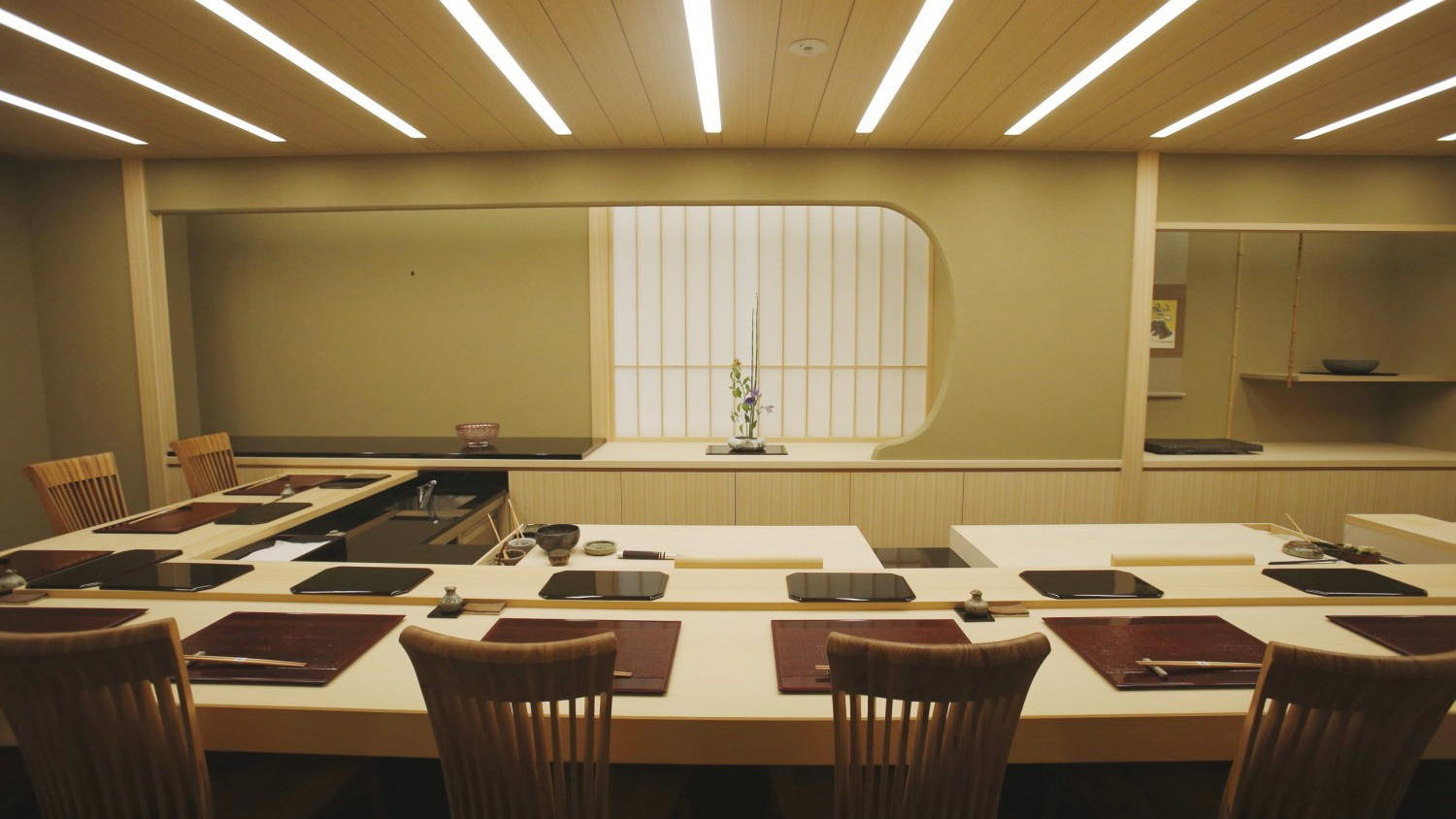
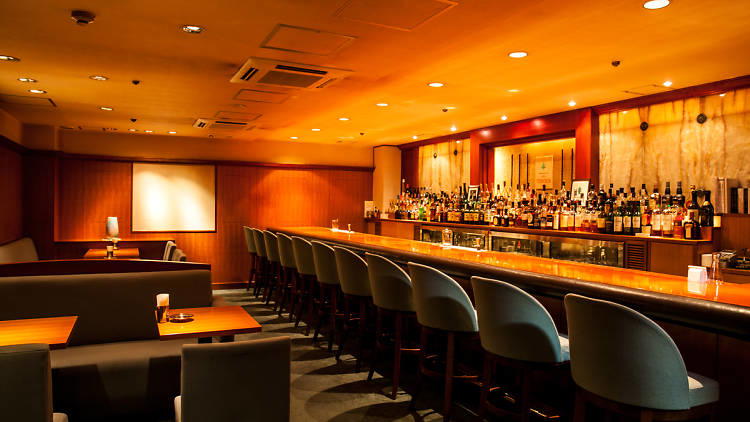
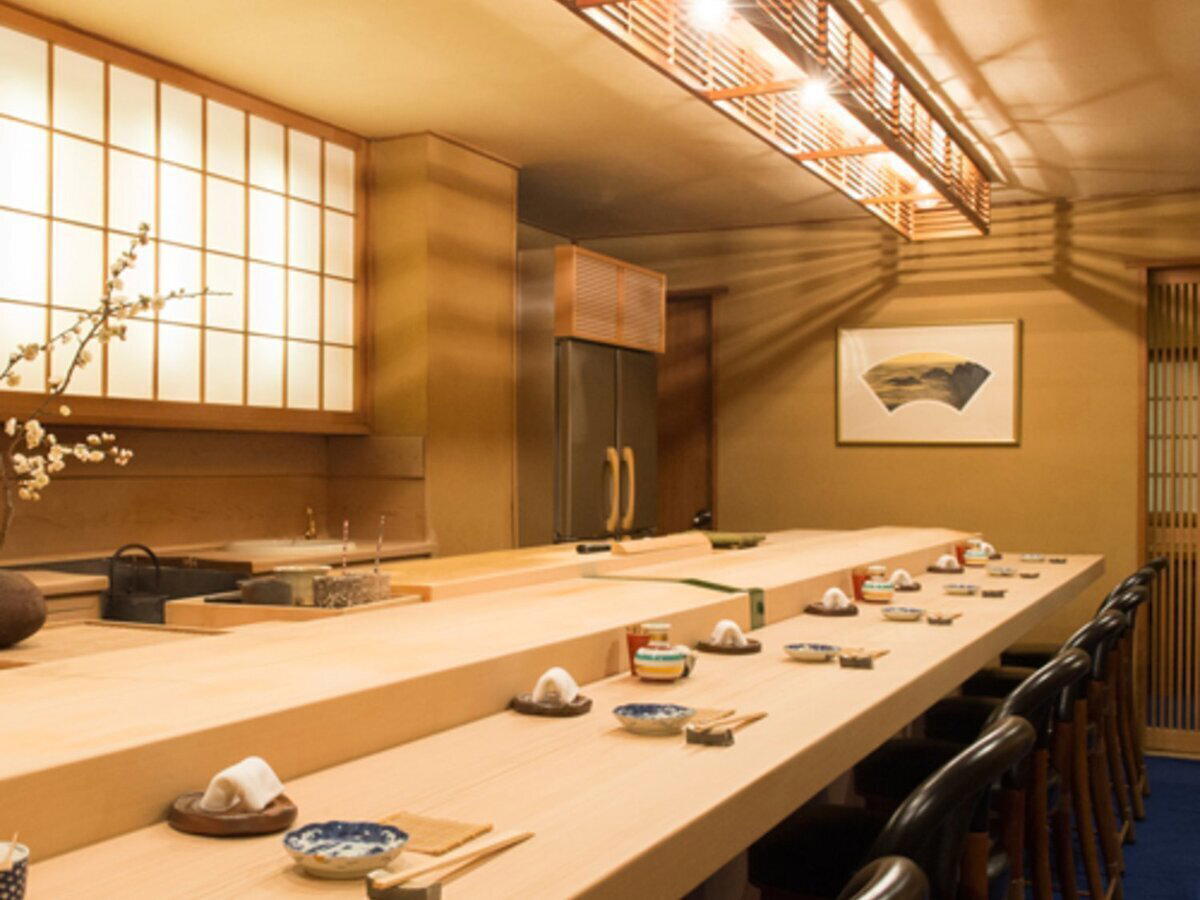
Kiyota occupies a nine-seat counter in Ginza 6-chome, operating within one of Tokyo's most competitive sushi corridors. A Tabelog Silver Award winner in 2018 and 2019, and consistently recognised in the Tabelog Sushi Tokyo 100 through 2025, the counter also runs a separate satellite space, Kiyota Hanare, where dinner pricing reaches JPY 100,000 and above. Both venues operate on a reservation-only basis under Chef Norihiko Yoshizawa.

Pearl is the En Primeur Club membership app, where members save venues, book tables and use the concierge.
Where Ginza Sushi Draws Its Lines
Ginza has long served as the reference point for understanding what premium omakase sushi costs, how tightly it controls access, and what it expects of its guests. The neighbourhood runs on a counter format that has remained largely unchanged in structure for decades: a handful of seats, a single sitting, fish sourced directly from Toyosu or trusted intermediaries, and a pace set entirely by the itamae. What shifts year by year is the pricing ceiling, the competition density, and the tier separation between counters that hold consistent recognition and those still building toward it.
Kiyota, operating from a nine-seat counter at Ginza 6-chome, sits in the established tier. Tabelog awarded it Silver in both 2018 and 2019, then Bronze continuously from 2020 through 2026, with selection to the Tabelog Sushi Tokyo 100 in 2021, 2022, and 2025. That arc, from Silver back to Bronze, is common among Ginza counters that face intensifying competition from newer openings without losing their core audience. A Tabelog score of 3.98 and review-based average spend of JPY 60,000 to JPY 79,999 at dinner place it below the district's highest-priced tier but well inside the upper bracket for serious sushi in Tokyo. For context, counters like Harutaka and Sushi Kanesaka operate in the same neighbourhood and competitive set, each with their own lineage and pricing signals.
Two Rooms, Two Registers
One of the more telling structural details about Kiyota is the existence of Kiyota Hanare, a satellite space operating separately from the main counter with dinner pricing listed at JPY 100,000 and above. Hanare earned its own Tabelog Bronze Award in both 2025 and 2026, alongside selection to the Tabelog Sushi Tokyo 100 in 2025, achieving a score of 4.00. The Tabelog address places it at Ginza 5-5-18, in a ninth-floor location, while the main counter sits at Ginza 6-3-15.
This bifurcation is worth reading carefully. In Tokyo's premium sushi world, the satellite or annex format tends to serve one of two functions: it either provides overflow capacity for a counter with more demand than seats, or it operates as a higher-register expression of the same kitchen, aimed at guests who want either greater exclusivity or a differently calibrated experience. The pricing gap between the two Kiyota spaces, roughly double at Hanare, points toward the latter interpretation. The main counter at JPY 50,000 to JPY 59,999 for dinner is already positioned above casual omakase, but Hanare's floor of JPY 100,000 places it alongside some of the district's most tightly held counters. That gap within a single chef's operation says something about how the Japanese market currently segments premium sushi: not just by quality, but by occasion, party size, and what level of separation from a shared counter experience a guest is prepared to pay for.
The Logic of a Nine-Seat Counter
Format is content in omakase sushi. A nine-seat counter at Kiyota's main location sets a ceiling on the number of guests the chef can serve across both lunch and dinner sessions on any given day. With both lunch (12:00 to 14:00) and dinner (18:00 to 22:00) sittings running Monday through Saturday, the counter closed on Sundays and public holidays, the total weekly seat capacity remains firmly in the hundreds rather than thousands. That constraint is not incidental: it is the mechanism by which quality at this price point is maintained and by which the Tabelog recognition becomes credible.
The omakase structure at counters in this tier operates differently from tasting menus at, say, a kaiseki house or a Western fine-dining room. There is no printed menu, no option architecture, no negotiation of allergies through a multi-stage front-of-house interaction. The sequence from chef to guest is direct and physical, with the rice temperature, the cut angle, and the resting time for each piece all visible from a counter seat. This transparency is part of what separates a nine-seat counter from a larger dining room: the guest is inside the production, not observing it from a distance. Counters like Sukiyabashi Jiro Roppongiten and Edomae Sushi Hanabusa operate on the same structural logic in Tokyo, with seat count and format acting as editorial statements about what the chef believes the experience should feel like.
Kiyota's Tabelog listing specifically notes that solo dining is recommended by many reviewers, which is an unusual designation in a city where omakase counters often fill fastest with paired guests or small groups. It reflects the counter's spatial design and the nature of the engagement: a single diner at nine seats draws a proportionally larger share of the chef's attention, and the rhythm of the meal is uninterrupted by the logistics of shared ordering.
Placing Kiyota in Its Competitive Context
Tabelog Bronze, held continuously since 2020 after two Silver years, positions Kiyota in a specific stratum of Tokyo sushi recognition. Bronze in Tabelog's award architecture does not signal a ceiling so much as a consistent floor: counters at this level have demonstrated sustained quality across a large enough review base to maintain scores that place them in the upper few percent of all restaurants tracked on the platform. Chef Norihiko Yoshizawa operates within a Ginza sushi tradition that has been formalised over decades, where the sourcing of fish, the preparation of shari, and the sequencing of nigiri pieces follow conventions established by counters with much longer histories.
Opinionated About Dining, which aggregates critical and consumer data to rank restaurants independently of Michelin and Tabelog, placed Kiyota at number 44 in Japan in 2023, number 58 in 2024, and number 70 in 2025. That three-year trajectory, declining in relative rank while presumably holding similar absolute quality, reflects the expansion of the competitive field rather than a deterioration of the kitchen. More high-quality counters opening in Ginza and across Tokyo means the ranking ladder extends further, and a static performance slides in relative position. For the guest, this detail matters primarily as a signal that the room has not changed dramatically, even as the reference set around it has grown.
For those exploring the wider range of serious sushi in Tokyo, Hiroo Ishizaka offers a different neighbourhood context, operating outside the Ginza concentration. Beyond Tokyo, the same discipline appears in different registers at Sushi Shikon in Hong Kong and Shoukouwa in Singapore, both of which transplant the Edomae format to international markets with their own sourcing constraints and guest demographics.
Planning Your Visit
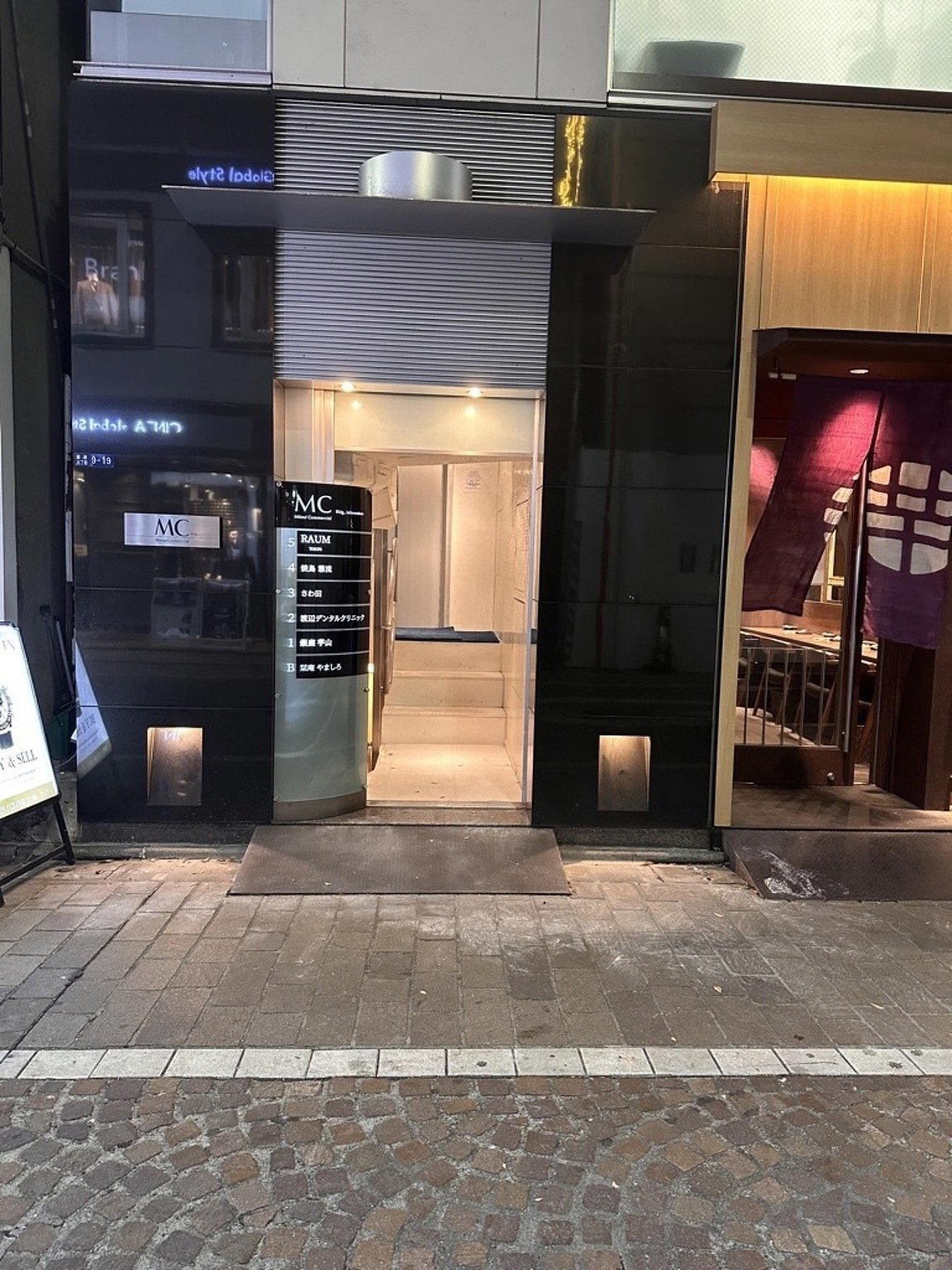
The main counter at Kiyota operates Monday through Saturday, with lunch from 12:00 to 14:00 (last order 13:45) and dinner from 18:00 to 22:00. Sundays and public holidays are closed. The venue is reservation-only, and the nine-seat capacity means availability tightens quickly; advance planning of several weeks at minimum is reasonable for dinner. The main counter accepts JCB, AMEX, and Diners credit cards; electronic money and QR code payments are not accepted. The average dinner spend at the main counter runs JPY 50,000 to JPY 59,999 per the listed budget, with review-based data suggesting JPY 60,000 to JPY 79,999 is a more accurate expectation. Kiyota Hanare operates at a separate address with dinner pricing at JPY 100,000 and above; it operates evenings only (18:00 to 22:30) Monday through Saturday and accepts Visa, Mastercard, JCB, AMEX, and Diners. Both locations are non-smoking. The main counter is a five-minute walk from Ginza Station, Tokyo Metro, C2 Exit.
For a full picture of where Kiyota sits within Tokyo's dining options, see our full Tokyo restaurants guide. Those planning a broader trip can also consult our full Tokyo hotels guide, our full Tokyo bars guide, our full Tokyo wineries guide, and our full Tokyo experiences guide. Elsewhere in Japan, the EP Club covers HAJIME in Osaka, Gion Sasaki in Kyoto, akordu in Nara, Goh in Fukuoka, 1000 in Yokohama, and 6 in Okinawa.
Quick reference: Kiyota, 6 Chome-3-15 Ginza, Chuo City, Tokyo. Reservation-only. Monday to Saturday, lunch 12:00-14:00, dinner 18:00-22:00. Closed Sundays. Dinner average JPY 60,000-79,999 (review-based). Kiyota Hanare, Ginza 5-5-18, 9F. Dinner only, JPY 100,000 and above.
Frequently asked questions
What distinctions does Kiyota have?
Kiyota has received recognition including:
Is Kiyota open every day?
Hours at Kiyota: Hours: Monday 6–10:30 pm Tuesday 6–10:30 pm Wednesday 6–10:30 pm Thursday 6–10:30 pm Friday 6–10:30 pm Saturday 6–10:30 pm Sunday Closed.
What's the signature dish at Kiyota?
Tabelog's classification notes the counter is 'particular about fish,' and the omakase format means the menu is dictated by seasonal sourcing rather than a fixed centerpiece. What Kiyota's Tabelog Bronze record from 2018 through 2026 does confirm is consistent recognition for its nigiri at a nine-seat counter in Ginza, where dinner averages JPY 60,000–79,999 per person based on reviewer spending data.
What type of food is Kiyota known for?
Where is Kiyota in Tokyo?
Kiyota is located at Japan, 〒104-0061 Tokyo, Chuo City, Ginza, 6 Chome−3−15 長谷第2ビル, Tokyo.
What It’s Closest To
Comparable venues nearby, for context on price, style, and recognition.
| Venue | Cuisine | Price | Awards | Notes |
|---|---|---|---|---|
| KiyotaThis venue (the venue you are viewing) | Traditional Omakase Sushi | $300–500 | Tabelog Bronze #185 | Not listed |
| Sushi Kobayashi | Traditional Edomae Omakase | Not listed | Michelin Plate | Chūō |
| Jimbocho Gokita | Yakitori with French Sauces | $200–300 | Michelin Plate | Chiyoda |
| Ajihiro | Traditional Japanese Kaiseki | $200–300 | Tabelog Bronze #9 | Chūō |
| Suetomi | Classic Kaiseki | Not listed | Tabelog Silver #127 | Minato |
| NK | Modern Creative Japanese Kaiseki | $300–500 | Tabelog Silver #92 | Shinjuku |
Recognition history
Dated appearances from independent guides and award organizations, with the underlying list record or original source where available.
Opinionated About Dining Top Restaurants in Japan Ranked #99
Opinionated About Dining
Tabelog Bronze #185
Tabelog
Full recognition history (8 entries)
Tabelog Bronze #184
Tabelog
Opinionated About Dining Top Restaurants in Japan Ranked #70
Opinionated About Dining
Tabelog 100 #87 · No. 87
Tabelog · Tabelog 100 - Sushi - TOKYO - 2025
Tabelog Bronze
Tabelog
Opinionated About Dining Top Restaurants in Japan Ranked #58
Opinionated About Dining
Opinionated About Dining Top Restaurants in Japan Ranked #44
Opinionated About Dining