
Michelin Plate
Our verdict
Kitashinchi Okurano occupies the third floor of a building in Osaka's Kita Ward entertainment district, earning consecutive Michelin Plate recognition in 2024 and 2025. The kitchen works from a monthly-changing menu that treats seasonal ingredients as a starting point rather than a constraint, folding traditional techniques with a quiet strand of playfulness. A counter and five private rooms serve the full range of how Osaka's serious dining crowd prefers to eat.

Pearl is the En Primeur Club membership app, where members save venues, book tables and use the concierge.
The menu
What to order
- Crab croquettes with toasted crab shell aroma
- Fugu kaiseki course
- Matsuba crab kaiseki course
- Clay pot sea bream rice
The Floor That Kitashinchi Built
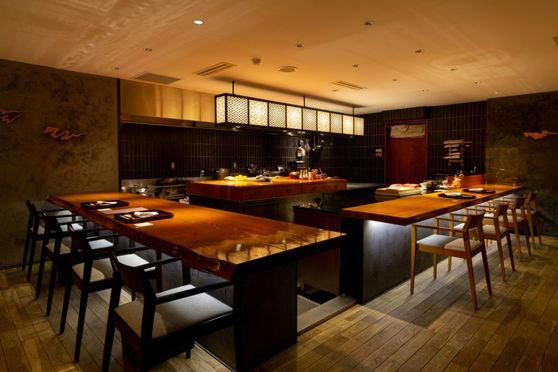
Osaka's Kitashinchi district has long operated as the city's most concentrated pocket of serious dining: a grid of narrow streets in Kita Ward where expense-account kaiseki sits alongside intimate counter restaurants and low-lit bars that have been serving the same regulars for decades. The address at 北新地FOODEARビル3階, on the third floor of a building at 曽根崎新地 1-3-23, places Kitashinchi Okurano squarely inside that tradition. In Kitashinchi, the third floor is not an afterthought; it is a deliberate elevation above the street-level noise, and the counter's modern, stylish design signals clearly which tier of the district's market it is operating in.
The room itself frames the experience before a dish arrives. Counter seating and five private rooms serve two distinct versions of the same kitchen: the counter for those who want proximity to the work, the private rooms for groups who prefer the meal to unfold as a self-contained occasion. That division, open counter or enclosed room, is a standard architecture for higher-end Japanese restaurants, and Okurano deploys it without pretension.
Recognition and the Michelin Plate Standard
In the Michelin framework, the Plate sits below the star tier but above the absence of recognition. It signals that inspectors found the cooking technically accomplished and consistent enough to return. Kitashinchi Okurano has held the Michelin Plate in both 2024 and 2025, a two-year run that indicates sustained performance rather than a single good season. For context, Osaka's Michelin-starred tier at the same general price bracket includes Kashiwaya Osaka Senriyama, which carries three stars at the ¥¥¥ price level, and counter Japanese restaurants like Miyamoto and Oimatsu Hisano. The Plate designation places Okurano at a level where the cooking is taken seriously by the guide's inspectors without reaching into the allocation-driven, months-ahead-booking tier of Osaka's highest-recognised tables.
At that volume, the score reflects a consistent cross-section of actual guests rather than a narrow sample, and 4.2 for a ¥¥¥ counter restaurant in a competitive district suggests the kitchen is meeting expectations reliably. The combination of inspector recognition and guest-review consistency is more useful as a signal than either source alone.
The Monthly Menu as Editorial Statement
Kitashinchi Okurano operates on a monthly-changing menu built around seasonal ingredients. This structure is not unusual in Osaka's serious Japanese restaurant tier, seasonality is a baseline assumption for most kitchens operating at this price point, but the kitchen's approach has a distinct character. Where many seasonal menus treat tradition as an endpoint, Okurano treats it as a starting point, then introduces a strand of playfulness that reframes familiar preparations without abandoning their logic.
The crab croquette is the most documented example of this. The dish uses toasted crab shells to introduce the aroma of baked crab to a creamy filling: a technique that adds a layer of roasted, caramelised flavour to what would otherwise be a direct preparation. The method is grounded in classical thinking about how aroma carries flavour, but the application to a croquette format is unexpected enough to reframe the dish. That kind of lateral move, technically orthodox, conceptually slightly surprising, appears to be the kitchen's recurring method.
Monthly rotation at this standard means guests who return across seasons encounter a substantially different menu each visit. For the Kitashinchi clientele, which skews toward repeat diners rather than one-time visitors, that cadence matters. It is what converts a restaurant into a regular destination rather than a single occasion.
Where Okurano Sits in Osaka's Dining Picture
Osaka's serious Japanese restaurant tier spans a wide range of formats and price points. At the higher end of the ¥¥¥¥ range, innovative French-influenced kitchens like HAJIME and La Cime command the attention of international food media. The ¥¥¥ tier in Japanese cuisine contains a denser population of options: three-star kaiseki at Taian, the traditional and modern split across counters in various districts, and restaurants like Tenjimbashi Aoki and Yugen, each with their own approach to the balance between formality and accessibility.
Kitashinchi Okurano operates within that ¥¥¥ tier as a counter-led restaurant with Michelin Plate recognition and a kitchen that has positioned itself on the playful side of the tradition-meets-ingenuity axis. It is not making the case for radical reinvention, and it is not operating as a strict-form kaiseki house. The space between those two positions is where Okurano works, and in Kitashinchi, that positioning connects it to the district's long-standing preference for sophisticated but not ceremonially rigid dining.
For those mapping Osaka against Japan's broader restaurant picture, the comparison set extends outward: Gion Sasaki in Kyoto and akordu in Nara represent adjacent regional approaches, while Tokyo references like Myojaku and Azabu Kadowaki illustrate how the capital's Japanese counter scene operates at similar price points. Harutaka in Tokyo, Goh in Fukuoka, 1000 in Yokohama, and 6 in Okinawa round out the national picture for readers placing Okurano within Japan's wider Michelin-recognised Japanese dining scene.
Know Before You Go
| Detail | Information |
|---|---|
| Address | 〒530-0002 Osaka, Kita Ward, 曽根崎新地1-3-23 北新地FOODEARビル3階 |
| Price Range | ¥¥¥ |
| Recognition | Michelin Plate 2024, Michelin Plate 2025 |
| Guest Rating | |
| Menu Format | Monthly-changing, seasonal Japanese |
| Seating | Counter + five private rooms |
| Booking |
Frequently asked questions
How do I find Kitashinchi Okurano?
Kitashinchi Okurano is located at Japan, 〒530-0002 Osaka, Kita Ward, 曽根崎新地1-3-23 北新地FOODEARビル3階, Osaka.
Has Kitashinchi Okurano won any awards?
Kitashinchi Okurano has received recognition including: The menu, incorporating seasonal ingredients when available, changes each month. The head chef, whose passion is cuisine that sparks conversation, respects tradition while sneaking a little playfulness into his menus. Even familiar items ar….
What dish is Kitashinchi Okurano famous for?
The crab croquette is the kitchen's most cited preparation. Toasted crab shells are used to infuse the dish with a roasted, baked-crab aroma, layered against a creamy filling, a precise technique that illustrates the chef's approach of applying ingenuity to familiar forms. The Michelin Plate recognition in both 2024 and 2025 suggests inspectors found this kind of thinking consistent across the menu.
What should I budget for a meal at Kitashinchi Okurano?
Pricing at Kitashinchi Okurano is listed as ¥¥¥.
What's the best way to book Kitashinchi Okurano?
No public website or phone number is currently listed. In Kitashinchi, restaurants operating at the ¥¥¥ Michelin-recognised tier frequently accept reservations through concierge services or Japanese booking platforms such as Tableall or Omakase. Arriving via a hotel concierge familiar with Kita Ward's dining circuit is often the most reliable route.
What's the defining dish or idea at Kitashinchi Okurano?
The kitchen's organising principle is seasonal Japanese tradition filtered through technique-driven playfulness. Menus change each month around available seasonal ingredients, and the chef deliberately applies fresh presentation to familiar dishes rather than abandoning recognisable forms. The five private rooms alongside the counter mean the same philosophy plays out across group and solo formats, both holding Michelin Plate status in 2024 and 2025.
Cuisine and Awards Snapshot
A quick peer reference to anchor this venue in its category.
| Venue | Cuisine | Price | Awards | Notes |
|---|---|---|---|---|
| Kitashinchi OkuranoThis venue (the venue you are viewing) | Seasonal Kaiseki | $150–200 | Michelin Plate | Not listed |
| HAJIME | Avant-Garde Japanese Fine Dining | $300–500 | 3 Michelin Stars · World's 50 Best #83 | French, Innovative |
| La Cime | Modern French with Japanese Ingredients | $150–200 | 2 Michelin Stars · World's 50 Best #13 | French |
| Kashiwaya Osaka Senriyama | Seasonal Kaiseki Omakase | $200–300 | 3 Michelin Stars · La Liste Top Restaurants | Japanese |
| Taian | Traditional Japanese Kaiseki Omakase | $150–200 | 3 Michelin Stars · La Liste Top Restaurants | Kaiseki, Japanese |
| Fujiya 1935 | Modern Japanese with European influences | $100–150 | 2 Michelin Stars · La Liste Top Restaurants | Innovative |
Recognition history
Dated appearances from independent guides and award organizations, with the underlying list record or original source where available.
Michelin Plate
Michelin
Full recognition history (3 entries)
Michelin Plate
Michelin
Michelin Plate
Michelin
Continue exploring
More in Osaka
Restaurants in Osaka
All restaurants in Osaka →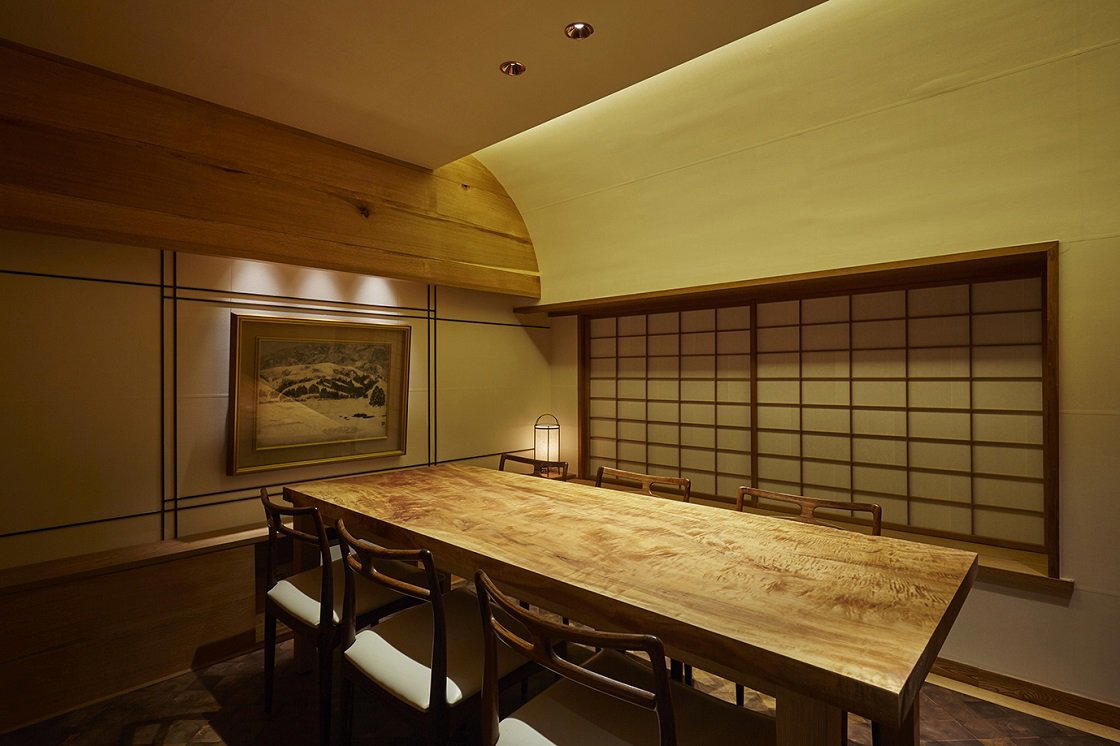


Bars in Osaka
All bars in Osaka →



Hotels in Osaka
All hotels in Osaka →


Wineries in Osaka
Browse all →
Kitashinchi Okurano
The wine
- Extensive wine list
- Sommelier-led
- Sake program
Details
- Elegant
- Sophisticated
- Intimate
- Modern
- Quiet
- Special Occasion
- Business Dinner
- Celebration
- Date Night
- Chefs Counter
- Open Kitchen
- Private Dining
- Sake Program
- Extensive Wine List
- Sommelier Led
- Local Sourcing
- Tasting Menu
- Counter Dining
- Set Menu
- Sake
- Wine
- Allergy Accommodating
Current opening hours
- Monday
- 11:30 AM–2 PM, 5:30–10 PM
- Tuesday
- 11:30 AM–2 PM, 5:30–10 PM
- Wednesday
- 11:30 AM–2 PM, 5:30–10 PM
- Thursday
- 11:30 AM–2 PM, 5:30–10 PM
- Friday
- 11:30 AM–2 PM, 5:30–10 PM
- Saturday
- 11:30 AM–3 PM, 5:30–10 PM
- Sunday
- Closed
Hours can change for holidays and private events. Hours as of .
Stylish, modern counter with serene Japanese elegance; refined and tranquil atmosphere inspired by tea ceremony philosophy of harmony and tranquility.