
Michelin Plate
Our verdict
In Osaka's Chuo Ward, Kirari frames its omakase around the heat of Kishu bincho charcoal, a focus that sets it apart from kaiseki-rooted peers at the same price tier. Sashimi scorched at the edges, fried dishes finished over fragrant smoke, and char-grilled wagyu served sukiyaki-style with egg yolk dipping sauce define the format.

Pearl is the En Primeur Club membership app, where members save venues, book tables and use the concierge.
The menu
What to order
- Charcoal-grilled wagyu beef with sukiyaki dipping sauce
- Seared sashimi
- Hinohikari rice in Shigaraki clay pot
Smoke Before the First Course
Tanimachi, the long north-south avenue that connects Osaka's civic core to the older residential streets of Chuo Ward, is not a dining destination in the way that Kitashinchi or Namba are. The restaurants here tend to be smaller, harder to locate, and dependent on word-of-mouth or deliberate research rather than foot traffic. Kirari, occupying the ground floor of a low-rise building at 7-chome on Tanimachi, fits that pattern precisely. Arriving without prior knowledge of the format, you might walk past it. Arriving with it, you understand immediately that the restraint of the exterior is a calibrated choice: the experience begins at the counter, not on the street.
The name translates loosely as "a flash of brilliance," and the kitchen lives up to that framing through a single, disciplined obsession: the application of bincho charcoal, sourced specifically from the Kishu region of Wakayama Prefecture. Kishu binchotan burns hotter, longer, and with less visible smoke than ordinary charcoal, which is why it has been the professional cook's choice across Japan for centuries. At Kirari, that heat is not one technique among many, it is the structural principle around which the omakase is assembled.
The Architecture of the Omakase
Japan's omakase format carries a particular ritual logic: the chef decides, the guest receives, and the sequence builds meaning over the course of a meal. The leading counters in Osaka operate on this principle with varying degrees of formality. Kashiwaya Osaka Senriyama approaches omakase through the lens of kaiseki tradition, with three Michelin stars anchoring it in the city's most formal tier. Yugen and Oimatsu Hisano each occupy positions where technique and sourcing carry the editorial weight. Kirari operates at a ¥¥¥ price point, the same bracket as Kashiwaya, but the conceptual departure is significant: where those counters frame the meal through seasonal produce or kaiseki progression, here the organising principle is fire.
The ritual of eating at Kirari follows from that premise. Sashimi, which in most Japanese restaurants of this calibre represents the cleanest possible expression of raw fish, arrives here at a different register: the edges scorched, the surface altered by contact with high heat, the familiar texture of raw fish now carrying the ghost of flame. It is a deliberate subversion of the form, and one that repays attention. The char adds a dimension that neither raw nor fully cooked fish provides, landing somewhere between the two states and asking the guest to recalibrate.
Fried dishes receive similar treatment. Rather than serving karaage or tempura immediately from the oil, the kitchen takes the finished pieces back to the charcoal to broil the coating, wreathing each piece in a fine aromatic smoke. The result is a second layer of flavour built on top of the first, a doubling of craft that would be excessive if the balance were off but reads as precision when executed correctly. The Michelin inspectors who awarded the restaurant a Plate in both 2024 and 2025 were recognising exactly this kind of consistent technical intelligence.
The Wagyu Course and the Sukiyaki Reference
The structural centrepiece of the omakase is the char-grilled wagyu. Osaka has a long history with beef, the city's merchants were eating it in forms that predated the Meiji-era arrival of Western culinary influence, and the sukiyaki tradition, in which thin slices of beef are cooked at the table and dipped in raw egg, remains one of the most recognisable expressions of that history. At Kirari, the kitchen borrows that logic and recasts it through the lens of the charcoal grill: the wagyu is cooked over binchotan, served alongside raw egg yolk and a dipping sauce constructed from sukiyaki stock.
The combination is not a novelty for its own sake. Sukiyaki stock, built typically from soy, mirin, and sake, brings a sweet-savoury depth that the raw egg softens into something richer. Applied to char-grilled wagyu rather than hot-pot wagyu, it creates a contrast between the smokiness of the grill and the delicate sweetness of the sauce that neither preparation produces alone. It is the kind of cross-referencing that Osaka's dining culture has always done well: taking a known form and finding where it can travel.
Where Kirari Sits in Osaka's Mid-Tier Omakase Scene
Osaka's ¥¥¥ omakase bracket is competitive. Miyamoto and Tenjimbashi Aoki each represent different expressions of Japanese counter dining at this price level, as does the broader city tradition of intimate chef-led formats that prioritise a single strong idea over comprehensive ceremony. Kirari's position in this peer group is defined by that bincho focus, it is a narrower proposition than a multi-course kaiseki and a more technical one than an izakaya-rooted grill. That specificity is a strength for guests who understand what they are booking; it requires some orientation for those arriving expecting a more diffuse omakase.
High-confidence reviews at small specialist counters tend to cluster around guests who have done their research, which makes the rating a reasonable proxy for satisfaction among the relevant audience.
For comparison across the Kansai region and beyond, Gion Sasaki in Kyoto and akordu in Nara each represent the kind of chef-led counter format where a single dominant idea structures the meal. In Tokyo, Harutaka, Myojaku, and Azabu Kadowaki offer useful benchmarks for how the capital handles the same category. Further afield, Goh in Fukuoka, 1000 in Yokohama, and 6 in Okinawa round out the picture of Japan's mid-to-upper omakase tier outside Tokyo.
Planning Your Visit
Kirari is at 7-1-49 Tanimachi, Chuo Ward, Osaka, on the ground floor of the Toyotomi Building. The Tanimachi 6-chome subway station, served by the Tanimachi and Nagahori Tsurumi-ryokuchi lines, is the closest access point. For anyone building a wider Osaka itinerary, the full scope of the city's dining, drinking, and accommodation options is covered in our full Osaka restaurants guide, our full Osaka hotels guide, our full Osaka bars guide, our full Osaka wineries guide, and our full Osaka experiences guide.
Know Before You Go
- Address: 7-1-49 Tanimachi, Chuo Ward, Osaka (Ground floor, Toyotomi Building)
- Price tier: ¥¥¥
- Format: Omakase (chef's set menu)
- Awards: Michelin Plate 2024, Michelin Plate 2025
- Nearest station: Tanimachi 6-chome (Tanimachi Line / Nagahori Tsurumi-ryokuchi Line)
- Booking: Contact details not publicly listed, reservations likely via phone or third-party platform; confirm in advance
- Hours:, verify before travelling
Frequently asked questions
Is Kirari a family-friendly restaurant?
Kirari is structured around the omakase format at a ¥¥¥ price point, which means the chef sets the sequence, the pace is deliberate, and there is no à la carte menu to accommodate selective eaters. That format works well for adults or older teenagers with a genuine interest in Japanese counter dining. Younger children would find little to engage with here, and the intimate counter setting is not built for disruption.
What is the atmosphere like at Kirari?
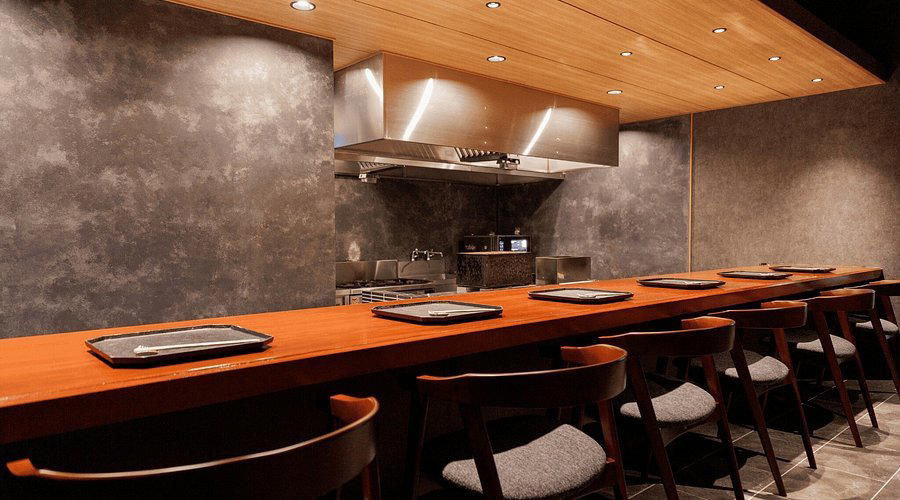
Kirari sits on the ground floor of the Toyotomi Building in Tanimachi, a neighbourhood whose dining rooms tend toward the intimate rather than the theatrical. The counter format places guests close to the chef's work, and the omakase sequence, moving through sashimi, fried courses, and char-grilled wagyu, gives the meal a structured, cumulative rhythm. The name itself, meaning 'a flash of brilliance,' signals a room built around the chef's craft rather than décor or spectacle.
What's Kirari known for in terms of accolades?
Kirari has received recognition including: The owner-chef loves the heating power of bincho charcoal from the Kishu region. Unsurprisingly, his omakase set menu showcases the appeal of charcoal grilling. Decoratively arranged sashimi are scorched; the coating of fried foods is broil….
What should I order at Kirari?
There is no à la carte option at Kirari, the omakase set menu is the only format. The sequence is built around Kishu bincho charcoal as its organising principle: sashimi is scorched, fried courses are broiled in fragrant smoke, and the structural centrepiece is char-grilled wagyu served with egg yolk and a sukiyaki-stock dipping sauce. The Michelin Plate recognition in both 2024 and 2025 reflects consistent execution across that full sequence.
The Short List
| Venue | Cuisine | Price | Awards | Notes |
|---|---|---|---|---|
| KirariThis venue (the venue you are viewing) | Modern Japanese Omakase with Charcoal Grilling | $150–200 | Michelin Plate | Not listed |
| HAJIME | Avant-Garde Japanese Fine Dining | $300–500 | 3 Michelin Stars · World's 50 Best #83 | French, Innovative |
| La Cime | Modern French with Japanese Ingredients | $150–200 | 2 Michelin Stars · World's 50 Best #13 | French |
| Kashiwaya Osaka Senriyama | Seasonal Kaiseki Omakase | $200–300 | 3 Michelin Stars · La Liste Top Restaurants | Japanese |
| Taian | Traditional Japanese Kaiseki Omakase | $150–200 | 3 Michelin Stars · La Liste Top Restaurants | Kaiseki, Japanese |
| Fujiya 1935 | Modern Japanese with European influences | $100–150 | 2 Michelin Stars · La Liste Top Restaurants | Innovative |
Recognition history
Dated appearances from independent guides and award organizations, with the underlying list record or original source where available.
Michelin Plate
Michelin
Full recognition history (3 entries)
Michelin Plate
Michelin
Michelin Plate
Michelin
Continue exploring
More in Osaka
Restaurants in Osaka
All restaurants in Osaka →


Bars in Osaka
All bars in Osaka →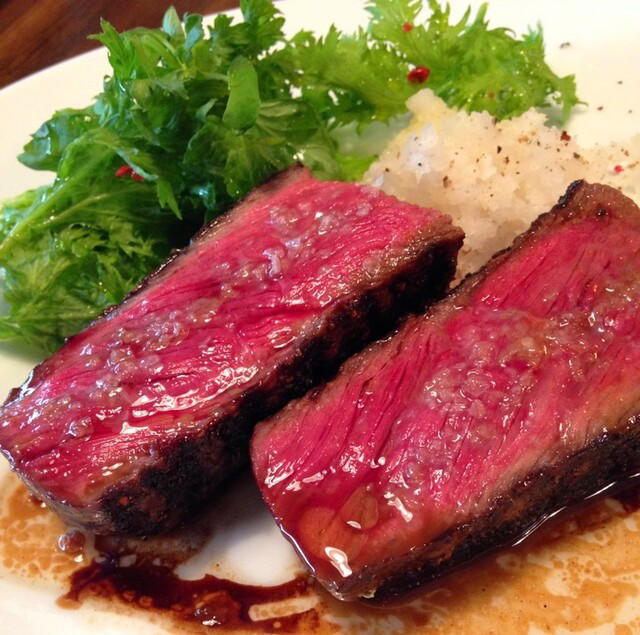

Hotels in Osaka
All hotels in Osaka →



Wineries in Osaka
Browse all →
Details
- Elegant
- Intimate
- Sophisticated
- Quiet
- Special Occasion
- Business Dinner
- Celebration
- Date Night
- Chefs Counter
- Open Kitchen
- Private Dining
- Sake Program
- Natural Wine
- Sommelier Led
- Local Sourcing
- Omakase
- Counter Dining
- Set Menu
- Sake
- Wine
- Allergy Accommodating
Current opening hours
- Monday
- 6–11 PM
- Tuesday
- 6–11 PM
- Wednesday
- 6–11 PM
- Thursday
- 6–11 PM
- Friday
- 6–11 PM
- Saturday
- 12–2:30 PM, 6–11 PM
- Sunday
- 12–2:30 PM, 6–11 PM
Hours can change for holidays and private events. Hours as of .
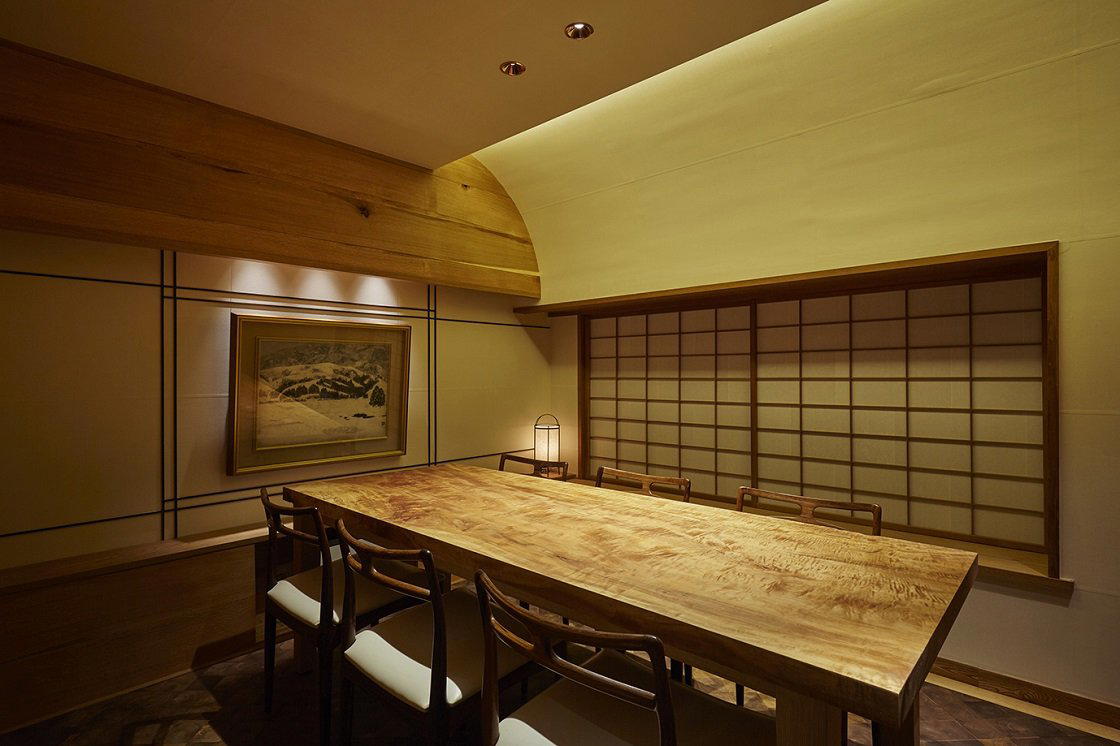
Calm, refined setting with subtle lighting, counter seating, and handcrafted tableware designed to create a space where guests can naturally unwind.