

Tabelog 100 #43
Our verdict
The format follows the classic yakiniku progression, graded cuts, tableside grilling, measured pacing, in one of Tokyo's more residential, lower-key dining districts. Open weekday evenings and with weekend lunch service added to the schedule.

Pearl is the En Primeur Club membership app, where members save venues, book tables and use the concierge.
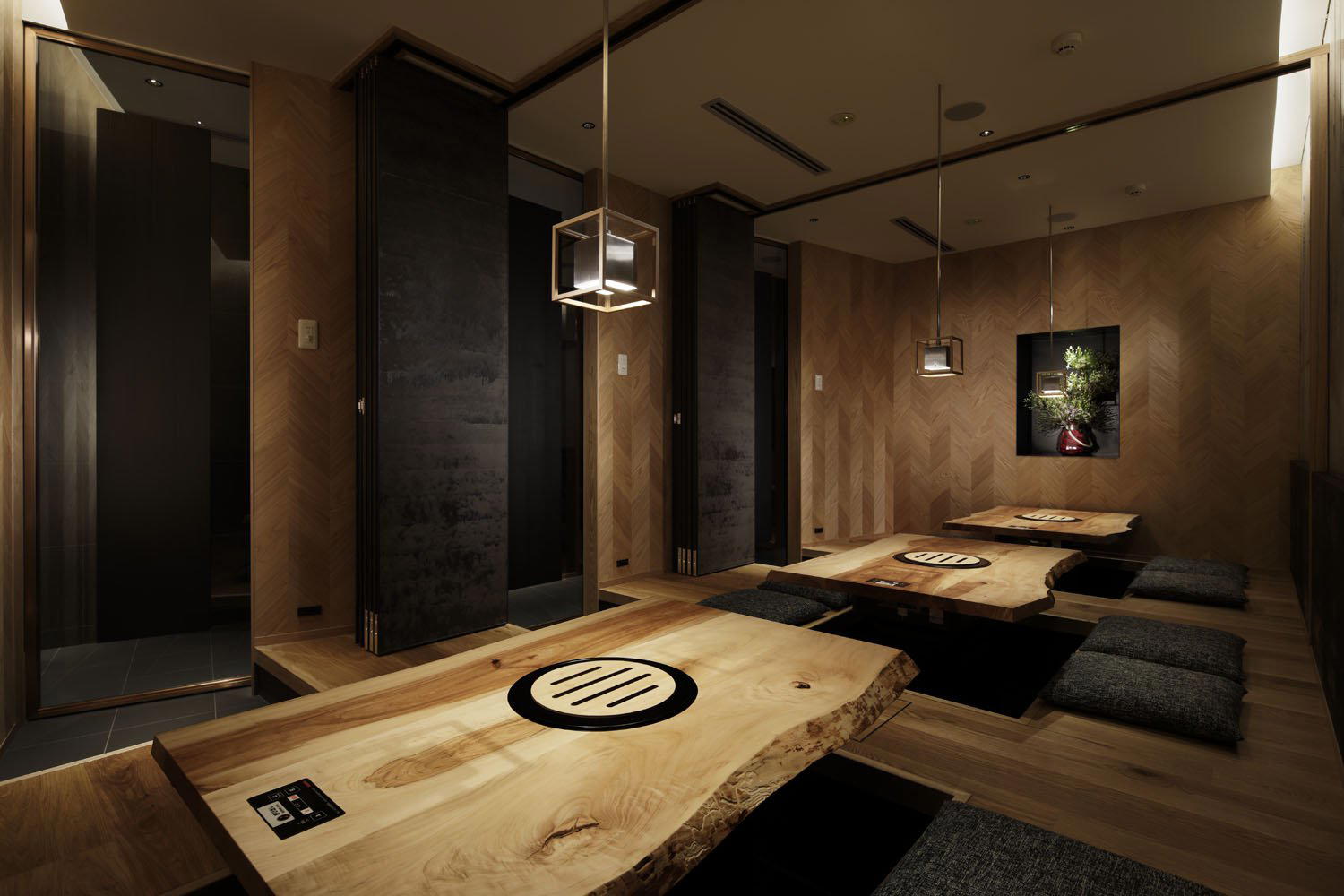
Shirokane and the Yakiniku Tier It Represents
Tokyo's yakiniku scene has stratified sharply over the past decade. At the upper end, small-format counters in Nishi-Azabu and Minami-Aoyama command per-head spends that rival kaiseki; at the other, izakaya-adjacent grill houses keep the format democratic and loud. Shirokane sits between those poles. The residential neighbourhood in Minato City draws a local clientele with money but without the need to perform it, and the yakiniku that has taken hold here reflects that register: technically serious, unflashy, built for repeat visits rather than occasions. Jumbo Yakiniku Shirokane, at 3 Chome-1-1 in the Daiichi Azabu Building, fits that description with some precision.
The OAD ranking record across 2023, 2024, and 2025, moving from Highly Recommended to #204 to #245, tells a story that is more nuanced than a simple climb. Opinionated About Dining's methodology weights repeat visits and critical consensus heavily, which means sustained presence on the list carries more signal than a single-year placement.
The Arc of a Yakiniku Meal Here
Yakiniku's structure differs from most Japanese dining formats in one important respect: the progression is partly in the diner's hands. Unlike kaiseki, where the kitchen controls pacing and sequencing entirely, or omakase sushi, as practised at counters like Harutaka, where the chef sets every variable, yakiniku places choices at the table. The better restaurants in this category manage that tension by building implicit guidance into the order in which cuts arrive and the way they are graded across fat content, texture, and intensity.
At a kitchen operating at the level Jumbo Yakiniku Shirokane has sustained, that sequencing matters. The conventional arc moves from leaner, higher-heat cuts early in the meal, where the grill is clean and the palate is fresh, through to more heavily marbled cuts mid-service, and finishes with offal or tongue preparations that clean the register before rice or noodles close the meal. Whether the kitchen here follows that arc precisely is a detail that falls outside the available record, but the format's logic is consistent across serious yakiniku houses of this tier, and a restaurant earning OAD recognition across three years is almost certainly working within that grammar.
The weekend lunch service, available Saturday and Sunday from 11:30 am to 2:30 pm, is worth noting as a distinct context. Yakiniku at lunch runs lighter, typically with smaller courses and a broader range of price entry points, and it draws a different crowd than the evening session. Weekday dinner, running 5 to 11 pm seven days a week, is where the full meal progression is most likely to be available.
Placing This in the Broader Tokyo Critical Record
Tokyo's dining record is large enough that a restaurant ranking in the 200s nationally still represents a high level of performance. The OAD Japan list draws from a pool of hundreds of evaluated restaurants; reaching #204 in 2024 places Jumbo Yakiniku Shirokane in the upper tier of yakiniku specifically, a category that competes against sushi, kaiseki, and French tasting menus for critical attention. Restaurants like RyuGin, L'Effervescence, and Sézanne occupy the Michelin three-star tier and command the best of the city's critical hierarchy, while Crony represents the innovative French end at two stars.
That dual signal, OAD recognition plus broad public approval, is not as common as it might seem. Restaurants with strong critic records sometimes divide general opinion; restaurants with high volume public ratings sometimes lack the precision that earns specialist attention. Holding both simultaneously over multiple years points to a kitchen and front-of-house that are calibrated for consistency rather than occasion performance.
For context across Japan's wider restaurant geography, the same standards of sustained critical recognition appear at places like Gion Sasaki in Kyoto, HAJIME in Osaka, and Goh in Fukuoka, each representing a regional version of the same principle: depth of craft within a specific format, maintained over time. Internationally, the comparison holds at restaurants like Le Bernardin in New York City and Atomix in New York City, where format discipline and consistency are the core of the critical case.
Shirokane as a Dining Context
Shirokane's position in Tokyo's dining geography is worth understanding before building an itinerary around it. The neighbourhood sits south of Hiroo and east of Shirokanedai, close enough to Roppongi and Azabu-Juban to share some of their residential affluence but without the density of high-profile dining that concentrates in those areas. It is a neighbourhood where restaurants serve regulars rather than tourists, and where the absence of marquee signage is not a liability. Visitors constructing a broader Tokyo restaurant programme should treat Shirokane as a complement to, rather than a substitute for, the more concentrated dining in central Minato. The full Tokyo restaurants guide maps those patterns across the city. For the broader trip architecture, the Tokyo hotels guide, bars guide, and experiences guide cover the surrounding infrastructure in detail, and the wineries guide addresses the growing domestic wine and sake scene that often pairs with serious yakiniku at this tier.
For travellers moving between Japanese cities, akordu in Nara, 1000 in Yokohama, and 6 in Okinawa represent further points of reference in the country's wider critical map.
Planning the Visit
Hours: Monday to Friday 5–11 pm; Saturday and Sunday 11:30 am–2:30 pm and 5–11 pm. Address: 3 Chome-1-1 Daiichi Azabu Building 1F, Shirokane, Minato City, Tokyo. Reservations: Budget: Nearest reference: Shirokane-Takanawa Station (Toei Mita Line and Namboku Line) provides the most direct approach from central Tokyo.
Frequently asked questions
What is the atmosphere like at Jumbo Yakiniku Shirokane?
Shirokane's residential character sets the register: this is not the high-decibel yakiniku of Shinjuku or the scene-driven dining of Roppongi. In Tokyo terms, that positions it closer to a neighbourhood specialist than a destination event.
What do people recommend at Jumbo Yakiniku Shirokane?
Order according to the format's internal logic: start lean, move to marbled cuts as the session progresses, and treat the rice or noodle course as a close rather than an afterthought.
Is Jumbo Yakiniku Shirokane child-friendly?
Yakiniku's tableside grilling format requires adult supervision regardless of venue, and at the critical tier Jumbo Yakiniku Shirokane occupies in Tokyo, the experience is calibrated for an adult dining pace.
Comparable Spots
| Venue | Cuisine | Price | Awards | Notes |
|---|---|---|---|---|
| Jumbo Yakiniku ShirokaneThis venue (the venue you are viewing) | Premium Yakiniku | $100–150 | Tabelog 100 #43 | Not listed |
| Harutaka | Edo-Style Omakase Sushi | $200–300 | 3 Michelin Stars · World's 50 Best #76 | Sushi |
| RyuGin | Modern Kaiseki | $500+ | 3 Michelin Stars · World's 50 Best #41 | Kaiseki, Japanese |
| L'Effervescence | Modern French with Japanese Influences | $200–300 | 3 Michelin Stars · World's 50 Best #69 | French |
| HOMMAGE | Modern French with Japanese Influences | $150–200 | 2 Michelin Stars · World's 50 Best #78 | Innovtive French, French |
| MAZ | Innovative Peruvian-Japanese Fusion | $150–200 | 2 Michelin Stars · World's 50 Best #28 | Innovative |
Recognition history
Dated appearances from independent guides and award organizations, with the underlying list record or original source where available.
Opinionated About Dining Top Restaurants in Japan Recommended
Opinionated About Dining
Tabelog 100 #43 · No. 43
Tabelog · Tabelog 100 - Yakiniku - TOKYO - 2025
Full recognition history (5 entries)
Opinionated About Dining Top Restaurants in Japan Ranked #245
Opinionated About Dining
Opinionated About Dining Top Restaurants in Japan Ranked #204
Opinionated About Dining
Opinionated About Dining Top Restaurants in Japan Highly Recommended
Opinionated About Dining
Continue exploring
More in Tokyo
Restaurants in Tokyo
All restaurants in Tokyo →



Bars in Tokyo
All bars in Tokyo →




Details
- Cozy
- Elegant
- Sophisticated
- Date Night
- Group Dining
- Family
- Celebration
- Open Kitchen
- Sake Program
- A La Carte
- Counter Dining
- Sake
- Wine
- Cocktails
- Vegetarian Friendly
Current opening hours
- Monday
- 5–11 PM
- Tuesday
- 5–11 PM
- Wednesday
- 5–11 PM
- Thursday
- 5–11 PM
- Friday
- 5–11 PM
- Saturday
- 11:30 AM–2:30 PM, 5–11 PM
- Sunday
- 11:30 AM–2:30 PM, 5–11 PM
Hours can change for holidays and private events. Hours as of .
Cozy and slightly dim with stylish, relaxing sofa seating in a somewhat tight space.