JUE

Michelin Plate
Our verdict
JUE sits in Yongsan District's quieter residential stretch along Dokseodang-ro, holding back-to-back Michelin Plate recognition in 2024 and 2025. Among Seoul's Chinese dining tier, it occupies a deliberate middle ground: formal enough for special occasions, focused enough to read as a specialist address rather than a broad-menu institution.

Pearl is the En Primeur Club membership app, where members save venues, book tables and use the concierge.
The menu
What to order
- Barbecued Pork
- Cheung Fan
- Shumai with Abalone
- Spring Rolls
- Peking Duck
Chinese Dining in Seoul: Where the Format Has Been Quietly Shifting
Seoul's Chinese restaurant tier has, for years, sorted itself into two broad camps: the banquet-hall format that serves large tables on lazy Susans, and a newer wave of smaller, more focused addresses that treat Chinese cuisine with the same technique-forward seriousness Seoul applies to its French and Japanese rooms. JUE belongs to the second category. Located at 124-7 Dokseodang-ro in Yongsan District, it sits on a stretch that reads more like a residential neighbourhood than a dining corridor, which is itself a signal: the places that survive here tend to do so on reputation and repeat business, not foot traffic.
That positioning places JUE inside a recognisable pattern across East Asian cities. Chinese cuisine interpreted through a fine-dining lens has produced some of the most analytically interesting restaurants of the past decade, from Restaurant Tim Raue in Berlin to Mister Jiu's in San Francisco to VELROSIER in Kyoto. Each of those addresses asks the same underlying question: what happens when you apply precision technique to a cuisine whose identity was built around abundance, communal service, and high heat? Seoul's version of that question carries its own local inflection.
The Yongsan Setting and What It Implies
Yongsan District occupies an unusual position in Seoul's geography. It is neither the concentrated fine-dining density of Gangnam nor the creative-casual energy of Mapo, but rather a quieter zone where independent restaurants can operate with lower visibility pressure. For a Chinese restaurant targeting a specific dining register, that context matters. The absence of obvious neighbours or competing clusters can work in a venue's favour, creating a sense of destination rather than one option among many on a single street.
The address on Dokseodang-ro specifically puts JUE in a part of Yongsan that rewards deliberate visits. Diners arriving by taxi or subway are not browsing; they made a choice.
Michelin Plate Recognition and What It Signals in Practice
JUE has held a Michelin Plate in both the 2024 and 2025 Seoul guides. The Plate designation marks a step below starred recognition but explicitly indicates that Michelin's inspectors found the cooking worth noting, with good ingredients prepared to a competent standard. In Seoul's Chinese dining tier, that credential is meaningful context. The city has a relatively small number of Chinese restaurants that attract any Michelin attention at all, which makes the Plate two years running a marker of sustained quality rather than a lucky inspection cycle.
For comparison, the broader Seoul guide contains starred Korean addresses at the same ₩₩₩₩ price tier, including contemporary Korean rooms and cross-cultural kitchens. JUE sits at that same price level, which positions it as a serious-occasion address rather than a casual lunch option. Within Chinese dining specifically in Seoul, the comparison set is small: Haobin, Yu Yuan, Crystal Jade, Hong Yuan, and Jin Jin each represent different points on the spectrum from traditional banquet-style to contemporary focused formats. JUE's Michelin recognition and pricing suggest it competes on the tighter, more considered end of that spectrum.
Local Ingredients, Global Technique: The Governing Tension
The editorial angle that most productively frames JUE is the relationship between Chinese culinary technique and Korean ingredients or context. This is not a dynamic unique to Seoul: Chinese diaspora cooking has always adapted to local produce, and the most interesting contemporary Chinese restaurants outside mainland China tend to make that adaptation deliberate rather than incidental. In Seoul specifically, Korean suppliers have developed high-grade ingredients across proteins, vegetables, and fermented goods that any serious kitchen can integrate into a Chinese framework without compromise.
What that looks like in practice at restaurants operating in this register is typically a menu where the structural logic remains Chinese, including the sequencing, the sauce traditions, the wok technique, and the texture philosophy, while the raw materials reflect what Korean producers do well. That intersection is where the most credible fine-dining Chinese kitchens in non-Chinese cities now compete, and it is the framework through which JUE's Michelin recognition most usefully reads. The inspectors are, in effect, endorsing execution at that intersection rather than simply rewarding a faithful replication of regional Chinese cooking.
Seoul's broader fine-dining scene offers useful comparators at this same price tier. Starred Korean rooms like Gaon and Kwon Sook Soo have set a high bar for how traditional culinary logic can be applied with modern precision. JUE operates in the shadow of those benchmarks, which raises the standard for any address claiming the same price point, regardless of cuisine type.
Planning a Visit
JUE is located in Yongsan District, accessible from central Seoul by a short taxi ride or via the Itaewon or Noksapyeong subway stops, both within reasonable distance of Dokseodang-ro. At the ₩₩₩₩ price tier, this is a dinner-occasion address rather than a casual drop-in, and Michelin-recognised restaurants in Seoul at this level generally benefit from advance reservation. Seoul's dining calendar tends to cluster demand around weekends and public holidays, so planning ahead by at least a week, and longer during peak periods, is prudent.
For visitors building a broader Seoul itinerary around serious dining, the city's concentration of ₩₩₩₩ restaurants across Korean, French, and now Chinese formats means multiple serious meals are achievable within a short radius. See our full Seoul restaurants guide for the wider picture, alongside our Seoul hotels guide, bars guide, wineries guide, and experiences guide for a complete city framework. For those extending their Korea trip beyond Seoul, addresses like Mori in Busan and Baegyangsa Temple in Jangseong-gun or the Jeju address The Flying Hog in Seogwipo extend the dining argument well beyond the capital.
Frequently asked questions
What do regulars order at JUE?
Do I need a reservation for JUE?
At a Glance
| Venue | Cuisine | Price | Awards | Notes |
|---|---|---|---|---|
| JUEThis venue (the venue you are viewing) | Michelin Cantonese Cuisine | $150–200 | Michelin Plate | Not listed |
| 7th Door | Modern Korean Fermentation Fine Dining | $100–150 | 1 Michelin Star · World's 50 Best #49 | Korean, Contemporary |
| Solbam | Contemporary Neo-Classical Korean | $200–300 | 1 Michelin Star · World's 50 Best #55 | Contemporary |
| Onjium | Modern Korean Royal Court Cuisine | Not listed | 1 Michelin Star · World's 50 Best #14 | Korean |
| L'Amitié | Classic French Fine Dining | $100–150 | 1 Michelin Star · La Liste Top Restaurants | French |
| Zero Complex | Modern French Neo-Bistro | $100–150 | 1 Michelin Star · La Liste Top Restaurants | Korean-French, Innovative |
Recognition history
Dated appearances from independent guides and award organizations, with the underlying list record or original source where available.
Michelin Plate
Michelin
Full recognition history (2 entries)
Michelin Plate
Michelin
Continue exploring
More in Seoul
Restaurants in Seoul
All restaurants in Seoul →
Bars in Seoul
All bars in Seoul →

Details
- Elegant
- Sophisticated
- Modern
- Intimate
- Special Occasion
- Business Dinner
- Celebration
- Design Destination
- Private Dining
- Extensive Wine List
- Sommelier Led
- Local Sourcing
- Tasting Menu
- A La Carte
- Set Menu
- Tea
- Wine
- Vegetarian Friendly
- Allergy Accommodating
Current opening hours
- Monday
- 11:30 AM–3 PM, 6–10 PM
- Tuesday
- 11:30 AM–3 PM, 6–10 PM
- Wednesday
- 11:30 AM–3 PM, 6–10 PM
- Thursday
- 11:30 AM–3 PM, 6–10 PM
- Friday
- 11:30 AM–3 PM, 6–10 PM
- Saturday
- 11:30 AM–3 PM, 5:30–9:30 PM
- Sunday
- 11:30 AM–3 PM, 5:30–9:30 PM
Hours can change for holidays and private events. Hours as of .
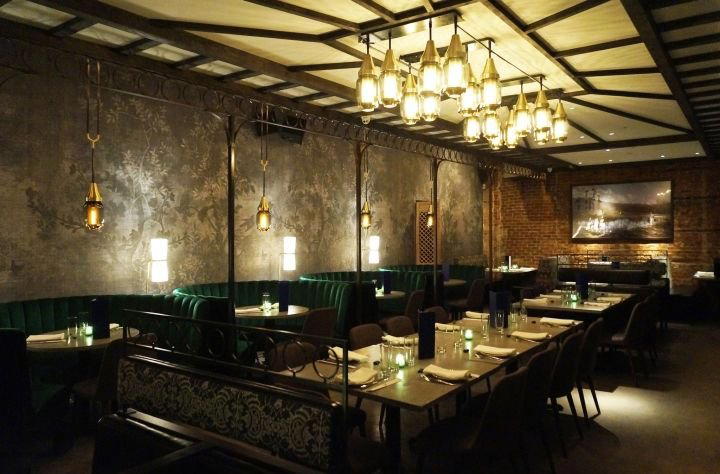
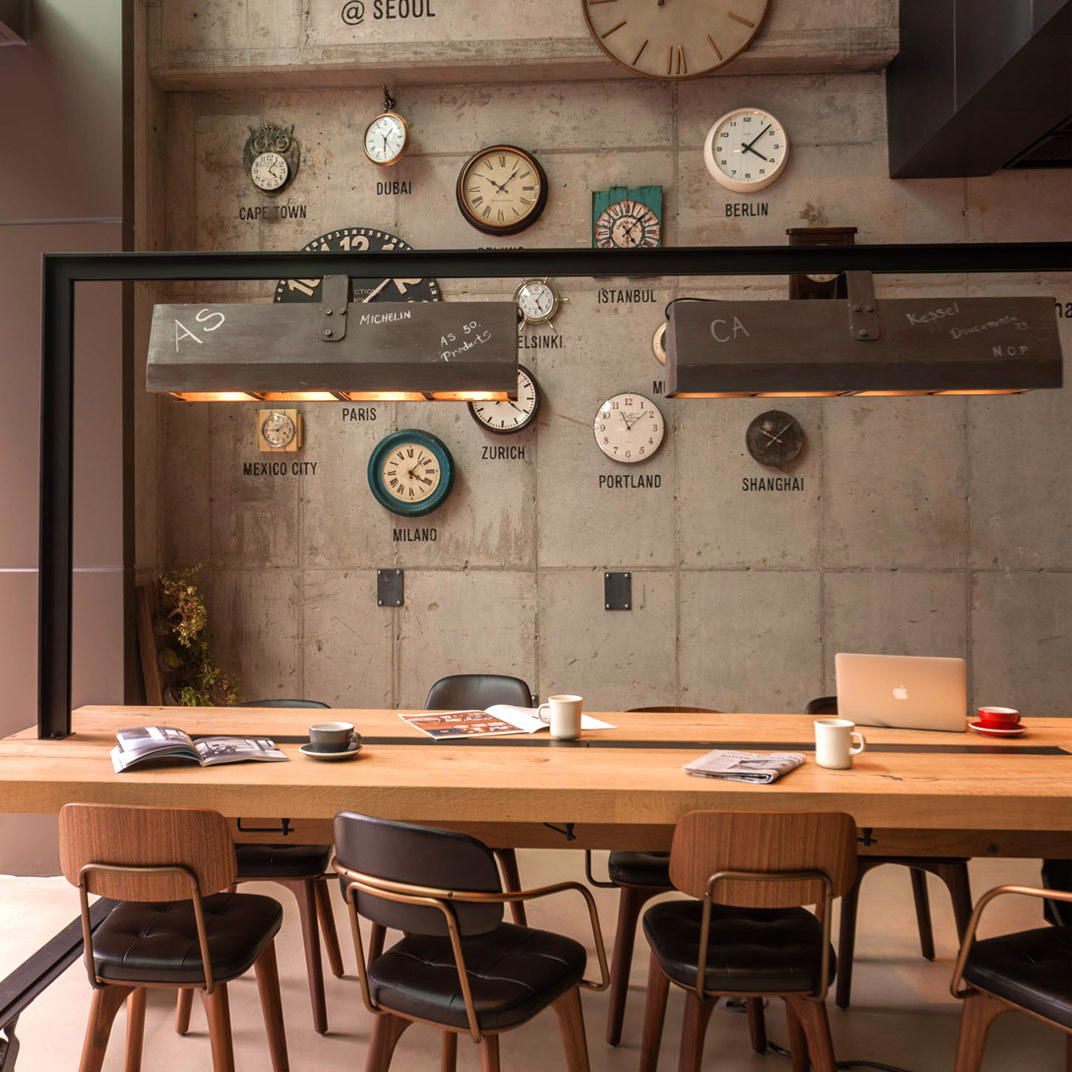
Gallery-like minimalist dining room with refined decor, beautiful ceramic plates and wooden tables, serene and artfully curated atmosphere emphasizing Korean cultural aesthetics.