Our verdict
Igarashi occupies a second-floor address in Ebisu, one of Tokyo's quieter residential-leaning pockets, where the dining room sits at a remove from the Michelin circuit's more theatrical registers. The kitchen operates within the broader tradition of ingredient-led Japanese cooking, where sourcing precision and seasonal discipline carry more weight than elaborate technique. For Tokyo's serious dining tier, it represents the kind of focused, produce-driven proposition that defines the city's upper-mid register.

Pearl is the En Primeur Club membership app, where members save venues, book tables and use the concierge.
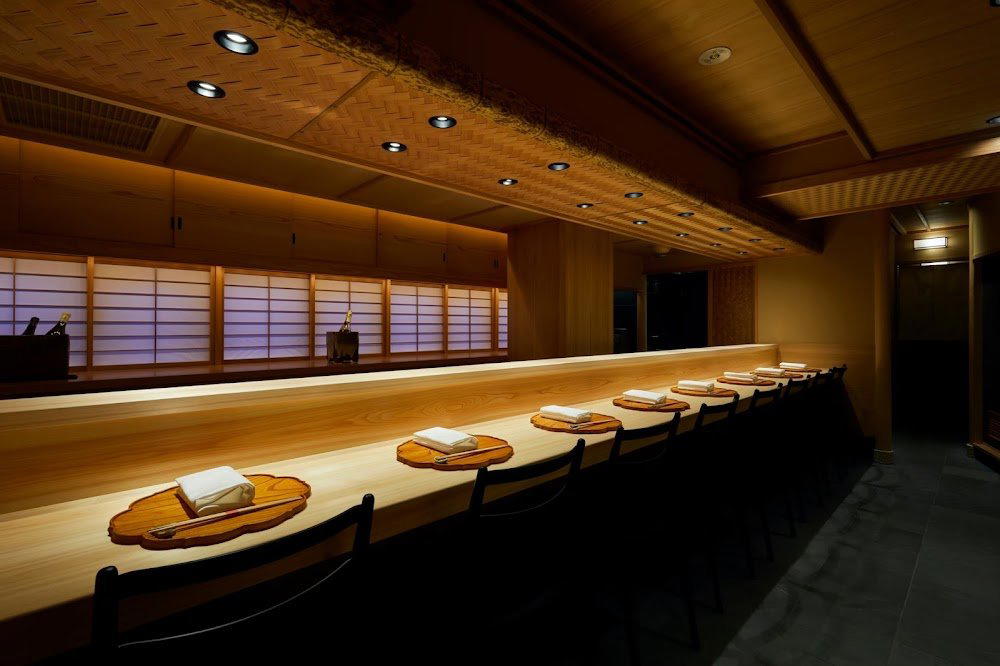
A Second Floor in Ebisu, and What It Signals
The approach to Igarashi sets a tone that the room then sustains. Ebisu sits between the commercial density of Shibuya and the residential calm of Daikanyama, and the restaurant's second-floor position on a quiet Chome street places it deliberately outside the main current of Tokyo's high-visibility dining corridor. In a city where restaurant real estate is itself a statement, choosing a walk-up address in this neighbourhood signals something about priorities: the room is not designed to catch passing traffic. The dining experience begins, in effect, at the street, when you commit to the climb.
This positioning is not unusual for Tokyo's more focused kitchens. The city has long supported a tier of restaurants that operate on reputation and word of mouth rather than footfall, where the address functions as a filter rather than an advertisement. Ebisu's dining scene sits in that tradition, with a cluster of serious, low-profile kitchens that attract a clientele who already know what they are looking for. Igarashi belongs to that cohort.
The Sourcing Logic Behind Ingredient-Led Japanese Cooking
To understand what kitchens like Igarashi represent, it helps to understand the infrastructure of ingredient sourcing that underpins serious Japanese cooking. Japan's premium produce networks are unusually granular: fish markets in Toyosu still run pre-dawn auctions where individual tuna are assessed by hand, regional vegetable farmers supply direct to named kitchens, and the concept of shun, the precise seasonal peak of an ingredient, functions less as a marketing term and more as an operational constraint. A kitchen that takes sourcing seriously is, in practice, a kitchen that structures its entire menu calendar around the availability windows of specific producers.
This model stands in contrast to the approach more common in Western fine dining, where a chef's technique or cuisine identity remains relatively stable across the year, with ingredients slotted into a pre-existing framework. In Japan's better ingredient-led restaurants, the direction runs the other way: what is available at its peak dictates what appears on the table. The kitchen follows the market, not the other way around. Across Japan, this philosophy surfaces in venues as distinct in format as Gion Sasaki in Kyoto, which applies it through a kaiseki structure, and Goh in Fukuoka, where it informs a more personal, less codified format.
Igarashi's Ebisu address places it within the Tokyo expression of this same sourcing discipline. The kitchen's context is a city that gives chefs access to some of the most precisely categorised produce in the world, distributed through a logistics network that moves faster and with more traceability than almost any comparable market globally. Tokyo restaurants at this tier do not source broadly, they source specifically, and the menu reflects those decisions directly.
Where Igarashi Sits in Tokyo's Dining Tier
Tokyo's serious dining scene has stratified considerably over the past decade. At the apex sits a small group of counters and kaiseki rooms with multi-year waiting lists and international recognition: venues like Harutaka in the sushi tier, RyuGin in kaiseki, and on the French-influenced side, L'Effervescence and Sézanne. Below that apex, and in some ways more interesting to follow, is a second tier of focused kitchens where the cooking is rigorous and the room smaller, but where the profile remains lower and the experience less mediated by celebrity.
Igarashi occupies space in that second tier. It is not the kind of operation that generates extensive critical literature or appears in international rankings, which in Tokyo is not necessarily a mark against it. Many of the city's most precise kitchens exist at this level of quiet competence, known to the local dining community and to a subset of international visitors who research beyond the obvious list. For comparison, Crony operates in a similarly understated register, though with a French-leaning format that contrasts with Igarashi's Japanese orientation.
The broader Japanese fine dining circuit provides additional context. Outside Tokyo, the sourcing-first approach appears in venues like HAJIME in Osaka, akordu in Nara, and more rural settings such as 一本杉川嶋 in Nanao and 漣庭庵 in Takashima, each working with regional produce networks that differ substantially from Tokyo's centralised supply. Understanding those differences helps clarify what a Tokyo kitchen like Igarashi actually has access to, and why that access matters for what ends up on the table.
Planning Your Visit
Ebisu is direct to reach from central Tokyo: the JR Yamanote Line stops at Ebisu Station, from which the 4-Chome address is a short walk into the residential streets east of the station. The second-floor location means the restaurant has no street-level presence, so first-time visitors should confirm the exact building before heading out. Booking, as with most serious Tokyo kitchens at this level, is leading approached through a hotel concierge if you are staying at a property with strong restaurant relationships, or through a specialist reservation service that handles Japanese-language communication directly. Walk-in chances are negligible. Given the restaurant's low profile relative to more publicised Tokyo addresses, the booking window may be shorter than for Michelin-listed peers, but this should not be assumed without verification.
For visitors building a wider Tokyo itinerary, our full Tokyo restaurants guide maps the full range of the city's serious dining options across cuisines and price tiers. Those extending the trip should consider Bistro Ange in Toyohashi or 羽根屋 in Nishikawa Machi as part of a broader regional dining circuit. For those comparing Japanese fine dining globally, Atomix in New York City and Le Bernardin represent the Western end of the precision-cooking spectrum, while Birdland in Sakai and 古井山乃 in Sapporo add regional Japanese reference points.
Frequently asked questions
at Igarashi?
Given the kitchen's alignment with ingredient-led Japanese cooking, the most direct answer is: whatever is at peak season at the time of your visit. Kitchens operating in this tradition do not sustain a fixed signature dish in the conventional sense, the menu moves with the produce calendar, and the dishes that leading represent the kitchen's approach are those built around what is in shun that week. Rather than arriving with a specific dish in mind, approach the meal with the expectation that the kitchen's sourcing decisions will determine the highlights. If the restaurant offers a tasting format, that is almost certainly the most coherent way to experience the full range of the kitchen's current work.
What is the ideal way to book Igarashi?
Tokyo's more serious, lower-profile restaurants rarely maintain English-language booking infrastructure, and Igarashi's Ebisu address positions it in precisely that category. The most reliable route for non-Japanese-speaking visitors is through a hotel concierge at a property with established Tokyo restaurant relationships, or through a dedicated reservation service that handles communication in Japanese. Attempting to book directly via international channels without language support often results in no response rather than a rejection. Given Igarashi's relatively modest public profile compared to Michelin-listed peers, advance planning of two to four weeks should generally be sufficient, but this cannot be guaranteed without direct confirmation.
What type of cuisine does Igarashi serve, and how does it compare to other Ebisu-area restaurants?
Igarashi operates within the tradition of ingredient-focused Japanese cooking, where seasonal produce sourcing and market-driven menu construction take precedence over a fixed cuisine category. Compared to the French-leaning operations at the top of Tokyo's dining tier, Igarashi's format is more rooted in Japanese produce logic, making it a useful reference point for visitors who want to understand how the city's mid-to-upper tier of Japanese restaurants differs from its more internationally profiled counterparts.
Awards and Standing
Comparable venues nearby, for context on price, style, and recognition.
| Venue | Cuisine | Price | Awards | Notes |
|---|---|---|---|---|
| IgarashiThis venue (the venue you are viewing) | Traditional Japanese Fugu Kaiseki | $150–200 | Not listed | Not listed |
| Toranoana Ebisu Ten | Yakiniku Horumon | $50–100 | Not listed | Shibuya |
| Jumbo Shirokane | Premium Yakiniku | $100–150 | Tabelog 100 #43 | Minato |
| Oni Tei | Traditional chicken yakiniku / yakitori in Shibuya | $50–100 | Tabelog 100 #77 | Shibuya |
| Sumibi Yakiniku Horumon Maruha | Charcoal-grilled wagyu & horumon yakiniku | $50–100 | Tabelog 100 #7 | Shinagawa |
| Ranma | Teppanyaki Japanese | $100–150 | Tabelog 100 #93 | Minato |
Continue exploring
More in Tokyo
Restaurants in Tokyo
All restaurants in Tokyo →


Bars in Tokyo
All bars in Tokyo →





Details
- Elegant
- Intimate
- Sophisticated
- Business Dinner
- Special Occasion
- Date Night
- Private Dining
- Set Menu
Current opening hours
- Monday
- 12–3 PM, 6–10:30 PM
- Tuesday
- 12–3 PM, 6–10:30 PM
- Wednesday
- 12–3 PM, 6–10:30 PM
- Thursday
- 12–3 PM, 6–10:30 PM
- Friday
- 12–3 PM, 6–10:30 PM
- Saturday
- 12–3 PM, 6–10:30 PM
- Sunday
- Closed
Hours can change for holidays and private events. Hours as of .
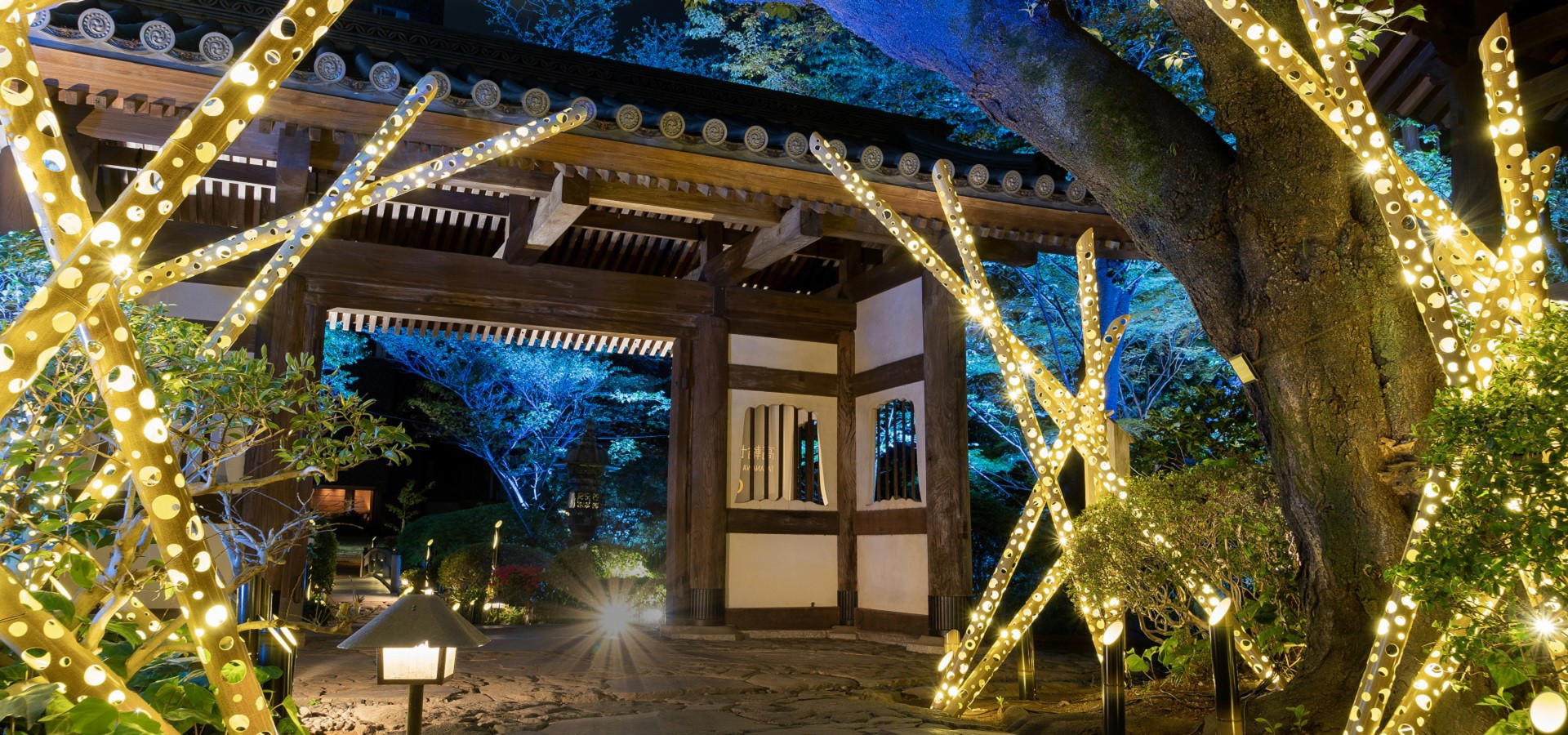
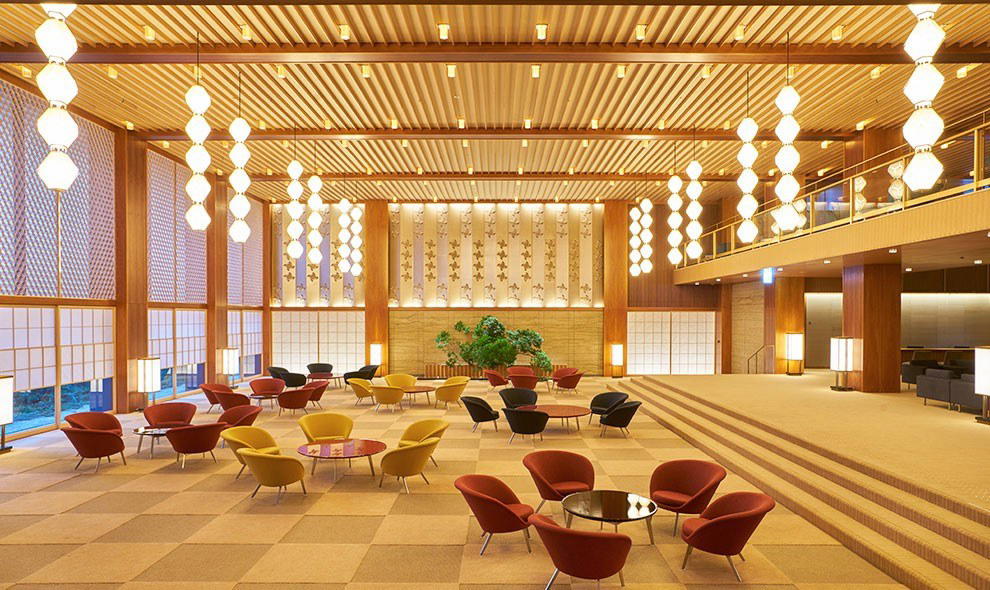
Intimate basement setting with private rooms, elegant Japanese decor fostering a sophisticated and serene dining atmosphere.