Stanley visits Zio Vincenzo, Enzo's special tomato supplier at his small farm, where he grows real San Marzano tomatoes. San Marzano tomatoes are special because of their extremely thin peel, a pleasant juice and an underlying acidity, which is unique in their combination with the mozzarella.
 Discover on Pearl
Pearl is the En Primeur Club membership app — saves, bookings, and concierge access live there. Same editors, same standards.
- Address
- Via Ingegno, 50, 84087 Sarno SA, Italy
- Phone
- +39 333 314 4090
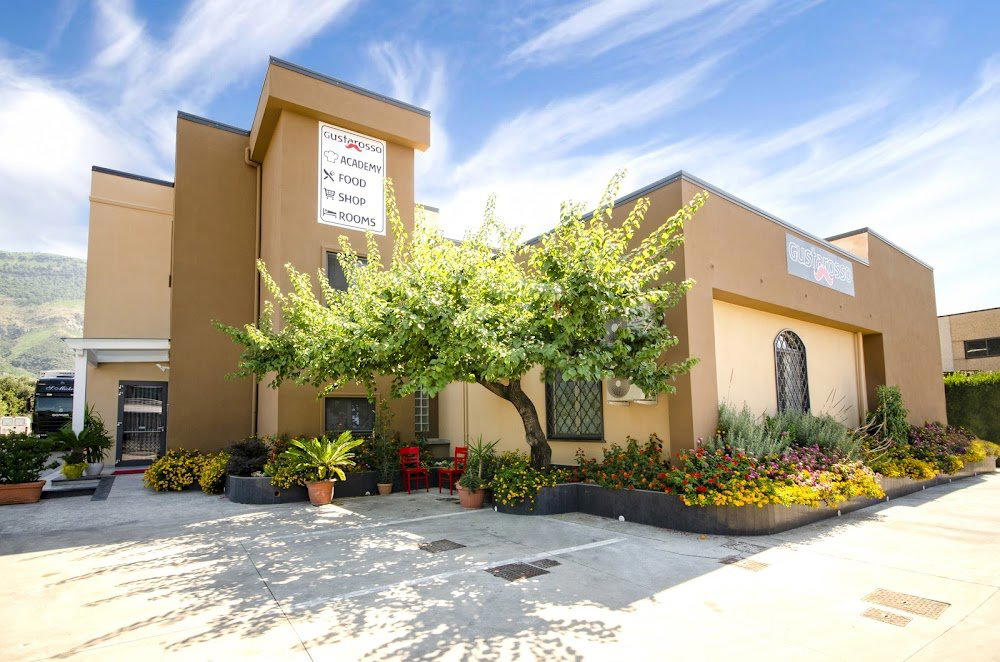
Sarno and the Agro Nocerino-Sarnese: Where the Tomato Still Means Something
The Agro Nocerino-Sarnese plain, anchored by the town of Sarno in the province of Salerno, is one of the most agriculturally significant corridors in southern Italy. This is the territory that gave the world San Marzano tomatoes, and the relationship between the land and the table here is not a talking point added for menu copy, it is the functional logic of how locals eat. Restaurants in this zone operate within a culinary tradition where ingredient provenance is a given, not a marketing distinction. Gustarosso Rooms, a casual Neapolitan Pizzeria in Sarno at Via Ingegno, 50, 84087 Sarno SA, Italy, sits inside that context, and understanding the territory is the starting point for understanding what the property offers.
The Approach: Entering Sarno's Slower Register
Sarno itself sits at the foot of the Lattari mountains, where the plain gives way to hillside terrain that shapes the microclimate responsible for the area's distinctive produce. Approaching the town from the Naples direction, the landscape shifts from motorway sprawl into agricultural flatland punctuated by processing facilities, farm roads, and the kind of provincial town infrastructure that signals you have moved away from the tourist circuit entirely. This is not a destination that positions itself for visitors in the conventional sense, which means the few properties that do accommodate guests operate in a different register from coastal or city-facing hospitality. Gustarosso Rooms functions in that quieter, more self-sufficient mode. For readers familiar with Italy's better-known dining destinations, the formal grandeur of Enoteca Pinchiorri in Florence or the institutional authority of Osteria Francescana in Modena, Sarno represents something structurally different: a place where the ingredient is the narrative, and the setting is built around agricultural reality rather than dining spectacle.
The Ingredient Geography of the Sarnese
The San Marzano tomato has a protected designation of origin (DOP) tied specifically to the volcanic soils of the Agro Sarnese-Nocerino, a geographic designation that covers a defined set of municipalities including Sarno. The soil composition here, enriched by deposits from Vesuvius, produces a tomato with lower acidity and higher flesh-to-seed ratio than comparable varieties grown elsewhere, which is why canning facilities in this corridor supply the Italian food industry at scale. That agricultural density is not background noise for dining in the area; it is the supply chain. Properties in Sarno operate with access to primary produce that restaurants in Milan or Rome source at a remove. The distinction between cooking in proximity to the ingredient and cooking with ingredients that have been distributed, warehoused, and redistributed is one that shapes what ends up on the plate in ways that are difficult to replicate through sourcing effort alone. Italy's highest-profile kitchens, from Reale in Castel di Sangro to Dal Pescatore in Runate, built their reputations in part by foregrounding regional produce. In Sarno, that proximity is structural rather than aspirational.
How Gustarosso Rooms Fits the Local Format
The property name itself, Gustarosso, which translates loosely as "taste red", signals an orientation toward the tomato traditions of the area. The rooms format places this in the category of smaller, accommodation-integrated hospitality that is common across Campania's agricultural interior: properties that combine lodging with food in a format closer to an agriturismo or family-run locanda than to a formal hotel. This tier of Italian hospitality has expanded significantly over the past two decades as agritourism regulations were broadened, and the Campanian version of this format tends to foreground the table as the primary offering, with rooms as the practical complement. Readers who have spent time at coastal Campanian tables, Quattro Passi in Marina del Cantone represents the refined coastal end of this regional tradition, will recognise the underlying culinary logic, even if the scale and register are different.
Specific details about Gustarosso Rooms' current menu format, pricing, and booking arrangements are not available in verified form at the time of writing. Sarno is accessible by rail from Naples on the Circumvesuviana network, which makes a day visit or overnight stay feasible for travellers based in the city.
Placing Sarno Within Italy's Regional Dining Map
Italy's premium dining conversation is heavily weighted toward a set of established reference points: the three-Michelin-star tier that includes Piazza Duomo in Alba, Le Calandre in Rubano, Villa Crespi in Orta San Giulio, and La Pergola in Rome. That conversation is real and worth having, but it covers a narrow band of Italian hospitality. A much larger portion of how Italians eat, and of what makes Italian food culture interesting to outside observers, happens in the tier below formal recognition, in properties where the chef is also the owner, the sourcing radius is measured in kilometres rather than regions, and the dining room is sized to match what the kitchen can produce without compromise. The Mezzogiorno, and Campania in particular, has a dense concentration of this kind of hospitality. Gambero Rosso in Marina di Gioiosa Ionica and Uliassi in Senigallia represent adjacent regional traditions, seafood-led, produce-proximate, that share the same underlying logic even when their public profiles differ significantly. Gustarosso Rooms operates at the quieter end of this spectrum, in a town that has more claim on the ingredient origin story than on the dining destination narrative.
Planning a Visit
Sarno sits roughly 40 kilometres southeast of Naples and is served by the Circumvesuviana rail line, making it reachable without a car for travellers staying in the city. The area is agricultural rather than tourist-oriented, so visit expectations should be calibrated accordingly: this is not a polished hospitality infrastructure, and that is part of what makes the experience register differently from a coastal or city-centre stay. Travellers accustomed to the precision of reservation systems at places like Enrico Bartolini in Milan or Da Vittorio in Brusaporto should approach Gustarosso Rooms with a more flexible and direct communication style. For broader framing of what ingredient-led hospitality looks like at different scales and in different traditions, the formats at Atelier Moessmer Norbert Niederkofler in Brunico and Lazy Bear in San Francisco offer useful comparison points, even if the register is entirely different. Le Bernardin in New York City and Casa Perbellini 12 Apostoli in Verona sit at the formal end of the spectrum that Gustarosso Rooms does not try to occupy.
Comparison Snapshot
Comparable venues nearby, for context on price, style, and recognition.
| Venue | Cuisine | Price | Awards | Notes |
|---|---|---|---|---|
| Gustarosso RoomsThis venue — the venue you are viewing | Neapolitan Pizzeria | $$ | , | |
| Dal Moro's Fresh Pasta To Go | Fresh Pasta To Go | $$ | , | Castello |
| Ciro a Santa Lucia | Neapolitan Pizza & Fresh Seafood | $$ | , | San Ferdinando |
| Osteria Donna Teresa | Traditional Neapolitan Osteria | $$ | , | Vomero |
| Lo Scoglio | Traditional Neapolitan Seafood | $$ | , | Marina del Cantone |
| The Lido | Italian Lakeside Pizzeria & Beach Club | $$ | , | Cernobbio |
Continue exploring
More in Sarno
Restaurants in Sarno
Browse all →
Bars in Sarno
Browse all →
Hotels in Sarno
Browse all →


At a Glance
- Rustic
- Cozy
- Scenic
- Casual Hangout
- Family
- Garden
- Local Sourcing
- Garden
- Mountain
Peaceful and clean with a garden for relaxation.