Dal Moro's Fresh Pasta To Go operates at the practical end of Venice's food spectrum, serving freshly made pasta in takeaway cups from a small counter in the city's historic centre. It occupies a distinct niche: immediate, affordable, ingredient-forward pasta at a pace suited to visitors moving between sites. For travellers who have exhausted canal-side tourist menus, it functions as a useful reset.
Pearl is the En Primeur Club membership app — saves, bookings, and concierge access live there. Same editors, same standards.
- Address
- Venice, Italy
- Directions
- Get directions
 Saves & bookings on Pearl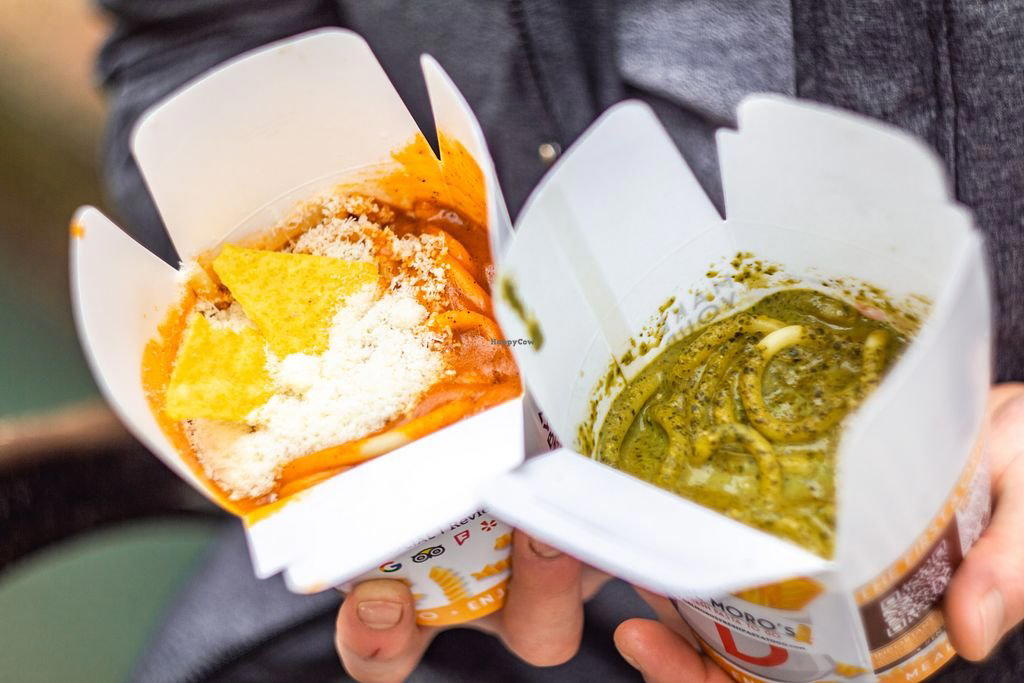
A Counter in the Calli: How Venice Eats Between Restaurants
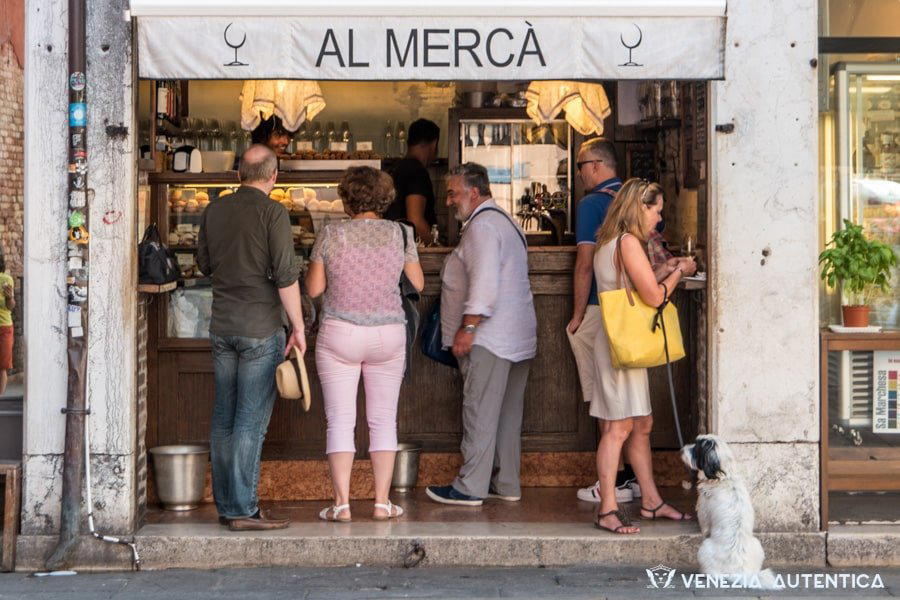
The physical approach tells you something before you order. A narrow counter, a short queue spilling into one of Venice's tighter calli, and a display of pasta being portioned directly into paper cups: Dal Moro's Fresh Pasta To Go occupies the kind of space that takes roughly ten seconds to understand. No tables. No linen. In a city where the restaurant experience is frequently inflated by location premium and tourist footfall, a format this stripped back carries its own editorial logic.
Venice's food culture divides more cleanly than most Italian cities. At the upper end, you have places like Glam Restaurant by Enrico Bartolini, Oro Restaurant, and Ristorante Quadri, where tasting menus run to multiple courses and the wine list requires serious budget allocation. In the middle tier, places like Local and Wistèria offer modern Italian cooking with considered sourcing and a properly Venetian point of view. Below those tiers, the city's mid-range becomes unreliable fast: tourist-facing trattorias cycling through frozen pasta and pre-portioned seafood at prices that bear no relationship to quality.
Dal Moro's operates outside those categories entirely. It is the takeaway counter format applied to fresh pasta, and its value proposition is not price alone. It is pasta made on site, served quickly, in a city where that combination is harder to find than it should be.
The Sourcing Argument for Fresh Pasta in a Tourist City
The ingredient sourcing question matters more in Venice than in most Italian cities, and for structural reasons. The island's supply logistics are genuinely complicated: everything arrives by boat or on foot across the bridges, which means that cost-cutting on ingredients is one of the fastest ways for a high-volume operator to protect margins. The consequence is that much of what passes for pasta in the city's mid-range tourist belt is not made on the premises and does not come from the kind of semolina or egg base that defines regional Italian tradition.
Fresh pasta, properly made, requires daily production. Eggs, flour, and in many cases additional ingredients for stuffed varieties need to be sourced, prepared, and used within hours. For a format as lean as a takeaway counter, maintaining that production cycle is a meaningful operational commitment. It is the difference between a counter that sells pasta and one that makes it, a distinction that sounds obvious but is frequently obscured in tourist-heavy environments where the visual presentation of food does more marketing work than the actual process behind it.
Italy's fine dining tier has long centred its identity on this kind of sourcing rigour. Restaurants like Osteria Francescana in Modena and Dal Pescatore in Runate have built reputations, in part, on the provenance of what arrives in the kitchen. Le Calandre in Rubano and Piazza Duomo in Alba apply similar discipline at comparable price points. The takeaway format does not allow for the same level of narrative around sourcing, but the underlying principle, that fresh, made-on-site pasta is a different product from reconstituted alternatives, applies regardless of the setting.
Reading the Queue: What the Format Actually Delivers
The queue at Dal Moro's is itself a form of quality signal. In Venice's historic centre, a consistent line of people who have clearly done some research before showing up, not just tourists who walked past and stopped, indicates a reputation that moves through word of mouth and travel writing rather than walk-in traffic alone. That is a different customer base from the canal-side tourist trattoria, and it tends to self-select for people who are specifically after what the counter offers rather than a convenient place to sit down.
The format is cup-service pasta, eaten standing or at one of the small ledges nearby, with a rotating selection of preparations that changes with availability. The portion size is designed for one, eaten immediately. This is not a place to linger, and the city's labyrinthine street layout means that finding a bench or bridge to sit on nearby is usually direct enough.
For travellers comparing this to the sit-down mid-range options in the neighbourhood, the relevant trade-off is comfort and service against the probability of getting pasta that was made that day. In Venice's tourist-facing middle tier, that probability drops sharply. Dal Moro's removes the ambiguity.
Where This Fits in Venice's Broader Dining Picture
Italy's full-service fine dining addresses a different need, clearly. If you are spending time in the Veneto and want to understand what the region's kitchen tradition looks like at its most technically accomplished, the choices are well-documented: Uliassi in Senigallia and Reale in Castel di Sangro represent the national tier, while Atelier Moessmer Norbert Niederkofler in Brunico shows what the northern Italian Alpine tradition produces at its most focused. Enoteca Pinchiorri in Florence and Enrico Bartolini in Milan anchor the broader Italian fine dining set. Quattro Passi in Marina del Cantone handles the southern coastal end of that spectrum with comparable precision.
Dal Moro's is not in conversation with any of those rooms. It occupies a different category, one that the city's tourist infrastructure makes more difficult to execute than it appears: honest, fast, ingredient-grounded pasta at a price point that does not require an expense account. In a city where the gap between that aspiration and the reality of what is actually served tends to be wide, a counter that closes it is useful to know about.
International reference points for fresh pasta's role in Italian culinary tradition extend as far as Le Bernardin in New York City and Atomix in New York City, both of which demonstrate how ingredient sourcing and production discipline function as credibility signals regardless of service format.
Planning Your Visit
Dal Moro's operates on a walk-in basis from a small counter in the historic centre of Venice, and queuing at peak hours, particularly midday and early afternoon, is part of the experience. The practical advice is to arrive slightly before or after the lunch rush if you want a shorter wait. Payment is cash-friendly, though card acceptance has become more common. Dietary requirements are best checked directly on arrival, as the preparation rotation changes.
Recognition Snapshot
Comparable venues nearby, for context on price, style, and recognition.
| Venue | Cuisine | Price | Notes |
|---|---|---|---|
| Dal Moro's Fresh Pasta To GoThis venue — the venue you are viewing | Fresh Pasta To Go | $$ | Not listed |
| La Calcina | Traditional Venetian Seafood | $$ | Dorsoduro |
| Osteria Mocenigo | Authentic Venetian Seafood Trattoria | $$ | Santa Croce |
| Pier Dickens | Italian Pizza & Pasta | $$ | Dorsoduro |
| Osteria Al Portego | Traditional Venetian Cicchetti Osteria | $$ | Castello |
| Osteria Da Carla | Modern Venetian Osteria | $$$ | San Marco |
Continue exploring
More in Venice
Restaurants in Venice
Browse all →
Bars in Venice
Browse all →
Hotels in Venice
Browse all →


At a Glance
- Trendy
- Modern
- Casual Hangout
- Standalone
Bright, clean, and modern with a casual, welcoming atmosphere focused on quick service.