

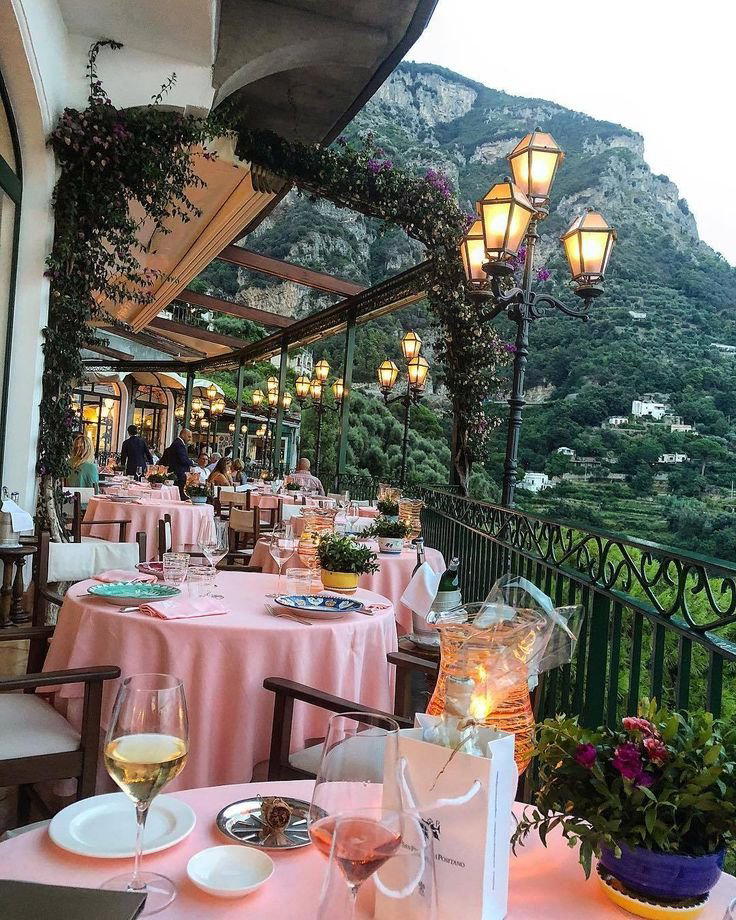
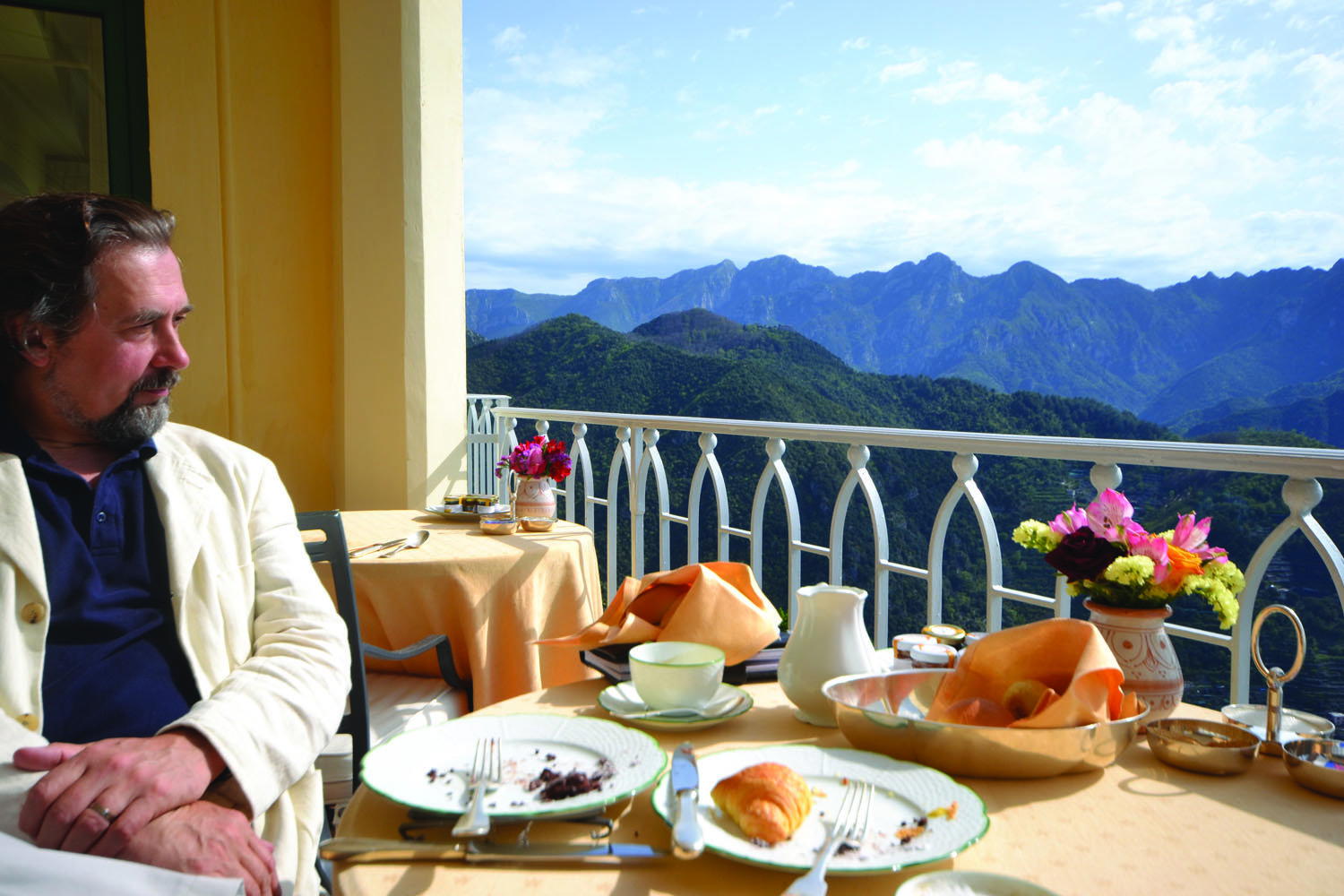
Rossellinis holds a Michelin star and an Opinionated About Dining Classical ranking (Europe #385 in 2024) at Palazzo Avino in Ravello. Chef Giovanni Vanacore's regional menu draws on Campanian coastal produce, served on a terrace with sightlines across the Amalfi Coast toward Minori. The wine program, guided by sommelier Luigi Nitto, covers an extensive international list.
Pearl is the En Primeur Club membership app — saves, bookings, and concierge access live there. Same editors, same standards.
- Address
- Via S. Giovanni del Toro, 28, 84010 Ravello SA, Italy
- Phone
- +39 089 818181
- Directions
- Get directions
 Saves & bookings on Pearl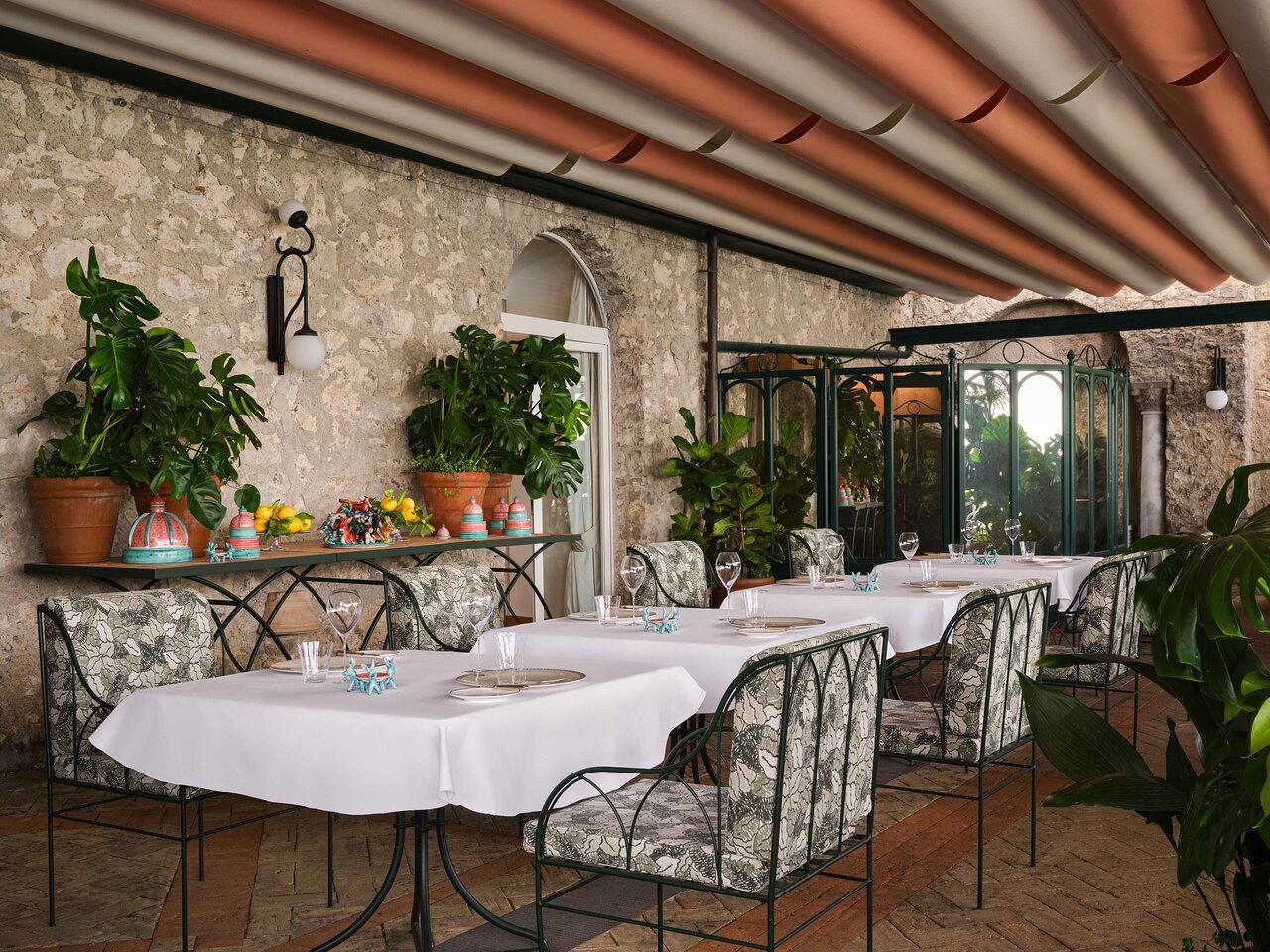
Dining Above the Amalfi Coast: What Rossellinis Represents
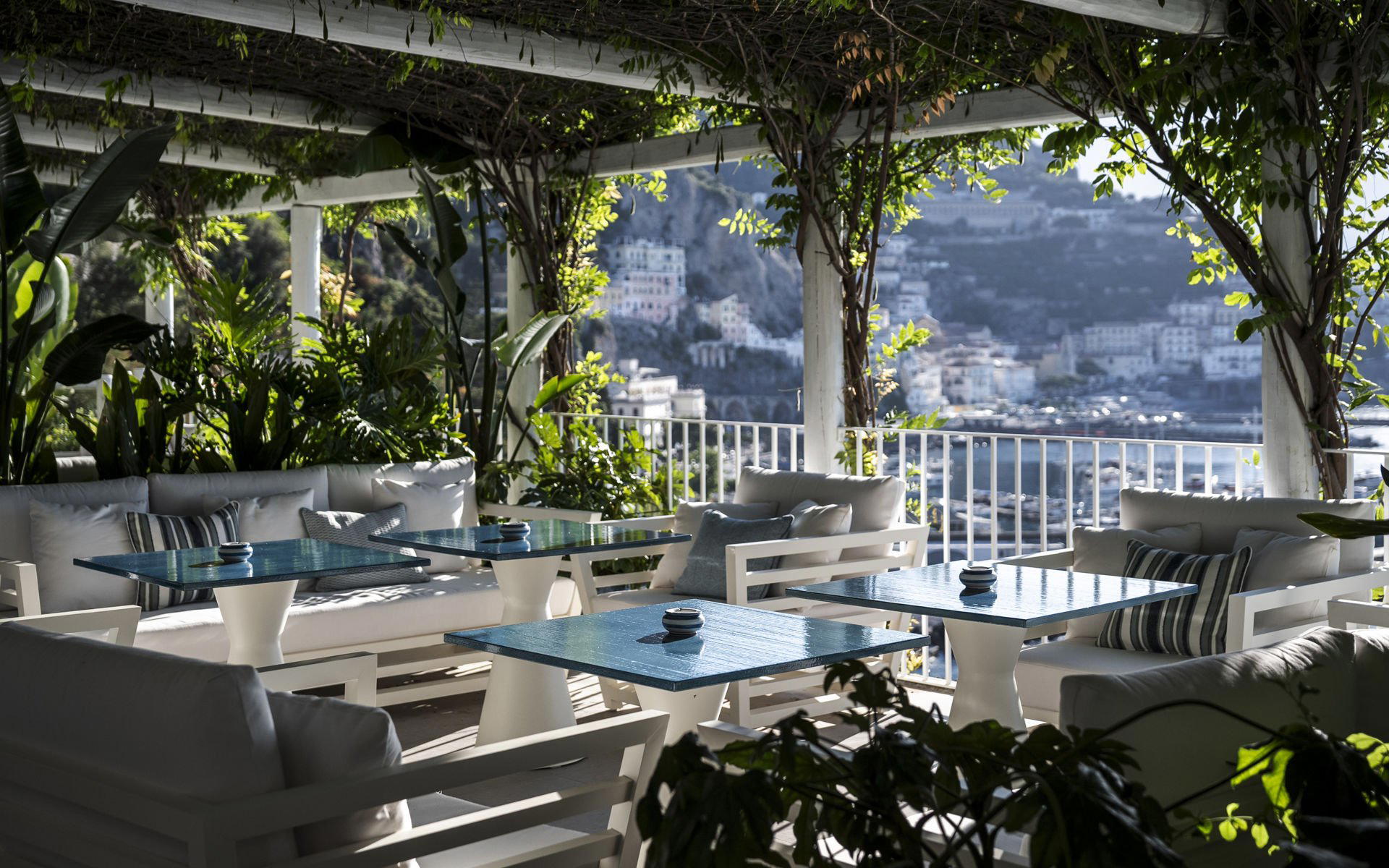
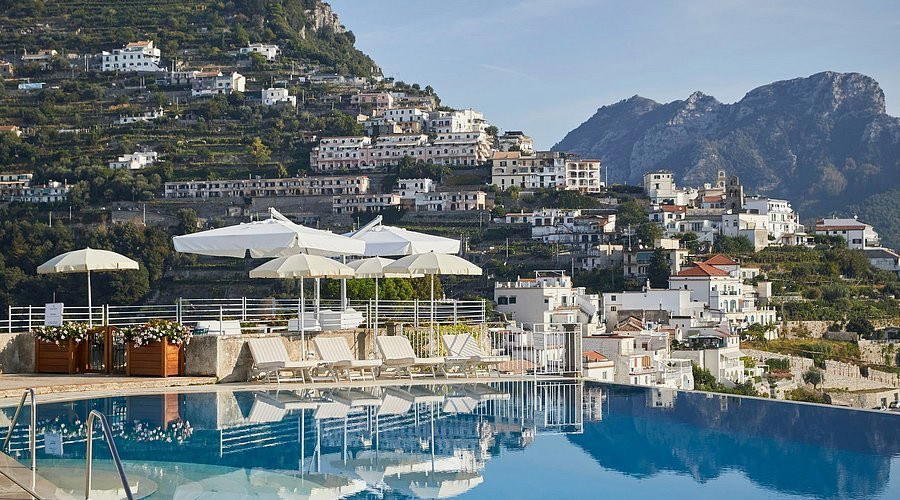
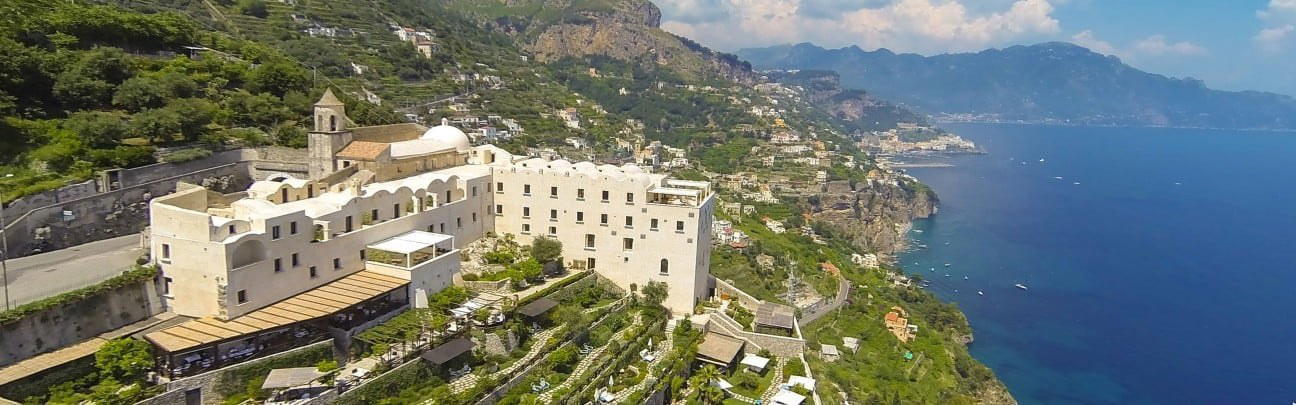
The terrace at Rossellinis sits high above a coastline that has been pulling travellers south for centuries. From this position inside Palazzo Avino on Via San Giovanni del Toro, the view extends past Minori and along among the more dramatised stretches of Italian shoreline. The setting frames a broader truth about fine dining on the Amalfi Coast: at this altitude and in this tier, the physical environment is not incidental, it is structural to the experience. Tables here are booked not despite the remoteness of Ravello but because of it.
Where Enrico Bartolini in Milan or Osteria Francescana in Modena compete on conceptual ambition and culinary narrative, Rossellinis works in a different register, one where restraint, regional produce, and the physical context of the meal are the primary arguments. Rossellinis has earned its place in that conversation: a Michelin star held since at least 2024, an Opinionated About Dining Classical Europe ranking of #385 in 2024 (improving from #479 in 2025's edition), and a longstanding OAD Classical recommendation dating to at least 2023.
The Arc of an Evening: From Garden to Table
The structure of dinner at Rossellinis follows a format that has become something of a blueprint for hotel dining at this level in southern Italy. Guests begin not at the table but in the garden below the terrace, where a flute of champagne arrives alongside finger food served on ceramic tableware from the region. This pre-dinner sequence does particular work: it establishes the visual and tonal register of the meal before a single course is plated, and it allows the views, down through the terraced gardens toward the sea, to act as the first course in all but name.
The finger food format here is worth noting in the context of Italian fine dining's current moment. Across the country's Michelin tier, the amuse and pre-course sequence has become a vehicle for the kitchen's most experimental impulses, sometimes at the expense of coherence with what follows. At Rossellinis, the approach aligns more closely with the classical tradition: the opening bites are described as imaginative but complementary, setting up rather than upstaging the regional menu that Chef Giovanni Vanacore develops through the main courses. For those curious about how this compares to the sharing-led format further down the coast, Quattro Passi in Marina del Cantone occupies a related but distinct position in the Campanian fine dining bracket.
The Kitchen's Logic: Regional Ingredients, Balanced Flavours
Campania's pantry is among the more identifiable in Italy. San Marzano tomatoes, locally caught seafood from the Tyrrhenian, preserved lemons from the Amalfi hillside lemon groves, buffalo mozzarella from the plains around Caserta, these are the ingredients that define the region's cooking at every price point. What distinguishes the fine-dining treatment is not the addition of foreign luxuries but the degree of precision applied to familiar materials.
Chef Vanacore's approach, as documented through OAD assessments across multiple cycles, prioritises balance and lightness as organising principles. This positions Rossellinis within a specific school of contemporary Italian haute cuisine that favours restraint over accumulation, closer in spirit to the coastal classicism seen at Uliassi in Senigallia than to the more architecturally complex plating of Le Calandre in Rubano. The emphasis on light, balanced flavours in a regional idiom is a conscious editorial choice by the kitchen, and it reads consistently across the OAD commentary.
For Ravello specifically, this is the appropriate pitch. The town sits at roughly 350 metres above sea level, and its dining culture has always leaned toward the contemplative rather than the theatrical. The restaurant in Ravello operating at a more experimental register is Il Flauto di Pan (Creative), which pursues a distinct agenda from Rossellinis' classical position. Both have merit; they are simply answering different questions about what a serious meal in this town should be.
The Wine Program
Italy's fine dining wine culture has shifted considerably in the past decade, with the leading lists moving away from trophy-bottle orthodoxy toward deeper regional representation alongside considered international selections. At Rossellinis, sommelier Luigi Nitto manages a list described across multiple sources as extensive and international in scope. In practical terms, this suggests a program that can support both the Campanian seafood register of the menu, where Fiano di Avellino or Greco di Tufo would be natural anchors, and the preferences of international guests arriving with specific expectations around French or international producers.
A comparable Italian wine program at this level can be seen at Enoteca Pinchiorri in Florence, where the cellar is among the more discussed in Europe. Rossellinis operates at a different scale and with a different mandate, the wine list serves the meal rather than becoming the primary argument for a visit, but the investment in sommelier expertise signals a program taken seriously at the property level.
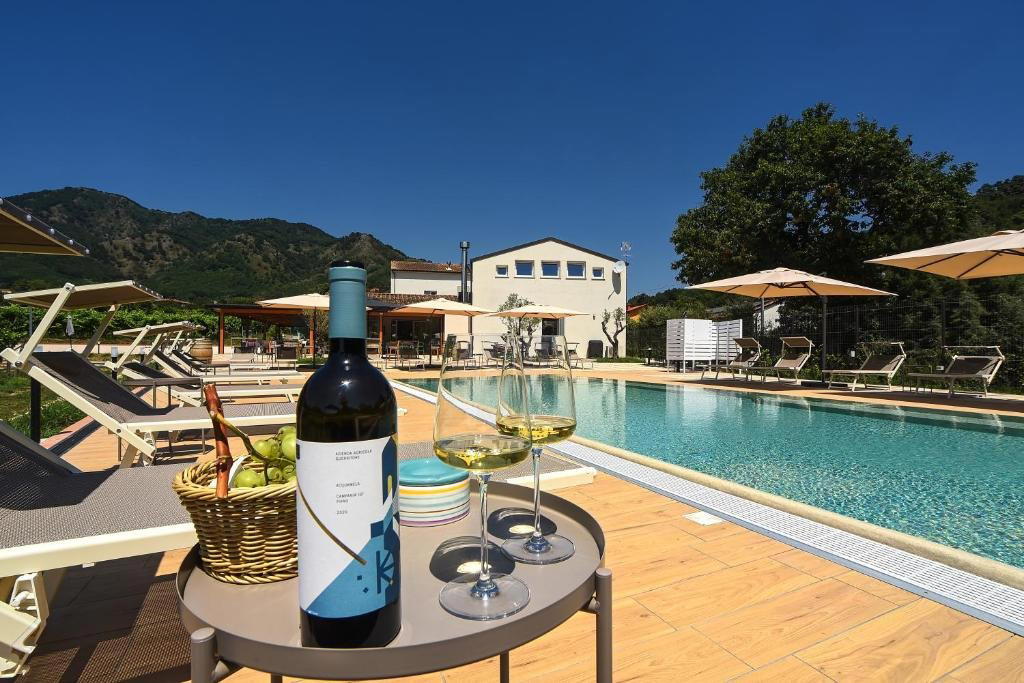
For those planning around regional wine, the Campanian producers making one compelling case for this kind of coastal, seafood-led menu include names from Cilento and the Vesuvian slopes.
Palazzo Avino and the Hotel Fine Dining Context
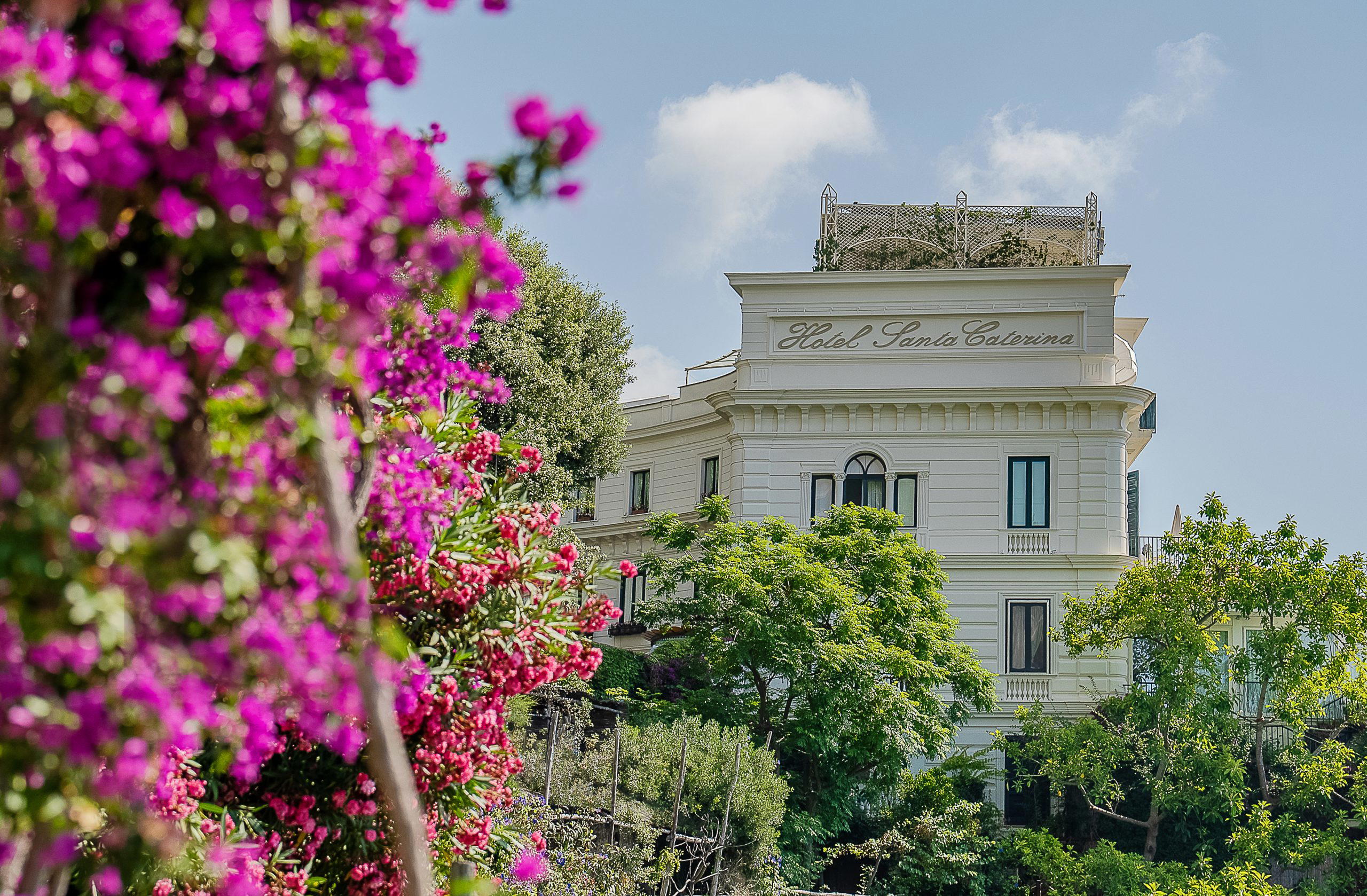
Hotel fine dining in Italy exists along a spectrum from perfunctory luxury add-on to genuinely destination-worthy table. The properties that achieve the latter share certain characteristics: kitchen independence from the broader hotel operation, consistent chef tenure, and investment in the dining room as a serious editorial project rather than an amenity. Rossellinis, by virtue of its sustained award presence, the Michelin star, the repeated OAD Classical rankings, falls into the category of hotel restaurants that justify a visit on their own terms.
This places it in company with a small group of Italian hotel restaurants that have developed independent reputations. Reale in Castel di Sangro and Atelier Moessmer Norbert Niederkofler in Brunico are further examples of Italian fine dining anchored to specific places rather than urban restaurant clusters. The comparison to Dal Pescatore in Runate is also instructive: that restaurant has made rural remoteness a credential rather than a handicap. Rossellinis does something similar for Ravello's elevation and relative isolation from the main Amalfi tourist circuit.
It is also worth noting where Rossellinis sits globally. La Pergola in Rome represents the apex of Italian hotel fine dining, with three Michelin stars and a cellar that operates almost as a separate institution. Rossellinis is not competing in that bracket, but the OAD Classical trajectory, moving up the ranking between 2024 and 2025, suggests a kitchen in consistent form rather than one resting on its hotel setting. For international context, the consistency required to sustain a Michelin star in a seasonal coastal town is comparable in its way to the year-round program demanded of Le Bernardin in New York City, different scale entirely, but the logic of sustained technical standards applies.
Planning Your Visit
Ravello operates on a pronounced seasonal rhythm. The town is most visited between May and October, with July and August bringing the highest demand from both international visitors and Italians using the Amalfi Coast as a summer base. Booking Rossellinis during peak summer months should be treated as a planning priority rather than an afterthought, the combination of a small town, a hotel setting, and a single Michelin-starred table means availability is genuinely constrained in high season. The shoulder months of May, early June, and September offer a more navigable booking window alongside cooler temperatures and somewhat less crowded access roads on the SP1.
Ravello is accessible by road from Amalfi, roughly a 20-minute drive via the hairpin road from the coast, or by ferry and then taxi from Positano or Salerno. Palazzo Avino itself is a short walk from the main Piazza Duomo. For those planning a broader stay,
The price range sits at the summit tier for this stretch of coast (€€€€), consistent with the Michelin-starred dining format. Reservations are essential and are handled directly through Palazzo Avino. Piazza Duomo in Alba offers a useful point of comparison for travellers calibrating expectations around Italian fine dining at this price point outside of the major urban centres.
What Should I Order at Rossellinis?
The kitchen's documented emphasis is on regional Campanian cuisine built around light, balanced flavours, which in practical terms means seafood and local produce treated with classical technique rather than heavy enrichment. The OAD Classical ranking signals a kitchen that privileges coherence and refinement over novelty, so the menu's seasonal regional dishes are where the kitchen's strengths are most likely to be concentrated. Chef Vanacore's track record across multiple OAD cycles suggests consistency in execution. On the wine side, engaging sommelier Luigi Nitto directly on regional Campanian options is likely to produce pairings well-matched to the kitchen's register, the list is broad enough to accommodate international preferences, but the regional anchors are where the local expertise is deepest.
Booking and Cost Snapshot
Comparable venues nearby, for context on price, style, and recognition.
| Venue | Cuisine | Price | Awards | Notes |
|---|---|---|---|---|
| RossellinisThis venue — the venue you are viewing | Ravello, Modern Italian Fine Dining | $$$$ | Michelin 1 Star | Not listed |
| Il Flauto di Pan | Ravello, Modern Italian Fine Dining | $$$$ | Michelin 1 Star | Not listed |
| Il Refettorio | Not listed | $$$$ | Michelin 1 Star | Conca dei Marini, Modern Italian Mediterranean Fine Dining |
| Marotta | Squille, Modern Italian Fine Dining | $$$$ | Michelin 1 Star | Not listed |
| Don Alfonso 1890 | Not listed | $$$$ | Michelin 1 Star | Sant'Agata sui Due Golfi, Modern Campanian Fine Dining |
| O Me O Il Mare | Not listed | $$$$ | Michelin 1 Star | Historic Center of Gragnano, Contemporary Campanian Fine Dining |
Recognition history
Dated appearances from independent guides and award organizations, with the underlying list record or original source where available.
Michelin 1 Star
Michelin
Michelin 1 Star
Michelin
Opinionated About Dining Classical in Europe Ranked #479
Opinionated About Dining
Michelin 1 Star
Michelin
Opinionated About Dining Classical in Europe Ranked #385
Opinionated About Dining
Opinionated About Dining Classical in Europe Recommended
Opinionated About Dining
Continue exploring
More in Ravello
Restaurants in Ravello
Browse all →
Bars in Ravello
Browse all →
Hotels in Ravello
Browse all →

At a Glance
- Romantic
- Elegant
- Sophisticated
- Scenic
- Intimate
- Date Night
- Special Occasion
- Celebration
- Terrace
- Panoramic View
- Hotel Restaurant
- Live Music
- Extensive Wine List
- Sommelier Led
- Local Sourcing
- Waterfront
- Mountain
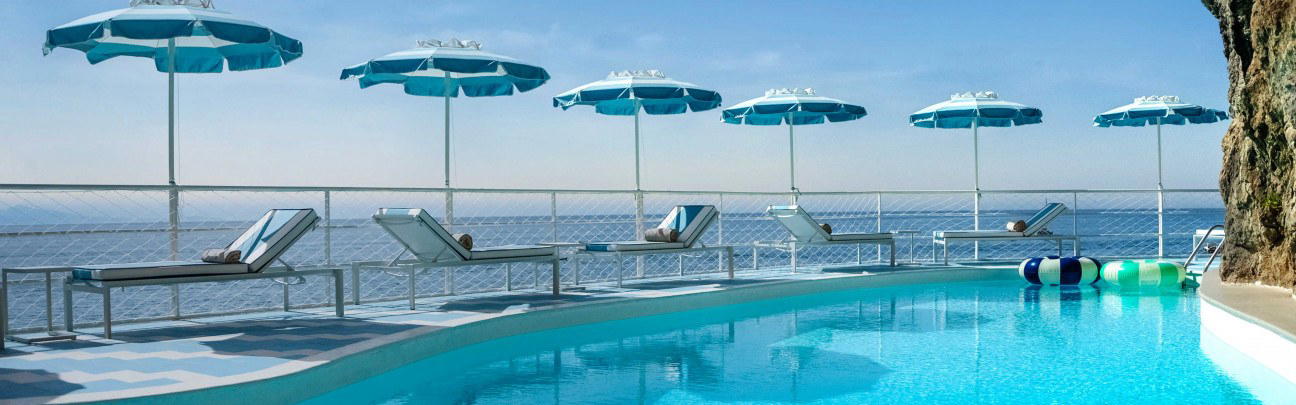
Classic elegant dining rooms with whitewashed arched interiors and a dramatic terrace featuring far-reaching coastal views, candlelight, live music, and a cozy romantic atmosphere.