





A two-Michelin-star address in Brusciano, roughly 18 kilometres from Naples, Taverna Estia translates Campanian flavour traditions into contemporary tasting menus without losing their regional grounding. Brothers Mario and Francesco Sposito run the dining room and kitchen respectively, maintaining a family-run operation that now draws well beyond the Campania region. La Liste scores the restaurant at 90 points in both 2025 and 2026, and Opinionated About Dining ranks it 168th in Europe for 2025.
Pearl is the En Primeur Club membership app — saves, bookings, and concierge access live there. Same editors, same standards.
- Address
- Via Guido De Ruggiero, 108, 80031 Brusciano NA, Italy
- Phone
- +39 081 519 9633
- Website
- tavernaestia.it
- Directions
- Get directions
 Saves & bookings on Pearl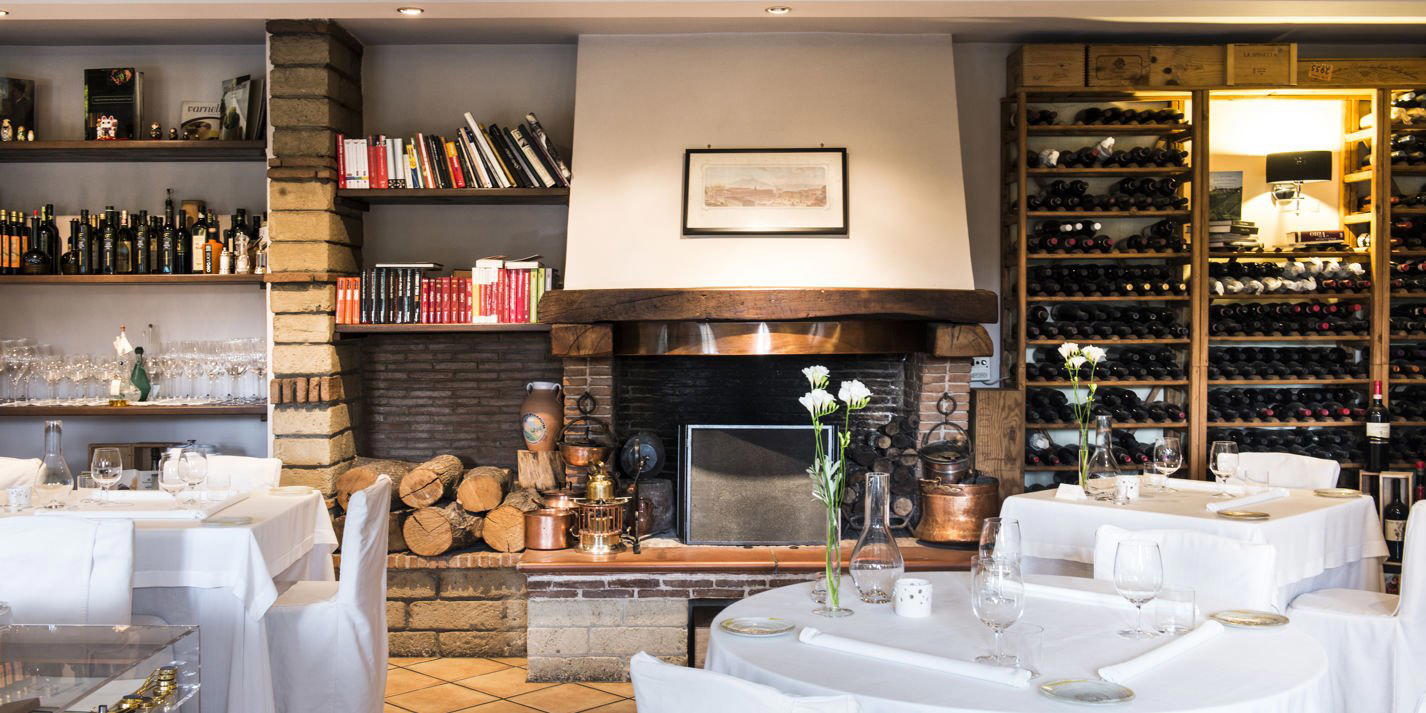
Campania at the Table: Why Brusciano Belongs in the Conversation
The dominant narrative around fine dining in Campania defaults to the coast: Positano cliffside terraces, Amalfi fish, the theatrical sweep of the bay from a Neapolitan rooftop. That framing misses a quieter, more serious strand of the region's kitchen tradition, one rooted in the agricultural interior, in the volcanic soils of the Vesuvian plain, and in family-run establishments that have spent decades refining rather than reinventing. Taverna Estia in Brusciano sits squarely in that interior tradition. The town is a working comune in the Naples metropolitan area, not a tourist destination, and the restaurant operates there with the self-assurance of a place that has never needed a scenic backdrop to justify its reputation.
Two Michelin stars confirm that this confidence is earned. Opinionated About Dining ranked Taverna Estia 168th among European restaurants in 2025. These are not local or regional accolades. They place the restaurant in a national tier occupied by addresses like Quattro Passi in Marina del Cantone and Reale in Castel di Sangro, both of which operate in similarly non-metropolitan settings while maintaining comparable recognition levels.
The Scene Before the First Dish
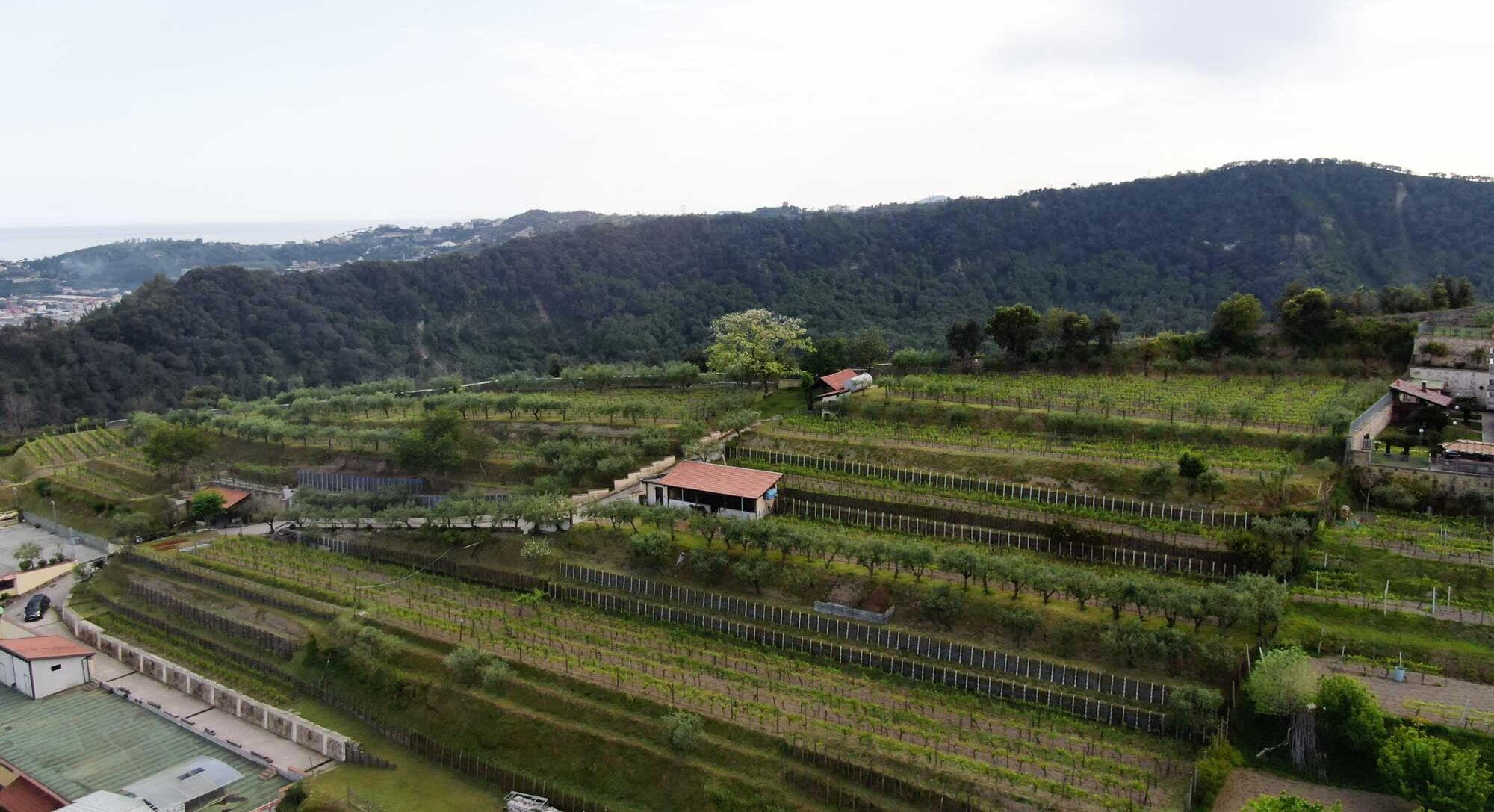
Approaching the restaurant, an aromatic herb garden announces priorities before any menu does. The growing of herbs and vegetables on-site is a signal that connects Taverna Estia to a broader Italian tradition of garden-to-table cooking that operates differently from the trend-driven farm-to-table idiom more common in northern European and American fine dining. Here, the garden is not a marketing statement; it reflects a Campanian sensibility in which what grows nearby shapes what appears in the kitchen, and the Vesuvian terroir, with its mineral-rich volcanic soil, produces ingredients with a density of flavour that chefs in less geologically active regions cannot replicate.
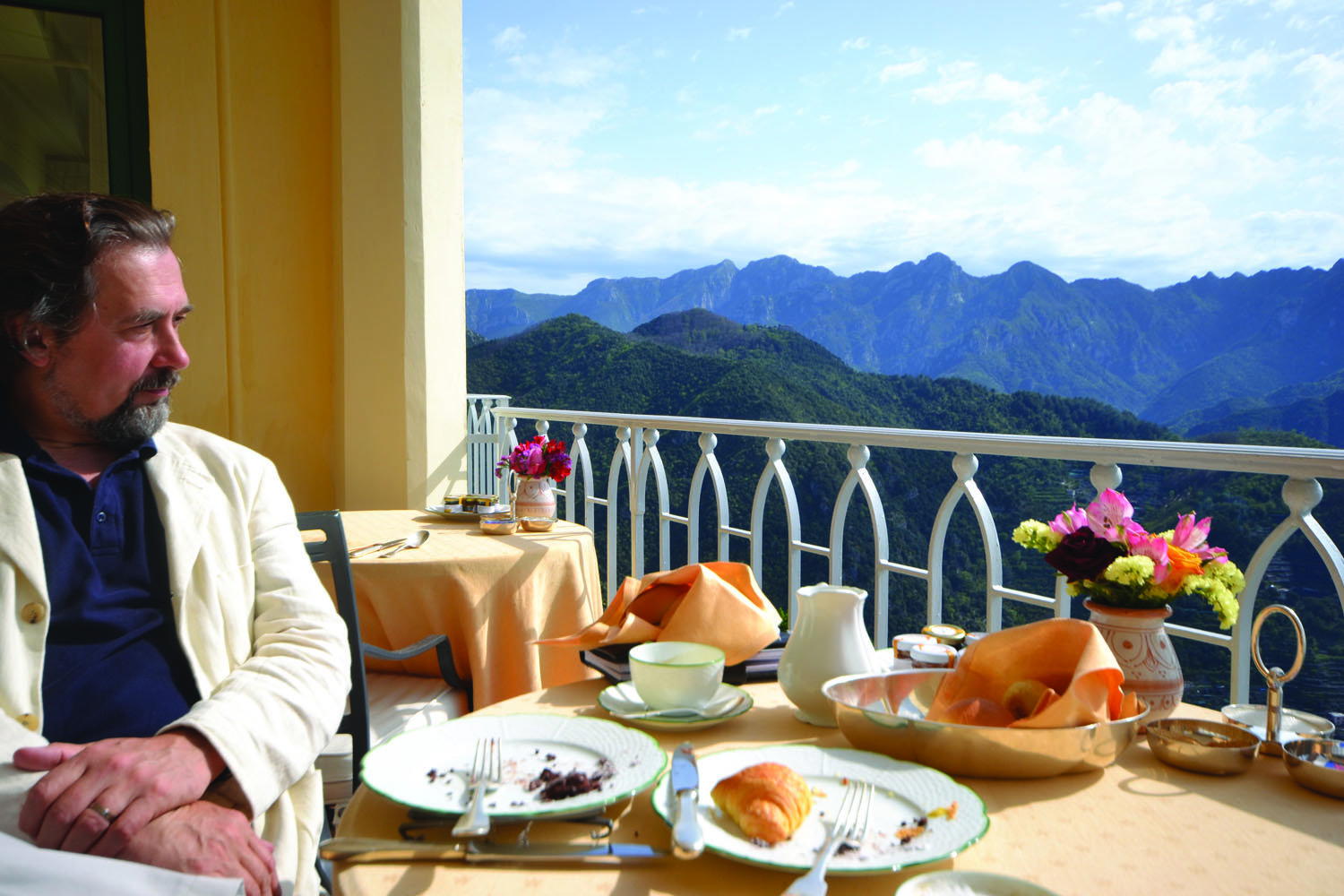
In fine weather, jasmine-covered alcoves provide the setting for outdoor dining, and the atmosphere in those spaces runs toward the genuinely romantic rather than the decoratively curated. Inside, the dining room is formal but not austere, with a wine cellar visible from the main space and an open kitchen that keeps the technical work in view without turning it into performance. The two registers, the garden informality outside and the composed elegance within, coexist without contradiction, which is a harder balance to maintain than it sounds.
What Campanian Contemporary Actually Means Here
Campania's flavour profile is among the more recognisable in Italian regional cooking: tomatoes with genuine acidity, local cheeses from the plains, seafood from the Tyrrhenian coast, produce from the volcanic hinterland around Vesuvius. The challenge for any kitchen working at this level is how to apply contemporary technique without flattening the regional character that gives the food its identity. The approach at the restaurant produces dishes that are notable and exciting while remaining anchored in Campanian flavour. That framing matters. It positions the cooking as creative within constraints rather than creative against them.
The format offers tasting menus with the option to order individual dishes à la carte, a structure that increasingly distinguishes southern Italian fine dining from the more rigid omakase-style progression common in upper-tier northern European restaurants. Guests can commit to the full sequence or compose their own meal from the same ingredients, which allows the kitchen's ambitions to be explored at whatever depth the diner prefers. For a two-star kitchen, that accessibility is notable.
The wine programme extends to more than a thousand labels, with an impressive selection of French bottles sitting alongside Italian producers. At this price point (€€€€), a deep cellar with international range is a reasonable expectation. The parallel appears elsewhere in Italian fine dining: Enoteca Pinchiorri in Florence built its reputation partly on a Franco-Italian cellar approach, and Dal Pescatore in Runate maintains a similarly broad international list at a family-run address with comparable generational depth.
The Family Structure and What It Signals
Fine dining in Italy has a long tradition of family-run addresses that hold serious critical recognition, a pattern less common in France or the United Kingdom, where the chef-owner model more often detaches from family inheritance. The restaurant follows that Italian pattern directly: brothers Mario and Francesco Sposito inherited the restaurant from their parents and have improved its standing without abandoning its character. Mario manages the front of house; Francesco leads the kitchen. The division of labour is clear, and the institutional memory of a family operation gives the restaurant a continuity that chef-hopping or ownership changes would disrupt.
This model appears across the category. Dal Pescatore operates on similar family-continuity logic in Lombardy. The Santini family there has maintained three Michelin stars over decades through the same inherited, improved model. The comparison does not diminish either restaurant; it illustrates that this structural approach produces a particular kind of consistency and depth that is hard to manufacture in a newer operation.
Where Taverna Estia Sits in Italy's Fine-Dining Field
Italy's two-star tier covers a wide range of culinary philosophies and regional identities. At one end, conceptually ambitious kitchens like Osteria Francescana in Modena or Enrico Bartolini in Milan operate in a register that prioritises intellectual provocation alongside technical precision. At the other, regionally grounded kitchens, in Campania, the Adriatic south, or the Alpine north, draw their authority from deep knowledge of a specific place. The restaurant occupies the latter position. Its 90-point La Liste score places it in the same general tier as Le Calandre in Rubano and Piazza Duomo in Alba, both of which earn their standing from deep regional specificity rather than from international conceptual frameworks.
Within Campania specifically, the restaurant's jump from OAD rank 352 (2024) to 168 (2025) suggests a kitchen that has accelerated in critical visibility. For a region that receives less critical attention than Piedmont, Lombardy, or Emilia-Romagna, that trajectory matters. Campanian fine dining produces a distinct tradition worth tracking alongside the more heavily covered northern kitchens, and the restaurant is now among its most persuasive arguments.
Planning the Visit
In Context: Similar Options
Comparable venues nearby, for context on price, style, and recognition.
| Venue | Cuisine | Price | Awards | Notes |
|---|---|---|---|---|
| Taverna EstiaThis venue — the venue you are viewing | Modern Italian Fine Dining | $$$$ | Michelin 2 Star | Not listed |
| Krèsios | Modern Italian Fine Dining | $$$$ | Michelin 2 Star | Telese Terme |
| daní maison | Modern Italian Fine Dining Tasting Menu | $$$$ | Michelin 2 Star | Bagno |
| Torre del Saracino | Modern Campania Seafood | $$$$ | Michelin 2 Star | Marina di Equa, Vico Equense |
| Il Pagliaccio | Modern Italian-Japanese Fusion Fine Dining | $$$$ | Michelin 2 Star | Ponte |
| Arnolfo | Modern Tuscan Fine Dining | $$$$ | Michelin 2 Star | Colle di Val d'Elsa |
Recognition history
Dated appearances from independent guides and award organizations, with the underlying list record or original source where available.
Falstaff Restaurant - 96 Falstaff Points
Falstaff
La Liste Top Restaurants
La Liste
Michelin 2 Stars
Michelin
Relais Chateaux Award
Relais Chateaux
La Liste Top Restaurants
La Liste
Michelin 2 Stars
Michelin
Opinionated About Dining Classical in Europe Ranked #168
Opinionated About Dining
Relais Chateaux Award
Relais Chateaux
The Best Chef One Knife
The Best Chef
Michelin 2 Stars
Michelin
Opinionated About Dining Classical in Europe Ranked #352
Opinionated About Dining
Opinionated About Dining Classical in Europe Recommended
Opinionated About Dining
Continue exploring
More in Brusciano
Restaurants in Brusciano
Browse all →
Bars in Brusciano
Browse all →
Hotels in Brusciano
Browse all →
At a Glance
- Romantic
- Cozy
- Elegant
- Rustic
- Intimate
- Date Night
- Special Occasion
- Celebration
- Garden
- Open Kitchen
- Extensive Wine List
- Local Sourcing
- Garden
Current opening hours
- Monday
- Closed
- Tuesday
- Closed
- Wednesday
- 7:30–10 PM
- Thursday
- 7:30–10 PM
- Friday
- 7:30–10 PM
- Saturday
- 12:30–2:30 PM, 7:30–10 PM
- Sunday
- 12:30–2:30 PM
Hours can change for holidays and private events. Last verified .
Warm and welcoming with beautiful garden atmosphere, elegant dining room featuring open kitchen view, fireplace, beamed ceiling, and jasmine-covered alcoves.