Grado
In Jardim Botânico, one of Rio's most considered residential neighbourhoods, Grado occupies a quiet address on Rua Visconde de Carandaí that puts it at a remove from the beachfront dining circuit. The setting signals a particular kind of intention: a meal here is structured around pace and place rather than spectacle. For Rio's dining scene, that posture alone marks a distinct position.
Pearl is the En Primeur Club membership app — saves, bookings, and concierge access live there. Same editors, same standards.
- Address
- R. Visc. de Carandaí, 31 - Jardim Botânico, Rio de Janeiro - RJ, 22460-020, Brazil
- Phone
- +5521994358386
- Website
- instagram.com
- Directions
- Get directions
 Saves & bookings on Pearl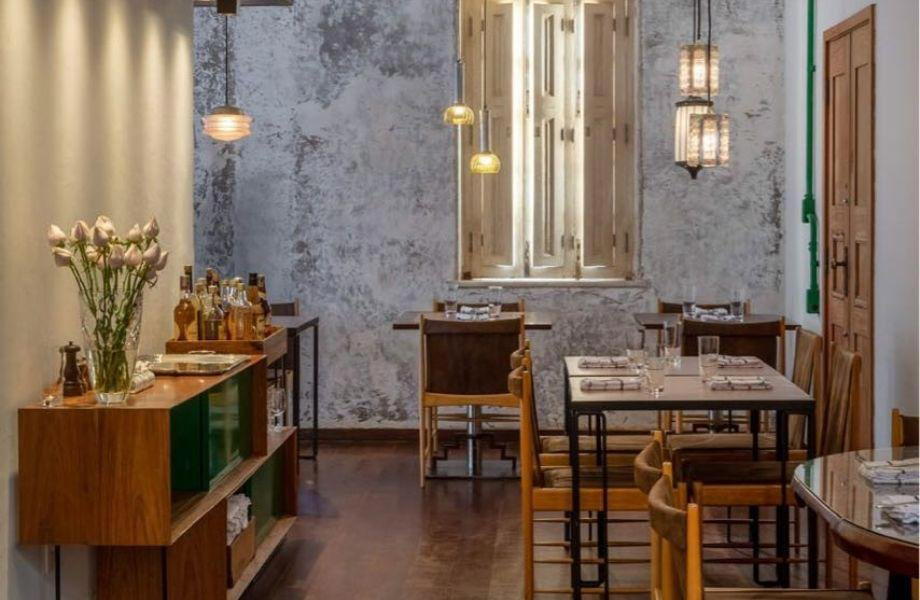
Jardim Botânico's Quieter Register
Rio de Janeiro's dining conversation tends to cluster around two poles: the tasting-menu flagships that compete on the same tier as Lasai and Oteque, and the casual neighbourhood spots that absorb the city's daytime energy. Grado, on Rua Visconde de Carandaí in Jardim Botânico, is an Italian Handmade Pasta restaurant in Rio de Janeiro. The neighbourhood is one of the city's more composed residential zones, shaded by the canopy that spreads outward from the Botanical Garden itself, and that character shapes the register of what a restaurant here can plausibly be. The street is unhurried. The approach to the address feels deliberate rather than accidental, which is its own editorial statement about what kind of meal follows.
Jardim Botânico has attracted a particular cohort of Rio restaurants in recent years: places that prioritise repeat local clientele over tourist throughput, and that build their identity around consistency rather than spectacle. Grado operates in this context, a neighbourhood where the ambient expectation is that things are done carefully and without noise.
The Ritual of the Meal Here
In cities where dining has become performance, the alternative is a meal structured around sequence rather than theatre. The strongest dining rituals in Rio's mid-to-upper tier share certain characteristics: attention to the pace at which courses arrive, a wine or beverage list that has been thought through rather than assembled, and a room where the acoustics allow conversation. These are not decorative qualities. They determine whether a guest leaves feeling they have eaten well or merely eaten. Grado's address in a residential quarter, rather than a commercial strip, supports this kind of pacing by reducing the throughput pressure that busier locations impose.
The comparison is instructive. Oro and Casa 201 operate at the formal end of Rio's dining spectrum, where the tasting-menu format imposes its own ceremonial structure. Cipriani brings the weight of its institutional lineage to bear on every sitting. Grado, by contrast, does not appear to be reaching for that tier of ceremony. The Jardim Botânico setting points toward something more like a considered neighbourhood restaurant, where the ritual is internal to the experience rather than announced by the format.
A dinner at a place like this is not structured around a pre-set tasting sequence or a fixed price that decides the experience before you arrive. The ritual is in the choosing, in the room itself, in the rhythm of service that a well-run neighbourhood restaurant makes look easy. Getting that right consistently is harder than a multi-course format, which at least provides scaffolding.
Where Grado Sits in the Rio Context
Rio's restaurant scene has matured considerably over the past decade. The city now has representatives at the serious end of the Latin American conversation, with properties like Lasai and Oteque drawing the kind of attention that previously flowed almost exclusively to D.O.M. in São Paulo and its peers. But the more interesting development, for a reader planning a week in Rio rather than a single benchmark dinner, is the strengthening of the tier below that: restaurants that are not chasing awards recognition but are doing precise, repeatable work at a neighbourhood scale.
That tier is where Grado belongs. It is a logical addition to an itinerary that already includes a booking at Oteque or Lasai for the headline evening. The two kinds of meal serve different purposes and do not compete with each other. The flagships make an argument; a place like Grado makes you comfortable. Both are necessary for a complete read of what Rio's dining culture has become.
For context on how the city's restaurant geography is organised, and where other neighbourhoods fit relative to Jardim Botânico, the full Rio de Janeiro restaurants guide maps the scene across zones. Jardim Botânico is one of the more coherent dining neighbourhoods precisely because it lacks the tourist pressure of Ipanema or the volume of Leblon, which gives restaurants here more room to develop on their own terms.
Brazilian Dining Traditions at This Scale
The neighbourhood restaurant as a serious category has deep roots in Brazilian dining culture. In cities across the country, from Santa Maria to Manaus, the model of a small, owner-operated room serving a regular local clientele remains the dominant form. What distinguishes the better examples is not ambition in the tasting-menu sense but exactness at the scale they have chosen: a short menu executed without error, a room that has been thought about, a service approach that does not call attention to itself. These are the same criteria that apply at Le Bernardin in New York, scaled differently but governed by the same logic.
Internationally, the neighbourhood restaurant that takes itself seriously without performing seriousness is having a moment. Atomix in New York operates in a different register entirely, but the broader shift it represents, away from casual-versus-formal as the only axis, is visible in cities like Rio too. Grado sits on Rua Visconde de Carandaí as part of that broader pattern.
Planning a Visit
Grado is recommended for reservations and follows these hours: Mon: Closed; Tue: 7–11 PM; Wed: 7–11 PM; Thu: 7–11 PM; Fri: 7–11 PM; Sat: 12:30–4:30 PM, 7–11 PM; Sun: 12:30–5 PM. For a neighbourhood restaurant of this type and location, reservations are recommended.
EP Club Rio de Janeiro guide provides the fuller picture. Other Brazilian dining worth considering in a broader itinerary includes Aero Burguer e Grill in Santa Cruz do Sul, Arte e Café Imperial in Angra dos Reis, Casa da Dika in Bragança, Casa da Flor in Dourados, Casa da Picanha Penedo in Itatiaia, Famosa Pizza in Ribeirão Preto, and Fornazzo Pizzaria in Passo Fundo, each representing a different facet of how Brazilian dining culture plays out across the country's diverse regions.
Cuisine Lens
Comparable venues nearby, for context on price, style, and recognition.
| Venue | Cuisine | Price | Notes |
|---|---|---|---|
| GradoThis venue — the venue you are viewing | Italian Handmade Pasta | $$$ | Not listed |
| Alloro | Refined Regional Italian | $$$ | Copacabana |
| BOTA | Italian & Mediterranean Seaside | $$$ | Glória |
| Bráz | Pizza Paulistana | $$$ | Jardim Botânico |
| CT Boucherie | French Steakhouse | $$$ | Leblon |
| Gurumê | Contemporary Japanese Fusion | $$$ | Leblon |
Continue exploring
More in Rio de Janeiro
Restaurants in Rio de Janeiro
Browse all →
Bars in Rio de Janeiro
Browse all →





At a Glance
- Cozy
- Intimate
- Elegant
- Date Night
- Special Occasion
- Open Kitchen
- Courtyard
- Extensive Wine List
- Garden
Current opening hours
- Monday
- Closed
- Tuesday
- 7–11 PM
- Wednesday
- 7–11 PM
- Thursday
- 7–11 PM
- Friday
- 7–11 PM
- Saturday
- 12:30–4:30 PM, 7–11 PM
- Sunday
- 12:30–5 PM
Hours can change for holidays and private events. Last verified .
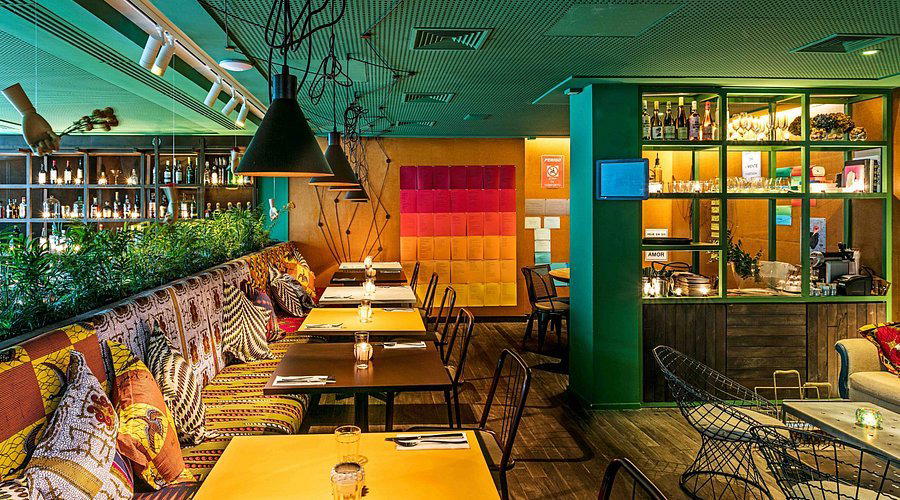
Cosy interior with quirky decoration, bookshelves, and warm lighting in a charming historic house setting.