Madame Olympe


1 Michelin Star · Conde Nast Hot List Restaurants
Our verdict
Madame Olympe brings Rio’s high-end dining conversation back to ingredient discipline: Brazilian produce, French technique, an eight-course format, and a 24-seat room in Leblon. The draw is not formality for its own sake, but the way Troisgros’s lineage and Jessica Trindade’s long kitchen tenure are used to frame local sourcing with restraint.

Pearl is the En Primeur Club membership app, where members save venues, book tables and use the concierge.
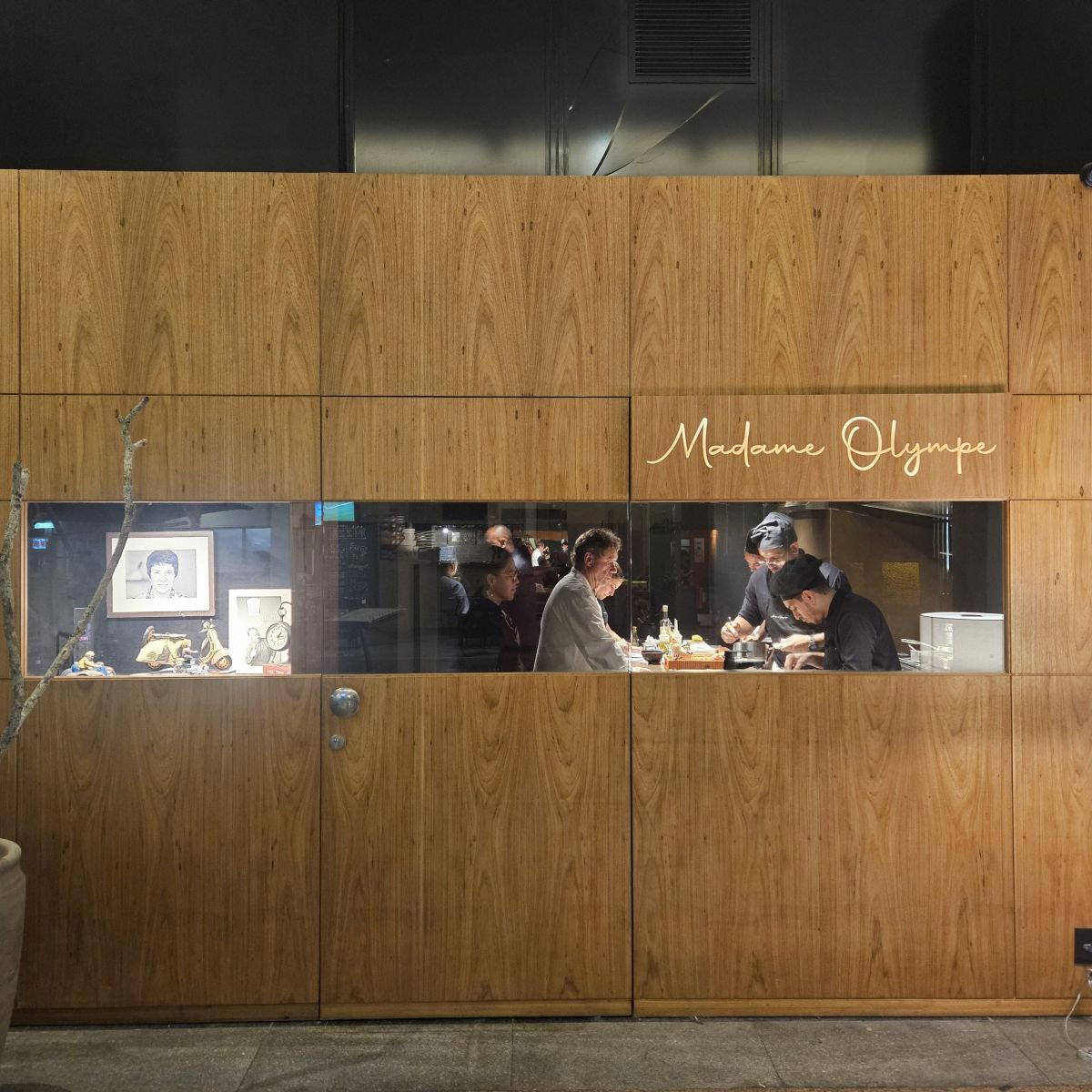
Rio de Janeiro is where polished restaurant culture meets the city’s refusal to act like a formal dining capital. At Madame Olympe, that tension can be read through the restaurant’s central proposition: a Brazilian table shaped by French technique without sanding down local identity. The room matters less as a stage than as a way to understand the city around it, where serious dining rarely convinces when it imitates elsewhere too literally.
The format is considered in spirit, with the restaurant identified for Brazilian cooking using French techniques. That places it apart from the city’s broader bistro, casual, and beach-adjacent culture without requiring an imported script. For readers mapping Rio beyond the obvious addresses, Our full Rio de Janeiro restaurants guide is the wider frame, while nearby hospitality, drinking, wine, and cultural planning sit in Our full Rio de Janeiro hotels guide, Our full Rio de Janeiro bars guide, Our full Rio de Janeiro wineries guide, and Our full Rio de Janeiro experiences guide.
Brazilian ingredients, French grammar, and the discipline of a small menu
The strongest way to read this kitchen is through foundations, not flourish. In some dining cultures, serious contemporary cooking announces itself through a single defining staple; in Brazil, the equivalent conversation is broader, moving through regional produce, fruit, roots, local grains, native acidity, and small-producer supply chains. Madame Olympe’s appeal is that its Brazilian-with-French-technique approach asks ingredients to carry the idea rather than merely decorate it.
That restraint is the editorial point. A high-profile Rio restaurant can easily be framed through abundance: tropical fruit, seafood, smoke, flowers, sauces, and gestures of generosity. This room is better understood through a tighter premise. Brazilian products provide the flavor vocabulary; French technique supplies proportion, sequencing, and temperature logic. The result is neither nostalgic French restaurant nor casual Brazilian dining room. It sits in the contemporary middle, where local character is no longer a slogan and technique matters only when it clarifies the ingredient.
The approach is best understood as translation rather than novelty for novelty’s sake. French forms can carry a different charge when the base pantry changes, and Brazilian ingredients can read differently when handled with a more formal sense of structure. These are not random mashups; they show how a kitchen can keep the grammar disciplined while letting the nouns remain Brazilian.
Rio has many ways to eat well outside this register. Casual comfort, polished dining, neighborhood cooking, and contemporary formats all shape other versions of the city. They are useful not as direct peers, but as proof that Rio’s restaurant identity is plural: comfort, view, polish, generosity, and technique can coexist without needing to imitate one another.
The restaurant's recognition is a credential, but the operating signal is restraint
Madame Olympe’s international recognition gives the restaurant a clear credential: it appears in Condé Nast Traveler’s 2026 Hot List of the best new restaurants in the world. In Rio, however, recognition alone is not the story. The more practical signal is whether the cooking can make a technical premise feel natural in a city that does not reward stiffness for its own sake.
That matters because restaurants built around a defined culinary idea live or fail on clarity. A focused Brazilian-and-French framework leaves little room for vague positioning, and technical cooking cannot hide behind labels. The relaxed Rio dining context also changes the social contract: technique should be visible in the food, not imposed on the guest. Rio’s better dining works well when it accepts the city’s informality. Dressed-up diners and easygoing local habits in the same dining culture are not a contradiction here; they measure the local code.
The producer conversation is another trust signal, even when the specific names are less important than the principle. A menu built around Brazilian ingredients and French technique depends on sourcing, timing, and restraint. If the cooking is going to avoid excess, the supply chain has to do more work. Foundational ingredients become serious when restaurants treat sourcing, processing, and clarity as craft, not background.
Where this fits in Rio's 2026 dining map
For 2026, Madame Olympe is best understood as a controlled counterpoint to Rio’s more expansive dining moods. The city remains defined by beach rhythm, neighborhood generosity, and rooms that do not over-police the guest. This restaurant uses a refined culinary structure, but the social temperature is still Rio. That balance is its distinction: technique without theatrical reverence.
For travelers building a wider Brazil itinerary, the country’s restaurant map stretches far beyond Rio’s coastal grammar. Other cities and regions show different habits, from urban comfort to seafood-led rooms, casual local counters, and contemporary projects. Even outside Brazil, focused ingredient formats explain the same editorial pattern: when a restaurant narrows its language, the quality of sourcing and execution becomes the point.
The verdict needs no inflation: this is for diners who want Brazilian cooking interpreted through French technique, not a restaurant framed only by spectacle. The evidence is specific enough: Brazilian ingredients, French technique, a Rio de Janeiro setting, and recognition from Condé Nast Traveler’s 2026 Hot List. In a city where informality is not a weakness, that combination gives Madame Olympe its reason to be taken seriously.
Frequently asked questions
Is Madame Olympe suitable for children?
Madame Olympe is a restaurant in Rio de Janeiro with a refined culinary focus. Travelers bringing children should check directly with the restaurant for current seating and service details.
Is Madame Olympe formal or casual?
Madame Olympe is best understood as a Rio de Janeiro restaurant with a polished culinary approach rather than a venue defined only by formality.
What distinctions does Madame Olympe have?
Madame Olympe is recognized by Condé Nast Traveler in its 2026 Hot List of the best new restaurants in the world.
What type of food is Madame Olympe known for?
Madame Olympe is known for Brazilian cooking with French techniques.
Reputation & Price
Comparable venues nearby, for context on price, style, and recognition.
| Venue | Cuisine | Price | Awards | Notes |
|---|---|---|---|---|
| Madame OlympeThis venue (the venue you are viewing) | French-Brazilian Fine Dining | $150–200 | 1 Michelin Star · Conde Nast Hot List Restaurants | Not listed |
| Olympe | French-Brazilian Fine Dining | $100–150 | Not listed | Humaitá, French-Brazilian Fine Dining |
| Anna | Italian Seafood | $50–100 | Not listed | Leblon, Italian Seafood |
| BOTA | Italian & Mediterranean Seaside | $50–100 | Not listed | Glória, Italian & Mediterranean Seaside |
| Satyricon | Italian-Mediterranean Seafood | $50–100 | Not listed | Ipanema, Italian-Mediterranean Seafood |
| Ferro e Farinha | Modern Neapolitan Pizza | $30–50 | 50 Top Pizza World Best Pizza #31 | Ipanema, Modern Neapolitan Pizza |
Recognition history
Dated appearances from independent guides and award organizations, with the underlying list record or original source where available.
Michelin 1 Star
Michelin
Conde Nast Hot List Restaurants
Conde Nast
Continue exploring
More in Rio de Janeiro
Restaurants in Rio de Janeiro
All restaurants in Rio de Janeiro →
Bars in Rio de Janeiro
All bars in Rio de Janeiro →
Details
- Elegant
- Sophisticated
- Romantic
- Intimate
- Modern
- Date Night
- Special Occasion
- Celebration
- Design Destination
- Standalone
- Sommelier Led
- Local Sourcing
- Tasting Menu
- Prix Fixe
- Wine
Current opening hours
- Monday
- Closed
- Tuesday
- 6:30–11:30 PM
- Wednesday
- 6:30–11:30 PM
- Thursday
- 6:30–11:30 PM
- Friday
- 6:30–11:30 PM
- Saturday
- 6:30–11:30 PM
- Sunday
- Closed
Hours can change for holidays and private events. Hours as of .
A contemporary, refined dining room with rice-paper lamps evoking floating clouds and an atmosphere centered on a polished tasting-menu experience.