Pabu Izakaya
Pabu Izakaya brings the izakaya format to Leblon, one of Rio de Janeiro's most food-serious neighbourhoods, translating Japan's tradition of convivial, drink-driven dining into a city already fluent in that rhythm. The address on Rua Humberto de Campos places it within reach of the zone's restaurant cluster, making it a natural stop for those working through Rio's evolving Japanese dining scene.

Pearl is the En Primeur Club membership app — saves, bookings, and concierge access live there. Same editors, same standards.
- Address
- R. Humberto de Campos, 827 - Loja G - Leblon, Rio de Janeiro - RJ, 22430-190, Brazil
- Phone
- +55 21 3738 0416
- Hours
- Mon–Wed 12–11 PMThu–Sat 12 PM–12 AMSun 12–11 PM
- Website
- menu.pabuizakaya.com.br
- Directions
- Get directions
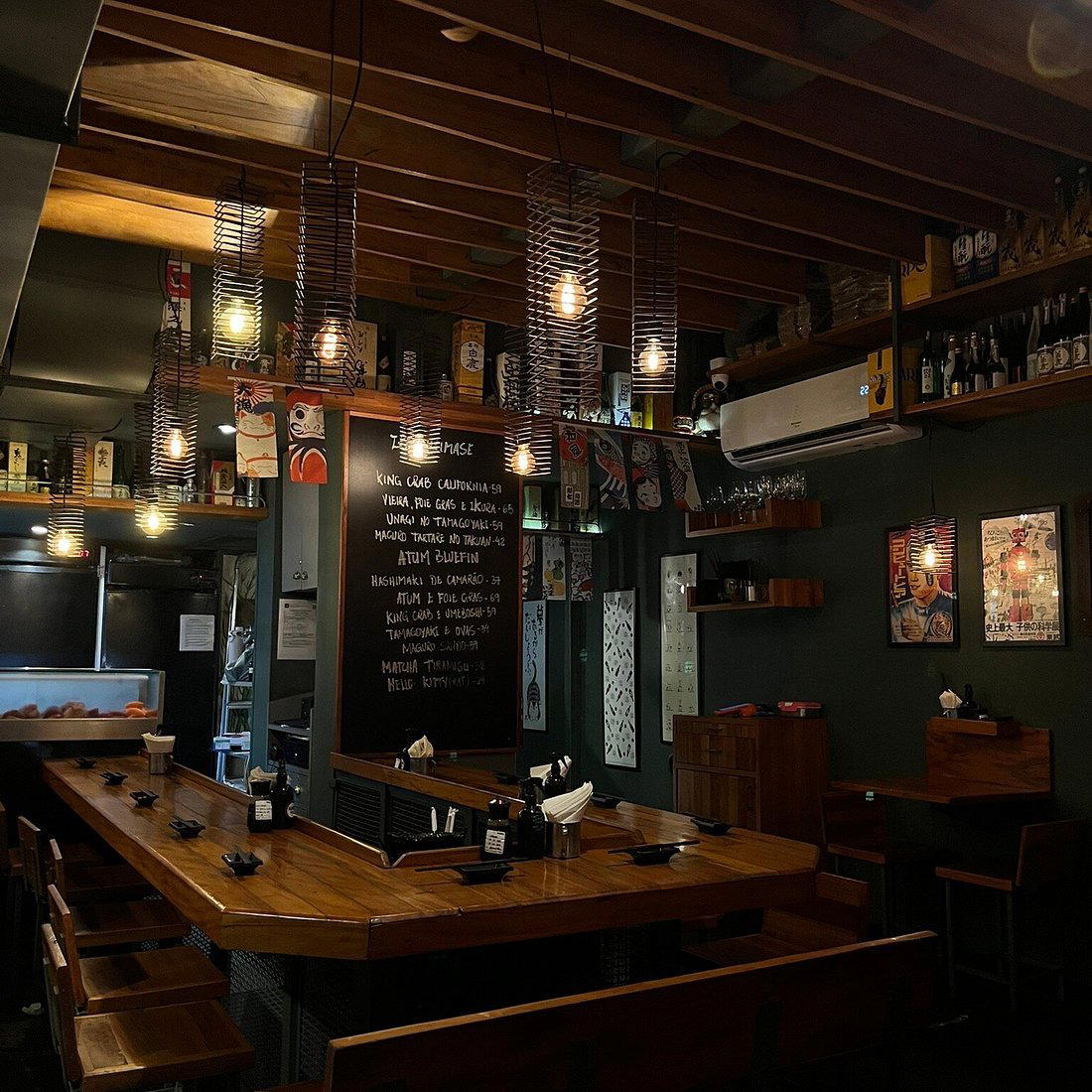
Izakaya Culture Finds Its Register in Leblon
The izakaya format has always been better understood as a mood than a menu category. In Japan, these drinking establishments built their identity around the space between dishes — the unhurried pace, the low lighting, the sense that the evening has no fixed endpoint. When that format travels, the venues that carry it most credibly are the ones that preserve the atmosphere rather than simply transplanting the food. Pabu Izakaya, on Rua Humberto de Campos in Leblon, operates in that tradition, bringing the convivial logic of izakaya dining to a neighbourhood that already understands how to eat and drink without rushing.
Leblon itself sets a high baseline. The area runs parallel to Ipanema along the western edge of Rio's Zona Sul, and its restaurant density reflects both the spending power of its residents and the expectations of visitors who know where to look. Japanese dining in Rio has deepened considerably over recent decades, shaped partly by Brazil's large Nikkei community — the country holds one of the largest populations of Japanese descent outside Japan, and partly by a broader shift in urban dining culture toward more ingredient-focused, restrained formats. Pabu sits within that longer arc.
The Physical Logic of the Space
Izakaya interiors in their original context tend toward the deliberately unpretentious: wooden surfaces, close seating, enough ambient noise to feel alive without becoming oppressive. The format resists grandeur by design. What matters is the quality of the counter experience, the proximity of other diners, and the sense that the space encourages staying rather than cycling through. The address on Rua Humberto de Campos, 827, Loja G, places Pabu in a street-level unit, which is consistent with the izakaya model of accessible, walk-in-friendly premises that don't signal exclusivity from the exterior.
In cities like São Paulo, where the Japanese dining scene is older and more layered, izakaya-style venues have consolidated around two distinct registers: the high-production, design-led spaces aimed at a cocktail-and-small-plates crowd, and the more stripped-back operations where the food and drink carry the weight without theatrical support. Rio's equivalent scene is smaller but developing along similar lines. Pabu's positioning in Leblon, rather than in the more tourist-facing zones of Ipanema or Copacabana, suggests an orientation toward the neighbourhood's regular clientele rather than foot traffic.
Drinking and Eating in the Izakaya Sequence
The izakaya sequence matters. Unlike tasting-menu restaurants where the kitchen controls the pacing, or casual dining rooms where dishes arrive as they're ready, the izakaya model hands timing to the diner. Small plates arrive across a long evening, drinks anchor the experience, and the meal doesn't so much end as gradually wind down. This structure suits Rio's existing dining culture, which has never been rigid about course-by-course formality. The city's botequim tradition, built around informal, long-table socialising with food as accompaniment rather than centrepiece, shares enough structural DNA with the izakaya to make the format feel less like an import and more like a translation.
For those unfamiliar with izakaya ordering logic, the practical approach is to treat the menu as a list of accompaniments to drinking rather than a conventional progression from starter to main. Grilled skewers, cold preparations, fried items, and small rice or noodle dishes are meant to share across the table over multiple rounds. The leading sessions at venues like Pabu tend to be the ones where no single diner takes ownership of the order, where the table decides collectively and continuously throughout the night.
Rio's broader bar and dining scene offers a useful comparative frame. Operations like Bar de Copa, Bar do Bode Cheiroso, Bar do Mineiro, and Bar dos Descasados each anchor a different register of Rio's convivial dining tradition, from the historic botequim to the more contemporary cocktail-forward format. Pabu operates in its own distinct lane within that ecosystem, defined by Japanese idiom rather than Brazilian vernacular, but sharing the same underlying principle: that the space should encourage people to stay.
How Pabu Fits Rio's Japanese Dining Scene
Brazilian Japanese dining has historically concentrated in São Paulo, where neighbourhoods like Liberdade built decades-long reputations around ramen houses, sushi counters, and izakayas serving a community with direct generational ties to Japan. Rio's equivalent scene is smaller and arrived later, but it has matured. The city now supports enough serious Japanese operations that venues are beginning to differentiate by format and register rather than simply by the breadth of their menus. An izakaya like Pabu occupies a specific niche within that: it is not a sushi counter experience, not a ramen specialist, and not a fusion concept. It is a format built around the evening itself.
Across Brazil's other major cities, the izakaya concept is gaining ground in ways that reflect local character. Exímia in São Paulo represents the more technically ambitious end of the city's drinking and dining culture, while operations in cities like Belo Horizonte, where venues such as Bar da Lora anchor a different kind of social dining scene, show how Brazil's regional cities are developing their own frameworks for convivial evening formats. In Salvador, Acarajé da Dinha demonstrates how a single product can anchor an entire evening ritual. Pabu's version of that anchoring is the izakaya session itself.
Further south, the drinking and dining cultures of Porto Alegre and Balneario Camboriu have developed more wine-forward social formats: Dionisia Restaurante VinhoBar in Porto Alegre and Vivan Wine Bar in Balneario Camboriu reflect that tendency. And internationally, venues like Bar Leather Apron in Honolulu and SEEN Belém in Belem show how the craft drinking format adapts across very different cities. Pabu's version of premium evening hospitality is more food-driven than cocktail-forward, which places it in a specific subcategory within Rio's evening economy.
Planning a Visit
Pabu Izakaya is located at Rua Humberto de Campos, 827, Loja G, in Leblon, a neighbourhood that is navigable on foot from Ipanema and well-served by Uber and app-based car services from central Rio. The izakaya format rewards arriving without a fixed agenda: plan for a minimum of two hours and allow the pace of the table to dictate when the evening ends. For a broader map of where Pabu sits within Rio's overall dining and drinking culture, the full Rio de Janeiro restaurants guide provides neighbourhood-level context across the city's major areas.
Where It Fits
| Venue | Cuisine | Price | Awards |
|---|---|---|---|
| Pabu IzakayaThis venue — the venue you are viewing | This venue | $30–50 | Not listed |
| Bar de Copa | World's 50 Best | $20–30 | World's 50 Best #41 |
| Elena Horto | Not listed | Not listed | Star Wine List · Top 500 Bars Best Bars #426 |
| Galeto Sat's Botafogo | Not listed | $10–20 | Not listed |
Continue exploring
More in Rio de Janeiro
Bars in Rio de Janeiro
Browse all →
Restaurants in Rio de Janeiro
Browse all →
Details
- Trendy
- Lively
- Intimate
- Casual Hangout
- Group Outing
- After Work
- Standalone
- Design Destination
- Seated Bar
- Counter Only
- Booth Seating
- Sake
- Craft Cocktails
- Craft Beer
Current opening hours
- Monday
- 12–11 PM
- Tuesday
- 12–11 PM
- Wednesday
- 12–11 PM
- Thursday
- 12 PM–12 AM
- Friday
- 12 PM–12 AM
- Saturday
- 12 PM–12 AM
- Sunday
- 12–11 PM
Hours can change for holidays and private events. Last verified .
Intimate interior with a long central bar and side tables, creating a casual yet sophisticated atmosphere that blends Japanese tradition with Rio's local energy.