Our verdict
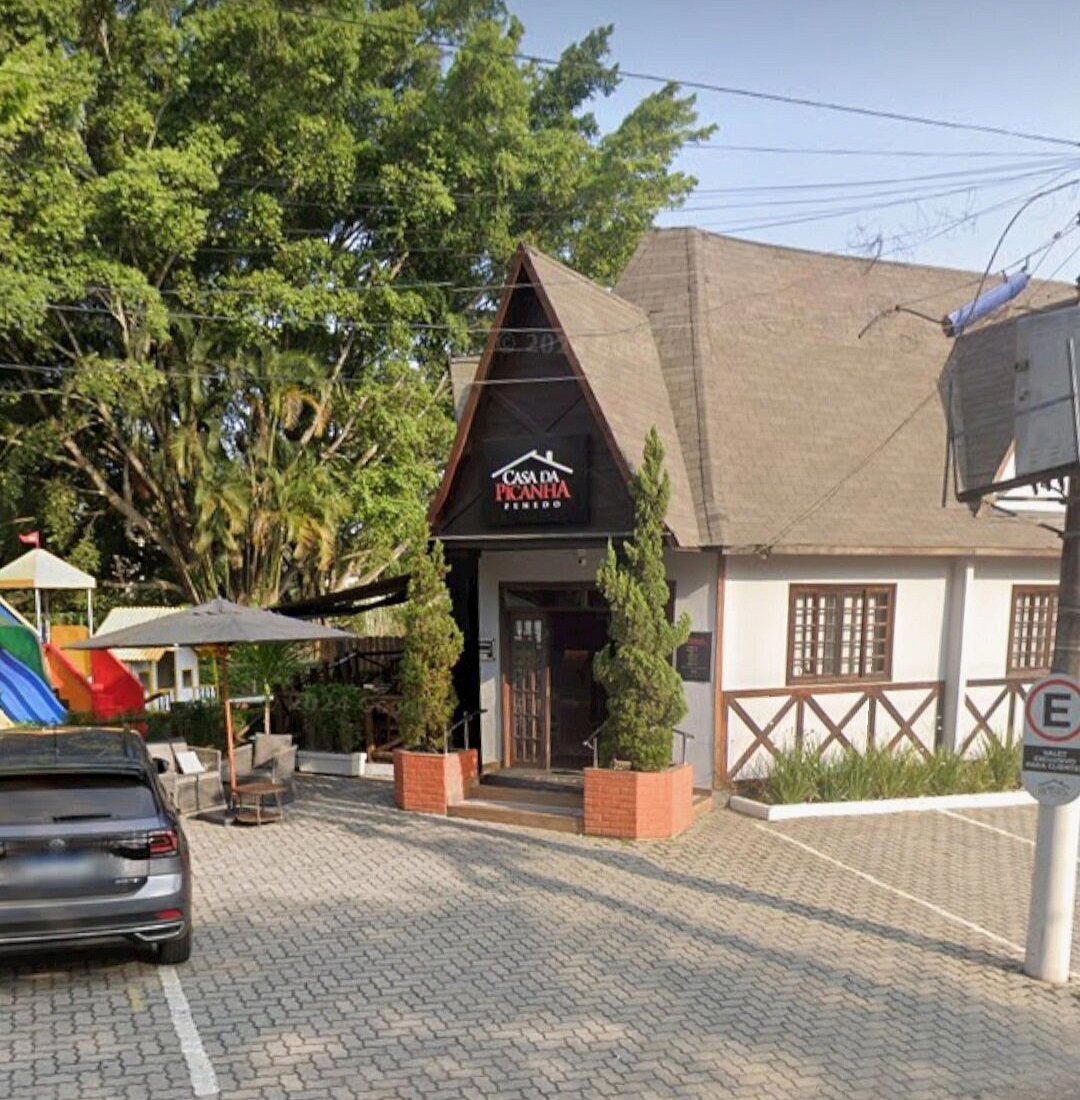
In Penedo, the mountain village outside Itatiaia that draws weekenders from Rio and São Paulo, Casa da Picanha Penedo represents the straightforward end of Brazilian churrasco culture: a neighborhood address built around the cut that defines the country's beef identity. The picanha is the story here, and in a region where cattle farming and highland pasture shape the table, that focus carries genuine local logic.

Pearl is the En Primeur Club membership app, where members save venues, book tables and use the concierge.
The menu
What to order
- Picanha
- Porchetta
Where the Cut Comes First
Penedo sits in the Serra da Mantiqueira foothills, about 170 kilometres from Rio de Janeiro, and the village has long operated as a pressure-release valve for urban residents willing to trade pavement for pine trees and cooler air. The dining culture that developed here reflects that function: it skews casual, communal, and meat-forward, built around the rhythms of weekend appetite rather than culinary ambition. Within that context, Casa da Picanha Penedo at Av. Brasil, 525 is precisely what its name promises, an address organized around Brazil's most culturally loaded beef cut, served in the mountain air of a town that has always preferred the table over the tasting menu. For a broader orientation to eating and drinking in the area, see our full Itatiaia restaurants guide.
The Ingredient Argument: Why Picanha in the Serra da Mantiqueira
Brazil's relationship with picanha, the rump cap, trimmed with its fat layer intact, is not a marketing invention. The cut has occupied a specific ceremonial role in Brazilian churrascos for decades, prized for the way its fat renders against direct flame and bastes the lean muscle beneath. What makes geography relevant here is the proximity to cattle country. The Serra da Mantiqueira and the surrounding Paraíba Valley region have sustained beef and dairy farming for generations, and the supply chains that feed smaller regional restaurants in towns like Itatiaia and Penedo tend to be shorter than those supplying urban steakhouses in São Paulo or Rio.
That shorter supply chain matters in practice. Fresher, locally sourced beef arrives at regional tables with less cold-chain handling, and for a cut as fat-dependent as picanha, the quality of that fat, its texture, its flavor, the way it behaves under heat, reflects the animal's diet and finishing conditions more directly than a heavily sauced or aged preparation would allow. Brazil's broader fine-dining circuit, represented at its apex by restaurants like Oteque in Rio de Janeiro and D.O.M. in São Paulo, has spent the last decade foregrounding Brazilian ingredients as a point of national pride. Casa da Picanha Penedo operates at the other end of that spectrum, no tasting menus, no foraged garnishes, but the underlying argument about ingredient provenance connects to the same current.
Regional Brazilian restaurants have always carried this logic quietly. Places like Birosca S2 in Belo Horizonte and Orixás | North Restaurant in Itacaré demonstrate how regional sourcing shapes the table in different parts of the country. In the Serra da Mantiqueira, beef is the regional product, and a restaurant named for the cut is making a sourcing claim whether it explicitly frames it that way or not.
The Penedo Setting and What It Signals
Penedo earned its character as a destination from Finnish immigrants who settled here in the early twentieth century, and the village retains an unusual architectural texture for the Brazilian interior: wooden chalets, pine-lined streets, a cooler microclimate that sits several degrees below the Rio de Janeiro basin. That atmosphere shapes dining expectations. Visitors arriving for a weekend in the mountains are not generally hunting for the kind of urban technical cooking you find at Manu in Curitiba or Olivetto Restaurante E Enoteca in Campinas. They want a table, a fire, good meat, and the particular satisfaction of eating something well-sourced in the place where it belongs.
Casa da Picanha Penedo addresses that appetite directly. The address on Av. Brasil places it on the village's main commercial artery, accessible on foot from the central square and within the pedestrian flow of Penedo's weekend market activity. Brazilian mountain dining at this register is communal by default, portions are sized for sharing, cuts arrive tableside, and the meal extends in the way that a Sunday lunch in a hill town should. For comparison, similar dynamics operate at Mina in Campos do Jordão, another Serra da Mantiqueira address where weekend appetite and highland setting define the offer.
Situating the Restaurant in Brazilian Churrasco Culture
Brazilian churrasco culture is not monolithic. It runs from roadside espetos in Minas Gerais to the high-volume rodízio format that exports to cities worldwide, and from that to the single-cut specialist addresses that have proliferated in affluent urban neighborhoods over the last decade. Casa da Picanha Penedo sits in the regional specialist register: a focused offer in a specific geography, where the cut itself rather than the format or the spectacle is the organizing principle.
That positioning has its own competitive logic. In São Paulo, a picanha-focused restaurant competes against dozens of alternatives within a few kilometers. In Penedo on a Saturday, the competitive set is smaller, the weekend visitor base is captive, and the question shifts from which restaurant to how long to wait for a table. The parallel dynamic operates at popular regional addresses across Brazil, from Manga in Salvador to State of Espírito Santo in Rio Bananal, where geography concentrates demand in ways that urban dining never quite replicates.
Internationally, the single-protein specialist format has proven durable across price tiers, from high-technique fish counters like Le Bernardin in New York City to community-driven formats such as Lazy Bear in San Francisco. The principle that a restaurant committed to one ingredient category can outperform generalists on that specific axis is well established. Casa da Picanha Penedo applies that logic at a regional, accessible scale.
Planning a Visit
Penedo is most heavily trafficked on weekends and Brazilian public holidays, when the village draws day-trippers and overnight guests from Rio and São Paulo. Arriving mid-week offers a quieter experience and typically shorter waits. The Av. Brasil address is centrally located and reachable without a car once you are in the village, though getting to Penedo itself from Rio requires either a private transfer or a connecting route through Resende. No phone number or website is currently listed in public records for direct reservations, so walk-in timing is the practical approach, earlier sittings on weekends move faster. For travelers building a broader itinerary around the mountain region, addresses like Castelo Saint Andrews in Gramado and Primrose in Gramado illustrate how other Brazilian highland towns have developed their own dining identities worth comparing.
Frequently asked questions
Is Casa da Picanha Penedo a family-friendly restaurant?
Penedo itself draws a broad mix of day-trippers, families, and overnight visitors from Rio and São Paulo, particularly on weekends and public holidays, and restaurants in the village generally reflect that demographic. Casa da Picanha sits on Av. Brasil, the main thoroughfare through Penedo, which positions it squarely in the village's accessible, walk-in traffic corridor. Brazilian churrasco formats, built around shared cuts and table-side service, tend to suit group dining across generations.
What's the vibe at Casa da Picanha Penedo?
Penedo carries an atmosphere shaped by its Finnish immigrant heritage and its role as a weekend retreat from Rio and São Paulo, unhurried, village-scale, with a strong pedestrian culture along Av. Brasil where the restaurant is located. The setting is closer to a regional churrascaria serving a loyal local and tourist mix than to an urban dining destination. Expect the pace and informality that goes with a mountain village on a Saturday afternoon.
How does Casa da Picanha Penedo compare to churrascarias in Rio de Janeiro?
Casa da Picanha operates in Itatiaia, roughly 170 kilometres from Rio, in a village context that sits outside the high-volume rodízio format common to urban churrascarias. Where Rio's larger houses prioritise throughput and variety across multiple cuts, a restaurant named specifically for picanha in a small Serra da Mantiqueira town signals a tighter, cut-focused approach. The Penedo setting also means the surrounding cattle country is part of the proposition in a way that a city venue cannot replicate.
What do regulars order at Casa da Picanha Penedo?
The name of the restaurant is the answer: picanha, Brazil's rump cap cut, trimmed with its fat layer intact and grilled over high heat, is the centrepiece. In the Serra da Mantiqueira region, cattle are raised at altitude in cooler pastures, which regional producers argue produces a more defined fat cap, the quality marker that determines how a picanha performs on the grill. Side orders typical of Brazilian churrasco, such as farofa, vinagrete, and rice, follow as standard accompaniments.
Fast Comparison
| Venue | Cuisine | Price | Awards | Notes |
|---|---|---|---|---|
| Casa da Picanha PenedoThis venue (the venue you are viewing) | Brazilian Steakhouse & Churrasco | Not listed | Not listed | Not listed |
| Oteque | Modern Seafood Fine Dining | $100–150 | 1 Michelin Star · World's 50 Best #38 | Modern Brazilian, Modern Cuisine |
| D.O.M. | Modern Brazilian Amazonian Fine Dining | $150–200 | 2 Michelin Stars · World's 50 Best #74 | Modern Brazilian, Creative |
| Evvai | Modern Italian-Brazilian Fusion | $200–300 | 3 Michelin Stars · World's 50 Best #95 | Contemporary Italian, Modern Cuisine |
| Lasai | Modern Brazilian Fine Dining | Not listed | 2 Michelin Stars · World's 50 Best #28 | Regional Brazilian, Modern Cuisine |
| Maní | Modern Creative Brazilian | $50–100 | 1 Michelin Star · World's 50 Best #67 | Brazilian - International, Creative |
Continue exploring
More in Itatiaia
Restaurants in Itatiaia
All restaurants in Itatiaia →

Details
- Rustic
- Cozy
- Lively
- Family
- Group Dining
- Open Kitchen
- A La Carte
Current opening hours
- Monday
- Closed
- Tuesday
- 11 AM–11 PM
- Wednesday
- 11 AM–11 PM
- Thursday
- 11 AM–11 PM
- Friday
- 11 AM–11 PM
- Saturday
- 11 AM–11 PM
- Sunday
- 11 AM–4 PM
Hours can change for holidays and private events. Hours as of .
Relaxed and welcoming with a calm environment and good decor, praised for its family-friendly playground and attentive service.