JANEIRO Hotel



Michelin Selected · Virtuoso Luxury Hotel Partner · Mr & Mrs Smith Seal of Approval
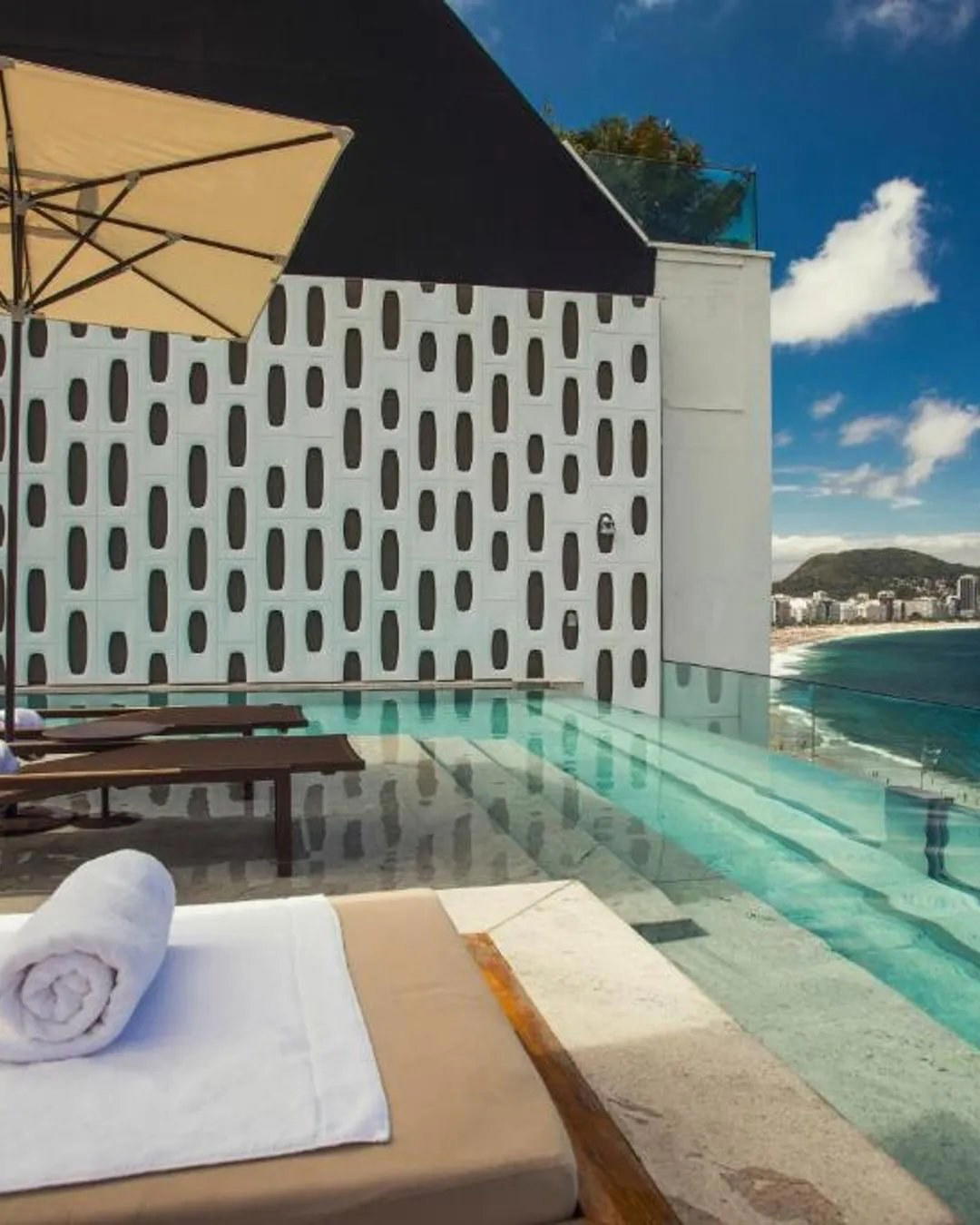
A 51-room boutique hotel on Avenida Delfim Moreira, JANEIRO occupies one of Leblon's most sought-after seafront positions, with unobstructed sightlines to the Dois Irmãos peaks, the Cagarras Islands, and the arc of coastline running through Ipanema to Arpoador. The kitchen works with global references reinterpreted through seasonal, locally sourced ingredients. For a compact, design-attentive stay in Rio's most residential beachfront neighbourhood, it sits in a distinct tier from the city's large-format luxury hotels.

Pearl is the En Primeur Club membership app, where members save venues, book tables and use the concierge.
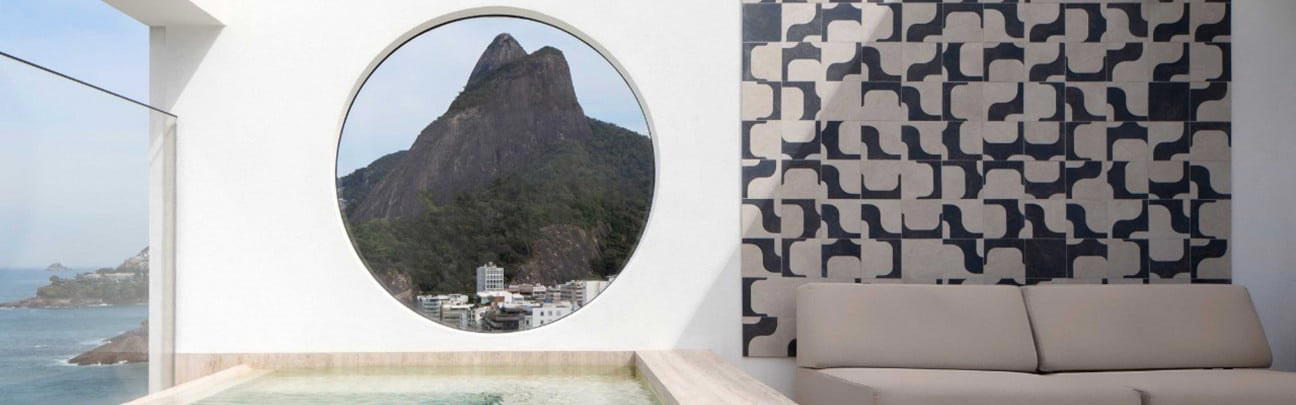
Where Leblon Meets the Atlantic
The stretch of Avenida Delfim Moreira that runs along Leblon beach is among the most quietly coveted addresses in Rio de Janeiro. Unlike the broad commercial frontage of Copacabana or the high-density hotel corridor of Ipanema's eastern edge, Leblon maintains a residential character, low-rise buildings, a calmer crowd, and a promenade that empties out earlier in the evening. It is the part of the Zona Sul that Rio residents tend to claim as their own. Arriving at JANEIRO Hotel on that avenue, with the Atlantic filling the window line and the silhouette of the Dois Irmãos peaks rising to the west, is to enter Rio through its most composed face rather than its most performative one.
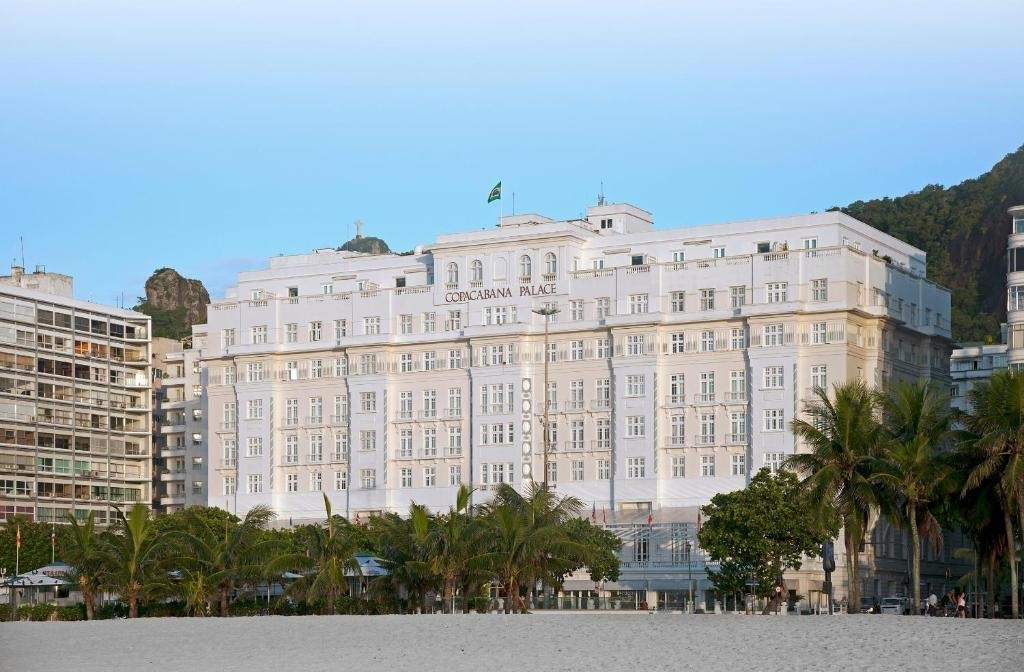
The hotel occupies 51 rooms across this beachfront position. That scale places it firmly in the boutique tier of Rio's hospitality market, a category that operates differently from the large-format properties along Copacabana. Where hotels like the Copacabana Palace, A Belmond Hotel or the Fairmont Rio de Janeiro Copacabana trade on scale, event infrastructure, and landmark recognition, smaller properties in Leblon compete on location specificity, atmosphere, and the sense that a stay here is rooted in a particular neighbourhood rather than a generic beachfront product.
The View as Architectural Element
In a city where natural scenery functions as a kind of permanent installation, the question of how a building frames its surroundings matters as much as the interior design. At JANEIRO, the approach is to treat each room's windows as the primary visual feature. The framing varies by position: depending on orientation, guests look out toward the Cagarras Islands sitting offshore in the Atlantic, the Dois Irmãos peaks at the western edge of Leblon, or the long coastal arc that extends from the hotel through Ipanema and around to Arpoador. On a clear morning, the Cristo Redentor statue becomes visible on the ridge above the city. Natural light and cross-ventilation from sea breezes are the two constants that define the room atmosphere, qualities that cannot be replicated by interior specification alone.
This view-first logic reflects a broader design sensibility that has gained traction among boutique hotels throughout Brazil's coastal cities: rather than competing with the landscape through elaborate interior theatrics, the architecture steps back and lets the geography do the work. The Casas Brancas Boutique Hotel and Spa in Búzios applies a similar logic along the Búzios coastline, and the Barracuda Hotel and Villas in Itacaré does the same in the Bahian south. The restraint is the point.
The Rhythm of a Meal at JANEIRO
Rio de Janeiro has its own dining pace, and it is not in any hurry. The city eats late by most international standards, approaches lunch as a serious occasion rather than a working interruption, and treats the hours between a beach afternoon and an evening meal as a distinct social ritual in their own right. A hotel kitchen that understands this rhythm operates differently from one importing a generic international format onto a tropical beachfront address.
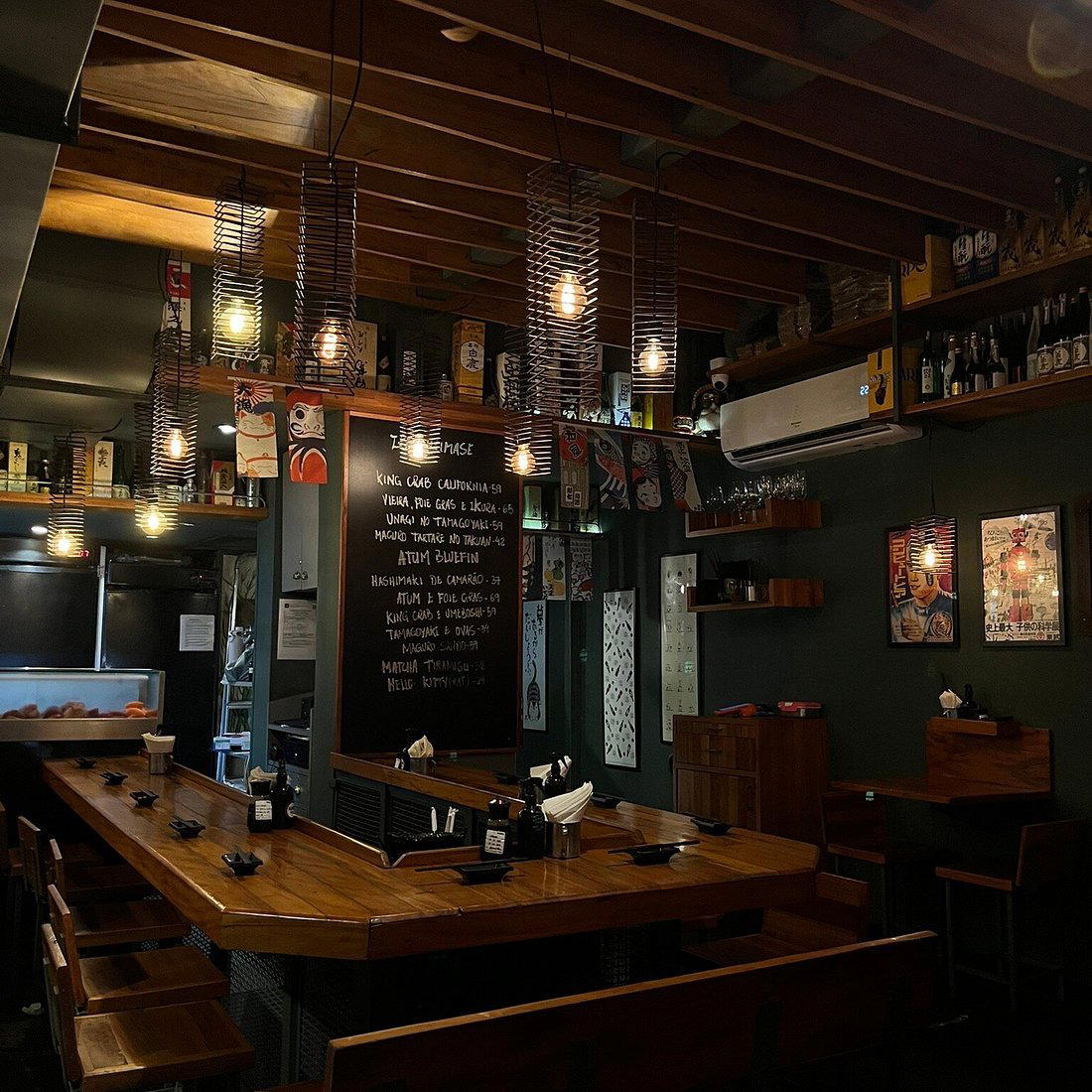
The kitchen at JANEIRO draws on references from global cuisines but filters them through the ingredients and light of Rio, seasonal produce, a preference for clarity over heaviness, and an attentiveness to the particular appetite that comes from a day spent close to the ocean. This is less a fusion proposition than a localization one: the essential structure of the meal remains familiar, but the ingredients and register are calibrated to where you are. Dishes arrive with the intention of enhancing primary flavors rather than layering complexity for its own sake.
For guests who have spent time across Rio's dining scene, covered in depth in our full Rio de Janeiro restaurants guide, this kitchen philosophy fits inside a wider movement among the city's better restaurants toward cleaner, produce-led cooking. The heavier, more formal European-influenced restaurant tradition that once defined Rio's upscale dining has given way to something more responsive to season and setting. JANEIRO's approach to its gastronomy aligns with that shift.
Leblon as a Base: What the Neighbourhood Offers
Choosing to stay in Leblon rather than Copacabana or Ipanema is a positional decision with practical consequences. The neighbourhood sits at the westernmost point of Rio's beachfront hotel corridor, which means it is quieter, further from the main tourist infrastructure, and closer to the residential life of the city's Zona Sul. The beach in front of Leblon draws a local crowd, and the streets behind the avenue are dense with the bars, restaurants, and small shops that Carioca residents actually use.
For a hotel like JANEIRO, this proximity to functioning neighbourhood life is part of the pitch. The property's position on Avenida Delfim Moreira puts it within reach of some of Rio's most respected restaurants and bars without requiring a taxi ride across multiple neighbourhoods. That walkability within Leblon distinguishes the area from Copacabana's more transactional commercial strip, and it gives a short stay there a different character, more settled, less itinerant.
Guests planning wider exploration of Rio's hotel and cultural geography will find useful reference points across the city's range: the Hotel Fasano Rio de Janeiro in Ipanema represents the city's most design-driven large-format option; the Emiliano Rio brings the São Paulo group's particular brand of contemporary Brazilian luxury to the same neighbourhood; and properties like Casa Cool Beans, Casa Marques Santa Teresa, and Casa Mosquito offer entirely different scales and neighbourhood contexts in the Santa Teresa hills above the city.
JANEIRO in the Context of Brazilian Travel
Rio de Janeiro sits at one end of a very wide spectrum of Brazilian travel possibilities. At the other end are properties that mediate entirely different relationships with the country's geography: the Cristalino Lodge in Alta Floresta, set against Amazon forest reserve; the Caiman Pantanal in Miranda, oriented around wildlife in the world's largest tropical wetland; or the Hotel das Cataratas, A Belmond Hotel, the only property inside the Iguassu Falls national park. JANEIRO operates in an entirely different register: urban, beach-oriented, embedded in one of the most densely social cities in the Americas.
For travelers building a longer Brazilian itinerary that moves between urban and natural settings, JANEIRO makes sense as a Zona Sul anchor before or after a stay at something like the Awasi Santa Catarina or the Botanique Hotel Experience in Campos do Jordão. Its value is precisely its urbanity, the immediate access to beach, neighbourhood, and the particular social tempo of Carioca life that no resort-format property can replicate.
Travelers extending into São Paulo will find a useful comparison point at the Rosewood São Paulo, where the format shifts entirely toward an interior-city luxury proposition with no geographical counterpart to Leblon's seafront. The contrast between the two stays underlines what JANEIRO is actually selling: not luxury as an abstraction, but a specific and non-transferable physical position in one of the most recognizable urban landscapes in the world.
Planning Your Stay
JANEIRO Hotel is located at Avenida Delfim Moreira 696, Leblon, directly facing the beachfront promenade. The 51-room scale means availability is tighter than at Leblon's larger neighbouring properties, and the seafront-facing rooms in particular are worth requesting at the time of booking rather than on arrival. The hotel's position at the quieter western end of the Zona Sul beachfront corridor means it is well-placed for guests who want immediate access to Leblon's restaurants and bars without the noise levels of Ipanema's busier stretches. Rio's peak season runs from December through Carnival in February or March, when room rates and competition for bookings across all Zona Sul properties increase considerably, the shoulder months of April through June and August through October generally offer better conditions for a considered stay.
Accolades, Compared
Comparable venues nearby, for context on price, style, and recognition.
| Venue | Cuisine | Price | Awards | Notes |
|---|---|---|---|---|
| JANEIRO HotelThis venue (the venue you are viewing) | Contemporary luxury boutique hotel emphasizing simple elegance and carioca lifestyle curation with minimalist design principles. | $200–300 | Michelin Selected · Virtuoso Luxury Hotel Partner | Not listed |
| Fairmont Rio de Janeiro Copacabana | Luxury beachfront hotel blending 1950s style with modern comfort. | $300–500 | Michelin Selected · Forbes Recommended | Copacabana |
| R. Alm. Alexandrino, 660 - Santa Teresa | Luxury boutique hotel housed in a restored colonial mansion with contemporary design elements and Brazilian heritage influences. | $1,000–1,500 | 1 Michelin Key · Condé Nast Johansens Best for Romance | Lapa |
| Chez Georges | Private modernist villa with Brutalist architecture and tropical design elements. | $300–500 | Michelin Selected | Lapa |
| La Suite by Dussol Rio de Janeiro | Intimate cliffside luxury guesthouse | $200–300 | Michelin Selected · Mr & Mrs Smith Seal of Approval | São Conrado |
| Mama Ruisa Boutique Hotel | Elegant 19th-century boutique guesthouse with French-Brazilian fusion. | $100–200 | Michelin Selected | Lapa |
Recognition history
Dated appearances from independent guides and award organizations, with the underlying list record or original source where available.
Michelin Selected
Michelin
Mr & Mrs Smith Seal of Approval
Mr & Mrs Smith
Virtuoso Luxury Hotel Partner
Virtuoso
Continue exploring
More in Rio de Janeiro
Hotels in Rio de Janeiro
All hotels in Rio de Janeiro →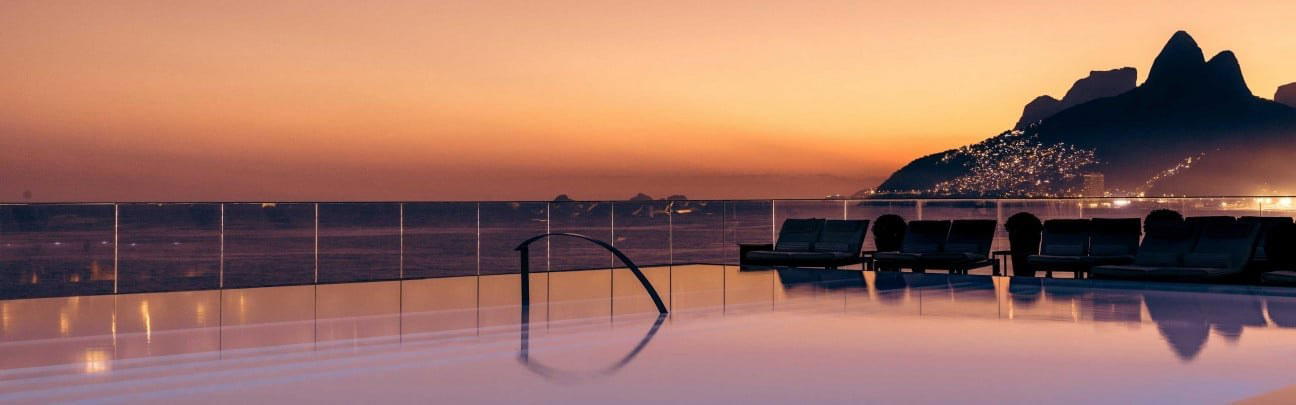
Details
- Romantic
- Modern
- Elegant
- Scenic
- Romantic Getaway
- Honeymoon
- Anniversary
- Weekend Escape
- Beachfront
- Rooftop Pool
- Panoramic View
- Terrace
- Destination Spa
- Butler Service
- Wi Fi
- Pool
- Spa
- Fitness Center
- Room Service
- Concierge
- Business Center
- Valet Parking
- Beach Access
- Restaurant
- Bar
- Waterfront
- Mountain
- Wheelchair Accessible
- Elevator
- Accessible Restroom
Modern minimalist design with bright, airy spaces; sophisticated yet welcoming atmosphere enhanced by ocean views, natural light, and attentive service creating a serene luxury retreat.