
Gamushara places Iruma in the serious udon conversation through a compact, low-friction format: wheat noodles, tempura, and curry udon at everyday prices, backed by selection for Tabelog Udon EAST 100 in 2020, 2022, and 2024. The appeal is not luxury theatre; it is regional noodle cooking judged on texture, pacing, and the discipline of a small room.
Pearl is the En Primeur Club membership app — saves, bookings, and concierge access live there. Same editors, same standards.
- Address
- 886-3 Noda, Iruma, Saitama 358-0054, Japan
- Phone
- +81 4-2968-5862
- Website
- tabelog.com
 Saves & bookings on Pearl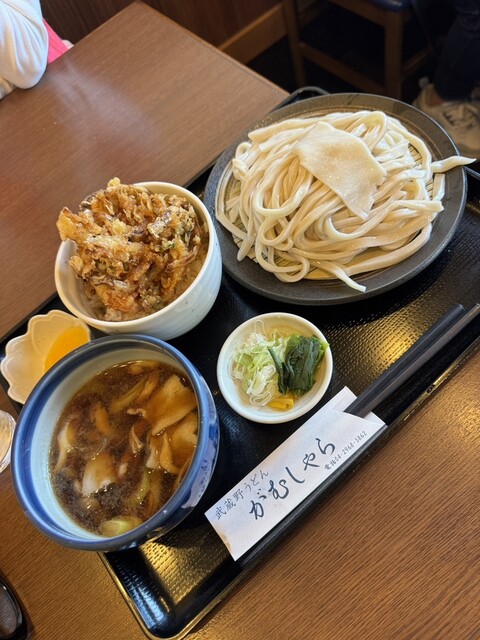
Approaching a house-style restaurant in Noda, Iruma, the signal is modest: a small local room, counter seating, and a short lunch rhythm built around udon. In Japan, serious noodle shops often read less like destination dining rooms than workshops, where credibility sits in flour handling, broth structure, frying timing, and fast table turns that do not feel rushed.
Gamushara fits that category. Its lane is udon, with tempura and curry udon forming the menu’s practical edges, and repeated selection for Tabelog Udon EAST 100 in 2020, 2022, and 2024 gives the address a credential beyond Iruma. For readers mapping Saitama dining rather than only central Tokyo counters, that recognition is the clue: a regional noodle specialist at a price tier where precision must show in the bowl, not in ceremony.
Iruma udon with a workshop rhythm, not a luxury script
Udon in the Kanto orbit has no single fixed identity. Tokyo-facing diners often think of speed, broth clarity, and station-adjacent convenience; Saitama’s noodle culture leaves more room for wheat texture and suburban specialists with loyal local followings. Iruma sits in that second frame. A shop here needs no elaborate service language; it needs repetition, consistency, and a product that works for solo diners and small groups.
The ingredient question starts with wheat. Udon is a flour-and-water discipline before it is a restaurant category, and the difference between a casual bowl and a serious one is felt in chew, surface tension, and how the noodle carries dipping sauce, hot broth, or curry. Gamushara’s categories suggest compact grammar, not a sprawling menu: udon as base, tempura as texture and fat, curry udon as heavier comfort. The narrow range keeps attention on noodle handling and timing, where udon shops earn repeat customers.
Compared with nearby out-of-metro peers such as Sanchome no Teuchi Udon and Udonya Kazu, both in the JPY 1,000–1,999 bracket, Gamushara sits in the same democratic band rather than a premium tasting-menu economy. For travelers, the choice is not whether to commit an evening to a chef-led counter; it is whether to make space in a Saitama day for a focused lunch where the ceiling is set by craft, not spend.
That context also separates it from ramen specialists in the broader area, including Chuka Soba Senmon Tonchibo and Jikasei Temomi Men Suzunoki. Ramen often announces itself through stock, oil, tare, and toppings; udon is more exposed. With less camouflage, wheat quality, kneading, resting, cutting, and cooking determine whether the bowl has authority.
Why the Tabelog Udon EAST 100 signal matters here
Tabelog’s Hyakumeiten lists separate category specialists from general popularity. Selection for Udon EAST 100 in three cycles, including 2024, places Gamushara in a regional conversation beyond Iruma’s immediate catchment. It is not a Michelin-style luxury marker, and should not be read as one; it is a category-specific signal, closer to a map of where committed noodle diners pay attention.
The address also shows how Japanese regional dining resists the idea that serious food must cluster in capital-city neighborhoods. Iruma is not Ginza, Ebisu, or Kyoto’s hotel corridor. It is a Saitama city where a 14-seat noodle shop can draw diners who might otherwise organize meals around Tokyo rail hubs. For broader planning, Our full Iruma restaurants guide is the natural companion, while overnight logistics belong in Our full Iruma hotels guide. Evening drinking and non-restaurant planning sit separately in Our full Iruma bars guide, Our full Iruma wineries guide, and Our full Iruma experiences guide.
The small format makes behavior matter. Fourteen seats, including counter seating, call for compact-room courtesy: arrive prepared, eat with purpose, and do not turn lunch into a long stay. Reservations are unavailable, making timing part of the experience. Cash is the clean assumption, since credit cards, electronic money, and QR payments are not accepted.
There is practical elegance in that setup. A house restaurant with a few parking spaces and a station within walking range serves diners who value accuracy over spectacle. The non-smoking interior and outside ashtray reflect a common small-shop compromise, not a lifestyle statement. Private rooms and private use are absent, so the meal is public, compact, and bowl-oriented.
How to place it within a wider Japan itinerary
Gamushara makes the strongest case for travelers already looking beyond central-city checklists. It pairs with a Saitama day built around local food rather than a single trophy reservation. Its editorial value is comparative: it shows how a humble category can carry serious technique without the price architecture of sushi, kaiseki, or French-influenced dining.
Readers building a broader Japan file can use it as a counterweight to more varied formats, from -Grilled beef Sukiyaki- KAMAKURA TANUKIAN 鎌倉 たぬき庵 in Kamakura and . 鮪と炭火焼き うお炭 秋葉原店 in Tokyo to .cafe in Osaka, .know in Kumamoto, and (Shoku) Vietnam in Kawasaki. The contrast matters because udon shops ask different questions: not how elaborate the meal becomes, but how convincingly a few elements are handled.
That lens also applies across casual-specialist addresses such as [Curry Senmon Ten] Maruyama Kyoju. in Sapporo, [ki:] in Kyoto, #肉といえば松田 奈良本店 in Kashihara, 1/3 HAMBURGER FACTORY in Kanazawa, 1000 in Yokohama, and 1000mヒュッテ 1000m Hut in Kutchan. Outside Japan, Jōdo Saké Bar in Los Angeles and Onigiri Time in Pasadena show how Japanese formats travel, but Iruma’s udon culture is clearer at the source: small scale, low spend, high reliance on fundamentals.
The recommendation is clear for the right diner. Choose Gamushara for a focused udon lunch in Iruma, not a leisurely multi-course meal or design-led room. Its credibility comes from category recognition, compact seating, and a menu anchored in wheat noodles with tempura and curry variations. That is enough; in this genre, excess would only blur the point.
Snapshot
Comparable venues by cuisine and price in the same metro.
| Venue | Cuisine | Price | Notes |
|---|---|---|---|
| GamusharaThis venue — the venue you are viewing | Musashino-style Udon & Tempura | $ | Not listed |
| Medika Soba Kingyo | Japanese Ramen | $ | Hino |
| Shotaro Udon | Traditional Musashino Udon | $ | Nerima |
| Nakamura Menzaburo Shoten | Ramen shop | $ | Chuo Ward, Sagamihara |
| Ramen Jiro Oomiya kouen ekimae ten | Jiro-style Ramen Shop | $ | Omiya Koen |
| Rich na Curry no Mise Asano | Japanese curry & katsu curry shop | $ | Machida |
Recognition history
Dated appearances from independent guides and award organizations, with the underlying list record or original source where available.
Tabelog 100 #29 · No. 29
Tabelog · Tabelog 100 - Udon - EAST - 2024
Continue exploring
More in Iruma
Restaurants in Iruma
Browse all →



Bars in Iruma
Browse all →




Hotels in Iruma
Browse all →




Wineries in Iruma
Browse all →
At a Glance
- Cozy
- Rustic
- Intimate
- Solo
- Family
- Casual Hangout
- After Work
- Standalone
Current opening hours
- Monday
- 11 AM–2 PM
- Tuesday
- 11 AM–2 PM
- Wednesday
- Closed
- Thursday
- 11 AM–2 PM
- Friday
- 11 AM–2 PM
- Saturday
- 11 AM–2 PM
- Sunday
- 11 AM–2 PM
Hours can change for holidays and private events. Last verified .
A small house-like udon restaurant with simple counter and table seating, non‑smoking, casual and family‑friendly; guests describe a direct, no‑frills atmosphere focused on efficiently serving hearty bowls of Musashino udon at lunch.