
Ramen Jiro Oomiya kouen ekimae ten brings the Jiro idiom to Saitama in a compact counter setting near Omiya Koen. Selection for Tabelog Ramen EAST “Tabelog 100” in 2024 and 2025 places it in a serious regional conversation, while its low-price ramen format keeps the experience closer to everyday Japanese eating than ceremony.
Pearl is the En Primeur Club membership app — saves, bookings, and concierge access live there. Same editors, same standards.
- Address
- 埼玉県さいたま市大宮区寿能町1-24 前場ビル 1F
- Website
- tabelog.com
 Saves & bookings on Pearl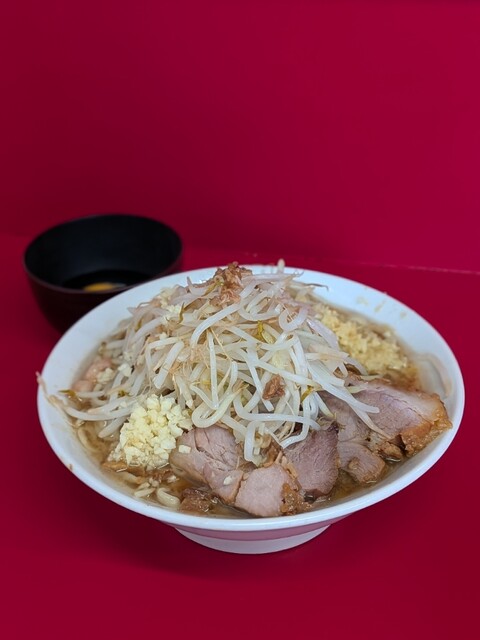
Approaching a Jiro-style ramen counter is less about décor than tempo: the line, the ticket machine, the quick handover, the concentrated silence once bowls land. In Saitama, that culture has a particular charge because it sits outside Tokyo’s densest ramen corridors yet speaks the same language of volume, ritual, and repeat custom. Ramen Jiro Oomiya kouen ekimae ten belongs to that stripped-back world, where the room is counter-led, the pace is functional, and the appeal depends on a diner’s appetite for a specific ramen grammar rather than on restaurant theatrics.
Jiro ramen has long occupied a category of its own within Japanese noodle culture. It is not the delicate shoyu ramen tourists often imagine, nor the regional nostalgia of miso in Hokkaido or tonkotsu in Kyushu. Its meaning comes from abundance, customization, and a set of house rules that reward attention. The Saitama branch’s selection for Tabelog Ramen EAST “Tabelog 100” in 2024 and 2025 gives it a public benchmark inside the eastern Japan ramen conversation, a field where small counters can carry as much weight as polished dining rooms.
Jiro ramen in Saitama is about format as much as flavor
The useful way to read this counter is through format. A 12-seat ramen room changes the social contract: diners arrive prepared, eat with focus, and make room for the next person. That compactness is not incidental. It is part of why Jiro-style ramen has remained culturally potent, built around high-turnover counters where the meal is intense, direct, and relatively democratic. In a city where dinner can range from casual noodle shops to higher-spend meat and izakaya formats, this sits in the low-cost, high-commitment lane.
The price position matters. Within the supplied Saitama comparison set, Noroshi Honten sits below the thousand-yen mark, while Beach Story shares the same JPY 1,000 to JPY 1,999 band. Hibi Shushu and Ningyocho move into mid-range territory, and Yakiniku Kushin operates in a higher dinner bracket. That spread explains why ramen remains one of Japan’s sharpest value propositions: the meal can carry deep local identity without requiring fine-dining pricing. Ramen Jiro Oomiya kouen ekimae ten is judged against serious ramen peers, not against tasting-menu restaurants.
That distinction is important for travelers planning Saitama around food rather than sightseeing alone. Ramen here is not a soft landing; it is a cultural format with its own etiquette. The defining idea is the Jiro system itself: a hearty bowl style, counter service, and customization culture that has generated a following across Japan. Specific toppings and ordering calls vary by shop, so the smarter approach is to observe the room and keep the first order simple unless already fluent in the genre.
Omiya Koen adds a neighborhood frame to the bowl
Omiya Koen is not a Ginza-style destination district, and that works in the restaurant’s favor. The area gives the experience a local, commuter-adjacent feel rather than a trophy-dining mood. Saitama’s food map often rewards this kind of specificity: excellent patisserie, bakeries, ramen counters, and casual specialists dispersed across residential and transit-linked neighborhoods. For a wider look at that pattern, Our full Saitama restaurants guide is the natural starting point.
The city’s range is broader than ramen. Sweet-focused stops such as Acacier Kitaurawa honten and Acacier Urawa ten show another side of Saitama’s everyday precision, while Bagel Shop vivant and Aki Foods point toward the city’s casual specialist culture. Beach Story, which sits in a comparable low-price band, underlines how much of Saitama’s appeal comes from modest formats executed with focus.
Travelers building a fuller Saitama stay should separate food planning from lodging and evening drinking, because the city does not behave like a single walkable dining quarter. Our full Saitama hotels guide, Our full Saitama bars guide, Our full Saitama wineries guide, and Our full Saitama experiences guide help place the ramen stop inside a wider itinerary rather than treating it as an isolated errand.
Where this fits in a Japan ramen itinerary
For visitors comparing ramen across Japan, the draw is not novelty but fluency. Jiro-style ramen teaches a different lesson from sushi counters, kaiseki rooms, or regional noodle shops: Japan’s dining culture prizes specialization at every price level. The Tabelog 100 recognition signals that this is not merely a convenient station-adjacent bowl; it has been selected within an eastern Japan ramen field dense with competition. That is a meaningful credential in a cuisine where everyday customers often set the bar higher than guidebook readers expect.
The practical implication is simple: treat the visit as a focused ramen stop, not a lingering restaurant meal. The room is small, reservations are not part of the format, and payment is cash-oriented rather than card-led. Solo dining fits the counter culture well. Private rooms and private use are not the point here; the point is the efficient public ritual of ramen eating, where everyone faces the same counter and the bowl takes precedence over conversation.
For readers mapping Japanese casual dining beyond Saitama, the contrast is useful. A sukiyaki specialist such as -Grilled beef Sukiyaki- KAMAKURA TANUKIAN 鎌倉 たぬき庵 in Kamakura belongs to a different tradition of beef, heat, and pacing. Tokyo and Osaka entries such as. 鮪と炭火焼き うお炭 秋葉原店 in Tokyo and.cafe in Osaka sit in separate urban rhythms. Regional and overseas Japanese-adjacent formats, from.know in Kumamoto and (Shoku) Vietnam in Kawasaki to [Curry Senmon Ten] Maruyama Kyoju. in Sapporo, Jōdo Saké Bar in Los Angeles, and Onigiri Time in Pasadena, show how specific each format becomes once price, counter culture, and local habits are taken seriously.
Ramen Jiro Oomiya kouen ekimae ten is for diners who want Saitama’s ramen culture without translation into luxury cues. Its case rests on a compact counter, a recognized place in the 2025 eastern Japan ramen selection, and a style of eating that asks for appetite and attention rather than ceremony.
Cost Snapshot
Nearby venues at a similar price tier for orientation.
| Venue | Cuisine | Price | Notes |
|---|---|---|---|
| Ramen Jiro Oomiya kouen ekimae tenThis venue — the venue you are viewing | Omiya Koen, Jiro-style Ramen Shop | $ | Not listed |
| Fujidana Udon | Not listed | $ | Nishi-ku, Traditional Saitama Musashino Udon |
| Inakaya Irori | Not listed | $$ | Urawa-ku, Traditional Japanese Izakaya with Irori Hearth |
| Holland Ken | Higashi Iwatsuki, Ramen | $$ | Not listed |
| Teuchi Udon Matsuna | Urawa, Handmade Udon | $ | Not listed |
| かねかつ | Not listed | $$ | 北浦和 (Kita-Urawa), Traditional Shoyu Ramen & Abura Soba |
Recognition history
Dated appearances from independent guides and award organizations, with the underlying list record or original source where available.
Tabelog 100 #64 · No. 64
Tabelog · Tabelog 100 - Ramen - EAST - 2025







At a Glance
- Lively
- Energetic
- Well Known
- Cozy
- Solo
- Casual Hangout
- Late Night
- After Work
- Standalone
Compact, counter-only Jiro-style ramen shop with a busy, energetic atmosphere focused on quick solo meals rather than lingering; functional rather than design-driven.