新宿割烹 中嶋 serves classic robatayaki at a chefs counter with an open kitchen, a sake program, quiet pacing, and a smart casual setting for dinner or late night.
Pearl is the En Primeur Club membership app — saves, bookings, and concierge access live there. Same editors, same standards.
- Address
- Japan, 〒160-0022 Tokyo, Shinjuku City, Shinjuku, 3 Chome−32−5 日原ビル B1
- Phone
- +81333564534
- Website
- shinjyuku-nakajima.com
- Directions
- Get directions
 Saves & bookings on Pearl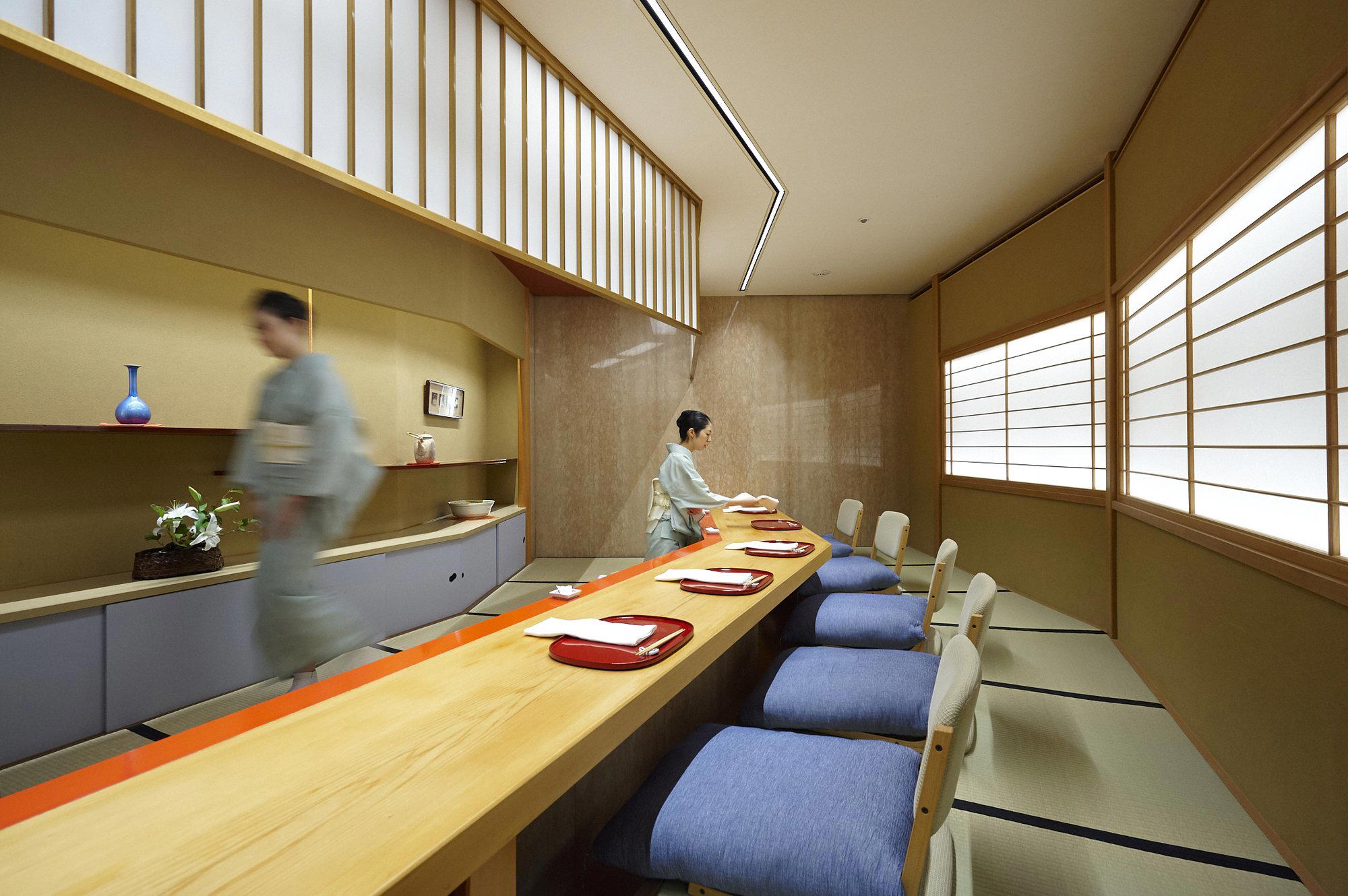
Basement Dining in Shinjuku: A Street-Level Read
In Shinjuku's denser commercial grid, basement restaurants occupy a particular position in Tokyo's dining culture. Descending below street level has long signalled a transition in Japan, away from the noise and pace of the city above, into something more considered. The B1 floors of Shinjuku's mid-rise buildings have historically housed everything from izakayas to counter-only kaiseki rooms, and the address of 新宿割烹 中嶋 sits squarely within that tradition: 3-chome, Shinjuku, in the B1 of 日原ビル.
That address matters for context. Shinjuku's dining scene is layered in a way that differs from Ginza or Minami-Aoyama. The neighbourhood carries both the sprawling anonymity of its entertainment district and, tucked within it, a strong current of long-established neighbourhood restaurants that have built followings through repetition rather than publicity. The baseline expectation for a diner walking into a Shinjuku basement is that the room earns its return visits through consistency.
The Evolution of a Shinjuku Address
The editorial angle that frames a venue like 新宿割烹 中嶋 most accurately is continuity in a neighbourhood that has seen significant churn over the decades. Shinjuku's dining fabric in the area around 3-chome has contracted and shifted with each economic cycle. Restaurants that survived those cycles generally did so through a combination of format discipline and a clear sense of what they were serving and to whom.
The name itself carries some signal. "Ganso" (元祖) translates roughly as "originator" or "the original," a designation that restaurants in Japan deploy deliberately, often to mark a particular dish or method as definitively theirs. It positions the venue within a tradition of claiming ownership over a specific preparation, a common rhetorical stance in Japanese restaurant culture, where lineage and origin carry considerable weight with regular customers. The naming choice itself speaks to how the restaurant frames its own identity.
That framing, original, foundational, not chasing trends, aligns with how basement restaurants in this part of Shinjuku have generally survived. The dining formats that endure in this postcode tend to be those that defined their territory early and held it. Longevity at B1 level in Shinjuku reads, in this context, as evidence of a settled proposition rather than a work in progress.
Where This Sits in Tokyo's Broader Dining Picture
Tokyo's restaurant scene at the premium end is well-mapped. Venues like Harutaka in Ginza, L'Effervescence in Nishi-Azabu, and RyuGin in Roppongi anchor the city's international reputation for rigorous tasting formats and long Michelin recognition. Sézanne and Crony represent the newer wave of French-influenced counters that have added a different competitive layer.
Shinjuku Ganso Chushu operates in a different register from those addresses, not by default, but by location and apparent orientation. Shinjuku's strongest dining culture has historically been in the mid-tier and neighbourhood specialist categories, where depth of craft and neighbourhood loyalty matter more than international visibility. A basement address in 3-chome Shinjuku is not where you look for destination dining in the Michelin sense; it is where you look for a restaurant that has solved a specific problem well for regular diners.
That positioning is not a limitation. Japan's dining culture rewards exactly this kind of specialisation. The country's restaurant geography includes not only the three-star counters of central Tokyo but also the deeply rooted specialist houses of Kyoto, the technically ambitious operations of Osaka, and neighbourhood anchors across every prefecture, from Fukuoka to Nara to Akita. The range is part of what makes Japanese dining culture coherent as a whole: you can find serious cooking at every tier, not just at the leading.
Price and Recognition
Comparable venues nearby, for context on price, style, and recognition.
| Venue | Cuisine | Price | Notes |
|---|---|---|---|
| 新宿割烹 中嶋This venue — the venue you are viewing | Shinjuku, Classic Robatayaki | $$$$ | Not listed |
| Yakiniku Ushigoro Shinjuku sanchome ten | Shinjuku, Luxury Wagyu Yakiniku | $$$$ | Not listed |
| Kusunoki | Shinjuku, Oil-Free Tempura Omakase | $$$$ | Not listed |
| Sushi Tanji | Not listed | $$$$ | Minato, Traditional Edo-style Omakase Sushi |
| The INNOCENT CARVERY | Minato, Modern Wagyu Yakiniku Omakase | $$$$ | Not listed |
| Yakitori Hirako | Not listed | $$$$ | Minato, Modern farm-to-table yakitori omakase |















At a Glance
- Elegant
- Intimate
- Sophisticated
- Date Night
- Special Occasion
- Business Dinner
- Open Kitchen
- Chefs Counter
- Sake Program
Cozy and elegant with warm grill lighting, subtle smoke aromas, and an intimate counter atmosphere focused on the live cooking.