
Tabelog Bronze #427
Our verdict
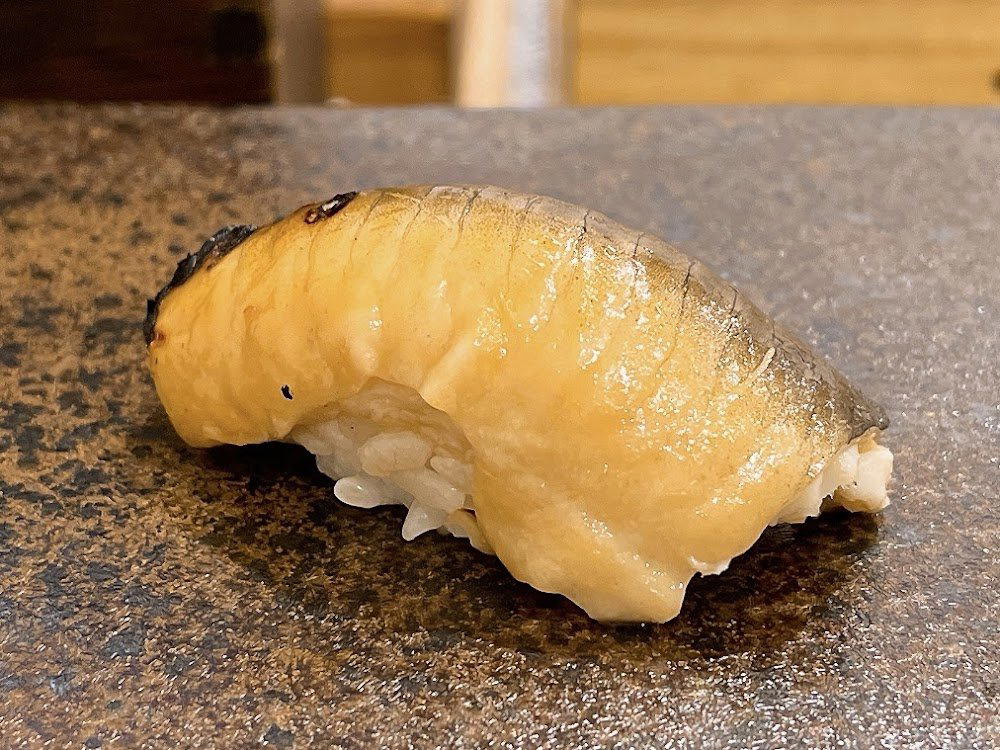
A nine-seat counter in Kuwana's old Edomachi district, Edo Machi Sugimoto earned a Tabelog Score of 3.98 and a 2026 Bronze Award while appearing in the Tabelog Sushi WEST Top 100 in both 2022 and 2025. Dinner runs JPY 20,000–29,999, lunch from JPY 15,000. Reservation-only and closed Wednesdays; confirmation of timing comes at the time of booking.

Pearl is the En Primeur Club membership app — saves, bookings, and concierge access live there. Same editors, same standards.
- Address
- 25 Edomachi, Kuwana, Mie 511-0022, Japan
- Phone
- +81 90-5007-7573
- Website
- tabelog.com
- Directions
- Get directions
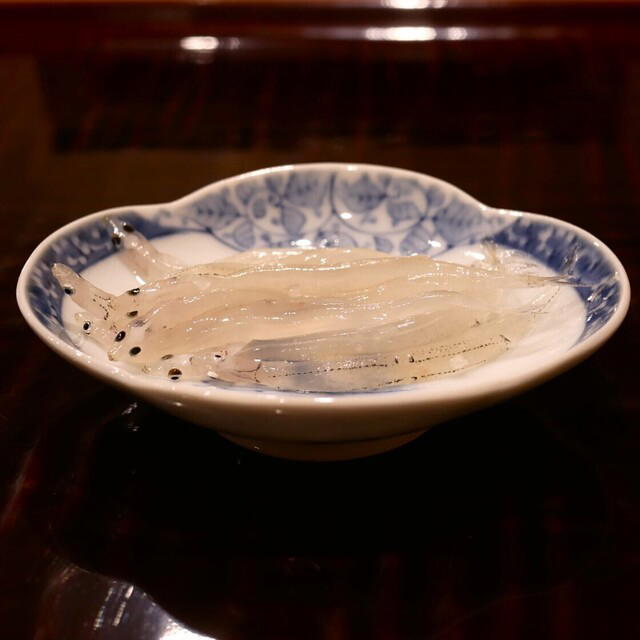
Kuwana and the Quiet Ambition of Provincial Sushi
Japan's premium sushi scene is rarely mapped beyond Tokyo's Ginza counters or Osaka's Kitashinchi district. Yet the country's tradition of shokunin craftsmanship — the vocational mastery that demands years of silent repetition before a chef earns the right to shape a single piece of nigiri — travels well beyond those capital-city addresses. In Kuwana, a port city in Mie Prefecture whose food identity has long been defined by its position at the mouth of the Kiso River and its access to Ise Bay seafood, Edo Machi Sugimoto represents exactly that provincial ambition made concrete. Opened in December 2021 in the old Edomachi quarter, it has accumulated Tabelog recognition at a pace that few counters manage in their first four years of operation.
The Counter, the Setting, the Register
The Edomachi district carries its history in its name: Edo-period merchant culture once ran through these streets, and the area retains a low-rise, unhurried character that separates it from the commuter density around Kuwana Station. Reaching the restaurant on foot from JR or Kintetsu Kuwana Station takes roughly fifteen minutes, and the walk reinforces the sense that this is a place you come to deliberately, not one you stumble upon. The counter seats nine, and that number is not incidental. At nine seats, every guest is within conversation range of the preparation surface; there is no middle distance, no corner table with a diluted view. The format imposes intimacy and demands it in return.
The venue is listed as a non-smoking space, accepts credit cards and electronic money (QR payments are not available), and has parking nearby at 15 Miyadori, Kuwana City. Private rooms are unavailable, but the full counter can be reserved for private use, accommodating groups up to the nine-seat maximum. Lunch and dinner entry times are confirmed at the time of reservation, which itself underlines the omakase operating logic: the rhythm of the meal is set by the kitchen, not the clock. The restaurant is closed on Wednesdays, though hours and rest days can change, so confirmation before travel is advisable.
Tabelog's scoring system is notoriously compressed at the leading end, a score of 3.5 already places a restaurant in the upper percentile of its category nationally, and 3.98 is a figure that appears consistently among counters with serious national followings. Edo Machi Sugimoto carries that score alongside selection for the Tabelog Sushi WEST Top 100 in both 2022 and 2025, and a Tabelog Award 2026 Bronze, ranking 427th in that cohort. For context, the Tabelog Award Bronze tier encompasses the top tier of consistently reviewed restaurants across Japan; reaching it within the Sushi WEST regional category means the counter is being measured against Osaka and Kyoto competition, not just local peers.
That competitive positioning matters when reading the price point. Dinner at JPY 20,000–29,999 (with some reviews placing actual spend in the JPY 30,000–39,999 range) and lunch at JPY 15,000–19,999 (with some reviews reporting JPY 10,000–14,999) places Sugimoto below the headline Tokyo omakase tier, counters like Harutaka in Tokyo operate in a higher bracket, but at a level that signals serious ingredient investment. For the Kansai-adjacent market, it competes with the same diners who might consider the broader Osaka-Kyoto corridor, where venues like Gion Sasaki in Kyoto or HAJIME in Osaka occupy the best of different categories. Within Mie itself, comparison points include Komada and Hinode in the seafood register, while restaurants like Nikawa and La Mer address different cuisine categories entirely. For those planning a broader Mie itinerary, restaurant Ryu rounds out the prefecture's recognised dining options.
The Shokunin Framework and What It Means Here
The shokunin tradition in sushi is built on the premise that technique is inseparable from material knowledge. A sushi chef who has trained seriously, typically across years in other counters before opening their own, carries not only cutting and seasoning skills but an education in sourcing: which markets yield which fish, how seasonal variation shifts the flavour profile of shellfish, when aging a piece of fish adds complexity rather than masking freshness. Mie's proximity to Ise Bay gives any counter operating here a geographic argument for ingredient quality; the prefecture is already associated nationally with Ise lobster (ise-ebi) and premium bivalves.
The venue opened in December 2021, making it relatively young at the point of its first Tabelog 100 selection in 2022, a signal that the counter arrived with an established reputation, almost certainly built on the chef's prior training rather than accumulated years of independent operation. That pattern is consistent across Japan's leading regional counters: the opening day marks a public debut, not the beginning of a culinary education. The sake list receives particular attention in the venue's own categorisation, with nihonshu flagged as a specific focus alongside shochu and wine, which suggests the pairing element of the meal is treated with the same care as the fish programme.
Sushi in Mie Against the Broader Regional Map
Japan's sushi geography outside Tokyo and Osaka is often misread as a tier drop. In practice, regional counters in prefectures with strong seafood traditions, Ishikawa on the Sea of Japan coast, Hokkaido in the north, and Mie along the Pacific, operate with ingredient access that metropolitan counters often cannot match through logistics alone. The proximity argument is real: fish sourced from waters an hour away behaves differently on the counter than fish that has spent a day in transit. That is one reason why the Tabelog Sushi WEST Top 100 list consistently includes prefectural counters outside the major Kansai cities.
For international visitors making the comparison, the closest structural analogues to a nine-seat reservation-only counter at this price point with this level of award recognition would be venues like Sushi Shikon in Hong Kong or Shoukouwa in Singapore, both of which transplant the Tokyo omakase format to different cities. Sugimoto inverts that logic: the format is the same, but the ingredient geography is local, which at its finest is the more defensible position.
Visitors planning a wider Kansai or central Japan trip can find context across EP Club's regional guides: our full Mie restaurants guide, our full Mie hotels guide, our full Mie bars guide, our full Mie wineries guide, and our full Mie experiences guide cover the prefecture's wider offering. For Kansai comparisons across different cuisine formats, akordu in Nara and Goh in Fukuoka represent the kind of precision-led regional dining that shares a competitive mindset, if not a cuisine. For another reference point at a different geographic register, 1000 in Yokohama occupies a comparable niche in its own city.
Planning the Visit
Reservations are required and entry times for both lunch and dinner are confirmed at the time of booking; arrive without one and the counter will be closed to you regardless of the day. Given the nine-seat maximum and the venue's award recognition, lead time matters, this is not a counter that absorbs walk-in overflow. Closed on Wednesdays. The fifteen-minute walk from Kuwana Station is the standard approach; parking is available nearby for those arriving by car. Payment by credit card or electronic money is accepted; QR code payments are not.
Frequently asked questions
What's the price range at Edo Machi Sugimoto?
Pricing at Edo Machi Sugimoto is listed as JPY 20,000 - JPY 29,999 JPY 15,000 - JPY 19,999.
How do I find Edo Machi Sugimoto?
Edo Machi Sugimoto is located at 25 Edomachi, Kuwana, Mie 511-0022, Japan, Mie.
How It Stacks Up
Comparable venues nearby, for context on price, style, and recognition.
| Venue | Cuisine | Price | Awards | Notes |
|---|---|---|---|---|
| Edo Machi SugimotoThis venue — the venue you are viewing | Edo-style Sushi Omakase | $200–300 | Tabelog Bronze #427 | Not listed |
| Hinome | Modern Vegetarian Japanese Fusion | $50–100 | We're Smart World 4 Radishes | Kameyama |
| Komada | Edo-style Omakase Sushi | $300–500 | Tabelog Gold #14 | Kawasaki, Ise |
| L’etude | French restaurant in Iga | Not listed | Tabelog 100 #48 | Iga |
| restaurant Ryu | French-Japanese Fusion | Not listed | Tabelog Bronze #363 | Meiwa-cho |
| Nikawa | Modern Yakitori Omakase | $300–500 | Tabelog Bronze #314 | Ichinoki |
Recognition history
Dated appearances from independent guides and award organizations, with the underlying list record or original source where available.
Tabelog Bronze #427
Tabelog
Full recognition history (2 entries)
Tabelog 100 #100 · No. 100
Tabelog · Tabelog 100 - Sushi - WEST - 2025
Details
- Intimate
- Elegant
- Special Occasion
- Chefs Counter
- Sake Program
- Local Sourcing
- Omakase
- Counter Dining
- Sake
Intimate counter-only hideout with focus on sushi craftsmanship.