
Tabelog 100 #14
Our verdict
ラ・ドゥ―ル occupies a quiet residential address in Nagoya's Chikusa Ward, operating within a dining register that prizes restraint and precision over spectacle. The restaurant sits inside a broader movement of intimate European-inflected rooms that have established themselves in Japan's regional cities away from the concentrated attention of Tokyo and Osaka. Advance planning is advisable for visitors seeking a table.

Pearl is the En Primeur Club membership app, where members save venues, book tables and use the concierge.
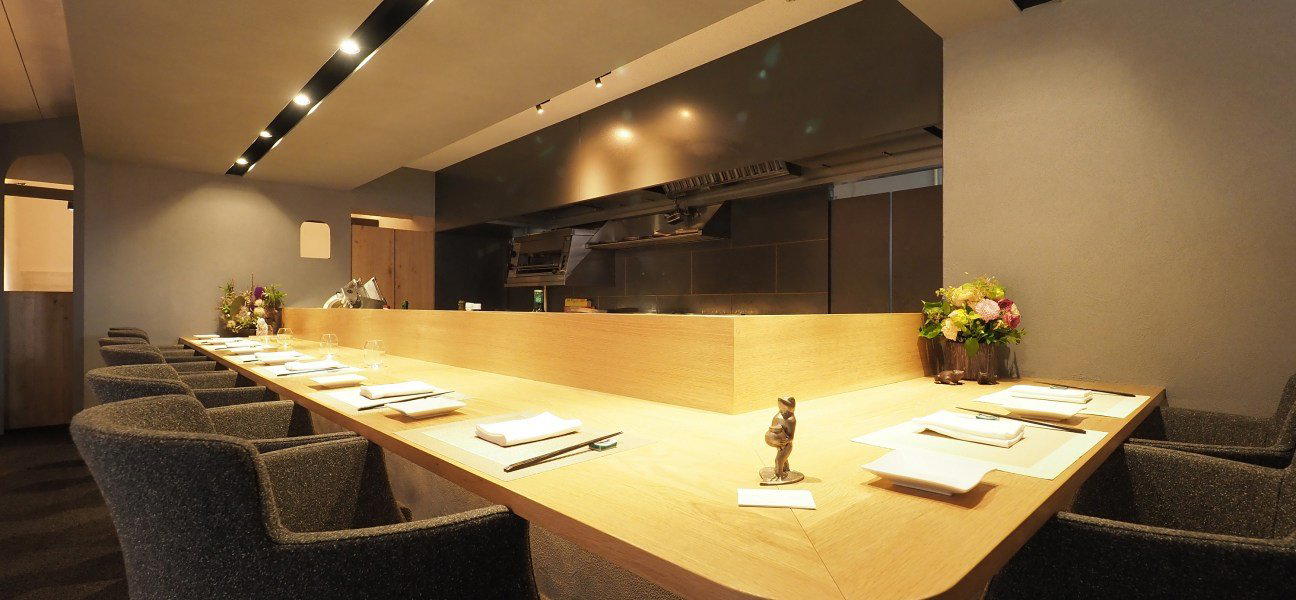
The Quiet Formality of Chikusa Ward
Nagoya's dining scene has long operated in the shadow of Tokyo's concentration of Michelin stars and Osaka's gravitational pull on food media, yet the city's residential wards have quietly supported a tier of intimate, European-inflected restaurants that reward patience and prior research. Chikusa Ward, east of the city centre and away from the Sakae entertainment district, is that kind of neighbourhood: low-rise, unhurried, the kind of address where a restaurant survives on repeat local custom rather than tourist traffic. ラ・ドゥ―ル occupies a ground-floor unit at a residential address on Haruoka, a location that places it squarely within a tradition of Japanese dining rooms that prefer anonymity to visibility.
This geography matters for how you approach the meal. Unlike the high-visibility restaurant floors of Nagoya Station's towers or the destination addresses around Atsuta Shrine, where Atsuta Horaiken (あつた蓬莱軒 本店) has built its reputation on hitsumabushi and decades of civic identity, a restaurant in a residential mansion building operates on different terms. The audience arrives already committed. There is no walk-in culture, no window browsing, no casual impulse decision. You have made a reservation, you have found the building, and the meal begins before you sit down.
The Ritual of the Small Room
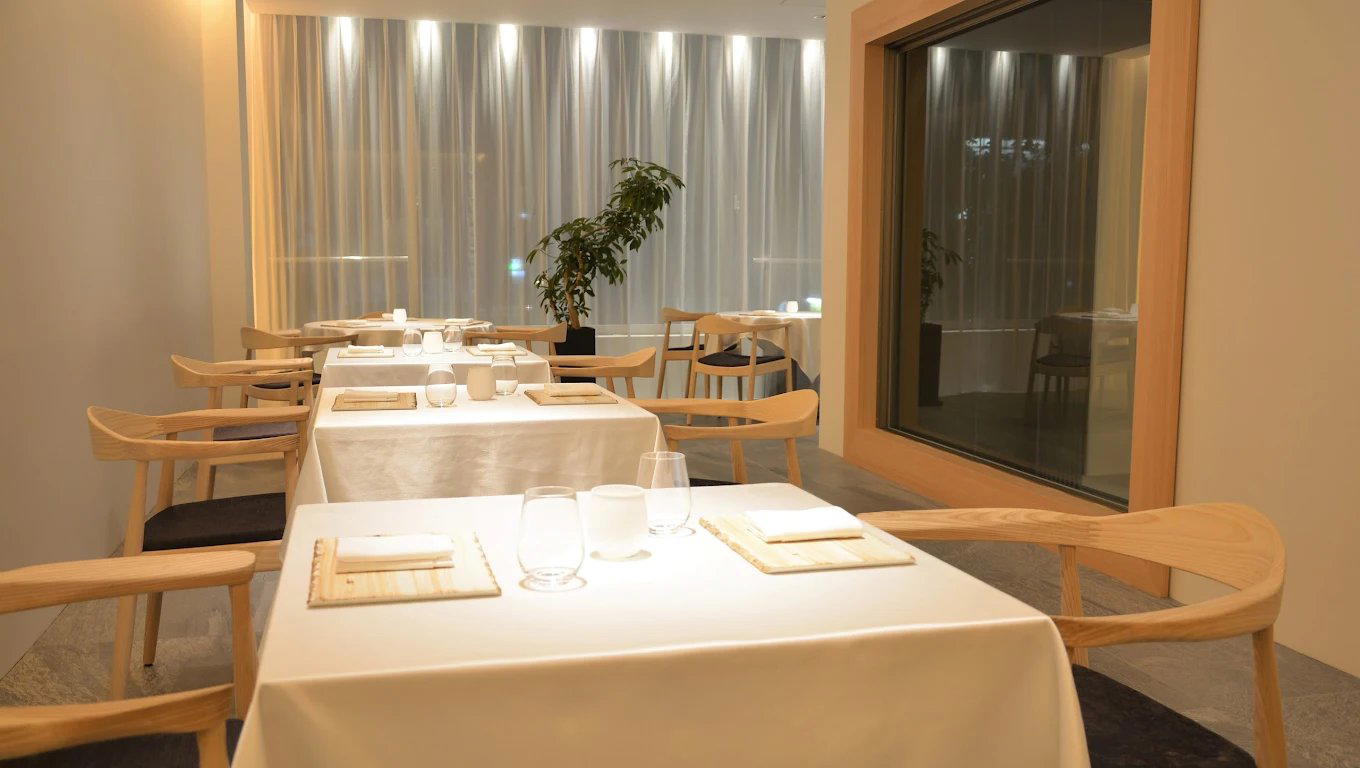
Across Japan's regional cities, a particular format has taken hold: the small European restaurant, typically French or Italian in orientation, where the chef's relationship with local producers and the pacing of the meal carry more weight than the address or the decor budget. This is the format that shapes the dining ritual at ラ・ドゥ―ル. The dining room in a mansion-unit setting implies a constrained seat count, and that constraint is the architecture of the experience. When a room holds only a handful of tables, the pacing between courses slows to match the kitchen's capacity. There is no pressure to turn covers. The meal extends.
This is worth stating plainly for visitors accustomed to larger European rooms: the etiquette is closer to Japanese kaiseki than to a Paris brasserie. You arrive on time. You do not abbreviate the meal. The sequence of courses, however many the format dictates, is the contract. Nagoya has several rooms that operate this way. Bacio and Chez Kobe both represent the kind of European-influenced dining that has found a stable footing in this city's residential and mid-city neighbourhoods, and cucina Wada demonstrates how Italian frameworks get reinterpreted through local ingredient logic. ラ・ドゥ―ル fits within this pattern rather than departing from it.
Regional Context: Where Nagoya Sits in Japan's Dining Conversation
Japan's most-discussed restaurant destinations remain Tokyo, Kyoto, and Osaka, but the intermediary cities, Nagoya, Fukuoka, Sapporo, Kanazawa, have developed their own coherent fine-dining registers. HAJIME in Osaka and Gion Sasaki in Kyoto represent the apex of their respective cities' formal dining traditions; Goh in Fukuoka has done similar work in establishing a credible regional fine-dining identity in Kyushu. Nagoya's equivalent tier is less internationally publicised, which partly explains why rooms like ラ・ドゥ―ル operate without the booking queues that characterise comparable addresses in Tokyo, where Harutaka represents what sustained critical attention can do to reservation availability.
That relative obscurity is a structural feature of Nagoya's fine dining, not a quality signal. The city's corporate and industrial economy generates a steady, well-funded local dining public that supports restaurants on different economics than tourism-dependent addresses. Rooms here do not need international media attention to fill covers. They need the loyalty of Nagoya's own professional class, and that loyalty, when earned, tends to be durable. akordu in Nara demonstrates a parallel dynamic in another regional city: serious European technique, committed local audience, minimal footprint in international dining press.
For visitors mapping Japan's broader restaurant geography, the regional picture extends further. 一本木 石川製 in Nanao, 夕月庵乃 in Sapporo, 羽根屋 in Nishikawa Machi, and 湖里庵 in Takashima each represent the regional fine-dining tradition applied in their own geographic and culinary contexts. The pattern, intimate scale, local ingredient sourcing, high technical standard without the overhead of destination-city rents, repeats across Japan's secondary cities and smaller towns.
European Fine Dining and the Japanese Room
The name ラ・ドゥ―ル (La Douceur in French, meaning softness or gentleness) signals the European orientation of the kitchen. French-named restaurants in Japan's regional cities typically operate in one of two registers: aspirational approximations of classical French technique, or disciplined hybrids that use French structure to frame Japanese seasonal produce. The latter has become the more interesting tradition, producing a dining rhythm where the European tasting menu format meets Japanese attentiveness to ingredient provenance and seasonal timing.
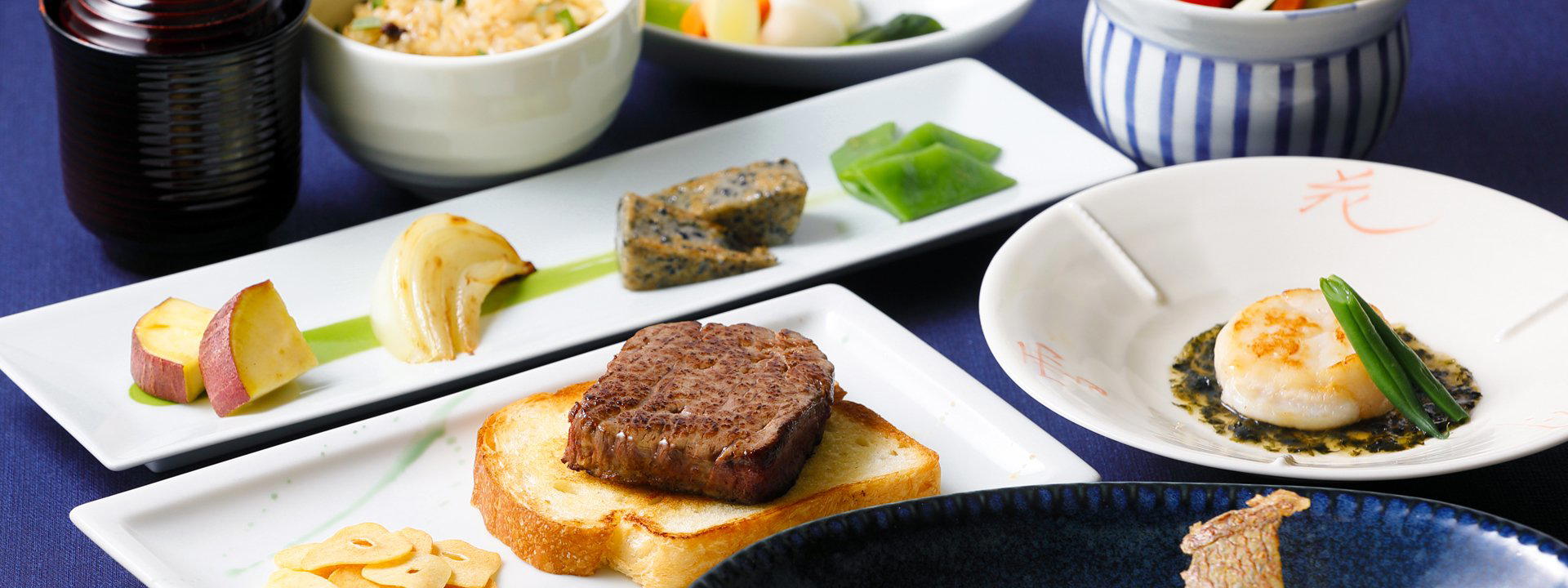
The seasonal dimension matters more than the menu specifics. In a room at this scale and with this orientation, the menu shifts to track what the central Japan region produces at a given point in the year. Aichi Prefecture's agricultural output, including its river fish, its produce from the Chita Peninsula, and its proximity to Ise Bay seafood, gives a kitchen in Chikusa Ward access to ingredients that no amount of logistics can replicate for rooms in Tokyo's dense supply chains. This kind of sourcing advantage is one reason European-format restaurants continue to establish themselves in regional Japanese cities: the ingredient geography rewards proximity. Cucina Italiana Gallura in Nagoya operates in a related register, demonstrating the range of European culinary frameworks that have found traction in this city.
Comparisons extend internationally. Le Bernardin in New York City and Atomix in New York City represent the high end of European and Korean fine dining translated into an American context, the inverse of what French-named rooms in Nagoya do with European frameworks applied through Japanese ingredient and service sensibility. Birdland in Sakai offers another angle on how regional Japanese cities absorb and recalibrate European dining traditions.
Planning Your Visit
Know Before You Go
- Location: 1 Chome-30-15 Haruoka, Chikusa Ward, Nagoya, Aichi, a residential apartment building (坂下マンション 104号)
- Getting There: Chikusa Ward is accessible from central Nagoya via the Higashiyama subway line; the neighbourhood is residential and not walkable from major tourist hubs
- Reservations: No booking method is listed in, direct contact via discovery through local Japanese dining platforms is advisable
- Dress Code: Not formally specified, but the French-named, intimate format implies smart-casual as a minimum
- Dietary Requirements: Contact the restaurant directly in advance; small kitchens at this scale typically require advance notice for any substitutions
- Seasonal Timing: Aichi's ingredient calendar makes spring and autumn visits particularly well-suited to tasting-menu formats that track seasonal produce
For a fuller picture of where ラ・ドゥ―ル sits within Nagoya's broader dining options, see our full Nagoya restaurants guide.
Frequently asked questions
Where exactly is ラ・ドゥ―ル?
ラ・ドゥ―ル is located at Japan, 〒464-0848 Aichi, Nagoya, Chikusa Ward, Haruoka, 1 Chome−30−15 坂下マンション 104号, Nagoya.
Is ラ・ドゥ―ル worth visiting from outside Nagoya for French fine dining in Aichi Prefecture?
Nagoya sits roughly midway between Tokyo and Osaka on the Shinkansen corridor, making it accessible as a deliberate stop rather than a detour. Aichi Prefecture has a smaller concentration of European fine dining than Kyoto or Tokyo, which means rooms like ラ・ドゥ―ル in Chikusa Ward attract guests specifically seeking that format at a regional scale. Whether the journey is proportionate depends on confirmed bookings and current menu information, which are best verified directly with the restaurant.
What's the signature dish at ラ・ドゥ―ル?
The name La Douceur, French for softness or gentleness, signals a kitchen philosophy oriented toward restraint rather than showmanship. Guests visiting the Chikusa Ward address should expect a set course format, as is standard in this style of European fine dining room in Nagoya.
How hard is it to get a table at ラ・ドゥ―ル?
Reservation specifics are not publicly listed for this Chikusa Ward address, and ラ・ドゥ―ル does not appear to maintain a public website or published phone number. Small European dining rooms of this format in Japan's regional cities frequently operate through word-of-mouth or referral booking, which can make access less straightforward than Tokyo equivalents. Contacting the restaurant directly through local channels is the practical approach.
What's the standout thing about ラ・ドゥ―ル?
ラ・ドゥ―ル occupies a position that Nagoya's dining scene does not widely advertise: a European fine dining room in a residential ward, operating at a remove from the city's commercial centre. Chikusa Ward is not Nagoya's obvious dining district, which means the restaurant functions for guests who are already looking for it rather than those passing through. That intentional quietness, reflected in the French name meaning softness, is the venue's defining character.
Can ラ・ドゥ―ル accommodate dietary restrictions?
No dietary accommodation policy is documented for ラ・ドゥ―ル. French-format tasting menus in Japan's regional fine dining rooms typically require advance notice for any restrictions, as courses are prepared to a fixed sequence. Given that the venue does not publish a phone number or website, guests with specific requirements should confirm arrangements at the point of booking through whatever contact method the restaurant uses.
Same-City Peers
Comparable venues nearby, for context on price, style, and recognition.
| Venue | Cuisine | Price | Awards | Notes |
|---|---|---|---|---|
| ラ・ドゥ―ルThis venue (the venue you are viewing) | French Restaurant | Not listed | Tabelog 100 #14 | Not listed |
| LA MODESTIE | French Wine Restaurant | $100–150 | Tabelog 100 #64 | Higashi |
| Reconnaissance | Natural French, fully customized course dining | Not listed | Tabelog 100 #100 | Naka |
| L'atelier K | French Teppanyaki | $100–150 | Tabelog 100 #58 | Higashi |
| Restaurant Loire French | Classic French Fine Dining | $50–100 | Tabelog 100 #36 | Naka |
| Chez Kobe | Classic French Fine Dining | $100–150 | Tabelog 100 #71 | Shōwa |
Recognition history
Dated appearances from independent guides and award organizations, with the underlying list record or original source where available.
Tabelog 100 #14 · No. 14
Tabelog · Tabelog 100 - French - EAST - 2025
Continue exploring
More in Nagoya
Restaurants in Nagoya
All restaurants in Nagoya →

Details
- Elegant
- Intimate
- Date Night
- Special Occasion
- A La Carte
Current opening hours
- Monday
- 11:30 AM–3 PM, 6–10:30 PM
- Tuesday
- 11:30 AM–3 PM, 6–10:30 PM
- Wednesday
- 11:30 AM–3 PM, 6–10:30 PM
- Thursday
- 11:30 AM–3 PM, 6–10:30 PM
- Friday
- 11:30 AM–3 PM, 6–10:30 PM
- Saturday
- 11:30 AM–3 PM, 6–10:30 PM
- Sunday
- Closed
Hours can change for holidays and private events. Hours as of .
優雅なフレンチの雰囲気