
LA VAGABONDE gives Nagoya’s French dining scene a small-room, ingredient-led counterpoint to the city’s better-known Japanese formats. Its Tabelog Award Bronze run and Tabelog French EAST 100 selection place it in a serious regional tier, with a 16-seat scale that keeps the experience closer to a focused dining room than a grand-occasion salon.
Pearl is the En Primeur Club membership app — saves, bookings, and concierge access live there. Same editors, same standards.
- Address
- 2 Chome-14-24 Chiyoda, Naka Ward, Nagoya, Aichi 460-0012, Japan
- Phone
- +81 52-253-7343
- Website
- lavagabonde.jp
- Directions
- Get directions
 Saves & bookings on Pearl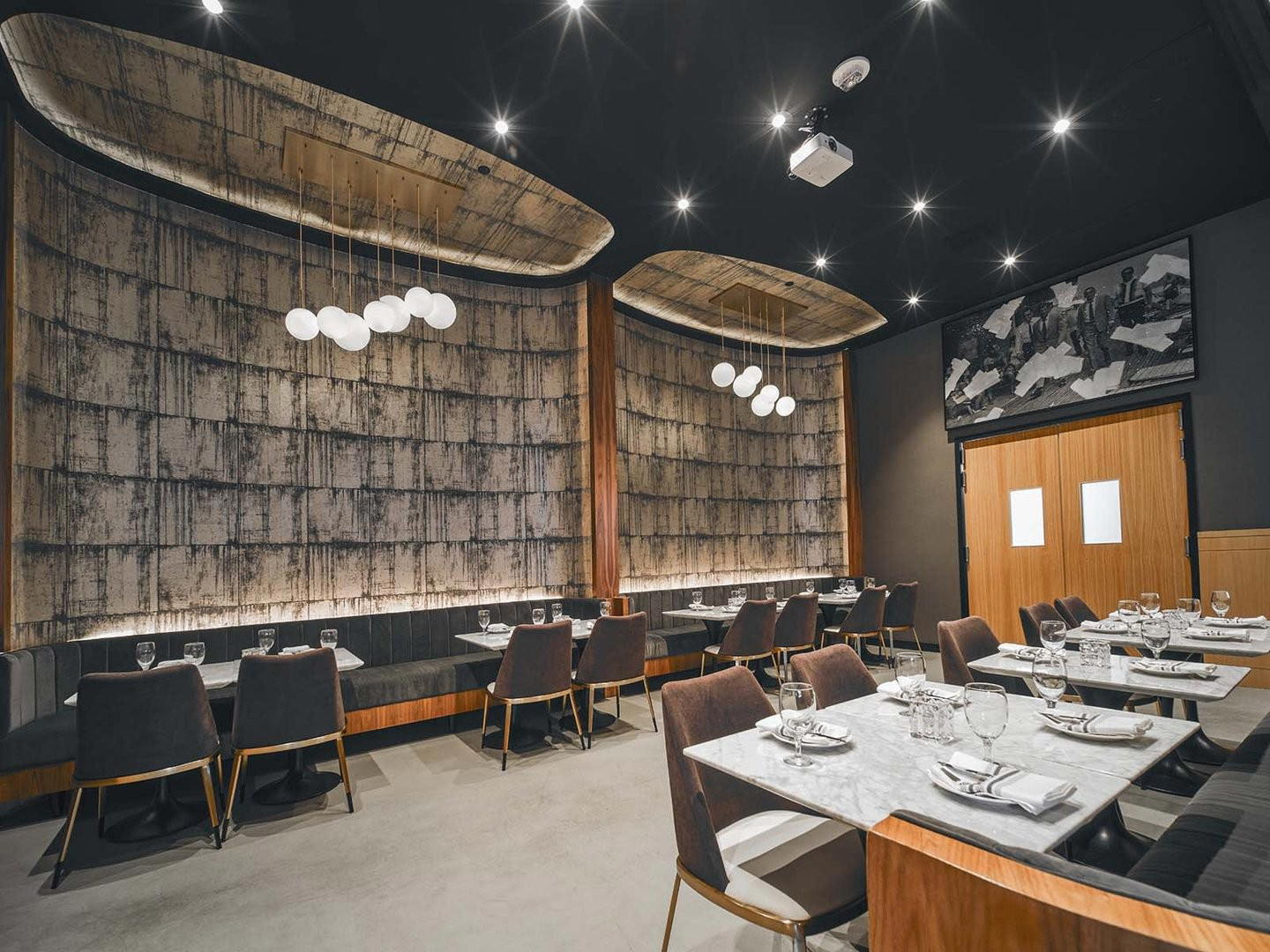
Approach through Tsurumai and central Nagoya’s department-store polish gives way to a quieter district of stations, apartments, small businesses, and restaurants worth detours. Here, French dining feels less like hotel ceremony than a compact, produce-sensitive format where room, wine service, and cooking carry equal weight.
Nagoya has a serious appetite and practical temperament. Its food culture rests on miso depth, eel, kishimen, tebasaki, and coffee-shop morning sets, yet higher-end dining has moved beyond local signatures. French restaurants here often work in a narrower register than in Tokyo or Kyoto: fewer seats, more regulars, and a sharper need to justify crossing town instead of choosing sushi, kappo, or steak. LA VAGABONDE belongs to that smaller, deliberate category.
French technique filtered through Aichi's ingredient logic
The useful way to read this restaurant is through sourcing, not decoration. Aichi’s position between mountains, rivers, industrial Nagoya, and the Ise Bay food economy gives chefs broad produce and seafood access without the mythology of better-known culinary capitals. French technique becomes a framework for seasonality, not an imported costume. That matters in Nagoya, where diners reward precision but are slower to be impressed by theatre alone.
The category signal is clear: French, with wine and cocktails, a sommelier, and counter seating. Those details indicate a format where pacing and pairing matter, but not anonymously, as in a large dining room. Sixteen seats pressure consistency: the kitchen cannot hide behind volume, and the dining room cannot rely on spectacle. The meal depends on ingredient handling across courses and how the drinks program supports that arc.
Awards history adds weight beyond generic praise. LA VAGABONDE has appeared as a Tabelog Award Bronze winner across multiple years through 2026 and was selected for Tabelog French EAST 100 in 2025, with prior selections in 2023 and 2021. In Japan’s user-review ecosystem, repeated recognition differs from one burst of attention. It suggests sustained confidence from demanding diners, especially in a cuisine category where Tokyo absorbs disproportionate attention.
Nearby Aichi reference points clarify its price tier and role. Itsuki sits in a serious high-spend bracket; Japan no Italian Ryori Ten sai occupies a comparable European-leaning lane at a lower lunch band; Masaka operates far below this level. SURIPU, at the opposite end of the spend spectrum, shows Aichi’s food culture is not defined only by formal dining. LA VAGABONDE sits firmly in the occasion-driven French tier, where the question is whether the kitchen turns local seasonality into a coherent meal.
A small room changes the stakes
Small French restaurants in Japan live or die by discipline. The counter is not just seating; it changes the diner-kitchen relationship. Movements are visible, timing feels less abstract, and wine service becomes part of the rhythm rather than a separate performance. Private rooms are available, but the counter is more revealing: it brings the restaurant closer to Japan’s omakase and kappo traditions than to a conventional European dining room.
That hybrid expectation is common in Japanese French dining. Diners often want French grammar, sauces, reductions, pastry work, cheese logic, and wine structure, with the intimacy and season-by-season responsiveness of Japanese restaurants. When it works, the result is not casual fusion, but a negotiation between two dining cultures that value restraint, timing, and ingredient hierarchy. The restaurant’s French EAST 100 recognition suggests it is judged inside that conversation, not as novelty outside it.
The non-smoking policy, credit-card acceptance, and no-parking setup define the experience. This is a planned urban-neighbourhood meal, not a spontaneous roadside stop. Online-only reservations also place it in the modern Japanese fine-dining pattern, where access is increasingly managed digitally rather than by phone persistence. For travellers, that matters: Nagoya rewards advance scheduling, especially when a small venue has limited seats and a short weekly rhythm.
There is useful restraint in the available information: no named chef mythology, public-facing signature dish, or inflated personal philosophy. The absence is refreshing. It keeps attention on the restaurant’s place in Aichi’s mature but under-discussed French scene. The strongest case for booking is not one famous plate, but repeated Bronze recognition, French EAST 100 selection, 16-seat scale, and a wine-oriented service structure.
How to place it in an Aichi itinerary
Aichi dining is often treated as a side note between Tokyo and Kyoto, a mistake. Nagoya has enough range for a dedicated food itinerary, especially for travellers interested in how regional Japanese cities absorb and reinterpret European technique. The restaurant is a dinner to anchor that itinerary, not a casual add-on, and fits better with a day in Nagoya’s central districts than a rushed cross-prefecture schedule.
For a broader read on the city’s dining field, Our full Aichi restaurants guide gives the necessary context, while nearby restaurant pages such as Amaki, aru, Fujisawa, GapricE, and HIRO NAGOYA help map the city’s registers of formality, counter dining, and European influence. Travellers building a fuller trip can extend planning through Our full Aichi hotels guide, Our full Aichi bars guide, Our full Aichi wineries guide, and Our full Aichi experiences guide.
The wider Japan file shows how broad the country’s dining spectrum has become, from -Grilled beef Sukiyaki- KAMAKURA TANUKIAN 鎌倉 たぬき庵 in Kamakura and. 鮪と炭火焼き うお炭 秋葉原店 in Tokyo to.cafe in Osaka.know in Kumamoto, (Shoku) Vietnam in Kawasaki, and [Curry Senmon Ten] Maruyama Kyoju. in Sapporo. For readers tracking Japanese drinking and casual-food culture abroad, Jōdo Saké Bar in Los Angeles and Onigiri Time in Pasadena sit at the other end of the diaspora conversation.
The editorial read is simple: this is a serious Nagoya French room for diners who care about sourcing, pacing, and regional context more than spectacle. It is not trying to make Aichi look like Paris, and that is the point. The better comparison is with Japan’s smaller, high-discipline restaurants that use European technique to clarify local ingredients. In a city too often reduced to its comfort-food canon, the restaurant marks how ambitious Nagoya dining has matured.
How It Stacks Up
Comparable venues by cuisine and price in the same metro.
| Venue | Cuisine | Price | Notes |
|---|---|---|---|
| LA VAGABONDEThis venue — the venue you are viewing | Modern French Fine Dining | $$$$ | Not listed |
| La Floraison de TAKEUCHI | Contemporary French with Seasonal Aichi Ingredients | $$$$ | Sakae, Naka Ward |
| Izumo | Japanese Cuisine with Aged Meat | $$$$ | Hisaya Odori |
| Amaki | Precise Sushi Omakase | $$$$ | Nishi-ku |
| aru | Seasonal French with Higashi-Mikawa Vegetables | $$$$ | Ekimae O Dori |
| Mutsuki | Edomae Sushi | $$$$ | Taketoyo-cho, Chita-gun |
Recognition history
Dated appearances from independent guides and award organizations, with the underlying list record or original source where available.
Tabelog Bronze #236
Tabelog
Tabelog 100 #8 · No. 8
Tabelog · Tabelog 100 - French - EAST - 2025
Tabelog Bronze
Tabelog
At a Glance
- Cozy
- Elegant
- Intimate
- Sophisticated
- Date Night
- Special Occasion
- Celebration
- Extensive Wine List
- Sake Program
- Local Sourcing
Current opening hours
- Monday
- 6–10 PM
- Tuesday
- 6–10 PM
- Wednesday
- 6–10 PM
- Thursday
- 6–10 PM
- Friday
- 12–3 PM, 6:30–10 PM
- Saturday
- 12–3 PM, 6:30–10 PM
- Sunday
- Closed
Hours can change for holidays and private events. Last verified .
Cozy cafe-like interior with clean pure white walls and dark windows creating a calm, relaxing atmosphere.