Our verdict
Dotonburi sits in Narimasu, a residential corner of Itabashi City that Tokyo's dining circuit rarely puts on the itinerary. That location is itself an editorial statement: in a city where address prestige often shadows everything else, a restaurant that draws visitors to the city's quieter northern wards is making a case on the strength of what it puts on the table alone.

Pearl is the En Primeur Club membership app — saves, bookings, and concierge access live there. Same editors, same standards.
- Address
- 2-chōme-17-2 Narimasu, Itabashi City, Tokyo 175-0094, Japan
- Directions
- Get directions
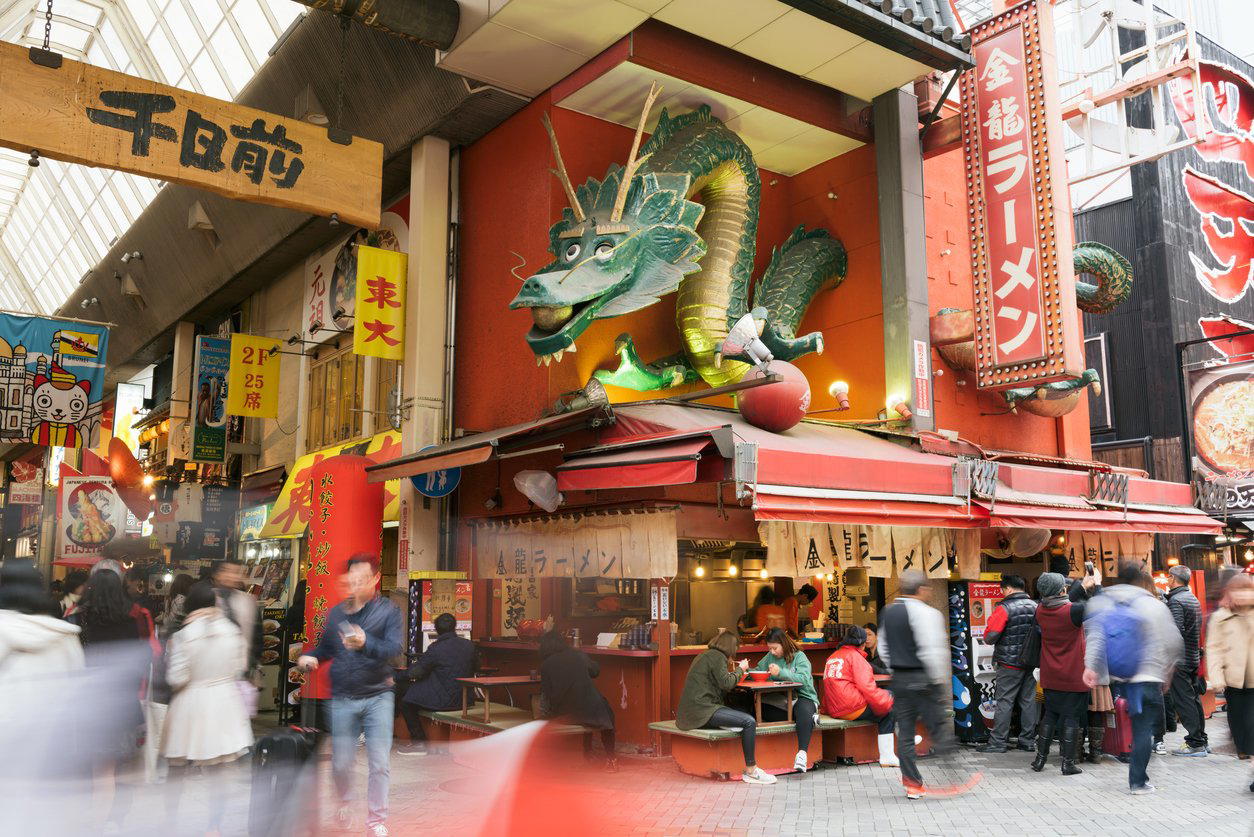
The menu
What to order
- Takoyaki
- Okonomiyaki
- Kushikatsu
- Ramen
- Sushi
Itabashi and the Logic of the Unfashionable Address
Tokyo's dining geography has always been centred on a familiar ring: Ginza for high-ceremony omakase, Minami-Aoyama for Franco-Japanese precision, Shinjuku and Shibuya for density and range. The residential wards north and west of the Yamanote Line operate outside that gravity. Itabashi City, where Dotonburi occupies a quiet block in Narimasu, is the kind of address that filters out the casually curious. Getting here requires intent. That dynamic, common to a particular tier of neighbourhood dining in Tokyo and in cities like New York's outer-borough fine dining scene, tends to produce a specific character in the room: regular clientele, a slower pace, and a kitchen that earns its audience on repeat visits rather than first-impression theatre.
Narimasu sits at the western terminus of the Toei Mita Line, about forty minutes from central Tokyo by rail. It is a neighbourhood of small shopfronts, local izakayas, and the kind of low-rise residential streetscape that defines much of the city beyond the tourist circuit. A restaurant choosing to operate here, rather than in one of the established dining precincts, positions itself deliberately outside the peer-comparison pressure that comes with Ginza or Minami-Aoyama adjacency. In that sense, the address is as much an editorial decision as a lease.
Where Dotonburi Sits in Tokyo's Dining Order
Tokyo runs one of the densest concentrations of Michelin-starred restaurants anywhere on the planet, and the top tier of that market has become its own compressed universe. Three-star counters like Harutaka and long-form kaiseki operations like RyuGin occupy a bracket defined as much by ritual and booking lead times as by price. French-influenced houses such as L'Effervescence and Sézanne have carved out a different kind of prestige within the same ecosystem. Below that, a second tier of two-star and recognised independent restaurants serves a more regular clientele at slightly lower ceremony levels — places like Crony, which mixes French technique with contemporary informality.
That absence of formal signal places it in an interesting category: Tokyo has hundreds of neighbourhood restaurants that operate entirely outside the award circuit and are nonetheless fiercely local institutions. The ward-level dining scene in areas like Itabashi, Nerima, and Adachi often runs on this model, with restaurants accumulating local loyalty over years without any particular critical apparatus around them.
For context on how Japanese restaurants operate at the regional level beyond Tokyo, see venues like Gion Sasaki in Kyoto, HAJIME in Osaka, or Goh in Fukuoka — all of which demonstrate that Japan's serious dining culture extends well beyond the capital's centre.
The Narimasu Address: What the Neighbourhood Signals
The specific block that Dotonburi occupies, 2-chōme-17-2 Narimasu, sits in a part of Itabashi that functions as everyday Tokyo. This is not a dining district in any conventional sense. There is no cluster of comparable restaurants nearby to anchor a broader evening itinerary, no hotel concierge circuit routing guests here automatically. Visitors arrive because they have looked for this restaurant specifically, which shapes the room in ways that matter. The demographic tends toward regulars and the locally informed rather than the hotel-and-concierge pipeline that feeds the central dining districts.
This pattern recurs across Tokyo's residential neighbourhoods and has parallels internationally. Neighbourhood-anchored restaurants in cities like New York, think the boroughs rather than Midtown, or in residential Paris arrondissements often develop a reliability and consistency that high-traffic central venues struggle to maintain. The economics are different, the pressure is different, and the resulting experience often reflects that. For Tokyo specifically, the residential ward restaurant operating without the Michelin scaffolding represents one of the city's more accessible, less performative dining modes.
Planning a Visit to Dotonburi in Narimasu
Getting to Narimasu from central Tokyo involves the Toei Mita Line, with Narimasu Station as the terminus. From Otemachi, the journey runs approximately 35 to 40 minutes. The neighbourhood is walkable from the station. Dotonburi's address at 2-chōme-17-2 Narimasu is consistent with the residential grid immediately surrounding the station's western exits. Visitors coming from the south of the city, or connecting from Shinkansen at Tokyo Station, should factor in additional transit time. For those building a broader Tokyo itinerary that includes central dining or accommodation, our full Tokyo restaurants guide, our full Tokyo hotels guide, and our full Tokyo bars guide cover the central districts in depth. Supplementary guides for Tokyo wineries and Tokyo experiences round out the planning picture for longer stays.
For Japan-wide itinerary building, the restaurant guides for akordu in Nara, 1000 in Yokohama, and 6 in Okinawa offer coverage across the range of Japan's dining regions. Internationally, Le Bernardin in New York City represents the kind of sustained critical benchmark that illustrates what long-running institutional restaurants can maintain across decades.
Reservations: Dress: Not specified; neighbourhood context suggests relaxed rather than formal. Budget: Getting there: Narimasu Station, Toei Mita Line, approximately 35-40 minutes from Otemachi.
Frequently asked questions
What's the address for Dotonburi?
Dotonburi is located at 2-chōme-17-2 Narimasu, Itabashi City, Tokyo 175-0094, Japan, Tokyo.
How far is Dotonburi in Narimasu from central Tokyo, and how do you get there?
Dotonburi is located at 2-chōme-17-2 Narimasu in Itabashi City, reachable via the Toei Mita Line to Narimasu Station, which serves as the line's terminus. From Otemachi in central Tokyo the journey runs approximately 30 minutes by direct train. The address places the restaurant outside the conventional dining zones of Ginza or Minami-Aoyama, which shapes both the atmosphere and the type of diner likely to seek it out.
What dish is Dotonburi famous for?
The cuisine type is also unspecified in available data. Visiting directly or contacting the restaurant is the most reliable way to establish what the kitchen focuses on.
Is Dotonburi reservation-only?
No booking policy is confirmed for Dotonburi at its Narimasu address in Itabashi City. Checking ahead before visiting is advisable given Narimasu is not a casual drop-in dining precinct.
Quick Comparison
A quick peer check to anchor this venue’s price and recognition.
| Venue | Cuisine | Price | Awards | Notes |
|---|---|---|---|---|
| DotonburiThis venue — the venue you are viewing | Osaka street food district | $1–10 | Not listed | Not listed |
| Harutaka | Edo-Style Omakase Sushi | $200–300 | 3 Michelin Stars · World's 50 Best #76 | Sushi |
| RyuGin | Modern Kaiseki | $500+ | 3 Michelin Stars · World's 50 Best #41 | Kaiseki, Japanese |
| L'Effervescence | Modern French with Japanese Influences | $200–300 | 3 Michelin Stars · World's 50 Best #69 | French |
| HOMMAGE | Modern French with Japanese Influences | $150–200 | 2 Michelin Stars · World's 50 Best #78 | Innovtive French, French |
| MAZ | Innovative Peruvian-Japanese Fusion | $150–200 | 2 Michelin Stars · World's 50 Best #28 | Innovative |










Details
- Lively
- Energetic
- Well Known
- Trendy
- Casual Hangout
- Family
- Late Night
- Standalone
- Beer Program
- Street Scene
- Waterfront
- A La Carte
- Beer
- Alcohol
Neon-lit, high-energy, and crowded district atmosphere with bright signage, loud sounds, and nonstop street activity.