
Teuchi Udon Hasegawa is a Nerima udon address for travellers who want Tokyo’s noodle culture beyond the central wards. Its Tabelog Udon EAST 100 selection in 2024, compact 24-seat format, and udon-and-sake framing place it in a modestly priced but serious category where sequencing matters more than ceremony.
Pearl is the En Primeur Club membership app — saves, bookings, and concierge access live there. Same editors, same standards.
- Address
- 102 4 Chome-3-18 Higashioizumi, Nerima City, Tokyo 178-0063, Japan
- Phone
- +81 3-3922-2626
- Website
- hasegawa.gorp.jp
 Saves & bookings on Pearl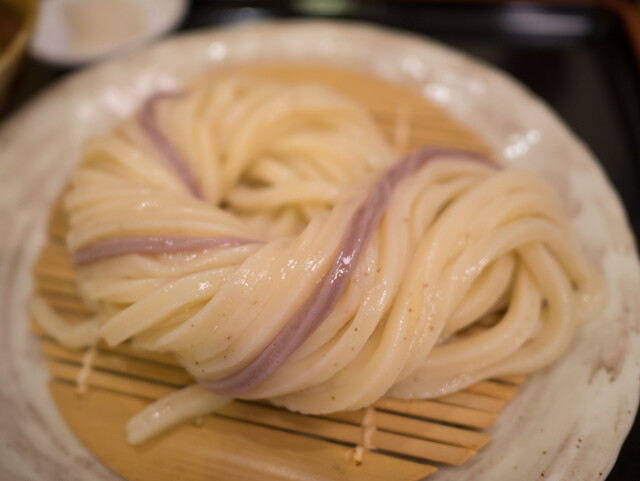
Oizumi Gakuen has a different tempo from the stations that dominate Tokyo dining itineraries. The approach is residential, not theatrical: local foot traffic, low-rise storefronts, and the feeling that a meal here belongs to the neighbourhood before it belongs to visitors. That context matters for udon. Tokyo’s prestige dining often pushes travellers toward counters, omakase choreography, and imported luxury cues, while udon rewards a quieter form of attention: dough, broth, temperature, and pacing.
Teuchi Udon Hasegawa sits in that second register. The room is small, with 24 seats split between tables and counter places, which keeps the meal close to the kitchen without turning it into a performance. Its selection for Tabelog Udon EAST 100 in 2024 gives the address a clear trust signal in a category where the difference between a casual noodle stop and a serious specialist can be hard to read from the street. The format is not luxury dining in miniature; it is Tokyo craftsmanship at everyday scale.
Udon as a sequence, not a single bowl
The better way to read a specialist udon meal is through progression. Unlike ramen, where richness often arrives immediately, udon tends to build through contrast: noodle texture against broth, hot against chilled, plain preparation against toppings, and, in some shops, sake or shochu as a second rhythm rather than an afterthought. Hasegawa’s listing as both udon shop and Japanese sake bar places it in that wider Japanese pattern, where a noodle house can also carry a drinking vocabulary without becoming an izakaya.
The strongest meal strategy is therefore not to treat the visit as a single-item errand. Start with the core udon decision, then let the supporting elements define the arc. The point is not maximal ordering; it is calibration. A compact specialist can expose the quality of wheat noodles more clearly than a broad casual menu, because fewer distractions sit between the diner and the craft. In Tokyo, that kind of restraint has become a useful counterweight to dining rooms where scarcity, price, or ceremony dominate the narrative.
Tabelog score of 3.71 places the restaurant in a meaningful bracket for Japanese user-review culture, especially for a humble noodle category outside the city’s hotel and Ginza orbit. That number should not be read like a Western star rating, but it does signal sustained local approval. The repeated Tabelog 100 history, including selections across 2017, 2018, 2019, 2020, 2022, and 2024, matters more than a single-year badge because it points to continuity in a field where neighbourhood regulars are less forgiving than destination diners.
Nerima gives the meal its logic
Nerima is not shorthand for tourist Tokyo, and that is part of the appeal. Oizumi Gakuen sits on the Seibu Ikebukuro Line, a useful reminder that Tokyo dining strength is not concentrated only in Aoyama, Ginza, Shibuya, or Shinjuku. For travellers building a food-led itinerary, this kind of address widens the map: it asks for a specific detour rather than a convenient add-on between department stores.
That detour has a clear comparative frame. In the same area, BUTCHER'S TABLE Ooizumi gakuen ten operates in a higher casual price band, while Sobakiri Suzuki gives the neighbourhood a soba reference point. ARCACHON Honten and Blondir show a patisserie and dessert side of local dining, and Musashino Enza keeps the udon conversation close by. Hasegawa’s position is sharper because the udon category is narrow, affordable, and recognized by a specialist list; it competes less on décor than on whether the noodles justify leaving the central circuit.
This is also where Tokyo’s noodle culture becomes more interesting for repeat visitors. Ramen has become the export language, soba carries old-Edo associations, and udon can be misread as simpler than both. In practice, udon specialists ask for close attention to chew, temperature, broth clarity, and the way accompaniments alter momentum. A meal can move from direct wheat-and-dashi focus into drinking-bar territory without losing its centre. That is a different kind of tasting progression from a formal multi-course menu, but it is a progression all the same.
How to place it in a Tokyo food itinerary
Hasegawa works well for diners who value specificity over convenience. The appeal is not a grand room or chef-led mythology; it is the chance to see how a 24-seat neighbourhood udon specialist can sit inside Tokyo’s larger hierarchy of serious eating. The price tier keeps the meal accessible, while the recognition history separates it from a random station-area noodle stop. For a visitor with limited meals, it is a stronger choice when the itinerary already includes central Tokyo restaurants and needs one address that pulls the city outward.
Cash-only payment and the absence of private rooms keep expectations grounded. Dinner reservations are available, while lunch functions more like a practical noodle-house meal shaped by demand and service rhythm. The restaurant is non-smoking and children are welcome, which broadens its usefulness for travellers who want a serious but not formal stop. The key is to respect the schedule and the small-room scale: this is not a venue built for loose arrival windows or large-group improvisation.
Other restaurant references in the wider Japan and Japanese-diaspora file include. 鮪と炭火焼き うお炭 秋葉原店, 12/10 Shinjuku ten, 124. KAGURAZAKA (Yakitori), 2D Cafe, 3 Chome no Curry Ya San, -Grilled beef Sukiyaki- KAMAKURA TANUKIAN 鎌倉 たぬき庵 in Kamakura.cafe in Osaka.know in Kumamoto, (Shoku) Vietnam in Kawasaki, [Curry Senmon Ten] Maruyama Kyoju. in Sapporo, [ki:] in Kyoto, Jōdo Saké Bar in Los Angeles, and Onigiri Time in Pasadena.
How It Stacks Up
Comparable venues to place this listing in its category.
| Venue | Cuisine | Price | Notes |
|---|---|---|---|
| Teuchi Udon HasegawaThis venue — the venue you are viewing | Musashino-style handmade udon & sake bar | $$ | Not listed |
| Re:s Cafe Bar & Sweets | Japanese Dessert Cafe | $$ | Nishi Waseda |
| Menson Rage | Modern Shamo Ramen | $$ | Suginami |
| MOKUBAZA | Modern Japanese keema curry & bar | $$ | Shibuya |
| 海月 | japanese | Not listed | Shibuya |
| 虎白 | Traditional Japanese Kaiseki | Not listed | Shinjuku |
Recognition history
Dated appearances from independent guides and award organizations, with the underlying list record or original source where available.
Tabelog 100 #24 · No. 24
Tabelog · Tabelog 100 - Udon - EAST - 2024
Continue exploring
More in Tokyo
Restaurants in Tokyo
Browse all →



Bars in Tokyo
Browse all →




Hotels in Tokyo
Browse all →




Wineries in Tokyo
Browse all →
At a Glance
- Cozy
- Classic
- Intimate
- Casual Hangout
- After Work
- Solo
- Group Dining
- Family
- Standalone
- Private Dining
- Sake Program
- Beer Program
- Local Sourcing
Current opening hours
- Monday
- Closed
- Tuesday
- Closed
- Wednesday
- 11:30 AM–2:30 PM, 6–8:30 PM
- Thursday
- 11:30 AM–2:30 PM, 6–8:30 PM
- Friday
- 11:30 AM–2:30 PM, 6–8:30 PM
- Saturday
- 11:30 AM–2:30 PM, 6–8:30 PM
- Sunday
- 11:30 AM–2:30 PM, 6–8:30 PM
Hours can change for holidays and private events. Last verified .
A small, relaxed neighborhood udon-and-sake bar with counter and table seating for under 30 guests, casual dress, and the feel of a classic, quietly lively local spot suited to both solo diners and small groups.