Our verdict
In Yokkaichi's Uneme district, 采女いしかわ represents the kind of address that rewards local knowledge over guidebook searching. The restaurant sits in a city better known for its petrochemical industry than its dining rooms, which makes the concentration of serious Japanese cooking here a more interesting proposition than its low profile suggests. Comparable in register to 割烹 西むら and distinct from the Italian-leaning 四日市バール, this is a counter for those already tracking Mie Prefecture's quieter culinary circuit.

Pearl is the En Primeur Club membership app, where members save venues, book tables and use the concierge.
Yokkaichi's Uneme District: A Dining Address You Find by Asking Around
The Uneme district of Yokkaichi does not announce itself. The city sits between Nagoya and the Ise Peninsula on Ise Bay, and its industrial skyline, dense with petroleum refineries and chemical plants, tends to define how outsiders picture the place. What that framing misses is the layer of serious, neighbourhood-scaled restaurants that has developed quietly in pockets like Uneme-cho, where 采女いしかわ holds its address at 199-6. In Japan's secondary and tertiary cities, the most consequential dining rooms are frequently found not in the commercial centre but in residential streets where the clientele is almost entirely local and the operator has no particular reason to court outside attention. This is that kind of address.
Japan's regional dining geography is worth understanding on its own terms. Mie Prefecture already carries culinary credibility through its seafood supply chains: the prefecture's coastline feeds some of the most demanding counters in Nagoya and Osaka, and Ise-Shima's water produces shellfish and fish that appear in high-end kaiseki menus across the country. Restaurants operating in this supply corridor, even those without the recognition of a Michelin listing or a position in an annual ranking, have access to product quality that their city-tier ranking often undersells. In that context, what a restaurant in Yokkaichi can put on the pass is a different question from what a restaurant in a comparable-size city elsewhere in Japan might manage.
Where Uneme-cho Sits in Yokkaichi's Restaurant Composition
Yokkaichi's dining scene is small enough that its registers are legible without a map. The city has Italian-influenced rooms like ターヴォラカルダ オオノ, traditional Japanese kappo-format rooms like 割烹 西むら, and casual European-style spots such as 四日市バール. These represent the outer boundaries of what the city offers, and 采女いしかわ occupies a distinct position within that composition. For the full picture of where the restaurant sits relative to the city's broader options, our full Yokkaichi restaurants guide maps the scene in more detail.
Across Japan's regional cities, restaurants operating in a similar tier to 采女いしかわ generally derive their authority from two sources: direct relationships with local suppliers, and the kind of cooking discipline that accretes over years of serving a demanding neighbourhood clientele rather than tourists. That model is structurally different from what drives recognition at, say, HAJIME in Osaka or Harutaka in Tokyo, where international visibility and guide recognition form part of the operational logic. Yokkaichi's serious rooms are not competing in that arena; they are serving a repeat clientele that has elected to eat well at home rather than travel to the nearest metropolitan counter.
The Case for Cooking Outside the Recognition Economy
Japan's regional restaurant culture has its own credibility structure, largely independent of the Michelin circuit. The guide's regional Japan coverage, while expanding, still concentrates heavily on Osaka, Kyoto, Tokyo, and Fukuoka. Rooms at a comparable level of seriousness in Mie Prefecture, Ishikawa, or Hokkaido often go unrecorded simply because they fall outside the zones that inspection prioritises in a given year. This is not a gap in quality; it is a gap in documentation. Venues like Gion Sasaki in Kyoto or Goh in Fukuoka operate within guide infrastructure; 采女いしかわ operates outside it, which changes neither the kitchen's relationship to its produce nor the expectations of its regulars.
The same pattern holds across Japan's lesser-documented prefectures. In Ishikawa, addresses like 一本木 石川製 in Nanao carry regional weight that exceeds their national profile. In Hokkaido, 夕仁山乃 in Sapporo represents a similar dynamic. Further south in Shiga Prefecture, 湖西庵 in Takashima and 鶴羽屋 in Nishikawa Machi occupy analogous positions in their respective local dining compositions. These are not restaurants that have been overlooked because the food is inadequate; they are restaurants that the broader critical infrastructure has simply not reached at consistent scale.
For a traveller whose itinerary is already calibrated toward Nara or the Ise Peninsula, Yokkaichi is a credible addition rather than a detour. akordu in Nara occupies the high end of that regional dining corridor; 采女いしかわ offers a different register in a city that sits logically on the same route.
Practical Orientation for Visiting
The Uneme-cho address places 采女いしかわ in a residential quarter of Yokkaichi that is direct to reach from Yokkaichi Station on the Kintetsu Nagoya Line, which connects directly to Nagoya in under an hour and to Osaka's Uehonmachi in approximately ninety minutes. Visitors arriving by rail from Kyoto or Nara can add Yokkaichi to an Ise Peninsula circuit without significant logistical adjustment. The restaurant's phone and website details are not publicly indexed in aggregated sources, which is consistent with the operating pattern of many neighbourhood-level Japanese rooms that prefer reservation contact through direct local networks or trusted introduction. Arriving with a specific intention and some advance groundwork, rather than a walk-in expectation, is the appropriate approach for this category of restaurant across Japan, whether in Yokkaichi, Sakai, or Toyohashi. For comparison, counter restaurants operating at a similar scale in markets as different as New York or Seoul-rooted formats in the same city increasingly require advance booking infrastructure that regional Japanese rooms often bypass entirely in favour of personal contact. At 采女いしかわ, the practical advice is to treat the reservation process as part of the experience of accessing a room that has not built a booking apparatus for outside visitors.
Frequently asked questions
Where is 采女いしかわ located?
采女いしかわ is located at 199-6 Unemecho, Yokkaichi, Mie 510-0954, Japan, Yokkaichi.
Is 采女いしかわ worth visiting as a day trip from Nagoya?
Yokkaichi sits roughly 40 minutes from Nagoya on the Kintetsu Nagoya Line, making the Uneme-cho address reachable without an overnight stay. The restaurant operates outside the recognition economy, with no documented awards or aggregator presence, so the draw is the neighbourhood dining register itself rather than a confirmed destination meal. Visitors making the journey specifically for 采女いしかわ should confirm the restaurant is open and accepting guests before travelling.
What should I order at 采女いしかわ?
Cuisine-level documentation for 采女いしかわ is not indexed in public-facing records. Restaurants operating in Yokkaichi's Uneme-cho residential quarter at this address tend to run tight, locally oriented menus determined by what the kitchen commits to that week. The most reliable approach is to ask directly when making contact, or to arrive open to whatever the room is serving.
What's the best way to book 采女いしかわ?
采女いしかわ does not appear on aggregated reservation platforms such as TableAll or Omakase, and no phone or website is indexed publicly. Restaurants in Yokkaichi's residential quarters at addresses like 199-6 Unemecho typically operate on direct telephone reservations handled in Japanese. Asking a hotel concierge in Yokkaichi or Nagoya to make contact on your behalf is the most practical route for visitors.
What's 采女いしかわ best at?
What the Unemecho address and operating register do indicate is a room oriented toward repeat local clientele in Yokkaichi rather than tourist or critic traffic. That positioning, in Japanese regional dining, often correlates with a tightly controlled menu and consistency over range.
Compact Comparison
Comparable venues nearby, for context on price, style, and recognition.
| Venue | Cuisine | Price | Awards | Notes |
|---|---|---|---|---|
| 采女いしかわThis venue (the venue you are viewing) | Traditional Japanese Kaiseki | $50–100 | Not listed | Not listed |
| 割烹 西むら | Kappou Kaiseki | $150–200 | Not listed | 西新地, Kappou Kaiseki |
| Oki No | Seasonal Japanese Izakaya & Kappo | $20–30 | Tabelog 100 #42 | Suwa Sakaemachi, Seasonal Japanese Izakaya & Kappo |
| Restaurant KAITO | Intimate French fine dining | $50–100 | Tabelog 100 #30 | Hachimanchō, Intimate French fine dining |
| Ramen Hachinoashiha | Traditional Japanese Ramen (Shio-focused) | $10–20 | Tabelog 100 #88 | : Traditional Japanese Ramen (Shio-focused) |
| Spanish Bar Bosque | Spanish Tapas Bar | Not listed | Tabelog 100 #87 | Yokkaichi, Spanish Tapas Bar |
Continue exploring
More in Yokkaichi
Restaurants in Yokkaichi
All restaurants in Yokkaichi →
Details
- Quiet
- Elegant
- Intimate
- Classic
- Celebration
- Special Occasion
- Business Dinner
- Private Event
- Private Dining
- Garden
- Local Sourcing
- Garden
- Set Menu
- Allergy Accommodating
Current opening hours
- Monday
- 11:30 AM–2 PM, 5:30–9 PM
- Tuesday
- 11:30 AM–2 PM, 5:30–9 PM
- Wednesday
- Closed
- Thursday
- 11:30 AM–2 PM, 5:30–9 PM
- Friday
- 11:30 AM–2 PM, 5:30–9 PM
- Saturday
- 11:30 AM–2 PM, 5:30–9 PM
- Sunday
- 11:30 AM–2 PM, 5:30–9 PM
Hours can change for holidays and private events. Hours as of .
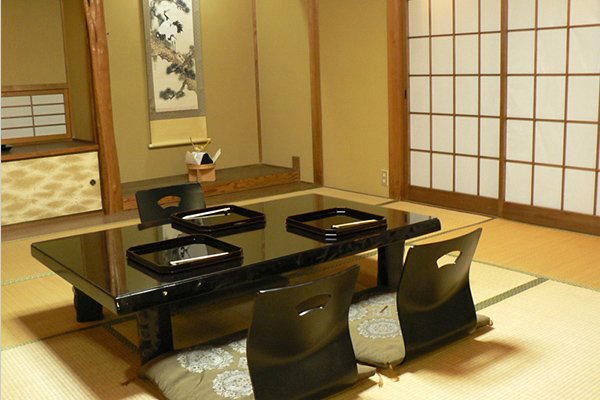
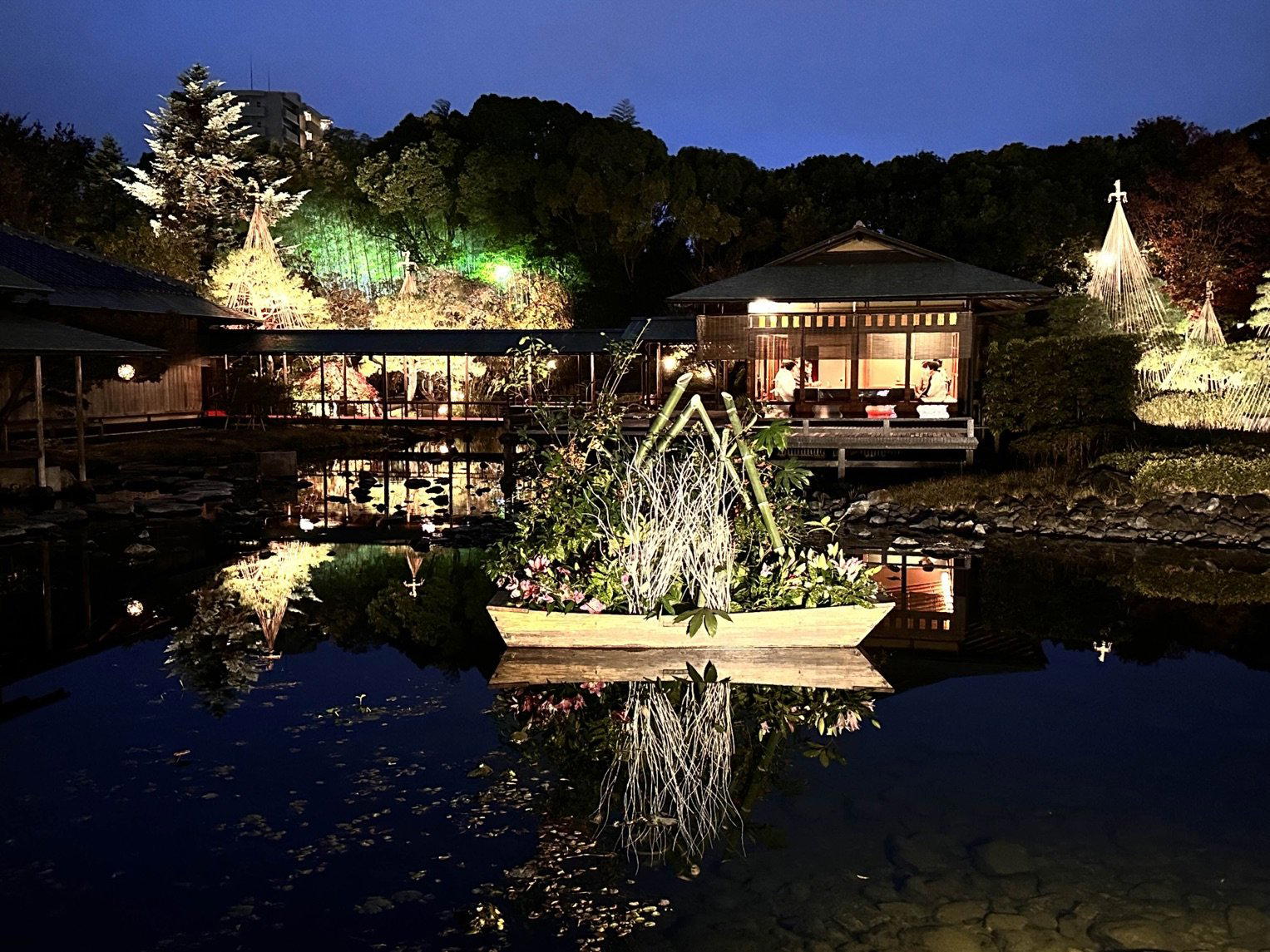
Serene and refined atmosphere with traditional Japanese aesthetics, featuring tatami seating and views of a Japanese garden, creating a calm and intimate setting for special occasions.