Our verdict
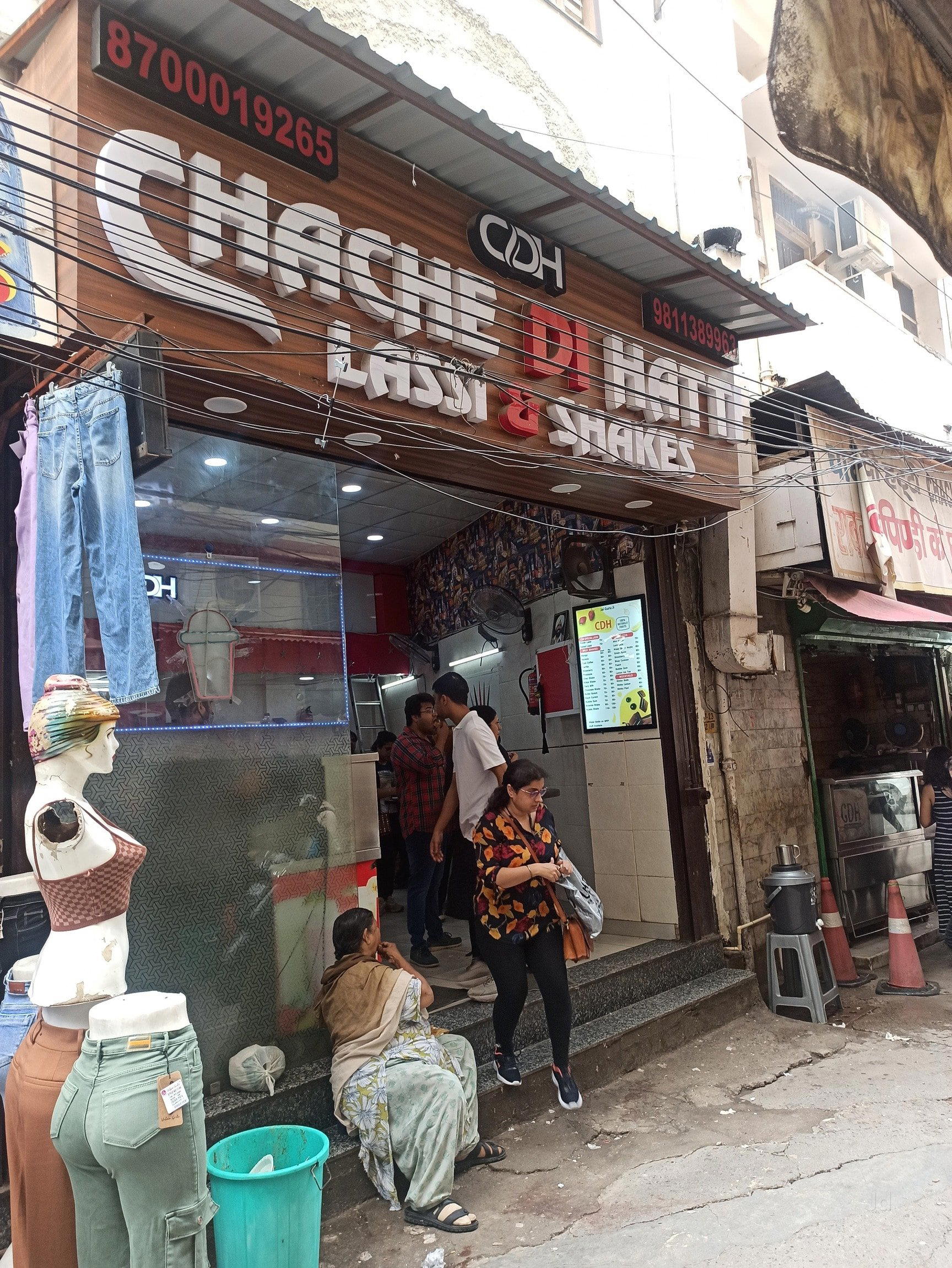
"Chole Bhature at Chacha In a city of almost 22 million people, perhaps 20 million of them would recommend Chacha's for their specialty - Chole Bhature. The classic North Indian dish is spicy chickpeas with fried bread. Sounds simple enough, but nothing can come close to this iconic stand in Kamla Nagar. There are only two tables without chairs, so you either eat standing or take it elsewhere to enjoy. My husband, born and raised in the same neighborhood and a frequent patron, has actually talked about Chacha Di Hatti in his sleep. I believe that says it all."

Pearl is the En Primeur Club membership app, where members save venues, book tables and use the concierge.
The menu
What to order
- Chole Bhature
- Aloo Stuffed Bhature
Kamla Nagar's Street Food Counter and What It Tells You About Delhi's Eating Habits
Bungalow Road in Kamla Nagar moves at a particular rhythm. The stretch is a student quarter feeding ground, the kind of block where eating is transactional and honest rather than performative. Chache Di Hatti sits inside that ecosystem, a counter-service institution that draws its authority not from dining room credentials but from the sheer weight of repetition: the same dishes, the same crowd, the same ritual of standing, ordering, eating fast. Delhi has dozens of spots that claim generational status; Kamla Nagar's version has a specific flavor of local loyalty that is harder to manufacture than a Michelin recommendation.
The Cultural Argument for This Kind of Eating
North Indian street food operates on a logic that formal restaurants rarely replicate. The value is in the reduction: one or two dishes done with obsessive consistency rather than a menu designed to impress. The chole bhature tradition, for instance, is not really about the ingredients in isolation. It is about the fermentation timing on the batura dough, the weight ratio of the finished bread, the temperature at which the chole is held between batches. These are variables that a high-turnover street counter manages through repetition across hundreds of covers per day, a discipline that is structurally different from the test-kitchen logic of, say, Inja in New Delhi or the tasting-menu restraint of Farmlore in Bangalore.
Chache Di Hatti belongs to a category of Delhi eating that sits apart from the spectacle end of the market. Venues like Bukhara and Andhra Pradesh Bhavan represent different registers of institutional reputation, one built on tandoor tradition for visiting heads of state, the other on government-canteen pricing with regional fidelity. Chache Di Hatti operates in neither of those registers. Its authority is neighborhood-scale and student-priced, which is its own form of credibility in a city that has always had room for both.
The Kamla Nagar Context
Understanding Kamla Nagar requires placing it against Delhi's broader geography of eating. The area is dominated by the student population from Delhi University's north campus, which creates a food economy defined by volume, speed, and value. The stalls and counters along Bungalow Road have developed accordingly, with specialization rather than breadth as the dominant strategy. This is the same pattern visible at Bikanervala in Chandni Chowk, where decades of single-category focus have produced a kind of institutional mastery, and at Dilli StreEAT, which frames the same street-food logic for a slightly more curated audience.
What distinguishes a place like Chache Di Hatti from the newer generation of street-food concepts is the absence of framing. There is no branding apparatus, no social media curation strategy, no fusion repositioning. The draw is the product itself, assessed by a returning audience that has eaten the same thing enough times to notice when something is off. That kind of feedback loop is a quality-control mechanism that formal restaurants spend considerable effort trying to replicate.
How This Counter Fits Delhi's Eating Spectrum
Delhi's dining range is wider than most Indian cities. At one end sit the white-tablecloth formats and hotel dining rooms; at the other, the pavement counters of Old Delhi and the university-belt spots of the north. Chache Di Hatti positions itself firmly in the latter category, and that placement is a choice, not a constraint. For visitors who have already covered the formal end, a dinner at Curry Kitchen or a meal benchmarked against the tandoor tradition of Bukhara, a counter like this offers a different kind of calibration. It is where the city eats when it is not performing for visitors.
The same principle applies across India's food cities. Kappa Chakka Kandhari in Chennai makes the case for regional specificity over accessibility; Adaa at Falaknuma Palace in Hyderabad operates at the formal heritage end of the same national conversation. Street-level counters in Delhi occupy a third position: they are neither regional showcases nor prestige venues, but rather the load-bearing infrastructure of a city's daily eating. To read a city's food culture without accounting for that layer is to miss most of what is actually happening.
Planning a Visit: What to Know Before You Go
Kamla Nagar is accessible from central Delhi and serves as a logical stop when combining a north campus visit with time in the Shakti Nagar or Civil Lines areas. The format at a counter like Chache Di Hatti is cash-and-queue rather than reservation-and-table: arrive, join the line, order at the counter, eat standing or find a ledge. Peak hours track the university schedule, with lunch service drawing the densest crowds. Early morning is a different experience, and North Indian breakfast traditions, including deep-fried breads and spiced accompaniments, have their own internal logic worth understanding separately from the midday rush.
No booking infrastructure exists for a spot of this type, which is structurally different from the weeks-ahead planning required at formal Delhi venues or the allocation systems of international dining rooms like Le Bernardin in New York City or Lazy Bear in San Francisco. The friction here is line length, not lead time. For visitors building a Delhi itinerary, our full Delhi restaurants guide covers the range from street counters through to formal dining, with context for each tier.
Those building an India-wide food itinerary around this kind of regional depth will find complementary reference points at Bomras in Anjuna, Dining Tent in Jaisalmer, Neel in Patiala, Naar in Kasauli, Leela Kerala Terrace in Trivandrum, and Americano in Mumbai, each operating in a different register of the same national food conversation.
Frequently asked questions
What's the address for Chache Di Hatti?
Chache Di Hatti is located at Bungalow Rd, Kamla Nagar, New Delhi, Delhi, 110007, India, Delhi.
Where exactly is Chache Di Hatti located, and how do I find it?
Chache Di Hatti is on Bungalow Road in Kamla Nagar, New Delhi, pincode 110007. Kamla Nagar is accessible from central Delhi and sits close to the Delhi University North Campus, making it a logical stop when combining a university-area visit with time in the Shakti Nagar or Civil Lines neighbourhoods. The counter format means there is no indoor seating to look for; the queue outside is typically the most reliable marker.
What's the best thing to order at Chache Di Hatti?
Chache Di Hatti is associated with the chole bhature tradition central to North Indian counter eating. The chole, spiced chickpea curry, paired with deep-fried bhature is the defining order here, as it is at comparable counters across this category. At a Kamla Nagar street counter, this is the dish the kitchen has built its reputation around, and it is the logical starting point for any visit.
Can I walk in to Chache Di Hatti?
Walk-in is the only mode of entry. Counter-service spots on Bungalow Road, Kamla Nagar operate without reservations, and Chache Di Hatti follows that same format. Expect queues during peak hours, particularly around lunchtime when the student population from nearby Delhi University colleges is heaviest on the street.
What makes Chache Di Hatti worth seeking out?
The case for Chache Di Hatti sits in what it represents within Delhi's eating structure: a counter that has maintained a fixed identity in a neighbourhood defined by student foot traffic and high turnover. Kamla Nagar's Bungalow Road has a competitive density of food stalls and quick-service spots, and sustained local patronage at any one counter in that environment is its own form of credential. This is eating defined by repetition and neighbourhood trust rather than critical recognition.
Can Chache Di Hatti accommodate dietary restrictions?
Specific dietary accommodation details are not. Counter-service formats in Kamla Nagar typically operate a short, fixed menu with limited scope for modification. The chole bhature format is inherently vegetarian, which aligns with a broad segment of North Indian street food custom, but anyone with specific allergen requirements should verify directly at the counter before ordering.
Is Chache Di Hatti worth it?
At a Kamla Nagar street counter, the value question operates on a different axis than at a formal dining room. Price points in this category are kept low by design, with the overhead model of a pavement-facing counter rather than a seated restaurant. The return on a visit is measured in access to a North Indian street food format, chole bhature specifically, that formal dining rooms in Delhi rarely replicate with the same register of directness and repetition.
Booking and Cost Snapshot
| Venue | Cuisine | Price | Awards |
|---|---|---|---|
| Chache Di HattiThis venue (the venue you are viewing) | Iconic Punjabi Chole Bhature | $1–10 | Not listed |
| Bukhara | North West Frontier Tandoori | $30–50 | World's 50 Best #37 · La Liste Top Restaurants |
| Dramz Delhi | Multi-Cuisine Fine Dining with North Indian & European | $50–100 | Not listed |
| Indian Accent | Modern Indian Fine Dining | $50–100 | World's 50 Best #46 · La Liste Top Restaurants |
| Rajdhani Thali Restaurant | Rajasthani & Gujarati Thali | Not listed | Not listed |
| Andhra Pradesh Bhavan | Authentic Andhra South Indian | Not listed | Not listed |
Continue exploring
More in Delhi
Restaurants in Delhi
All restaurants in Delhi →
Bars in Delhi
All bars in Delhi →
Details
- Well Known
- Classic
- Rustic
- Casual Hangout
- Standalone
- A La Carte
- Vegetarian Friendly
- Vegan Options
Current opening hours
- Monday
- 9:30 AM–3 PM
- Tuesday
- 9:30 AM–3 PM
- Wednesday
- 9:30 AM–3 PM
- Thursday
- 9:30 AM–3 PM
- Friday
- 9:30 AM–3 PM
- Saturday
- 9:30 AM–3 PM
- Sunday
- Closed
Hours can change for holidays and private events. Hours as of .
Casual street-side eatery with limited alley tables, focused on quick nostalgic bites.