A restored Mughal-era merchants' haveli set in the compressed lanes of Chandni Chowk, Haveli Dharampura occupies a specific position in Delhi's heritage hospitality field: intimate in scale, architecturally serious, and embedded in one of the old city's most historically concentrated districts. It is a property whose primary offering is the building and its location, not its amenity count.
Pearl is the En Primeur Club membership app — saves, bookings, and concierge access live there. Same editors, same standards.
- Address
- Haveli, 2293 Gali, Heritage Rd, Dharam Pura, Chandni Chowk, New Delhi, Delhi, 110006, India
- Phone
- +91 11 4909 1777
- Website
- havelidharampura.com
- Directions
- Get directions
 Saves & bookings on Pearl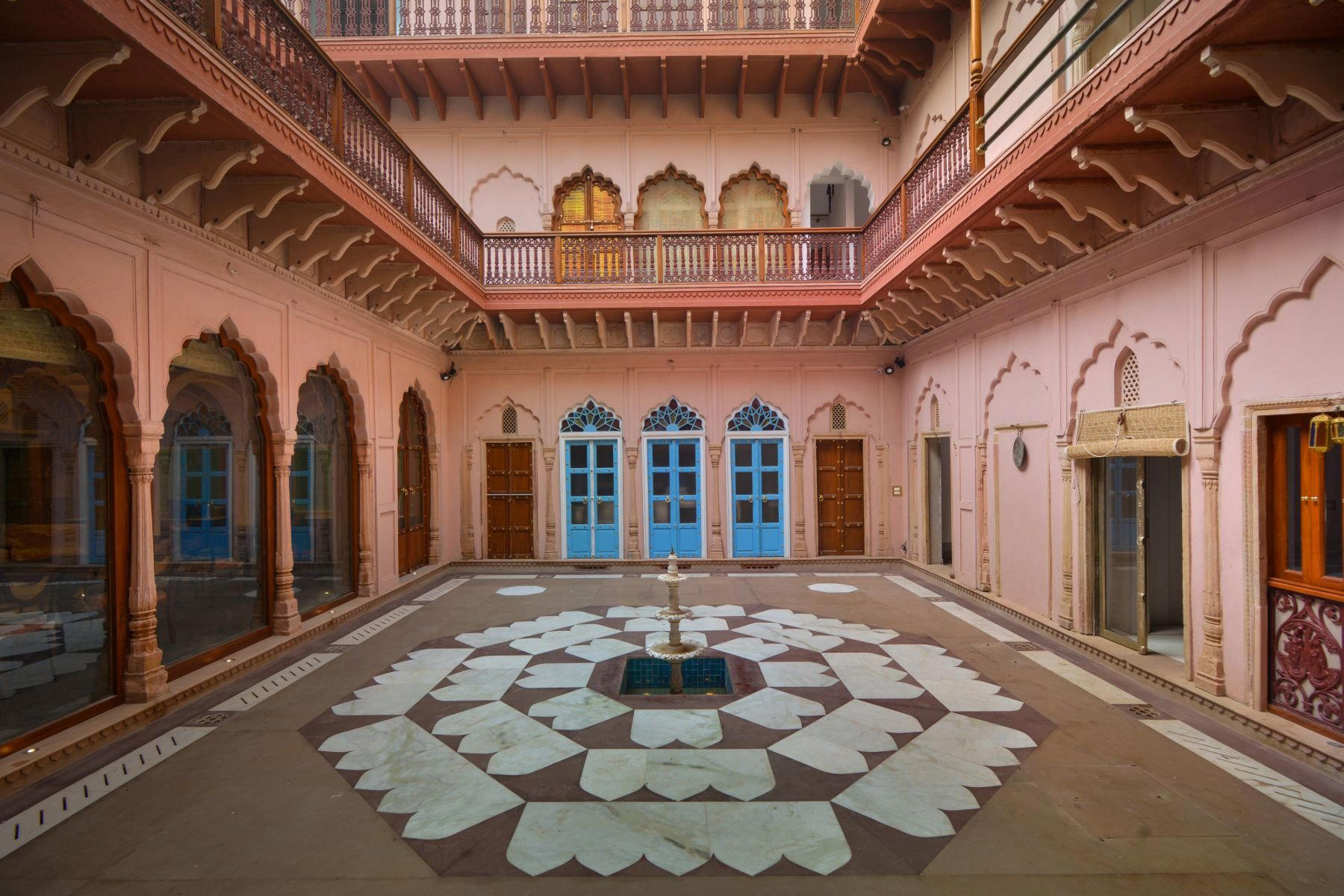
A Haveli Recovered: Chandni Chowk's Most Considered Restoration
Approaching Haveli Dharampura through the compressed lanes of Chandni Chowk is itself an act of historical immersion. The galis of Old Delhi narrow progressively, the noise of Netaji Subhash Marg giving way to the closer acoustics of covered markets and open spice stalls, until Heritage Road delivers you to a facade that reads immediately as something set apart from its surroundings. The haveli's exterior announces itself through the grammar of Mughal-era merchant architecture: latticed jharokha windows, a recessed entrance framed by carved stonework, proportions that were never built for haste. This is a building that predates the address it now occupies in contemporary travel circles.
What Havelis Represent in Delhi's Built Heritage
The haveli typology occupies a specific and diminishing place in Delhi's architectural record. These were the private palaces of the Mughal merchant and administrative class, typically built around one or more interior courtyards with rooms arranged on multiple levels to capture airflow, diffuse heat, and create a spatial hierarchy between the public-facing outer rooms and the private inner chambers. Chandni Chowk once contained dozens of significant havelis; most have been subdivided, converted into commercial storage, or simply degraded past recognition under the pressure of population density and real estate economics. Restoration at this scale, which requires reassembling original structural elements, sourcing period-appropriate lime plaster and sandstone, and working around shared-wall complications common in dense urban blocks, represents a different order of complexity than building new. Haveli Dharampura operates in a small group of properties across Rajasthan and the old Delhi belt that have pursued this kind of fabric-first conservation. Properties like Alila Fort Bishangarh in Manoharpur and Amanbagh in Ajabgarh sit in adjacent territory, though both operate in less urbanised settings where the logistical pressures are different.
Architecture as the Primary Offering
Inside Haveli Dharampura, the courtyard is the organising principle. Mughal residential architecture was built around the chowk as the social and spatial core: rooms face inward rather than outward, all circulation passes through the central space, and the relationship between enclosure and sky is the defining atmospheric condition. The restoration here has preserved that hierarchy. The inner courtyard functions as dining space, event space, and the primary point of arrival in a single sequence, which places it closer to the original social logic of the building than most adaptive-reuse hospitality projects manage. Carved wooden columns, bracketed balconies on the upper levels, and decorative plasterwork in relief are the load-bearing aesthetic elements; the furnishing works within this frame rather than against it. For travellers comparing Delhi's heritage hospitality options, this is a materially different proposition from the large-footprint luxury of The Leela Palace New Delhi or the colonial-era civic architecture of Ambassador, New Delhi - IHCL SeleQtions. The scale here is intimate, the architectural period is pre-colonial, and the neighbourhood context is Old Delhi rather than Lutyens.
Setting and Neighbourhood Context
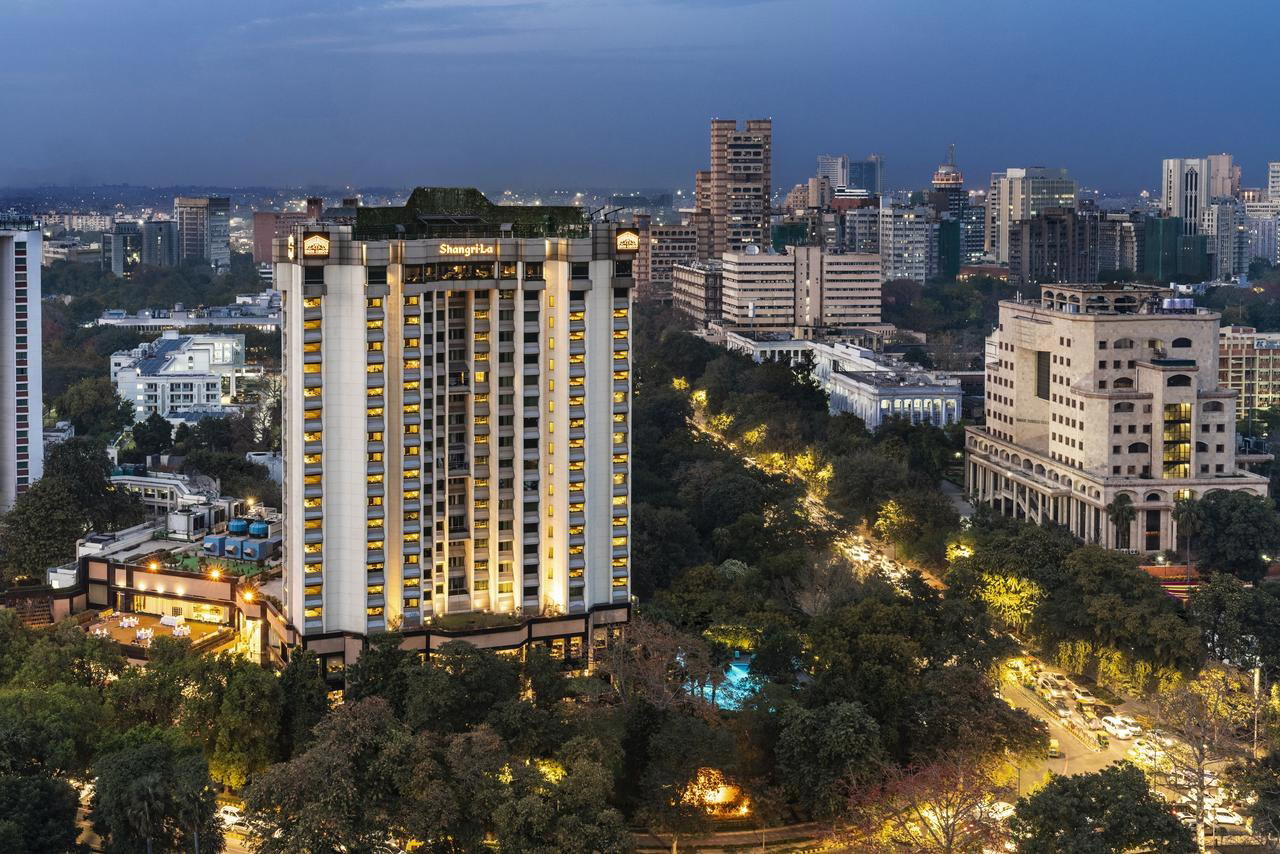
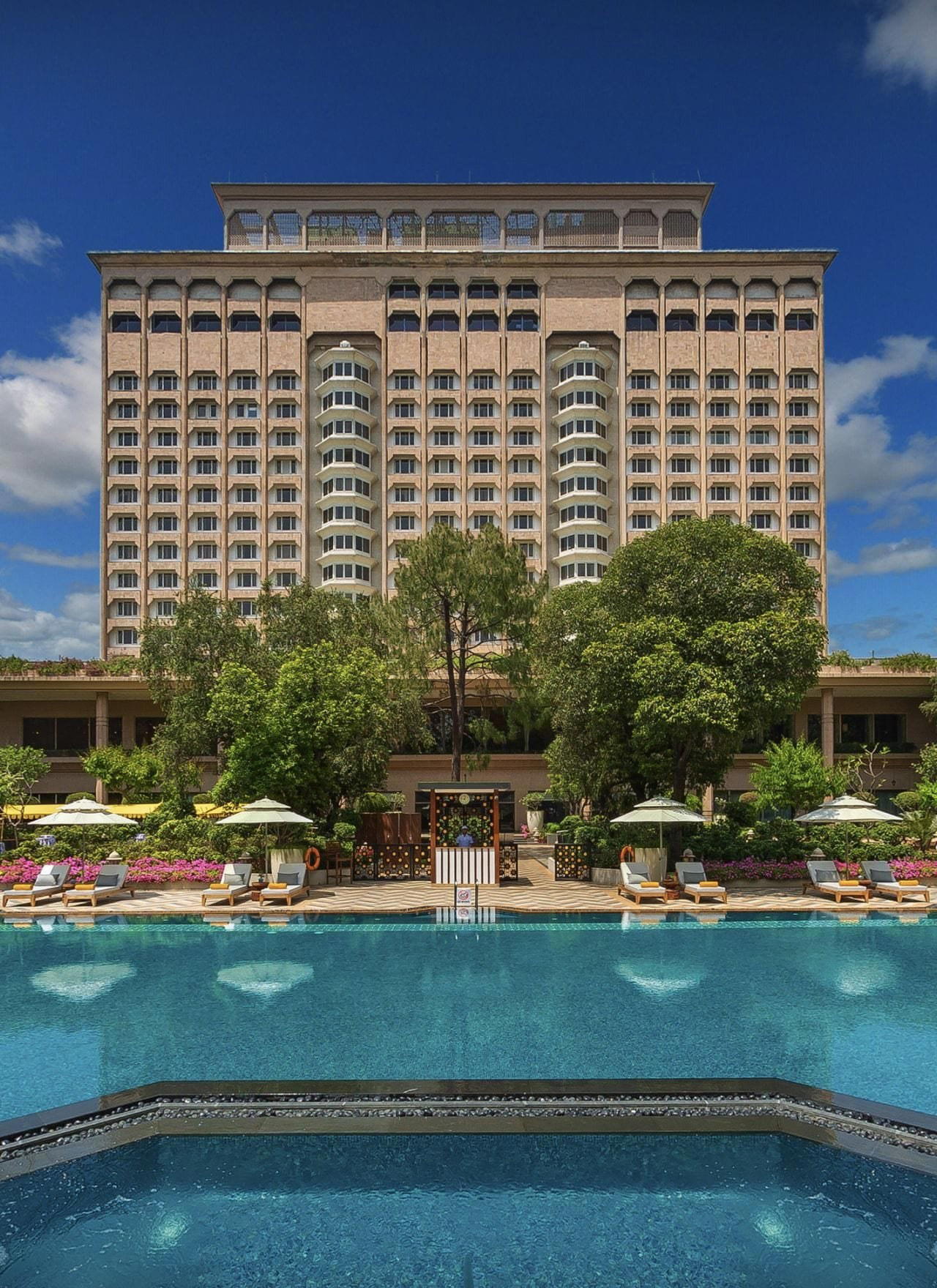
Chandni Chowk is among the more historically concentrated districts in the subcontinent, and staying inside it rather than commuting in from a southern Delhi hotel fundamentally changes how the area reads. The wholesale spice market of Khari Baoli, the silver and gold lanes of Dariba Kalan, the Jama Masjid, and the Red Fort are all within walking distance of Heritage Road. This proximity has a specific value for travellers who treat the old city as an end in itself rather than a half-day excursion. The trade-off is environmental: Chandni Chowk operates at a sensory register that larger, campus-style properties in Aerocity or Connaught Place insulate against entirely. Traffic, street commerce, and the compressed acoustics of dense urban fabric are present realities. For context on the broader Delhi accommodation spread, Roseate House and The Park represent the polished mid-city alternative, while The Leela Ambience Convention Hotel Delhi sits at the large-scale convention end of the market. The hotel is positioned elsewhere from all of them.
The Wider Heritage Circuit
Travellers using the hotel as a base frequently pair it with movement through Rajasthan, where the heritage hospitality tradition is older and more established. Suján Jawai in Pali, Natraj Hotel and Restaurant in Udaipur, and The Leela Palace Jaipur each represent different points on that spectrum, from tented wilderness camps to palace conversions to purpose-built luxury. The Agra extension is also a standard pairing, with The Oberoi Amarvilas occupying the premium position in that city. For the Himalayan extension, Chapslee in Shimla and Gateway Dehradun offer contrasting approaches to colonial-era hill station properties.
Planning Your Stay
The hotel sits at 2293 Gali, Heritage Road, Dharam Pura, Chandni Chowk, making it accessible by metro via the Chandni Chowk station on the Yellow Line, though auto-rickshaw or a pre-arranged vehicle is more practical for arrival with luggage given the lane widths near the property. The old city operates at peak intensity during morning market hours and again in the early evening; guests who want to walk the surrounding lanes should account for those rhythms when planning departures and returns. Those planning a Rajasthan continuation might also consider the religious and cultural circuit through Vivanta Vrindavan, or further afield to Aman-i-Khas in Ranthambore for a wildlife counterpoint.
Fast Comparison
Comparable venues nearby, for context on price, style, and recognition.
| Venue | Cuisine | Price | Awards | Notes |
|---|---|---|---|---|
| Haveli DharampuraThis venue — the venue you are viewing | Boutique heritage haveli blending Mughal grandeur with modern comforts | $$$$ | 5-Star | Not listed |
| The Leela Ambience Convention Hotel Delhi | Luxury convention hotel with dual towers and extensive event spaces | $$$$ | 5-Star | East Delhi |
| The Park | Contemporary urban boutique inspired by five natural elements | $$$$ | 5-Star | Connaught Place |
| Roseate House | Contemporary upscale urban resort blending modern aesthetics with refined Indian hospitality and architectural grandeur. | $$$$ | 5-Star | Aerocity |
| Aurika, Nehru Place, New Delhi | Large upper-upscale urban lifestyle hotel with extensive event and leisure facilities in a major commercial district. | $$$$ | 5-Star | Nehru Place |
| Ambassador, New Delhi - IHCL SeleQtions | Contemporary heritage hotel blending colonial past with modern luxury | $$$$ | 5-Star | Lutyens' Delhi |
Continue exploring
More in Delhi
Hotels in Delhi
Browse all →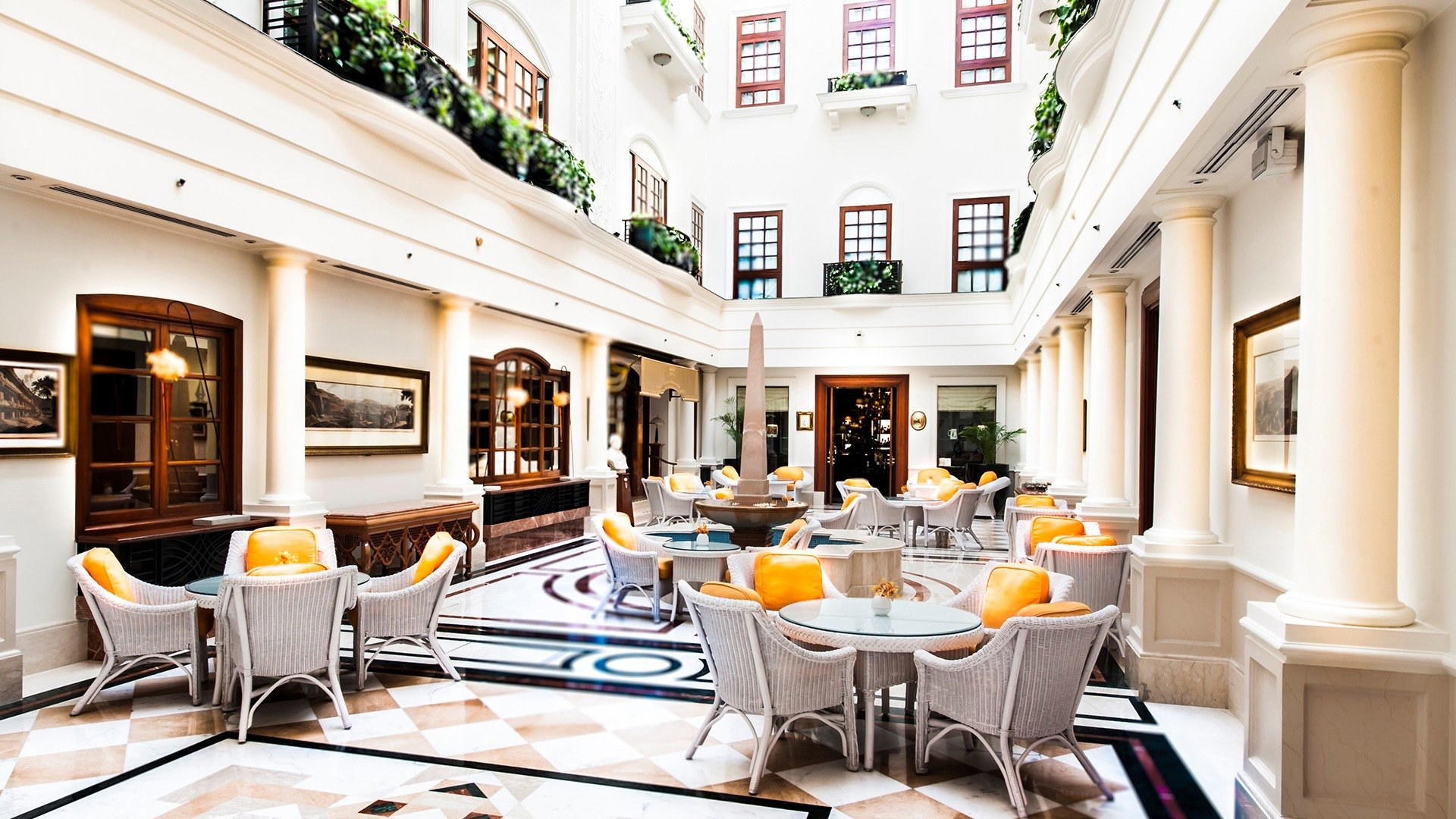

At a Glance
- Romantic
- Elegant
- Historic
- Intimate
- Sophisticated
- Ornate
- Romantic Getaway
- Anniversary
- Honeymoon
- Historic Building
- Terrace
- Wi Fi
- Room Service
- Concierge
- Restaurant
- Bar
- Street Scene
- Wi Fi
- Room Service
- Concierge
- Restaurant
- Bar
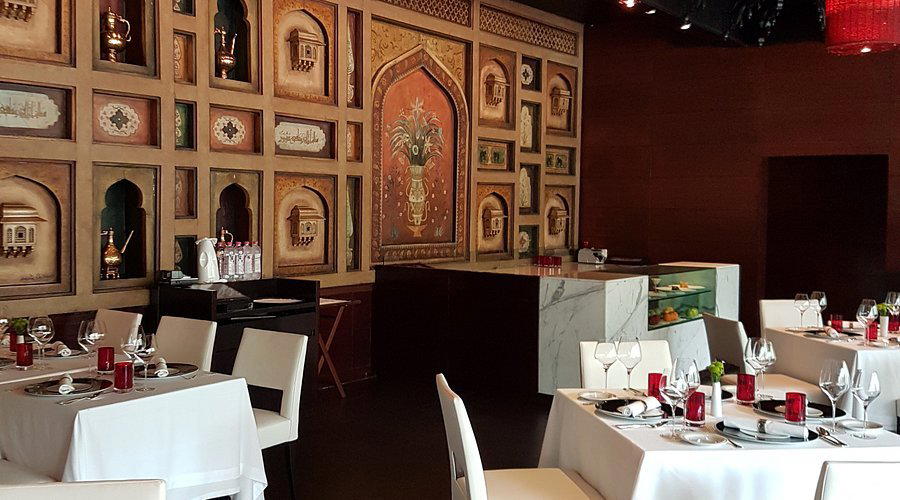
Timeless elegance with serene central courtyard, intricate jharokas, antique furnishings, and a tranquil escape from bustling streets.