Our verdict
Bikanervala's Chandni Chowk outpost sits on Kucha Seth Road in the heart of Delhi's oldest trading quarter, where street food and sweet shops have operated in an unbroken line for centuries. It belongs to a category of heritage snack institutions that serve as anchors for the neighbourhood's food identity, drawing locals and visitors alike with its range of chaat, mithai, and North Indian staples at accessible prices.

Pearl is the En Primeur Club membership app, where members save venues, book tables and use the concierge.
The menu
What to order
- Kaju Katli
- Rasgulla
- Soan Papdi
- Bikaneri Bhujia
Where Chandni Chowk's Food Culture Has Its Centre of Gravity
Step into Fatehpuri on a weekday morning and the sensory register is immediate: the clatter of steel trays, the smell of ghee meeting hot iron, the compressed movement of vendors and regulars sharing the same narrow lanes they have occupied for generations. Kucha Seth Road, where Bikanervala's Chandni Chowk branch operates, sits within one of the densest concentrations of food history in the Indian subcontinent. This is not a neighbourhood that discovered its identity recently. Chandni Chowk has been Delhi's commercial and culinary artery since the Mughal period, and the eating culture here carries that weight in every transaction.
Bikanervala as a chain traces its lineage to Bikaner in Rajasthan, where the family behind it began producing namkeen and mithai in the early twentieth century. The Delhi presence, and particularly this Chandni Chowk address, places it inside a neighbourhood where institutional sweet shops and snack houses are not outliers but the baseline. Rival institutions with multi-decade histories operate within walking distance, which means Bikanervala competes on familiarity and consistency rather than novelty. That competitive context matters: in a locality like this, longevity functions as its own credential.
The Setting and What It Says About the Experience
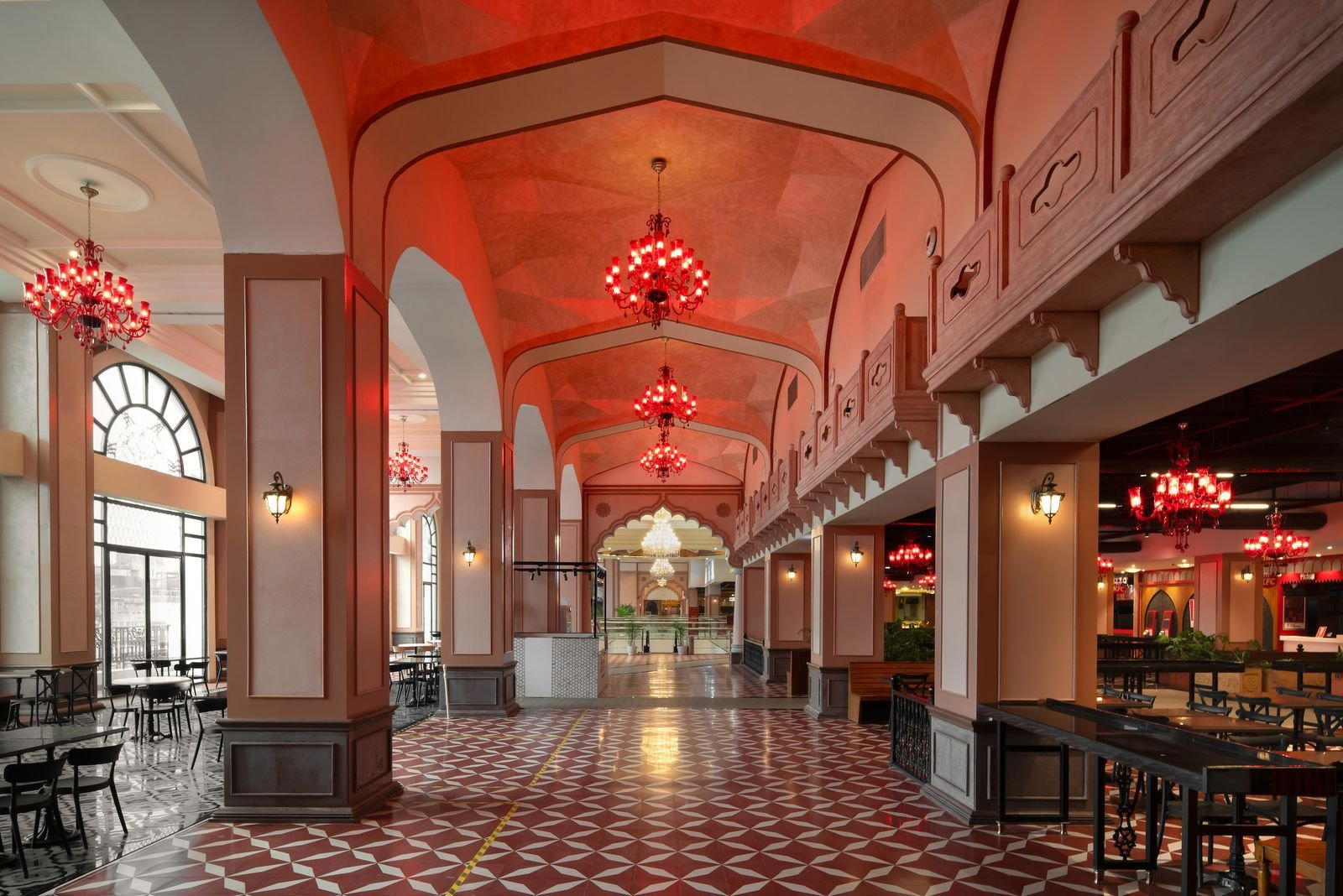
Chandni Chowk eating is not about ambience in the hotel-restaurant sense. The value proposition here is density of flavour per rupee, the reliability of a preparation you have eaten before, and the specific pleasure of consuming food in the place where it belongs. Bikanervala's Chandni Chowk format operates inside that contract. It is a multi-format operation in the Bikanervala mould: sit-down seating alongside a take-away counter, with the sweet and savoury sections visible and accessible. The physical environment is functional rather than designed. Tile, fluorescent light, steel counters, it matches the register of the street outside rather than trying to create distance from it.
That alignment with the street is significant for understanding what this address is for. Unlike the brand's locations in South Delhi or at airports, where a cleaner, more leisure-oriented dining room signals a different customer, the Chandni Chowk branch is oriented toward the working neighbourhood. Shopkeepers, traders, families visiting the area's religious sites, the customer base is as varied as the street itself. For a visitor using the branch as an entry point into Chandni Chowk's food culture, that mix is part of what makes the stop worth making.
The broader neighbourhood offers its own itinerary for anyone serious about Delhi's snack and sweet traditions. Chache Di Hatti handles the chole bhature category a few lanes away, while Dilli StreEAT represents the more curated, newer end of the street food conversation. These are different tiers of the same food culture, and Bikanervala sits in the established institutional bracket rather than either extreme.
What Bikanervala Does and Where It Sits in Delhi's Food Register
The Bikanervala menu operates across three broad registers: mithai (Indian sweets), namkeen and snacks, and cooked dishes ranging from chaat to full thali-style meals. In the Chandni Chowk context, the mithai and snack arms are the ones with the clearest local credibility. The Bikaner connection gives the brand a specific claim on varieties of namkeen and bhujia that are grounded in Rajasthani craft tradition. Halwai-style sweets, peda, barfi, ladoo, ghevar in season, represent a category where heritage sweet shops in this neighbourhood carry genuine authority.
Chaat at this address exists within a competitive field where Old Delhi has its own regional inflections. Aloo tikki, gol gappe, and papdi chaat here are prepared to a North Indian street style rather than the glossier interpretations found in South Delhi restaurants or at venues like Curry Kitchen. For comparison, the kind of technique-forward, plated Indian cooking at Inja in New Delhi or the tandoor lineage at Bukhara represents a completely separate tier of Delhi's food culture. Bikanervala's register is deliberate and different: it is about accessibility and volume, not refinement.
Across India, this kind of multi-city sweet and snack institution occupies a specific and durable role. It is not the address a food critic flies in for, but it is often where the people who live in the city actually eat. The distinction matters, and so does resisting the impulse to frame one as superior to the other. When Andhra Pradesh Bhavan draws queues for its thali, or when Farmlore in Bangalore anchors a different conversation about Indian ingredients, they are all responding to different but equally legitimate demands. Bikanervala's Chandni Chowk branch answers the demand for reliable, affordable, traditionally-framed food in a neighbourhood where that demand is constant.
Planning Your Visit: Logistics for Chandni Chowk
Kucha Seth Road is accessible from Chandni Chowk metro station on the Yellow Line, making this one of the more direct parts of Old Delhi to reach by public transport. The area is significantly more navigable on foot than by car, the lanes around Fatehpuri are narrow, and auto and cycle-rickshaw access is more practical than private vehicles during peak hours. Morning visits allow you to cover more of the neighbourhood's food stops before lunch crowds build; the sweet counters at Bikanervala and neighbouring shops are often freshest in the first half of the day when batches have just been made. No booking is required and no dress code applies. Prices across the Bikanervala format are kept accessible, consistent with the market-level pricing of the surrounding area. Cash is widely accepted; UPI payment is increasingly standard across Delhi's Old City establishments.
For those building a broader Delhi itinerary, the EP Club coverage of restaurants across the city spans from heritage street food institutions to the hotel-dining tier, see our full Delhi restaurants guide for context across neighbourhoods and price points. Further afield, the contrast with destinations like Adaa at Falaknuma Palace in Hyderabad, Kappa Chakka Kandhari in Chennai, or Dining Tent in Jaisalmer illustrates how differently each Indian city frames its food culture. Chandni Chowk is Delhi's answer to that question, and Bikanervala is one of the institutions that keeps the answer consistent.
Frequently asked questions
What part of town is Bikanervala | Chandni Chowk Delhi in?
Bikanervala | Chandni Chowk Delhi is located at 382, Kucha Seth Rd, Gachi Ram, Fatehpuri, Chandni Chowk, Delhi, 110006, India, Delhi.
What's the must-try dish at Bikanervala Chandni Chowk Delhi?
Bikanervala operates across mithai, namkeen, and cooked dishes including chaat, the chaat counter is where the Fatehpuri location earns its standing in Chandni Chowk's food register. The namkeen selection, a core part of the Bikanervala identity, travels well and is a practical reason to visit even if you're not staying for a full meal. Specific dish availability varies by time of day, so arriving in the morning gives you the widest range of cooked options.
Can I walk in to Bikanervala | Chandni Chowk Delhi?
Reservations are recommended for Bikanervala | Chandni Chowk Delhi in Delhi. Confirm current policy via the venue's official channels.
Can I walk in to Bikanervala Chandni Chowk Delhi?
Yes, Bikanervala on Kucha Seth Road operates as a walk-in venue, consistent with how eating in Chandni Chowk works: queuing and counter service, not reservations. The location is reachable directly from Chandni Chowk metro station on the Yellow Line, which makes access straightforward from most parts of Delhi. Weekday mornings tend to be the most manageable time to arrive before the midday crowds peak.
Cuisine and Recognition
Comparable venues nearby, for context on price, style, and recognition.
| Venue | Cuisine | Price | Awards | Notes |
|---|---|---|---|---|
| Bikanervala | Chandni Chowk DelhiThis venue (the venue you are viewing) | Indian Sweets and Snacks | $1–10 | Not listed | Not listed |
| Moti Mahal - Greater Kailash part 1 | Authentic Mughlai & North Indian | $10–20 | Not listed | Greater Kailash 1 |
| Oh! Calcutta | New Delhi | Authentic Bengali Fine Dining | $20–30 | Not listed | Greater Kailash |
| Nizam's Kathi Kabab | Indian Kathi Rolls & Kebabs | $1–10 | Not listed | Biden Pura, Malviya Nagar, Defence Colony |
| Hotel Saravana Bhavan | Authentic South Indian Vegetarian | $1–10 | Not listed | Connaught Place |
| Bukhara | North West Frontier Tandoori | $30–50 | World's 50 Best #37 · La Liste Top Restaurants | Chanakyapuri/Lutyens' Delhi |