
Relais Chateaux Award
Our verdict
A Rajasthani restaurant operating out of a heritage property near Kishan Ghat, Dining Tent earns EP Club's Expression of the Terroir highlight for cooking that stays close to the desert's own spice logic — whole dried chillies, ajwain, and asafoetida doing structural work rather than decorative duty. It holds a consistent reputation among travellers seeking honest Rajasthani cooking in Jaisalmer.

Pearl is the En Primeur Club membership app — saves, bookings, and concierge access live there. Same editors, same standards.
- Address
- 583.584 Hotel Heritage House, Dr. K. L. Achalvanshi Colony, Kishan Ghat, Rajasthan 345001, India
- Phone
- +91 82786 19610
- Website
- menumodo.com
- Directions
- Get directions
Desert Spice, Read Honestly
Rajasthani cooking is one of the few regional traditions in India where the spice architecture is genuinely shaped by geography. The Thar Desert's scarcity logic — limited water, extreme heat, a preference for dried and preserved ingredients — produced a cuisine that uses spices not as flourish but as preservation, flavour, and structural backbone. Whole dried chillies give slow-releasing heat without sharpness. Asafoetida replaces allium in many preparations because it stores longer and tolerates heat. Ajwain appears where digestion demands it, not where a chef decided it would be interesting. Jaisalmer, as one of the most remote cities in this tradition, holds some of the least-diluted versions of this logic, and Dining Tent, a small restaurant operating within Heritage House near Kishan Ghat, holds EP Club's Expression of the Terroir highlight precisely because it stays close to that original rationale.
That recognition places Dining Tent in a smaller subset of Indian restaurants nationally. Terroir-anchored cooking, cooking where the environment and its constraints are legible in the food, tends to be easier to recognise in wine than in cuisine, but it is just as present in a dal baati churma made with Rajasthani ghee and stone-ground wheat as in a Burgundy expressing its limestone. For comparative context, Farmlore in Bangalore and Naar in Kasauli operate in a similar register, hyper-local sourcing and regional specificity over generic pan-Indian menus, though in very different geographical and climatic contexts.
The Setting: Tent, Heritage, Desert Light
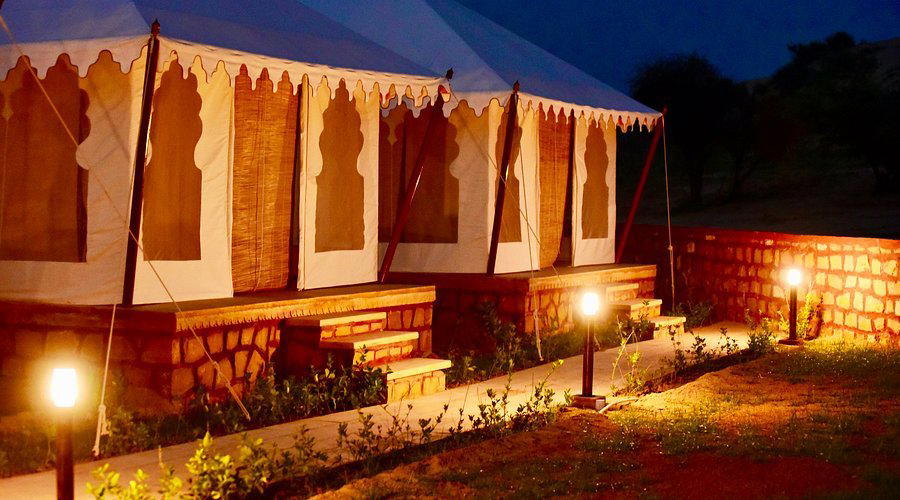
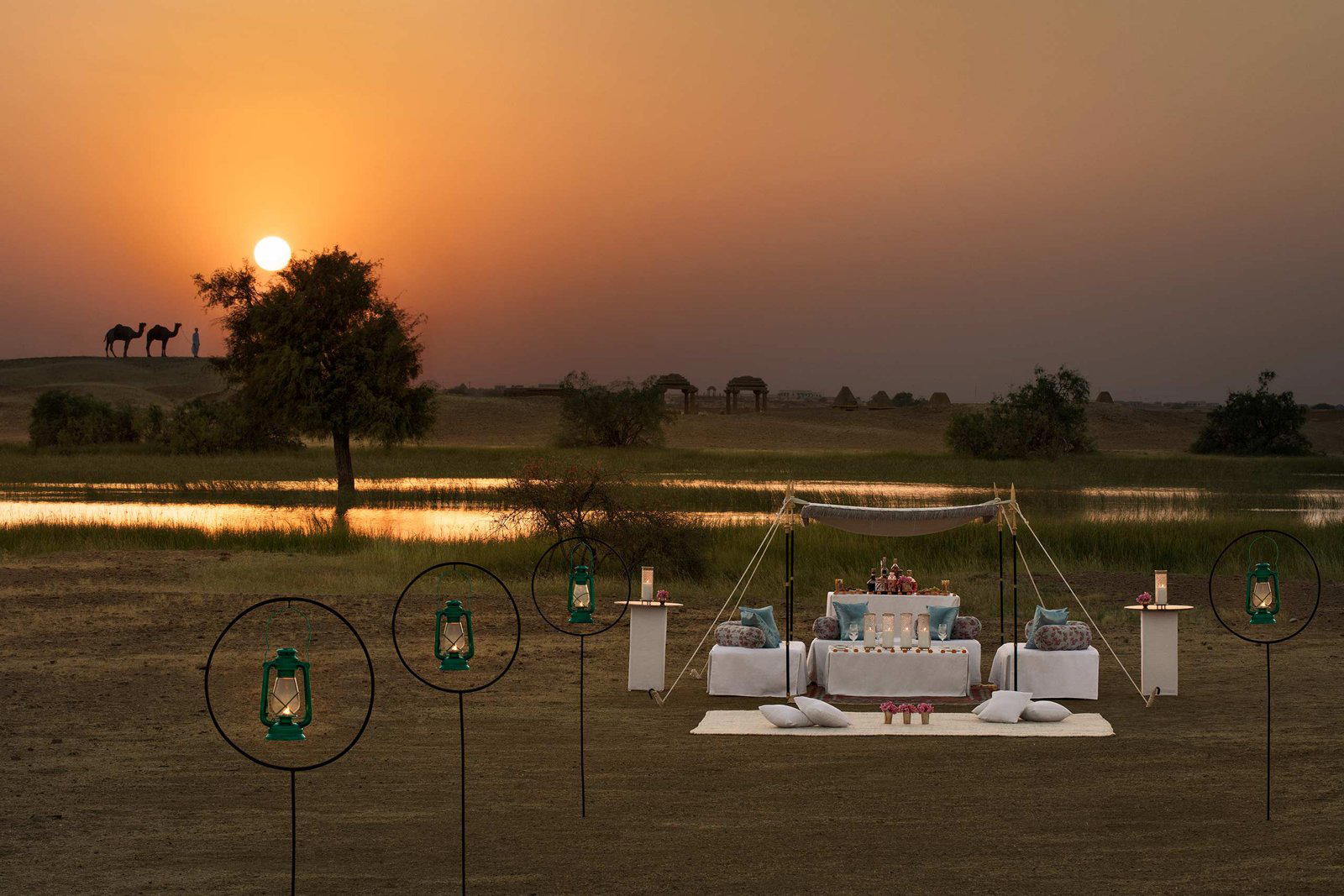
The name is literal in part and atmospheric in full. Kishan Ghat sits close to the old city walls, and the heritage property that houses this restaurant carries the architectural vocabulary of golden sandstone and shaded courtyards that defines Jaisalmer's built environment. In a city where the fort itself bleeds into the residential fabric, still inhabited, still functional, eating within a heritage property is not a curated heritage experience so much as a continuation of everyday life in an extraordinary built context. The evening light across Jaisalmer's sandstone turns the whole city amber, and a tent or open-air courtyard setting reads differently here than in most Indian cities. It is less theatrical and more natural.
This matters because the dining format shapes how spiced food is received. Rajasthani cooking was built for communal, unhurried eating, the kind that happens between courses of conversation and where a dal cooked low and slow for several hours is not a menu centrepiece but an assumed constant. A setting that allows that pace, without the ambient pressure of a high-turnover urban dining room, is structurally more appropriate to the cuisine than a slick metropolitan room would be. For those travelling through Rajasthan with a broader itinerary, Chandni in Udaipur operates in a similar state-specific tradition but within a lakeside context that produces a different register of the same regional logic.
Spice Architecture: What the Desert Tradition Actually Demands
To understand what Expression of the Terroir means in this context, it helps to understand what Rajasthani spice logic actually involves and where most restaurants depart from it. Tempering, blooming whole spices in hot fat before any liquid or protein enters the pan, is not unique to Rajasthan, but the specific sequence and the specific spices used are regionally distinct. Dried fenugreek leaves, whole coriander seeds cracked rather than ground, and long dried red chillies from the Mathania region near Jodhpur are markers of the tradition. When those are replaced by a generic garam masala or a blend calibrated for a national audience expecting comfort-heat rather than the sharper, more austere spice profile of the desert, the terroir evaporates.
Restaurants in larger Indian cities often adjust Rajasthani cooking towards a broader palate, richer in cream, lower on pungency, sweeter in the spice balance. This is commercially rational. Bukhara in New Delhi has spent decades calibrating its North Indian cooking to a mixed audience of domestic business travellers and international visitors, which produces a different kind of excellence but not a terroir argument. Adaa at Falaknuma Palace in Hyderabad does something similar within a heritage format, superbly executed, but in the service of palatability to a wide guest profile. Dining Tent operates without that pressure, in a city where the majority of visitors are arriving specifically for the desert experience and are more receptive to an unmodified version of it.
Where Dining Tent Sits in the Wider Indian Scene
India's regional dining conversation has matured considerably in the last decade. Avartana in Chennai made a case for South Indian cooking as technically rigorous fine dining. Americano in Mumbai and da Susy in Gurugram operate in a different register entirely, but the underlying shift, towards specificity over generalism, is the same force at work in a Jaisalmer tent restaurant holding its regional line. Jamavar Delhi and Bomras in Anjuna each claim regional anchoring while serving visitors, which is the operating challenge Dining Tent shares, at a very different scale and price point.
The absence of a listed price range is worth noting practically. Jaisalmer's restaurant pricing is generally low relative to major Indian metros, and a heritage property near the old city walls is unlikely to operate at metropolitan fine-dining prices. For planning visits, the address at 583.584 Hotel Heritage House, Dr. K. L. Achalvanshi Colony is the confirmed location, the area is walkable from the fort district, though the old city's winding lanes make navigation easier on foot than by vehicle for the final approach.
Travellers building a broader Jaisalmer itinerary can find context across [our full Jaisalmer restaurants guide](), [our full Jaisalmer hotels guide](), [our full Jaisalmer bars guide](), [our full Jaisalmer wineries guide](), and our full Jaisalmer experiences guide. For those tracking the broader arc of India's regional restaurant scene, Baan Thai in Kolkata offers a useful contrast, a restaurant making a specific regional argument in a very different culinary tradition, within an Indian city context rather than a heritage desert one.
Frequently asked questions
Is Dining Tent good for families?
Traditional Rajasthani cooking is structured around a broad communal spread — dal, sabzi, breads, rice, and pickles — which naturally accommodates varied appetites across age groups. The format suits families well, and the heritage property setting near Kishan Ghat in Jaisalmer adds context that resonates with visitors travelling with children curious about Rajasthani culture.
What kind of setting is Dining Tent?
The restaurant operates within a heritage property at Kishan Ghat, close to the old walled city of Jaisalmer. Sandstone architecture and courtyard-style environments are characteristic of this part of Rajasthan, and the tent framing references both the nomadic traditions of the region and the open-air dining culture common across the Thar Desert.
Does Dining Tent have a Michelin star or similar recognition?
Dining Tent has received recognition including: HIGHLIGHTS: • EXPRESSION OF THE TERROIR.
What do people recommend at Dining Tent?
EP Club recognises Dining Tent under the highlight designation Expression of the Terroir, which signals that the kitchen's cooking reflects the spice logic and ingredient tradition of the Thar Desert region rather than a generic pan-Indian menu. Dishes rooted in that Rajasthani framework — cooked lentils, millet-based breads, dried desert vegetables — are the core of what this kitchen does.
Quick Comparison
Comparable venues nearby, for context on price, style, and recognition.
| Venue | Cuisine | Price | Awards | Notes |
|---|---|---|---|---|
| Dining TentThis venue — the venue you are viewing | Rajasthani Terroir Cuisine | $50–100 | Relais Chateaux Award | Not listed |
| Mynt | Pure Vegetarian Indian | Not listed | Not listed | Vrindavan |
| SUJÁN The Serai, Jaisalmer | Rajasthani Indian with Western options | $100–150 | Relais Chateaux Award | Chandan |
| Hotel Aganta Green | Indian Multicuisine | $1–10 | Not listed | Fardapur |
| Tadka | Awadhi & North-West Frontier Indian Fine Dining | Not listed | Not listed | Cantonment |
| The Pillars | Contemporary European Fine Dining | Not listed | Not listed | Cantt Area |
Recognition history
Dated appearances from independent guides and award organizations, with the underlying list record or original source where available.
Relais Chateaux Award
Relais Chateaux
Continue exploring
More in Jaisalmer
Restaurants in Jaisalmer
Browse all →



Bars in Jaisalmer
Browse all →
Hotels in Jaisalmer
Browse all →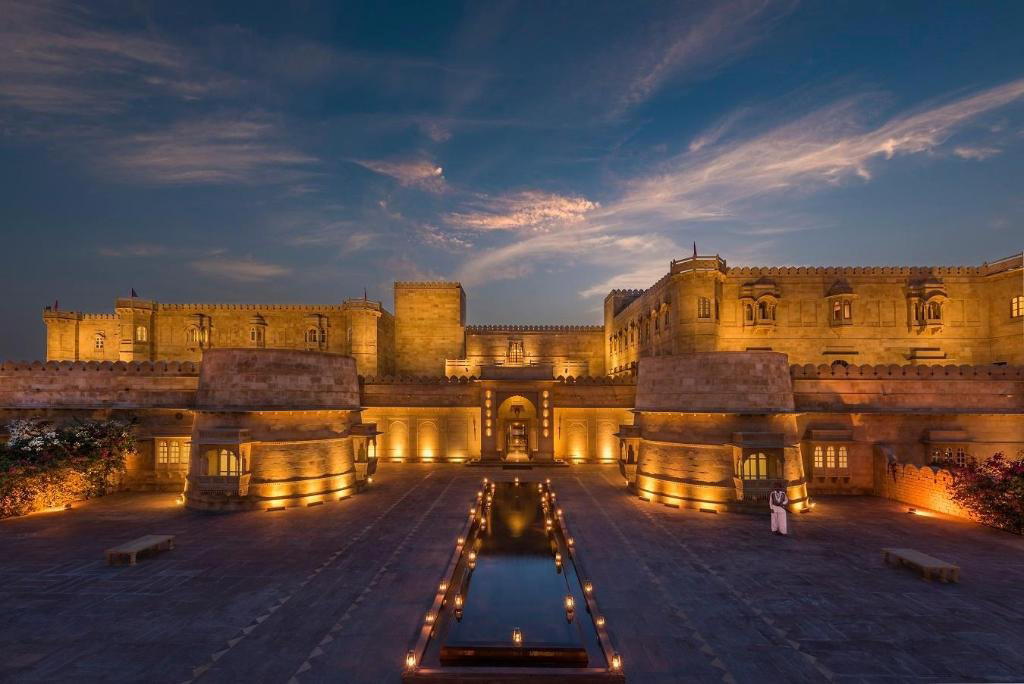
Details
- Rustic
- Scenic
- Intimate
- Special Occasion
- Date Night
- Historic Building
- Terrace
- A La Carte
Warm and attentive atmosphere with sophisticated desert tent ambiance featuring attentive staff and classic culinary presentation.