Leela Kerala Terrace
Our verdict
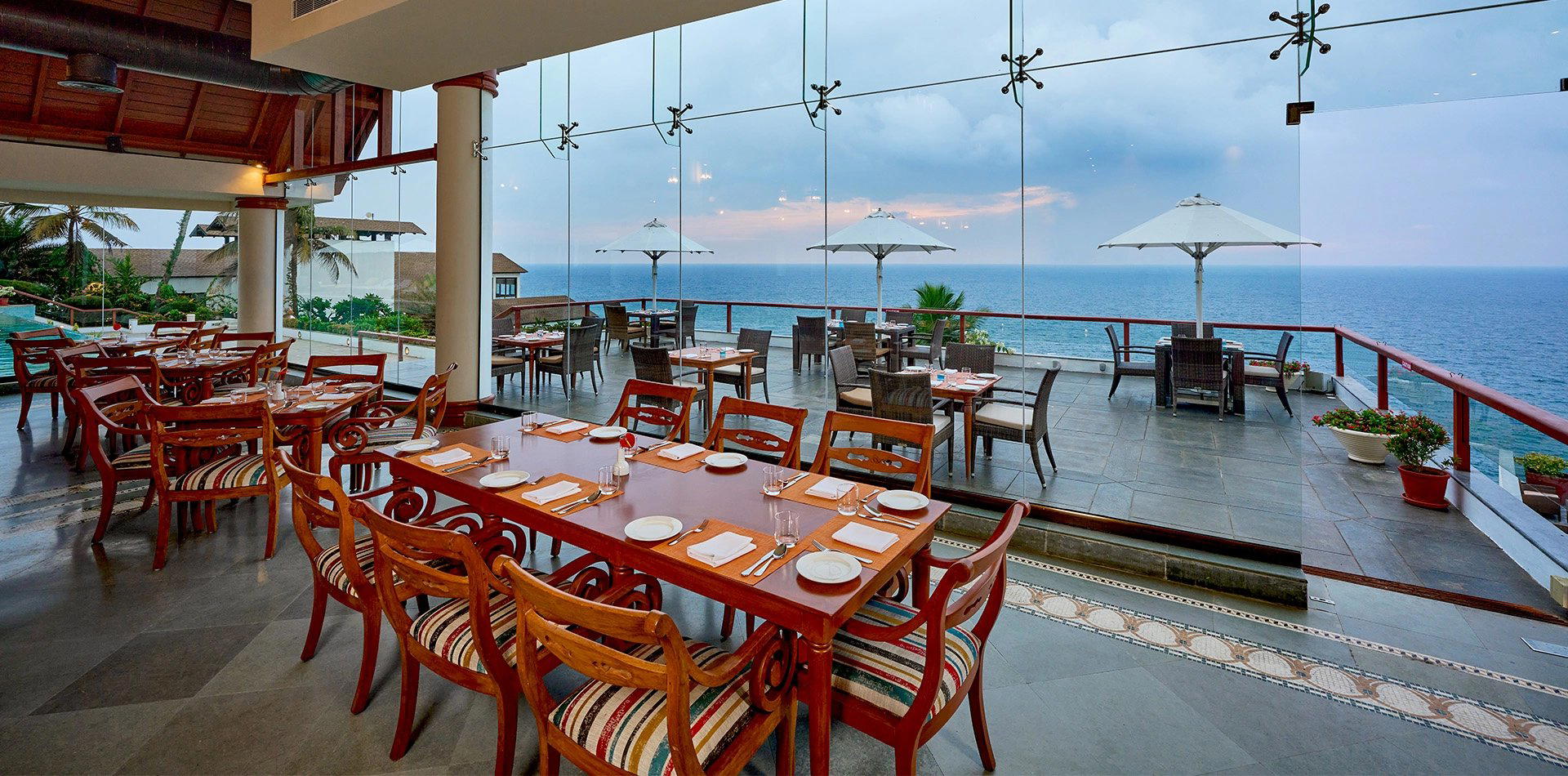
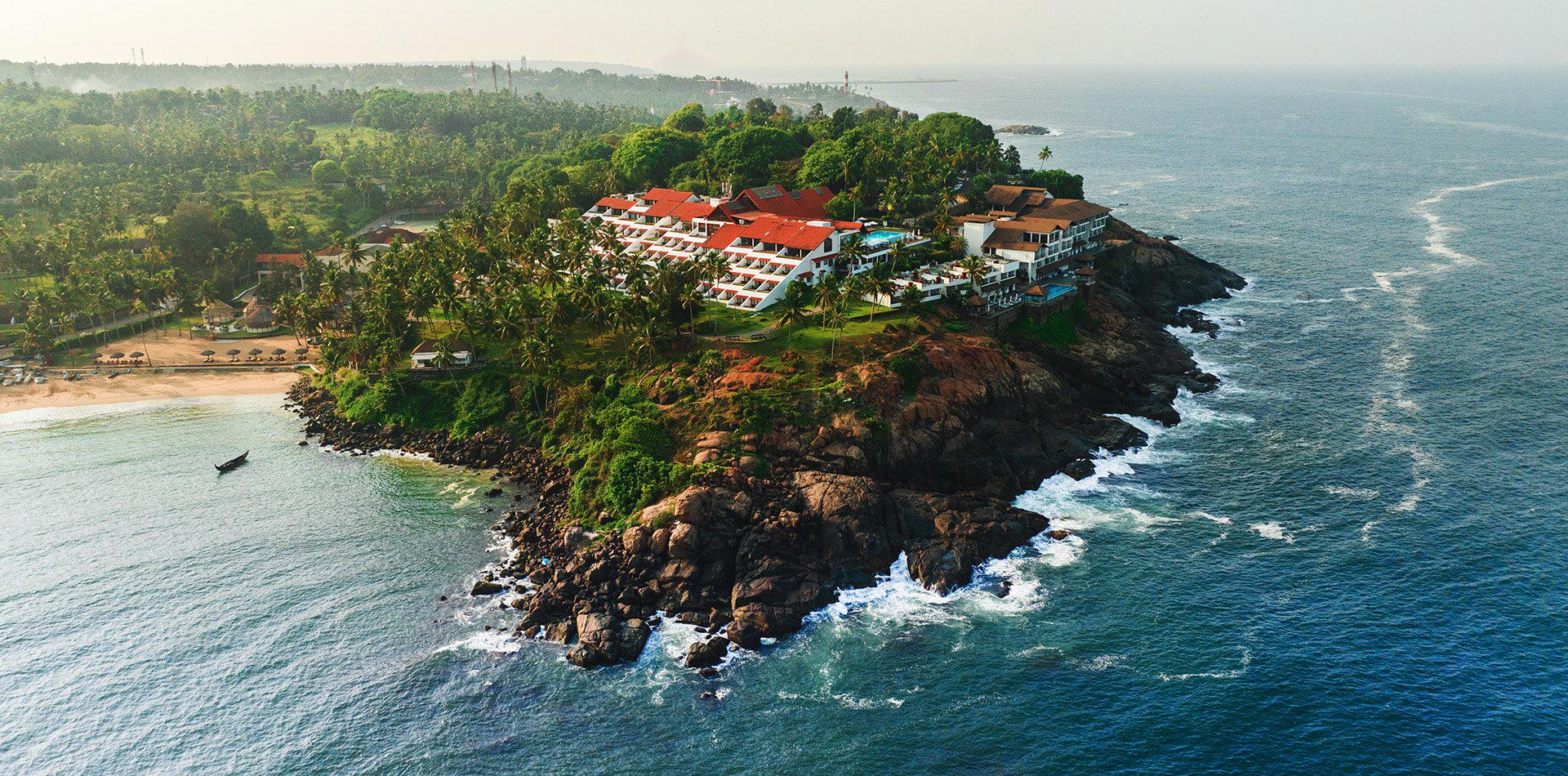
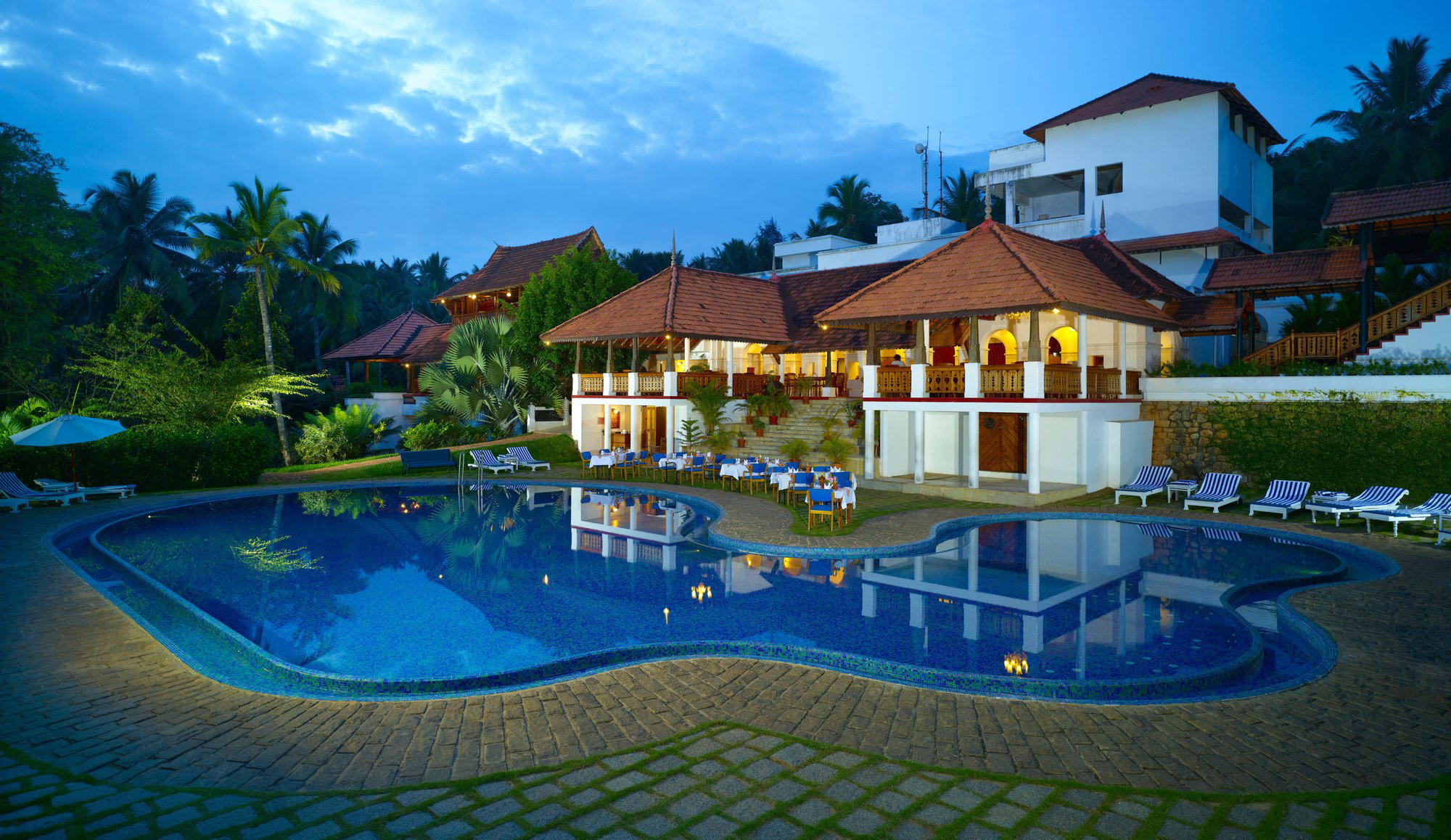
Positioned at lobby level opposite the infinity pool at The Raviz Kovalam, Leela Kerala Terrace is where the hotel-dining format meets the coastal cooking traditions of southern Kerala. The setting, open air, sea-facing, palm-fringed, frames a kitchen rooted in local ingredient sourcing rather than imported spectacle. For Trivandrum visitors seeking place-specific cooking over generic resort fare, this is a considered address.

Pearl is the En Primeur Club membership app, where members save venues, book tables and use the concierge.
Where Kerala's Coastline Becomes the Ingredient
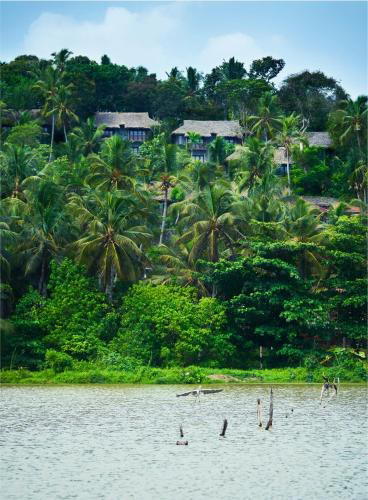
The terrace dining format has long served as one of India's most honest restaurant categories. Positioned at height, open to prevailing winds, and oriented toward a horizon rather than an interior wall, it forces a certain honesty: the setting either justifies the food, or the food must justify the setting. At the Leela Kerala Terrace, located at lobby level opposite the infinity pool at The Raviz Kovalam, both propositions are in play simultaneously. The Arabian Sea sits at the edge of the eyeline. The coconut canopy shifts with the evening breeze. This is not ambient backdrop, it is the conceptual frame through which a kitchen built on coastal Kerala sourcing makes its argument.
Kerala's culinary logic is, above all, a geography lesson. The narrow coastal strip between the Western Ghats and the sea produces a concentration of culinary raw material that few Indian states can match in diversity per kilometre: freshwater fish from the backwaters, deep-sea catch from the Arabian Sea, coconuts at industrial and artisan scale, black pepper and cardamom from the hill plantations, and a horticultural tradition that keeps curry leaf, drumstick, raw banana, and yam in near-constant rotation. A restaurant drawing seriously on this sourcing network operates differently from a kitchen that imports its identity. At a property like The Raviz Kovalam, the ingredient story is not supplementary, it is structural. For the broader context of where Leela Kerala Terrace fits within Trivandrum's dining scene, our full Trivandrum restaurants guide maps the city's options across price points and formats.
The Sourcing Architecture of a Coastal Kerala Menu
Understanding what makes Keralan coastal cooking coherent requires understanding its supply chain. The fishing fleets working out of Vizhinjam and Kovalam bring in karimeen (pearl spot), prawns, squid, and a rotating cast of reef fish whose availability is tide- and season-dependent. The leading kitchens in this corridor work with what arrives rather than what was listed on a fixed menu. That market-responsive approach produces dishes where the fish is neither imported nor frozen, it is caught within hours, sometimes within sight of the table.
The coconut in Keralan cooking deserves particular attention because it is not a single ingredient but a system. Freshly grated coconut appears in chutneys and thoran. Coconut milk, thin and thick, structures curries from the mildly spiced ishtew to the deeply reduced mappas. Coconut oil, used at high heat, gives certain preparations a characteristic richness that neutral oils cannot replicate. When a kitchen sources coconuts locally rather than from centralised processing plants, these distinctions are preserved in the plate. This is why sourcing geography matters in Kerala more than in most Indian regional cuisines: the ingredient and the preparation tradition are inseparable.
The spice dimension adds another layer. Black pepper from the Wayanad and Idukki districts carries a different heat profile than commodity pepper, sharper, more aromatic, less linear. Cardamom from the same highlands contributes a floral topnote that mass-market spice cannot replicate. Curry leaf, almost always used fresh in serious Keralan kitchens, loses its volatile oils within days of harvest, which means local supply is not merely a preference but a functional requirement for authentic flavour. The distance between the plantation and the pan is an active quality variable.
This ingredient architecture connects Leela Kerala Terrace to a broader tradition of hotel-format restaurants that have done serious work in preserving regional cooking. Karavalli at the Gateway Hotel Bengaluru is the most cited benchmark for coastal Indian cooking in a hotel context, it has maintained a coastal Karnataka and Kerala menu with documented sourcing discipline for decades. The question for any hotel restaurant in Kerala is whether it operates as a translation layer for these traditions or as a direct expression of them. The terrace format at Kovalam, proximate to both fishing communities and agricultural supply, creates conditions for the latter.
Kovalam as a Dining Destination
Kovalam is Trivandrum's coastal resort appendage, roughly 16 kilometres south of the city centre, and it carries two decades of international tourism infrastructure. That history has produced a dining scene that splits clearly between tourist-facing generic and hotel-integrated serious. The hotel-based restaurants have generally outperformed the standalone beach-shack category in sourcing rigour, partly because they have the procurement infrastructure and partly because they serve guests who expect consistency across a longer stay.
The terrace-and-pool format at The Raviz Kovalam is the kind of setting that most clearly communicates the hotel's positioning: this is a property that takes the view seriously as part of the dining proposition. Planning a visit involves accounting for the coastal evening schedule, sunset approaches from the west over the Arabian Sea, and the hours between 6pm and 8pm represent the most atmospheric window for a terrace meal. Kerala's humidity is most manageable from November through February, when the northeast monsoon has cleared and temperatures stay between 24 and 30 degrees Celsius. The southwest monsoon, running from June through September, closes most open-air terrace operations or makes them impractical.
For visitors building a wider Trivandrum itinerary, the adjacent Leela Kerala Tides offers a complementary format within the same property cluster. Beyond Kovalam, our full Trivandrum hotels guide, bars guide, wineries guide, and experiences guide cover the city's broader range.
How This Address Sits Among India's Regional Hotel Restaurants
The category of hotel-integrated regional Indian cooking has produced some of the country's most sustained culinary work. Dum Pukht in New Delhi built its reputation over decades on Awadhi dum cooking, establishing a benchmark for preservation over innovation. Adaa at Falaknuma Palace in Hyderabad frames Nizami cuisine within a heritage palace setting where the architecture and the food reinforce each other. Farmlore in Bangalore has pushed the farm-to-table sourcing conversation further than most Indian restaurants, using verifiable supply chain transparency as an editorial position. Each of these addresses operates on a version of the same principle: the dining format earns credibility through specificity of sourcing and tradition rather than through generalism.
Leela Kerala Terrace operates in a different tier of that conversation, open-air, terrace-format, with the visual and environmental context that Kovalam provides as a natural advantage. It belongs to the coastal hotel-dining tradition rather than the grand-hotel formal dining tradition. Comparisons to The Table in Mumbai, Bomras in Anjuna, or Chandni in Udaipur are instructive in mapping how India's regional dining formats continue to differentiate through geography and ingredient specificity. For those tracking the longer arc of regional Indian cooking, addresses like Naar in Kasauli, Baan Thai in Kolkata, da Susy in Gurugram, and Dining Tent in Jaisalmer each represent how geography shapes a dining premise. For global reference points in ingredient-led precision cooking, Le Bernardin in New York City and Atomix in New York City demonstrate what sourcing rigour looks like at the highest international tier.
Planning Your Visit
The Raviz Kovalam sits approximately 16 kilometres from Trivandrum International Airport, accessible by taxi in 30 to 45 minutes depending on traffic. The terrace operates at lobby level, making it accessible to both hotel guests and outside visitors, though reservations during peak season (December through January) are advisable. The coastal Kerala format suits unhurried evening meals; budget at least 90 minutes to allow the meal to develop at the kitchen's pace rather than rushing through courses. Dress is resort-casual, the open-air setting makes formal attire impractical and unnecessary.
Frequently asked questions
Does Leela Kerala Terrace work for a family meal?
The terrace setting at The Raviz Kovalam is open-air and relatively relaxed in format, which suits multi-generational groups without the pressure of a formal dining room. Kovalam itself draws a broad range of travellers, and hotel-integrated restaurants at this address tend to accommodate families as a baseline. The proximity to the infinity pool and lobby-level access makes it a practical option for guests staying at the property with children in tow.
Is Leela Kerala Terrace formal or casual?
Terrace dining in coastal Kerala, particularly at resort properties in Kovalam, typically operates on the less structured end of hotel dining, the open-air format and sea-facing orientation set a relaxed tone. This is a lobby-level terrace opposite the infinity pool at The Raviz Kovalam, not a sequestered fine-dining room. Resort-appropriate attire is the practical standard for this type of setting.
What makes dining at Leela Kerala Terrace different from other Kovalam restaurants?
Most restaurants in Kovalam operate as standalone beachside venues catering to tourist footfall, while Leela Kerala Terrace sits within The Raviz Kovalam at lobby level, positioned opposite the infinity pool with a controlled service environment that standalone spots cannot replicate. That hotel-integrated structure places it in the same category as India's more sustained regional dining projects, where kitchen consistency is tied to a property's overall reputation rather than seasonal tourist cycles. The terrace orientation toward the Arabian Sea is a fixed geographical advantage that few Kovalam addresses share at this level of setting.
What should I order at Leela Kerala Terrace?
Keralan coastal cooking is structured around the fish landed at nearby Vizhinjam and Kovalam harbours, so seafood preparations are the logical starting point at any serious restaurant in this geography. Kerala's kitchen also draws on coconut, curry leaf, and tamarind as foundational ingredients, with preparations ranging from fish molee to dry-fried preparations using local spice blends. For specific current dishes, contacting The Raviz Kovalam directly will give you the most accurate read on what is being served.
Side-by-Side Snapshot
Comparable venues nearby, for context on price, style, and recognition.
| Venue | Cuisine | Price | Notes |
|---|---|---|---|
| Leela Kerala TerraceThis venue (the venue you are viewing) | Kerala & Multi-Cuisine Terrace Dining | Not listed | Not listed |
| Leela Kerala Tides | Thai and Chinese | Not listed | Kovalam |
| Omya | Modern Indian Fine Dining | $100–150 | Lodhi Road |
| Swirl | Indian Pure Vegetarian | Not listed | Vrindavan |
| Hotel Aganta Green | Indian Multicuisine | $1–10 | Fardapur |
| Zing | World of Flavors Buffet - Asian, Italian, Indian & Maharashtrian | Not listed | Chikalthana MIDC |
Continue exploring
More in Trivandrum
Restaurants in Trivandrum
All restaurants in Trivandrum →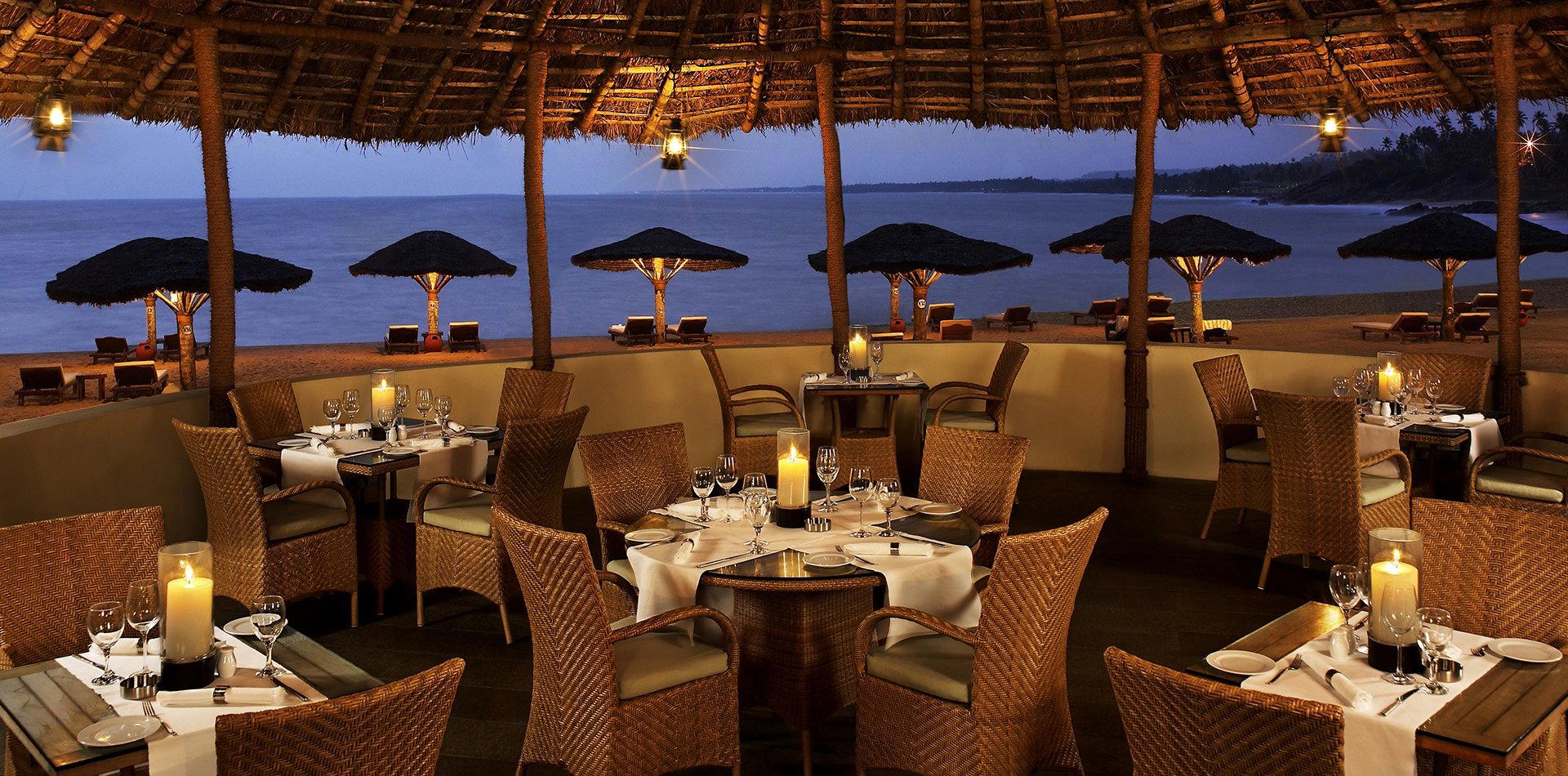
Details
- Scenic
- Elegant
- Sophisticated
- Family
- Celebration
- Special Occasion
- Rooftop
- Terrace
- Panoramic View
- Hotel Restaurant
- Waterfront
- Buffet
- A La Carte
- Vegetarian Friendly
- Allergy Accommodating
Current opening hours
- Monday
- 7 AM–11 PM
- Tuesday
- 7 AM–11 PM
- Wednesday
- 7 AM–11 PM
- Thursday
- 7 AM–11 PM
- Friday
- 7 AM–11 PM
- Saturday
- 7 AM–11 PM
- Sunday
- 7 AM–11 PM
Hours can change for holidays and private events. Hours as of .
Open terrace with scenic sea views, poolside setting, and elegant lighting ideal for sunset dining.