Our verdict
シンポジウム occupies a residential address in Toyama's Shinnezukamachi district, operating at the quieter end of the city's dining scene where regulars rather than tourists set the rhythm. The format and cuisine type remain deliberately low-profile, which is itself a signal in a city where the most consistent tables rarely need to advertise. Visitors planning ahead should treat this as a reservation-first destination and verify current details directly on arrival in Toyama.

Pearl is the En Primeur Club membership app — saves, bookings, and concierge access live there. Same editors, same standards.
- Address
- 3 Chome-5-14 Shinnezukamachi, Toyama, 939-8205, Japan
- Phone
- +815030913088
- Hours
- Mon–Tue 12–2:30 PM, 6–10 PMWed ClosedThu–Sun 12–2:30 PM, 6–10 PM
- Directions
- Get directions
- Booking
- Book on TableCheck
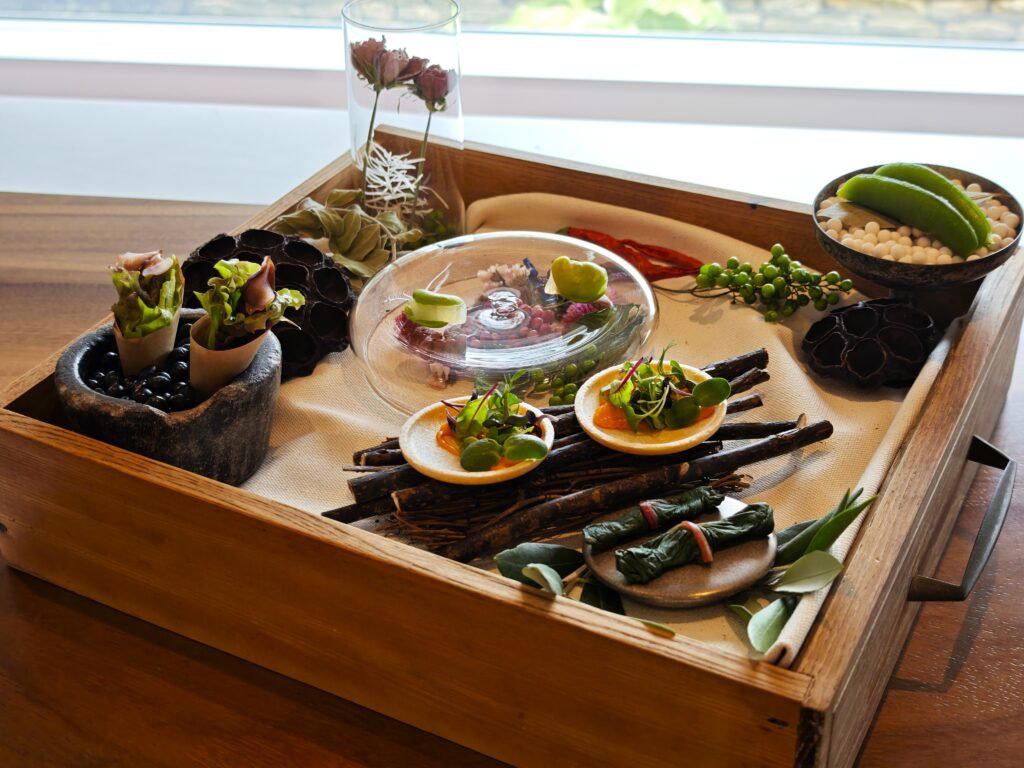
The menu
What to order
- Fregola
- White Truffle dish
Shinnezukamachi After Dark: What Draws People Back
Toyama's dining geography splits fairly cleanly between the central izakaya strips around the station and the quieter residential pockets that ring the city. Shinnezukamachi sits in the latter category: a low-traffic neighbourhood where the presence of a serious restaurant is easy to miss from the street, and where the clientele tends to arrive already knowing what they want. シンポジウム operates at this address — 3 Chome-5-14 Shinnezukamachi — and the location itself tells you something about its orientation. This is not a place built around walk-in curiosity. The rooms and rhythm belong to people who have been before.
That pattern is common enough in provincial Japanese cities to constitute its own category. In Kanazawa, Niigata, and Toyama alike, the tables that hold up longest over years tend to do so not through media cycles but through accumulated trust with a local base. The regulars are the review system. They are also, functionally, the reservation queue, which means that visitors arriving without a booking and without a local contact are working against the grain of how these places actually function.
Where シンポジウム Sits in Toyama's Dining Scene
Toyama has developed a more textured restaurant scene than its national profile might suggest. The prefecture's seafood access, particularly from Toyama Bay, one of the deeper bays on the Sea of Japan coast, gives local kitchens raw material that restaurants in larger cities actively source from this region. That geographic advantage filters through at multiple price tiers, from casual counter spots to more considered dining formats. For context on the range available, our full Toyama restaurants guide maps the city's options with more granularity.
Within that scene, some addresses operate closer to the izakaya model, convivial, relatively accessible, built for groups, while others occupy a quieter register. Ebitei Bekkan represents one version of Toyama's premium seafood tradition; Hagiwara and Daimon operate in their own registers. Himawari Shokudo 2, the Italian address in the city, runs at the JPY 20,000–29,999 bracket and represents how Western-influenced formats have settled into Toyama's mid-to-upper dining tier. Boteyan rounds out a peer group of places where knowing the room matters as much as knowing the menu.
シンポジウム's exact positioning within this field is not established by published awards or a documented price tier, which places it in a category of restaurants that Japan produces in considerable numbers: competent, consistent, locally embedded, resistant to easy classification from the outside. This is not a weakness. It is, for regulars, often the point.
The Logic of the Regular
What keeps people returning to a place that does not publicise itself is rarely one dramatic dish. It is more often the accumulation of small consistencies: the fact that a table is ready when they arrive, that the progression of courses or plates feels calibrated to the room's mood, that something seasonal has changed since last time without the fundamental character of the meal shifting. Japanese dining culture, particularly outside Tokyo and Osaka, rewards this kind of fidelity. The restaurant and the regular develop a relationship that is almost entirely invisible to the first-time visitor.
This dynamic is worth understanding before booking. At venues of this type, the experience available to a newcomer and the experience available to a known face are genuinely different, not because of deliberate exclusion, but because the kitchen and front of house are calibrated to a clientele they know. The analogy holds across formats: Gion Sasaki in Kyoto operates on a similar logic of earned familiarity, as does the counter-level intimacy found at Harutaka in Tokyo. The scale differs; the principle does not.
For comparison, highly formalised tasting-menu operations at the level of HAJIME in Osaka or Goh in Fukuoka have codified their offerings to a degree that makes them more navigable for international visitors. Neighbourhood restaurants like シンポジウム have not, and arguably should not, that codification would cost them what they actually are.
Regional Context and What Toyama Produces
Restaurants in Japan's Hokuriku region, which takes in Toyama, Ishikawa, and Fukui prefectures, benefit from an ingredient environment that the rest of the country treats with considerable respect. Winter sees buri (yellowtail) from Toyama Bay arriving at a fat content that drives premium pricing in Tokyo's wholesale markets. White shrimp, almost entirely specific to this bay, appear in raw preparations across the city's counters from spring through autumn. Crab season pulls serious diners from Osaka and Kanazawa toward the coast. This seasonal rhythm structures the menus of Toyama's better restaurants whether or not they describe themselves in kaiseki terms.
For regional comparisons outside Toyama, a kaiseki address in Nanao on the Noto Peninsula operates within the same ingredient geography, as does a restaurant in Takashima to the south. The ingredient sourcing logic connecting these places is more consistent than the format differences between them might suggest. Further afield, a Sapporo address and one in Nishikawa Machi reflect how Japanese regional dining outside the main urban centres operates on its own terms, separate from the Michelin and 50 Best frameworks that define the Tokyo conversation. For international reference points on how destination dining functions at the top of the formality scale, Le Bernardin in New York City and Atomix represent the kind of codified, award-tracked tier that most provincial Japanese restaurants deliberately do not occupy. akordu in Nara sits somewhere between those poles, a useful model for thinking about how smaller Japanese cities are absorbing international fine-dining conventions. Birdland in Sakai takes a different path, built around a single protein with notable focus.
Planning a Visit
The Shinnezukamachi address is in the western residential ring of Toyama city, accessible by taxi from Toyama Station in under ten minutes.
Visitors who engage the effort to book properly, and who approach the meal with calibrated expectations about what a locally embedded Japanese restaurant is and is not, are likely to find the experience more coherent than the absence of public information might initially suggest. That gap between public documentation and actual quality is itself a consistent feature of the restaurants that Toyama's serious diners return to most often.
Frequently asked questions
What kind of setting is シンポジウム?
シンポジウム sits in Shinnezukamachi, a residential quarter of Toyama rather than the high-traffic izakaya corridors near the station. The address at 3 Chome-5-14 Shinnezukamachi places it in a pocket the city's visitors rarely reach by accident. That geography shapes everything: the room is oriented toward repeat locals, not passing trade.
What's the address for シンポジウム?
シンポジウム is located at 3 Chome-5-14 Shinnezukamachi, Toyama, 939-8205, Japan, Toyama.
Is シンポジウム a good choice for visitors coming specifically to explore Toyama's Hokuriku food culture?
Toyama sits at the centre of the Hokuriku region alongside Ishikawa and Fukui, prefectures collectively known for some of Japan's most closely guarded ingredient sourcing — particularly cold-water seafood, mountain vegetables, and fermented foods. A restaurant operating quietly in Shinnezukamachi, away from the tourism-oriented strips, is more likely to reflect that local food culture without the adjustments made for outside audiences.
What should I eat at シンポジウム?
Toyama's ingredient environment — particularly its seafood from Toyama Bay and the Hokuriku region's broader produce — tends to anchor what serious local restaurants put on the plate.
How hard is it to get a table at シンポジウム?
Restaurants in residential Toyama districts that operate without public-facing reservation systems often fill through word of mouth, so demand can outpace what the room size implies.
What's the signature at シンポジウム?
What draws regulars to low-profile neighbourhood restaurants in Toyama's residential quarters is typically consistency over time rather than a single showpiece plate — the kitchen's relationship with its ingredient sources tends to be the anchor.
How does シンポジウム handle allergies?
Given the absence of a published website or phone number for the Shinnezukamachi address, the most reliable approach is to communicate dietary requirements in person or through whoever facilitates your introduction to the restaurant.
Cuisine Context
Comparable venues nearby, for context on price, style, and recognition.
| Venue | Cuisine | Price | Awards | Notes |
|---|---|---|---|---|
| シンポジウムThis venue — the venue you are viewing | Vegetable-Focused Italian Regional Cuisine | $100–150 | Not listed | Not listed |
| Takano | Kansai-Style Tempura | $100–150 | Not listed | Shimizu-machi |
| Cave Yunoki | One-group-per-day French fine dining in a historic Toyama warehouse | $150–200 | Tabelog 100 #100 | Higashi Iwase |
| Ebitei Bekkan | Kaiseki | $150–200 | Not listed | Yasunoya-cho |
| L'évo cuisine régionale. | Avant-Garde Regional Japanese-French Fine Dining | $200–300 | Not listed | Togamura, Nanto City |
| KAWAZ | French with Toyama Ingredients | $100–150 | Not listed | Sogawa |
Continue exploring
More in Toyama
Restaurants in Toyama
Browse all →
Hotels in Toyama
Browse all →
Wineries in Toyama
Browse all →
Details
- Cozy
- Elegant
- Date Night
- Special Occasion
- Private Dining
- Sake Program
- Local Sourcing
- Organic
- Tasting Menu
- Set Menu
- Vegetarian Friendly
Current opening hours
- Monday
- 12–2:30 PM, 6–10 PM
- Tuesday
- 12–2:30 PM, 6–10 PM
- Wednesday
- Closed
- Thursday
- 12–2:30 PM, 6–10 PM
- Friday
- 12–2:30 PM, 6–10 PM
- Saturday
- 12–2:30 PM, 6–10 PM
- Sunday
- 12–2:30 PM, 6–10 PM
Hours can change for holidays and private events. Last verified .
Cozy and serene atmosphere ideal for intimate dining.