Buchon Yukhoe


Buchon Yukhoe in Seoul's Jongno District holds consecutive Michelin Bib Gourmand recognition in 2024 and 2025, placing it among the city's most consistent affordable Korean specialists. The kitchen centres on yukhoe, Korea's raw beef tradition, at a price point that positions it well below the tasting-menu tier while drawing a level of critical attention usually reserved for fine dining..
Pearl is the En Primeur Club membership app — saves, bookings, and concierge access live there. Same editors, same standards.
- Address
- 177 Jongno 4(sa)-ga, Jongno District, Seoul, South Korea
- Phone
- +82 2-2272-1831
- Website
- konest.com
- Directions
- Get directions
 Saves & bookings on Pearl
Seoul's Raw Beef Tradition, at Street Level
Jongno District operates at a different register from Seoul's Gangnam restaurant corridor. The streets around Jongno 4(sa)-ga carry the texture of a working city neighbourhood: older shopfronts, lunch crowds that move with purpose, price points written by hand on laminated menus in windows. It is in this context that Buchon Yukhoe sits, a specialist kitchen focused entirely on yukhoe, the Korean preparation of seasoned raw beef that predates the city's fine-dining moment by centuries. The approach here is not to reimagine that tradition but to execute it with enough consistency that Michelin's inspectors have returned two years running, awarding Bib Gourmand recognition in both 2024 and 2025.
What Yukhoe Actually Is, and Why Sourcing Defines It
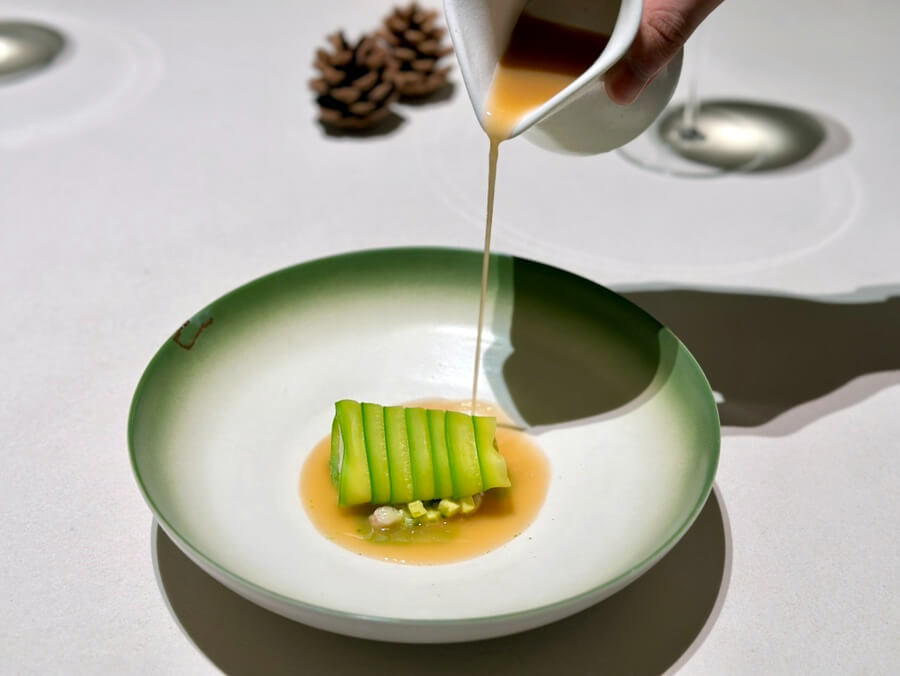
Yukhoe is not simply Korean steak tartare, though the comparison is often reached for. The dish involves hand-cut or hand-shredded beef, typically seasoned with sesame oil, soy, garlic, and sugar, then finished with a raw egg yolk and often paired with julienned Asian pear. The textural contrast between the yielding beef and the crisp pear is structural, not decorative, and the egg yolk is not garnish but binding agent and flavour vehicle. What separates one yukhoe kitchen from the next, at every price point, is the beef itself: its cut, its age, its fat distribution, and the freshness margin that raw preparation demands above all else.
In Korean culinary tradition, the beef cuts preferred for yukhoe are lean but not tough, taken from parts of the animal where the muscle fibre is fine enough to yield to hand-cutting rather than mechanical processing. The seasonings are calibrated to enhance rather than mask the meat's character. A kitchen serving this dish at the ₩ price tier, in a neighbourhood like Jongno, is operating on tighter margins than the tasting-menu rooms in Gangnam, which makes consistent sourcing a more visible achievement. Buchon Yukhoe's back-to-back Bib Gourmand awards are, in part, a statement about that sourcing discipline holding at accessible price points.
The Bib Gourmand designation itself is worth contextualising. Michelin awards it specifically to restaurants offering good food at prices that represent value relative to quality, not restaurants that are simply cheap. In Seoul's 2024 and 2025 guides, a large share of Bib Gourmand recipients are specialists: single-dish or narrow-menu kitchens where repetition over years produces a level of craft that broader menus rarely match. Buchon Yukhoe belongs to that category, and its repeat recognition signals that the standard has not slipped between editions.
The Jongno Setting and What It Signals
Seoul's dining geography has a clear axis. Gangnam and the adjacent districts, including Cheongdam and Apgujeong, concentrate the city's multi-starred restaurants: Mingles (Korean), Jungsik (Contemporary), Kwonsooksoo (Korean), alla prima (Innovative), and Soigné (Innovative) all operate in that southern corridor, where the price-per-cover average sits well above the ₩ tier. Jongno, to the north, is older Seoul, historically a centre of commerce and culture, and its dining character reflects that. The specialist restaurants here tend to earn their reputations through decades of operation and neighbourhood loyalty rather than through tasting-menu formats and international press.
For a visitor planning a broader Seoul food itinerary, the restaurant functions as a corrective to the assumption that critical recognition and high price points move together. That kind of review stability, at a low price point, is a more demanding test than maintaining ratings at a ₩₩₩₩ establishment where the margin for service and presentation errors is narrower by design.
For those building a wider picture of Korean dining excellence across the country, comparisons are instructive. Gaon in Seoul, Korea and 권숙수 - Kwon Sook Soo in Gangnam-gu represent the formal, high-ceremony end of Korean cuisine in the capital. Beyond Seoul, Baegyangsa Temple in Jangseong-gun and Mori in Busan show how Korean culinary identity operates differently outside the capital. The restaurant belongs to none of those registers; it is specifically urban, specifically affordable, and specifically focused.
The Specialist Case Against Broad Menus
There is a recurring argument in Korean food circles about whether the country's most technically demanding preparations are better served by specialist kitchens or by contemporary tasting menus that incorporate them as single courses. Yukhoe appears on the menus of formal Korean restaurants including some of those linked above, but the dish in those contexts is one moment within a longer sequence. A kitchen that serves yukhoe as its primary offering operates under different pressure: every cover is an evaluation of that single preparation, and the sourcing and seasoning decisions cannot be absorbed into the flow of a multi-course progression.
The restaurant's model, a narrow menu at low prices in a working district, is the specialist argument made concrete. The Bib Gourmand is the mechanism by which Michelin's guide acknowledges that argument as valid. This matters for how Seoul readers should understand the city's food scene: critical quality is not confined to the ₩₩₩₩ bracket, and particularly disciplined kitchens operate at the opposite end of the price scale precisely because single-dish focus allows for a level of repetition and refinement that broader formats do not.
Planning Your Visit
The restaurant is located at 177 Jongno 4(sa)-ga in Jongno District, a neighbourhood accessible by Seoul Metro with Jongno 4-ga station on Line 1 and Line 5 within walking distance. The venue is open daily from 10 AM to 9:30 PM, and reservations are recommended.
At a Glance
Comparable venues nearby, for context on price, style, and recognition.
| Venue | Cuisine | Price | Notes |
|---|---|---|---|
| Buchon YukhoeThis venue — the venue you are viewing | 이화동, Traditional Korean Yukhoe | $$ | Not listed |
| Pildong Myeonok | 을지로동, Pyongyang Naengmyeon | $$ | Not listed |
| Samcheongdong Sujebi | Not listed | $$ | 가회동, Traditional Korean Sujebi Noodle Soup |
| Mapo Ok | 노고산동, Traditional Korean Seolleongtang | $$ | Not listed |
| Gwanghwamun Gukbap | Not listed | $$ | Sajik-dong, Korean Pork Soup (Dwaeji Gukbap) |
| Jeongmyeon | 송정동, Korean Noodle Soups | $$ | Not listed |
Recognition history
Dated appearances from independent guides and award organizations, with the underlying list record or original source where available.
Opinionated About Dining Top Restaurants in Asia Recommended
Opinionated About Dining
Michelin Bib Gourmand
Michelin
Michelin Bib Gourmand
Michelin
Continue exploring
More in Seoul
Restaurants in Seoul
Browse all →
At a Glance
- Classic
- Well Known
- Casual Hangout
- Special Occasion
- Standalone
- Local Sourcing
Current opening hours
- Monday
- 10 AM–9:30 PM
- Tuesday
- 10 AM–9:30 PM
- Wednesday
- 10 AM–9:30 PM
- Thursday
- 10 AM–9:30 PM
- Friday
- 10 AM–9:30 PM
- Saturday
- 10 AM–9:30 PM
- Sunday
- 10 AM–9:30 PM
Hours can change for holidays and private events. Last verified .
Casual market eatery with plain wooden tables, round stools, and brisk service in a well-lit space.