Our verdict
BaRRa de Pintxos Montecarmelo sits in the residential northern reaches of Madrid, where the pintxos bar format — transplanted from the Basque Country — has found a foothold far from the tourist circuits of the city centre. The bar operates within a neighbourhood that rewards those willing to travel beyond the obvious, delivering the counter-top ritual of assembled pintxos in a context shaped by local regulars rather than passing visitors.

Pearl is the En Primeur Club membership app — saves, bookings, and concierge access live there. Same editors, same standards.
- Address
- Av. del Monasterio de El Escorial, 26, Fuencarral-El Pardo, 28049 Madrid, Spain
- Phone
- +34911733183
- Hours
- Daily 12 PM–12 AM
- Website
- barradepintxos.com
- Directions
- Get directions
- Booking
- Book on OpenTable
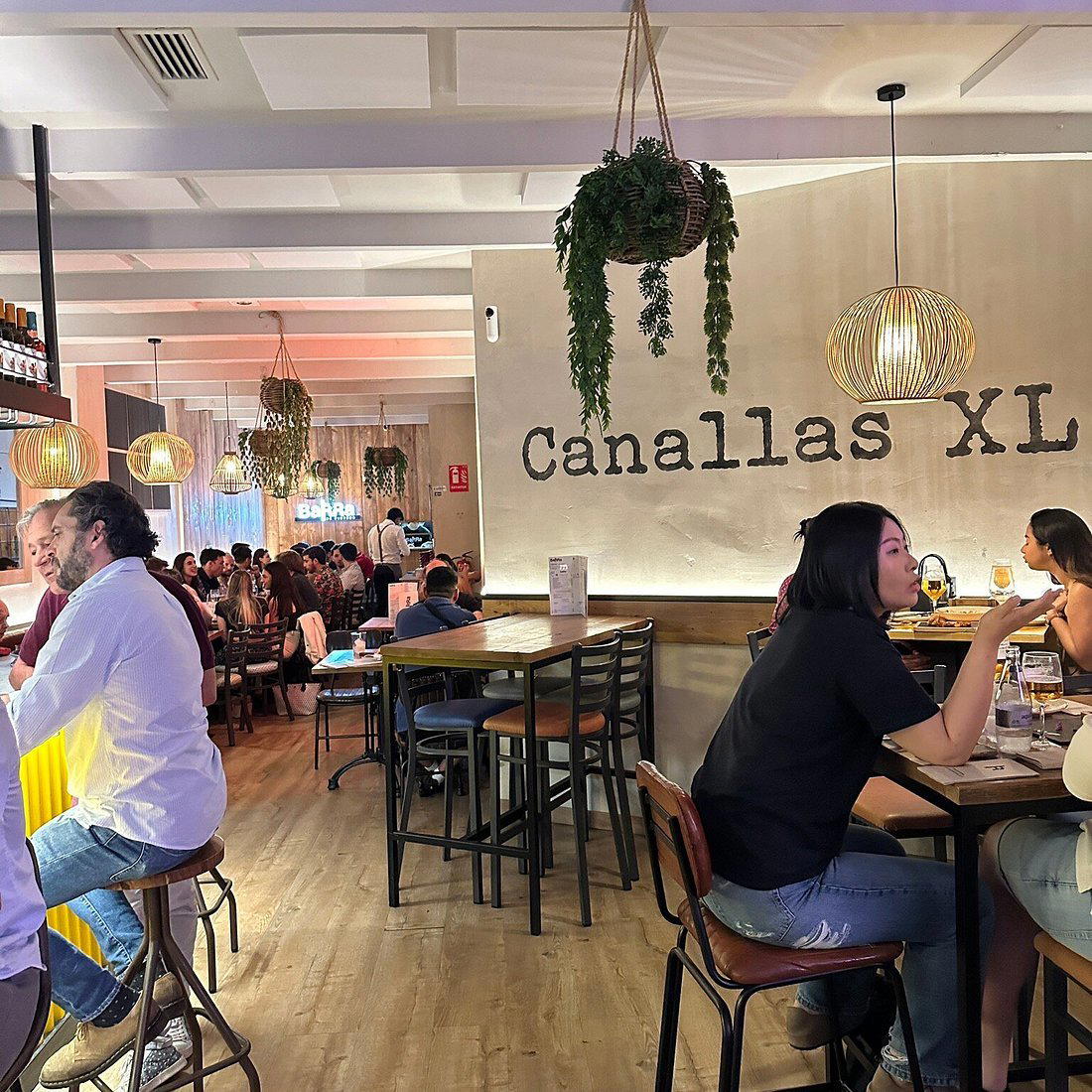
Pintxos in Madrid: A Tradition That Travels
The pintxos bar is a Basque invention, but Madrid has absorbed the format with enough enthusiasm to sustain a distinct tier of dedicated counters across the city. The model is familiar to anyone who has spent time along the Calle de la Pescadería in San Sebastián or the Parte Vieja in Bilbao: small pieces of bread or pastry carrying combinations of cured, pickled, or cooked ingredients, displayed along the bar and consumed standing, often with a glass of txakoli or house wine. What shifts when that format relocates to Madrid is context. The social ritual remains, but the crowd changes, the pace adjusts, and the neighbourhood exerts its own logic. For a broader picture of where pintxos bars fit within our full Madrid restaurants guide, the contrast with the city's high-table fine dining is worth understanding before you visit. This is residential Madrid at a considerable remove from the tasting-menu circuit. The Michelin-starred rooms that define the capital's international profile — DiverXO with its three-star progressive Asia-inflected format, Coque with its Spanish creative menu, or Deessa in the Mandarin Oriental — occupy a different register entirely. A neighbourhood pintxos bar in Montecarmelo answers a different question: not what is possible at the outer limits of Spanish gastronomy, but what is reliable, immediate, and rooted in a counter-leading tradition that has proven durable across the country.
The Counter as Social Architecture
The arrangement of a pintxos bar is, in itself, a format decision with social consequences. Unlike a seated restaurant where pacing is controlled by service, the pintxos counter invites self-direction. Guests move, they point, they revise their choices mid-way through. The interaction between the bar team and the customer is abbreviated but frequent, a rapid negotiation of what is available, what has just been restocked, and what pairs well with whatever is already in hand. This is where the editorial angle of team dynamic becomes legible: the rhythm of a pintxos counter depends on coordination between the person assembling the pieces, the one managing the bar, and the floor staff reading which customers are ready and which are still deciding.
That coordination is less visible than the brigade choreography of a tasting-menu kitchen, there is no open pass, no theatrical plating, but it is no less consequential. A counter where the team is poorly synchronised produces a different experience from one where the replenishment cycle, the pour timing, and the greeting cadence all align. The difference shows up in how the bar feels at peak hour: either a smooth self-sustaining loop or a series of bottlenecks.
Where Montecarmelo Sits in the Madrid Bar Map
Madrid's drinking and snacking culture has its own geography. The obvious poles are Malasaña and Chueca for cocktail bars, La Latina for tabernas, and the Salamanca district for upscale wine bars. A pintxos bar in this context serves a local function: it is the informal gathering point for people who live nearby, not a destination venue drawing from across the city.
That local orientation shapes what a visit feels like. The crowd on a Friday evening will largely know each other, or at least recognise each other. The bar is not performing for strangers. This stands in contrast to the experience at central Madrid operations like Paco Roncero or DSTAgE, where the room is calibrated for a mix of international visitors and local food-focused regulars. Neither orientation is superior; they answer different needs. But understanding which category a venue belongs to is useful before you plan the visit.
The Basque Format and Its Spanish Expansion
The spread of the pintxos bar beyond the Basque Country is one of the more interesting minor narratives in recent Spanish food culture. Cities like Pamplona had always maintained the tradition, but Madrid, Barcelona, and even Seville now support pintxos-specific venues that sit apart from both the tapas bar tradition and the formal restaurant tier. The format attracts operators because the economics of a counter-service model are more forgiving than a seated kitchen: lower labour overhead per cover, faster throughput, and a price-per-piece structure that allows customers to self-regulate spend. It attracts customers because the combination of speed, choice, and social atmosphere is difficult to replicate elsewhere.
For context on where the pinnacle of Spanish tasting-menu cuisine sits, the reference points extend well beyond Madrid. El Celler de Can Roca in Girona, Mugaritz in Errenteria, Arzak in San Sebastián, Martin Berasategui in Lasarte-Oria, and Azurmendi in Larrabetzu define the upper tier of a Spanish dining culture that is simultaneously producing neighbourhood bars doing the same culinary tradition at a fraction of the formality and cost. The pintxos format is not a lesser version of that tradition; it is a parallel one with its own disciplines and pleasures. Internationally, the same logic applies: Le Bernardin in New York and Lazy Bear in San Francisco represent counter-cultural experiments at the tasting-menu end, but the pintxos counter predates most of that experimentation and operates by entirely different rules.
Other Spanish destinations with strong counter-dining traditions worth cross-referencing include Quique Dacosta in Dénia, Aponiente in El Puerto de Santa María, Cocina Hermanos Torres in Barcelona, Ricard Camarena in València, and Atrio in Cáceres, each representing a distinct regional inflection of Spanish gastronomy.
Know Before You Go
| Detail | Information |
|---|---|
| Address | Av. As a general orientation: across well-regarded pintxos bars in Madrid and the Basque Country, the pieces that showcase the bar's technical range tend to involve cured fish, cured meats, or cooked egg preparations on toasted bread. Ask the bar team what has been made freshest that day, that instruction applies at most pintxos counters and typically produces better results than pointing at the display case without context. Do they take walk-ins at BaRRa de Pintxos Montecarmelo? Unlike the tasting-menu rooms at venues such as DiverXO, which require advance booking, a counter-service bar is designed for immediate entry. Arriving early in the evening session, typically before 9pm in Madrid, gives you better access to a full counter display before peak demand reduces options.What is the standout thing about BaRRa de Pintxos Montecarmelo?Its location is the most editorially significant detail. Montecarmelo sits in the residential north of Madrid, well outside the circuits that food visitors typically cover. A pintxos bar in this neighbourhood is serving a genuinely local function, not a destination audience, which tends to produce a different social atmosphere from central Madrid bars operating for a mixed crowd of tourists and food-focused visitors. Is BaRRa de Pintxos Montecarmelo part of a wider pintxos bar group in Madrid?The BaRRa de Pintxos name suggests a branded or multi-site operation, a format that has become increasingly common in Spanish cities as the pintxos bar model scales beyond single-owner neighbourhood venues. If consistency of format across sites matters to your visit planning, confirming the group structure directly with the venue would clarify what to expect. |
Frequently asked questions
What part of town is BaRRa de Pintxos Montecarmelo in?
BaRRa de Pintxos Montecarmelo is located at Av. del Monasterio de El Escorial, 26, Fuencarral-El Pardo, 28049 Madrid, Spain, Madrid.
Is BaRRa de Pintxos Montecarmelo part of a wider group or chain in Madrid?
The BaRRa de Pintxos name suggests a branded multi-site operation, a model that has grown across Spanish cities as the pintxos format scaled beyond the Basque Country. Whether Montecarmelo is one of several locations under that name can change from available data. If consistency across sites matters to your visit, checking directly at the Av. del Monasterio de El Escorial, 26 address in Madrid's Fuencarral district is the most reliable approach. Check the venue's official channels for the latest details.
What's the must-try dish at BaRRa de Pintxos Montecarmelo?
Across established pintxos counters in Madrid and the Basque Country, the benchmark pieces tend to be anchovy-topped bread, gilda skewers, and croquetas. The counter format at Montecarmelo follows Basque conventions, so those categories are a reasonable starting point for first-timers arriving at Av. del Monasterio de El Escorial, 26.
Do they take walk-ins at BaRRa de Pintxos Montecarmelo?
The pintxos bar format operates on a walk-in basis as standard across Spain, and BaRRa de Pintxos Montecarmelo follows that convention. Arrival timing matters more than reservations: counters in Madrid's residential neighbourhoods tend to fill quickly at the 8pm–10pm window when local traffic peaks.
What's the standout thing about BaRRa de Pintxos Montecarmelo?
Location is the defining editorial detail here. Montecarmelo sits in the residential north of Madrid, in the Fuencarral-El Pardo district, well outside the circuits most food visitors follow through Malasaña, La Latina, or Chueca. That placement makes BaRRa de Pintxos Montecarmelo a neighbourhood bar in the truest sense, drawing a local crowd rather than a tourist one, which is increasingly rare for a dedicated pintxos format in the capital.
Where the Accolades Land
Comparable venues nearby, for context on price, style, and recognition.
| Venue | Cuisine | Price | Awards | Notes |
|---|---|---|---|---|
| BaRRa de Pintxos MontecarmeloThis venue — the venue you are viewing | Modern Spanish Pintxos | Not listed | Not listed | Not listed |
| Taberna Origen | Modern Spanish Tapas | $20–30 | Macarfi 6.7 Food Rating | Arguelles |
| La Gran Pulpería | Authentic Galician Spanish | Not listed | Not listed | Piovera |
| El Urogallo Casa de Campo | Traditional Asturian Spanish | $30–50 | Not listed | Casa de Campo |
| Casa Narcisa | Traditional Spanish Grill | $50–100 | Not listed | Castilla |
| La Lupa | Modern Spanish Tapas | $20–30 | Not listed | Guindalera |
Continue exploring
More in Madrid
Restaurants in Madrid
Browse all →
Bars in Madrid
Browse all →
Hotels in Madrid
Browse all →

Details
- Lively
- Modern
- Trendy
- Casual Hangout
- Group Dining
- Beer Program
- Small Plates
Current opening hours
- Monday
- 12 PM–12 AM
- Tuesday
- 12 PM–12 AM
- Wednesday
- 12 PM–12 AM
- Thursday
- 12 PM–12 AM
- Friday
- 12 PM–12 AM
- Saturday
- 12 PM–12 AM
- Sunday
- 12 PM–12 AM
Hours can change for holidays and private events. Last verified .
Youthful and modern avant-garde atmosphere with a lively vibe.