Casa Narcisa serves Traditional Spanish Grill on P.º de la Castellana, with cachopo, grilled steak, and croquetas, plus a terrace and private dining for lunch or dinner.
Pearl is the En Primeur Club membership app — saves, bookings, and concierge access live there. Same editors, same standards.
- Address
- P.º de la Castellana, 254, Chamartín, 28046 Madrid, Spain
- Phone
- +34913238072
- Website
- casanarcisa.es
- Directions
- Get directions
 Saves & bookings on Pearl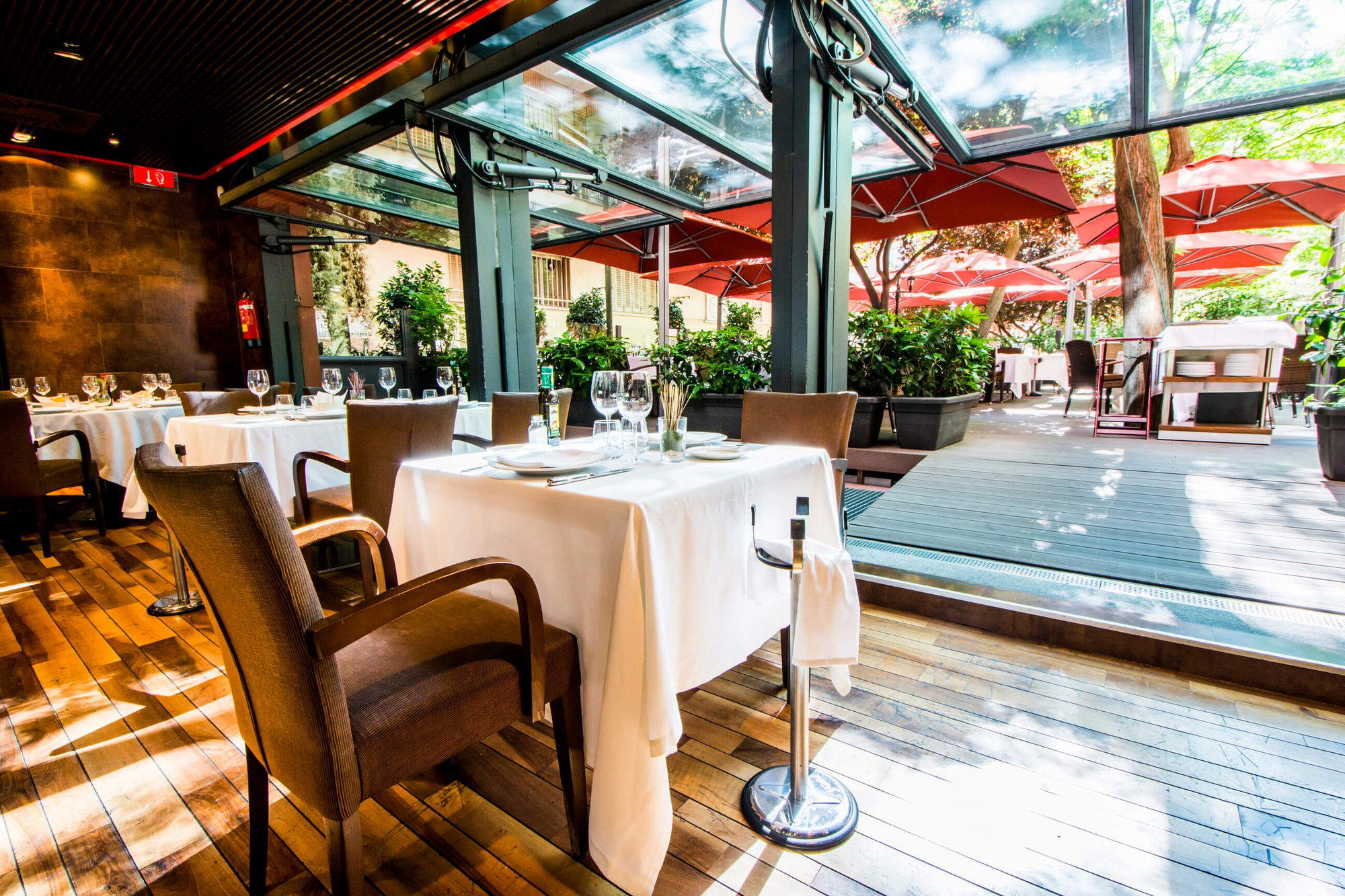
Castellana's Northern Reach: What the Address Signals
Paseo de la Castellana is not a single dining district, it is a 10-kilometre spine that changes character as it moves north. The southern sections, around Recoletos and Alonso Martínez, carry the weight of Madrid's traditional gastronomy: marble-clad bars, long lunch menus, and the kind of neighbourhood ritual that has barely changed in decades. By the time the boulevard reaches Chamartín, the register shifts. Corporate towers replace 19th-century facades. The clientele skews toward business travel and upper-residential rather than tourist circuit. Restaurants in this northern stretch tend toward a different operating logic: room quality, service formality, and a dining room that functions as a statement environment rather than a passing destination.
Casa Narcisa sits at number 254 on that boulevard, inside Chamartín, a postcode that places it north of the AZCA financial cluster and well outside the Michelin-dense belt that runs through Salamanca and Justicia. That positioning is itself an editorial fact. Venues that succeed this far up the Castellana corridor do so through design conviction and repeat-customer loyalty rather than foot traffic and proximity to the city's established fine-dining anchors.
The Space as Statement: Design and Physical Container
In Madrid's upper dining tier, the physical environment has become a competitive variable in its own right. The city's most discussed openings of the past decade have been as much about the room as the plate. Coque, with its sequence of basement spaces designed around ceremony and progression, and Deessa, housed within the Mandarin Oriental Ritz with all the architectural weight that implies, both demonstrate how the container shapes the experience before a single dish arrives. Paco Roncero has long used spatial design, including an immersive dining format, as a primary signal of its positioning.
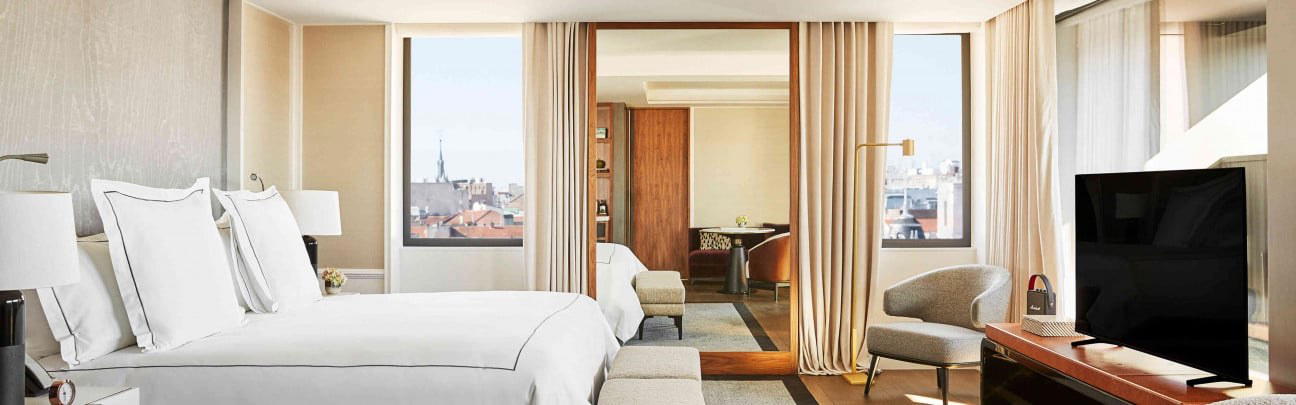
Casa Narcisa operates within this context. A Chamartín address on the Castellana carries an implicit expectation: the room should match the postcode. In this part of Madrid, that typically means considered material choices, scale that suggests investment rather than economy, and a spatial logic that makes the dining room feel intentional rather than assembled. Whether the interior leans toward contemporary Spanish restraint, classical elegance, or something more eclectic is detail that verified reporting would clarify, but the locational and commercial logic of the address points toward a space designed to hold its own against the neighbourhood's architectural ambition.
This matters because, in a city where venues like DSTAgE have used industrial-warehouse aesthetics to signal creative credibility, and where DiverXO deploys theatrical room design as an extension of its kitchen philosophy, design language has become a form of critical communication. A restaurant's physical container tells a returning diner, and a first-time visitor deciding between options, something about what kind of experience is being offered before the menu arrives.
Madrid's Dining Geography and Where Casa Narcisa Sits
Madrid's premium restaurant scene concentrates unevenly. The Salamanca district, particularly around Calle de Serrano and Jorge Juan, holds the highest density of decorated rooms. Justicia and Chueca have attracted a younger cohort of creative Spanish cooking. The Chamartín corridor, by contrast, has historically been dominated by hotel dining and business-lunch formats, practical rather than destination-focused.
That dynamic has been shifting. As real estate pressure pushes ambitious openings further from the centre, and as Madrid's international profile as a dining city has grown, supported by Spain's notable concentration of Michelin-starred restaurants, from El Celler de Can Roca in Girona to Mugaritz in Errenteria and Arzak in San Sebastián, northern Madrid has attracted venues willing to bet on a different customer relationship: one built on neighbourhood loyalty and design quality rather than tourist discovery.
The restaurant occupies that position. Its address at the upper end of the Castellana places it in a comparable set defined less by award citation and more by spatial seriousness and local rootedness. That is not a lesser position, particularly durable restaurants in any city operate outside the award-scrutiny zone and sustain through exactly the kind of consistent, high-quality return business that Chamartín's demographic supports.
Spain's Broader Restaurant Conversation
Understanding the restaurant requires understanding the context in which contemporary Spanish dining operates. Spain has produced a disproportionate share of globally influential restaurant formats over the past two decades. The avant-garde tradition running through the Basque Country and Catalonia, represented today by venues like Azurmendi in Larrabetzu, Aponiente in El Puerto de Santa María, Cocina Hermanos Torres in Barcelona, Ricard Camarena in València, Martin Berasategui in Lasarte-Oria, Quique Dacosta in Dénia, and Atrio in Cáceres, has established a national benchmark that makes even mid-tier Spanish dining more technically grounded than equivalent price points in most European capitals.
Madrid specifically has moved from a city known primarily for traditional Castilian roasting houses and tapas culture to one where creative contemporary Spanish cooking finds as many expressions as in any other major European capital. The comparison point is no longer purely domestic: Madrid now draws diners who might otherwise be weighing Le Bernardin in New York or Lazy Bear in San Francisco. That shift in how the city is perceived internationally raises the stakes for every venue operating in its upper tier, including those in Chamartín.
What Remains to Be Verified
The restaurant is a Traditional Spanish Grill at Paseo de la Castellana 254 in Chamartín, Madrid. Reservations are recommended, and the expected spend is about $60 per person.
Accolades, Compared
Comparable venues nearby, for context on price, style, and recognition.
| Venue | Cuisine | Price | Notes |
|---|---|---|---|
| Casa NarcisaThis venue — the venue you are viewing | Traditional Spanish Grill | $$ | Not listed |
| Cachopo & Go | Traditional Spanish Cachopo | $$ | Vallehermoso |
| Fismuler | Modern Spanish with Nordic influences | $$ | Almagro |
| El Café de la Ópera | Traditional Spanish with Opera | $$ | Palacio |
| LA MADREÑA Santa Lucrecia | Traditional Asturian | $$ | Opanel |
| Bovia Del Viso | Modern Spanish Steakhouse | $$ | Aguilas |
Continue exploring
More in Madrid
Restaurants in Madrid
Browse all →
Bars in Madrid
Browse all →
Hotels in Madrid
Browse all →


At a Glance
- Classic
- Cozy
- Business Dinner
- Group Dining
- Family
- Terrace
- Private Dining
- Extensive Wine List
Current opening hours
- Monday
- 1–4 PM, 8 PM–12 AM
- Tuesday
- 1–4 PM, 8 PM–12 AM
- Wednesday
- 1–4 PM, 8 PM–12 AM
- Thursday
- 1–4 PM, 8 PM–12 AM
- Friday
- 1–4 PM, 8 PM–12 AM
- Saturday
- 1–4 PM, 8 PM–12 AM
- Sunday
- 1–4 PM
Hours can change for holidays and private events. Last verified .
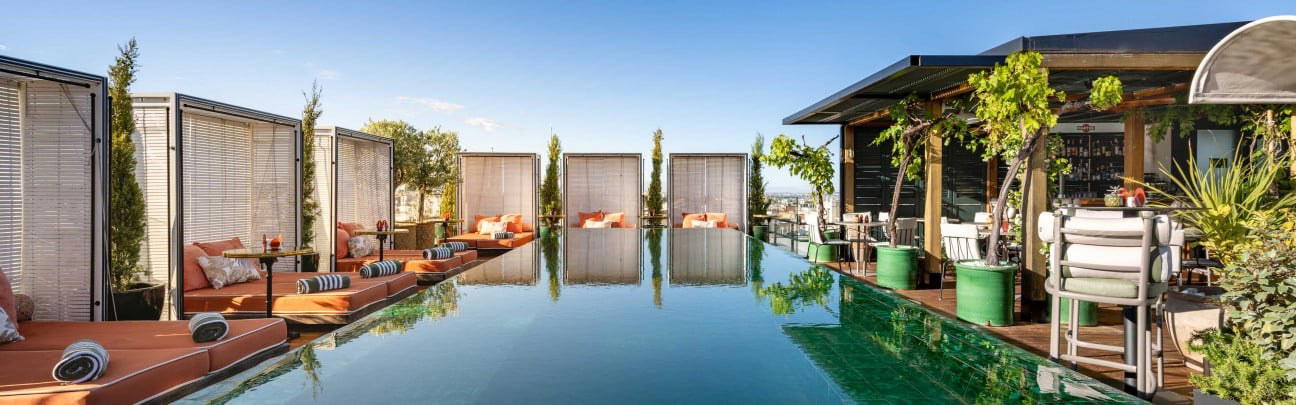
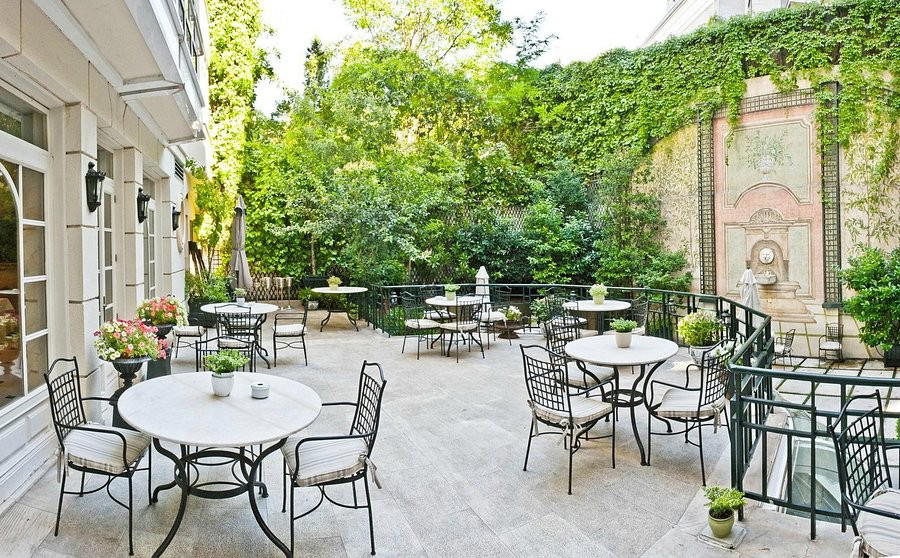
Modern and pleasant atmosphere with comfortable seating across three floors and a terrace garden isolated from city noise.