1 Michelin Star · Guía Repsol 2 Soles · Macarfi 9.5 Food Rating
Our verdict
Ugo Chan occupies a precise position in Madrid's premium dining scene: a Michelin-starred counter restaurant where Japanese technique absorbs Castilian ingredients and the city's own culinary memory. Ranked #167 in Europe by Opinionated About Dining in 2025, it operates through à la carte and personalised omakase formats, drawing a clientele that returns repeatedly to track a menu designed never to repeat itself.

Pearl is the En Primeur Club membership app, where members save venues, book tables and use the concierge.
The menu
What to order
- Tripe gyozas a la madrileña
- Lentil caviar with Japanese curry and coconut air
- Tribute to Robuchon
- Cocotxa nigiri
- Sardine sushi alboronía
A Counter That Earns Its Regulars
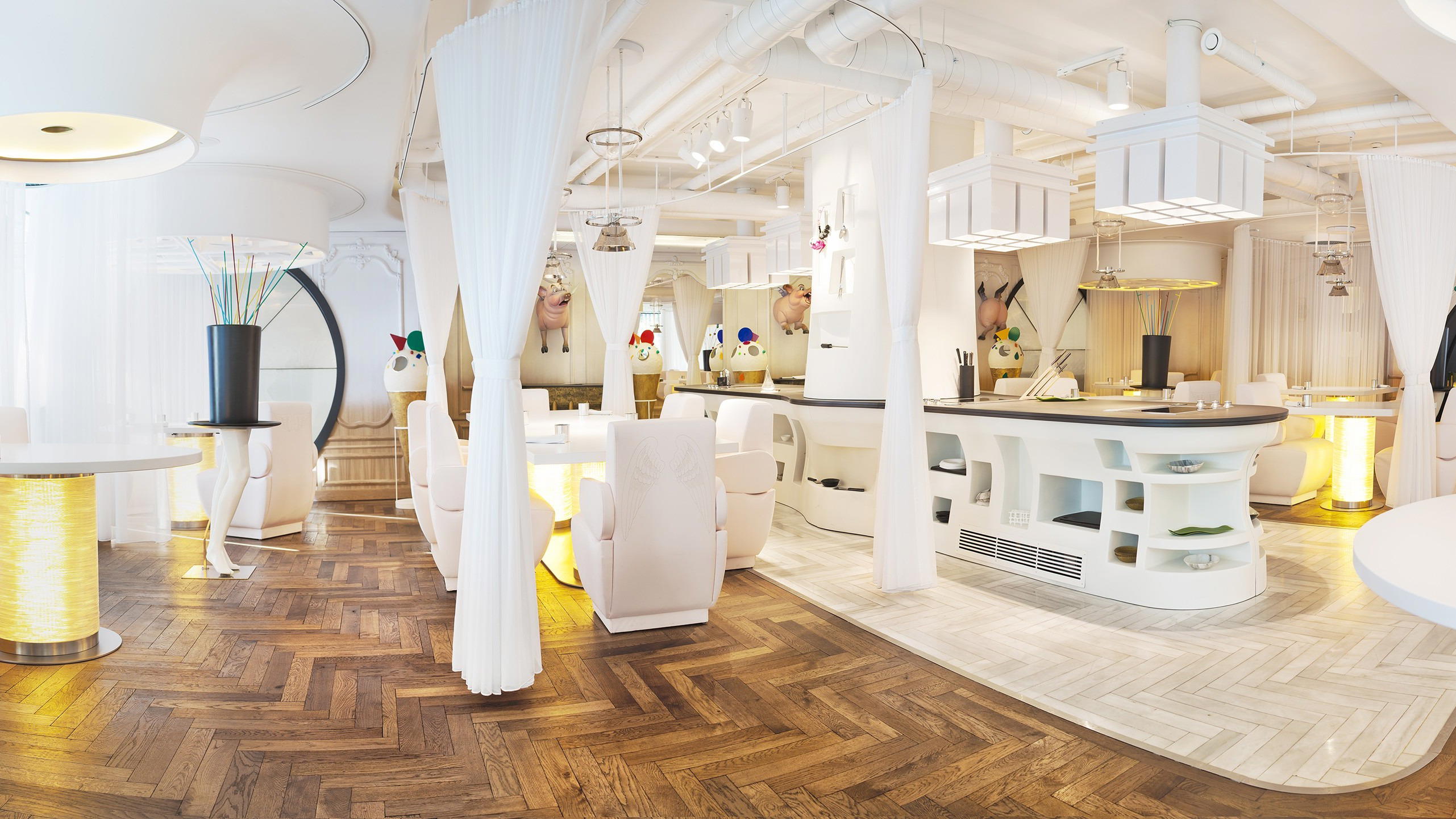
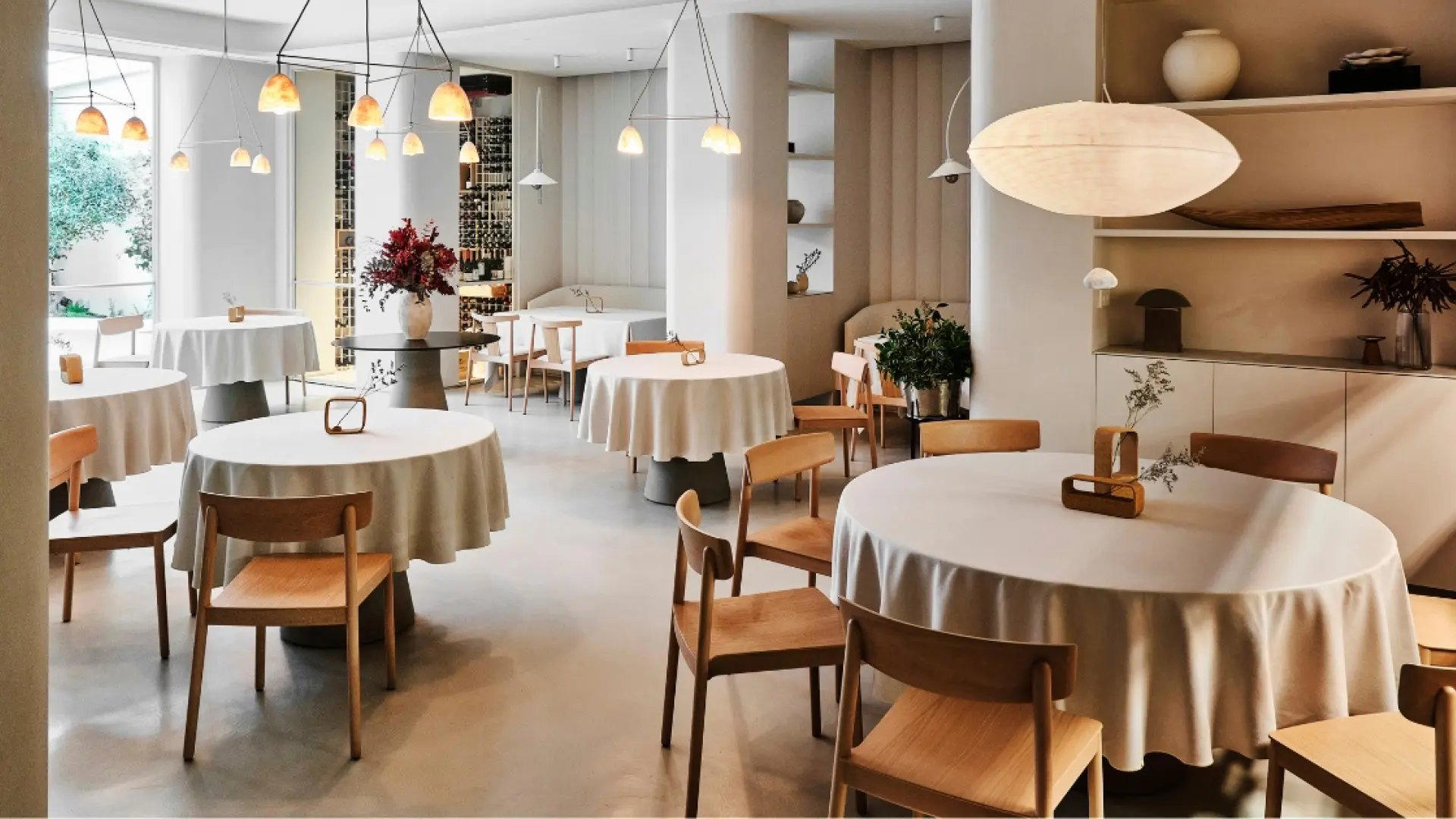
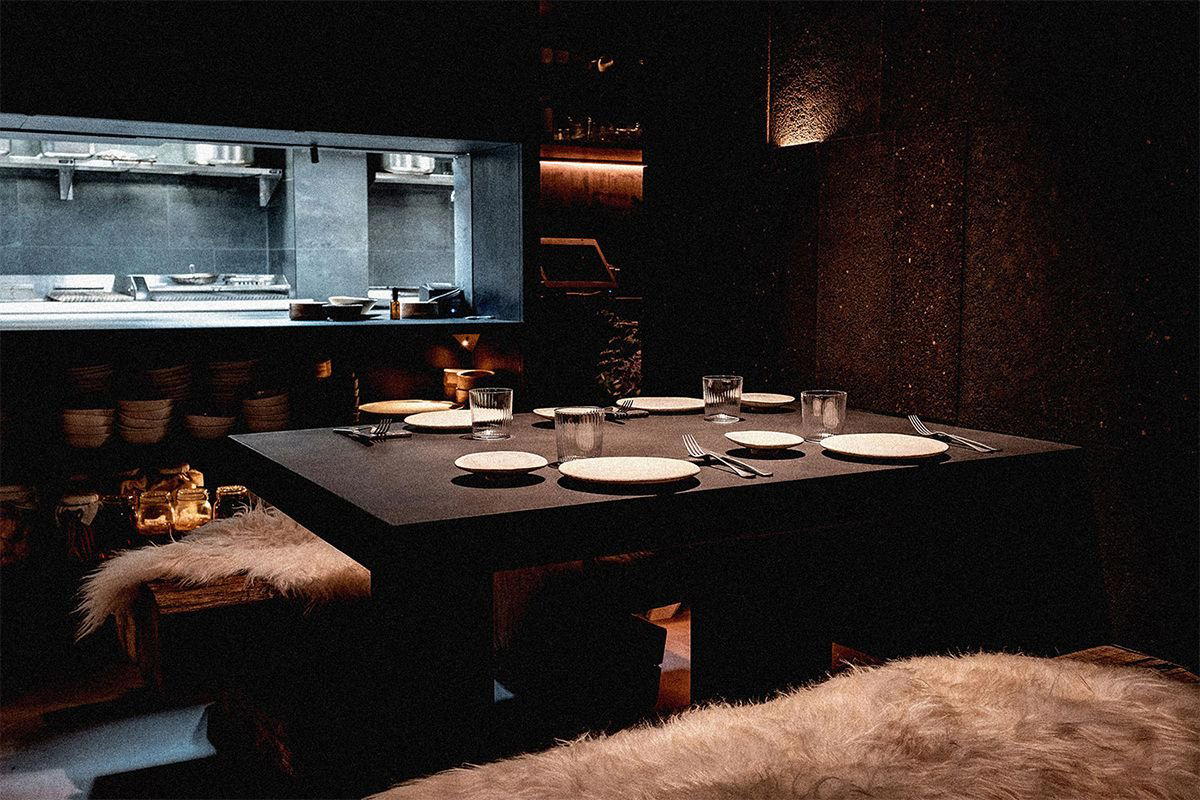
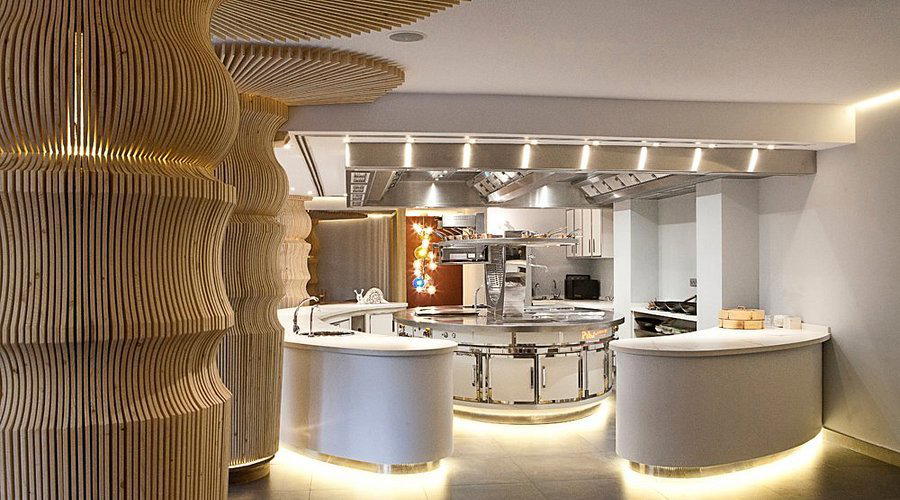
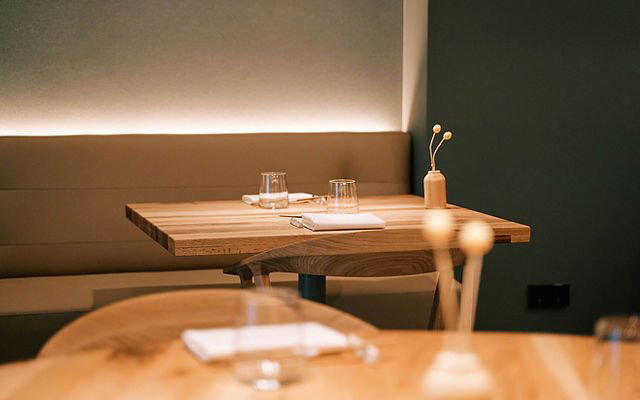
Chamartín is not Madrid's most photographed dining neighbourhood. The residential streets north of the IFEMA axis carry none of Malasaña's noise or Salamanca's retail energy, which makes the quiet on Calle de Félix Boix feel deliberate rather than overlooked. That quiet is partly what defines the experience at Ugo Chan: an open-view kitchen, two counters, and a room calibrated for people who came specifically to eat, not to be seen arriving. The atmosphere reads less as theatre and more as focused attention, the kind of environment that tends to produce a loyal, returning clientele rather than a single-visit crowd.
In Madrid's premium tier, where €€€€ restaurants range from the three-Michelin-star spectacle of DiverXO to the refined Spanish creativity of Coque, Deessa, DSTAgE, and Paco Roncero, Ugo Chan holds a distinct position. It is not trying to redefine Spanish cooking or occupy the avant-garde bracket. It is doing something more specific: applying Japanese culinary grammar to Madrid's own pantry, with seasonal ingredients at the centre and the city's food memory surfacing in the details.
What the Menu Keeps Revisiting
The logic of the menu at Ugo Chan is essentially that of the evolving omakase counter: no two visits are the same, and returning guests understand that the kitchen treats the menu as a living document. Opinionated About Dining, which ranked the restaurant at #167 in Europe in 2025 (up from #252 in 2024), described the cuisine as meticulous and constantly evolving, reaching for the Heraclitean principle that you cannot step into the same river twice. That framing matters more than it might appear. Counter restaurants that explicitly promise change put themselves in a different contract with regulars than those that build identity around a fixed signature.
What anchors the menu across that evolution is the integration of recognisably Madrilenian dishes into a Japanese framework. Tripe gyozas prepared in the madrileña style and a version of Soldaditos de Pavía, the beer-battered salt cod strips that are a fixture of traditional Madrid bar culture, are the clearest expressions of this. These are not fusion gestures in the diluted sense; they are specific references to dishes with local histories, reprocessed through a technique vocabulary from another tradition entirely. The approach places Ugo Chan alongside a small cohort of Spanish-Japanese counters across Europe where the cross-reference operates at the level of culinary memory rather than ingredient substitution.
A caviar lentil Japanese curry with smoked wood pigeon breast and coconut is the dish that has drawn the most direct editorial comment from reviewers, OAD noted it as particularly memorable. Lentils carry strong Castilian associations; curry and coconut do not. The combination, as described, is not an attempt to soften either tradition but to hold both in tension on the same plate. It is the kind of dish that tells returning guests what the kitchen is working on philosophically, not just seasonally.
The Format and What It Demands of Guests
Ugo Chan operates two parallel formats: a standard à la carte and a personalised omakase menu. The distinction is meaningful at this price point. The omakase format requires a degree of trust from the guest, ceding menu control, accepting the kitchen's seasonal logic, and it rewards the kind of repeat visitor who has already established preferences with the team. Counters that offer both formats tend to develop a tiered regulars culture: the à la carte guests who return seasonally, and the omakase guests who treat the restaurant as an ongoing conversation with the kitchen.
The open-view kitchen design reinforces this dynamic. Watching preparation in real time shifts the dining experience from passive consumption toward something closer to observation, the kind of attentiveness that counter dining has always encouraged, from the high-end omakase counters of Tokyo's Ginza district to the tasting-menu bars emerging across Western Europe. At the €€€€ price tier, guests are paying in part for that proximity. At Ugo Chan, the two-counter format keeps the room small enough for that proximity to remain meaningful rather than performative.
Service runs Tuesday through Saturday, with lunch from 1:30 PM to 4:00 PM and dinner from 8:30 PM to midnight. The restaurant is closed on Sundays and Mondays. The dinner window, extending to midnight, is consistent with Madrid's late dining culture and suits the counter format well: a kitchen running until midnight can sustain a longer tasting rhythm without the table-turn pressure that compresses service at earlier closing restaurants.
Awards as a Positioning Signal
The trajectory of Ugo Chan's external recognition is worth reading carefully. The OAD Highly Recommended designation for leading new European restaurants in 2023 established it in critical circuits early. The Michelin one-star awarded in 2024 moved it into a different booking tier. The OAD ranking climb from #252 in 2024 to #167 in 2025 suggests sustained momentum rather than a single-cycle reception spike, the kind of upward movement that tends to increase the difficulty of booking without any change to the restaurant's own communications.
Within Spain's broader fine-dining geography, this places Ugo Chan in a different register from the country's most awarded names. Restaurants like Arzak in San Sebastián, El Celler de Can Roca in Girona, Quique Dacosta in Dénia, Azurmendi in Larrabetzu, and Disfrutar in Barcelona represent the established upper tier of Spanish creative cooking. Aponiente in El Puerto de Santa María occupies its own category around marine-focused cuisine. Ugo Chan's critical positioning is more analogous to the international counter-format restaurants that have emerged as a distinct peer group across Europe and North America over the past decade, places like Atomix in New York City, where a structured counter format and Korean-inflected technique have built a serious critical reputation, or the broader model of chefs drawing on non-European culinary architecture to process local ingredients. The comparison to Le Bernardin in New York City is less direct in format but relevant in terms of the discipline with which a non-Spanish technique vocabulary can be applied to produce something that reads as deeply local.
How to Plan a Visit
Chef Hugo Muñoz's nickname, Hugochan, a childhood name from his grandfather, gives the restaurant its name and signals something about the register the kitchen is working in: personal without being precious, playful without being loose.
| Venue | Cuisine Focus | Price Tier | Format | Michelin Stars |
|---|---|---|---|---|
| Ugo Chan | Japanese-Spanish fusion, counter omakase | €€€€ | À la carte + personalised omakase | 1 star (2024) |
| DiverXO | Progressive Asian-Spanish creative | €€€€ | Tasting menu | 3 stars |
| Coque | Spanish creative | €€€€ | Tasting menu | 2 stars |
| Deessa | Modern Spanish creative | €€€€ | Tasting menu | 1 star |
| Paco Roncero | Creative | €€€€ | Tasting menu | 1 star |
The Chamartín address, Calle de Félix Boix, 6, is accessible by metro and sits in a residential area where parking is more manageable than in central Madrid. For guests combining dinner with a hotel stay, our full Madrid hotels guide covers the city's premium and mid-range options across neighbourhoods. Those building a broader Madrid programme can cross-reference our full Madrid restaurants guide, our full Madrid bars guide, our full Madrid wineries guide, and our full Madrid experiences guide.
Given the counter format and the critical attention the restaurant has received since its one-star award, advance booking is advisable. The omakase format in particular is likely to require planning further ahead than the à la carte option. The kitchen closes Sundays and Mondays, which means any visit requires mid-week or weekend planning within the Tuesday-to-Saturday window.
Frequently asked questions
What price level is Ugo Chan?
Pricing at Ugo Chan is listed as €€€€.
What awards or recognition does Ugo Chan have?
Ugo Chan has received recognition including: A contemporary restaurant with an open-view kitchen, two counters and a Japanese ambience that is far from lacking in personality. Its meticulous, constantly evolving cuisine could be described by quoting the Greek philosopher Heracles: “No….
What dish is Ugo Chan famous for?
The caviar lentil Japanese curry with smoked breast of wood pigeon and coconut has drawn specific editorial attention from Opinionated About Dining, which ranks Ugo Chan among its Top 167 restaurants in Europe for 2025. Beyond that single dish, the tripe gyozas prepared in the Madrid 'a la madrileña' style and a riff on the classic 'Soldaditos de Pavía' illustrate the restaurant's defining move: grounding Japanese technique in recognisable Madrid references. Because the omakase menu evolves continuously, no dish is guaranteed on any given visit.
What should I expect cuisine-wise at Ugo Chan?
When is Ugo Chan open?
Hours at Ugo Chan: Monday closed Tuesday 1:30 PM-4 PM 8:30 PM-12 AM Wednesday 1:30 PM-4 PM 8:30 PM-12 AM Thursday 1:30 PM-4 PM 8:30 PM-12 AM Friday 1:30 PM-4 PM 8:30 PM-12 AM Saturday 1:30 PM-4 PM 8:30 PM-12 AM Sunday closed.
A Tight Comparison
A compact comparison to help you place this venue among nearby peers.
| Venue | Cuisine | Price | Awards | Notes |
|---|---|---|---|---|
| Ugo ChanThis venue (the venue you are viewing) | Modern Japanese-Spanish Fusion Omakase | $200–300 | 1 Michelin Star · Guía Repsol 2 Soles | Not listed |
| DiverXO | Avant-Garde Spanish Tasting Menu | $300–500 | 3 Michelin Stars · World's 50 Best #4 | Progressive - Asian, Creative |
| Deessa | Modern Valencian Fine Dining | $150–200 | 2 Michelin Stars · La Liste Top Restaurants | Modern Spanish, Creative |
| Smoked Room | Modern Japanese Fire Omakase | $200–300 | 2 Michelin Stars · La Liste Top Restaurants | Progressive Asador, Contemporary |
| Coque | Modern Spanish Fine Dining | $300–500 | 2 Michelin Stars · La Liste Top Restaurants | Spanish, Creative |
| Paco Roncero | Avant-Garde Spanish Fine Dining | $150–200 | 2 Michelin Stars · La Liste Top Restaurants | Creative |
Recognition history
Dated appearances from independent guides and award organizations, with the underlying list record or original source where available.
Michelin 1 Star
Michelin
Guía Repsol 2 Soles
Guía Repsol
Macarfi 9.5 Food Rating
Macarfi
Opinionated About Dining Top Restaurants in Europe Highly Recommended
Opinionated About Dining
Full recognition history (9 entries)
Michelin 1 Star
Michelin
Opinionated About Dining Top Restaurants in Europe Ranked #167
Opinionated About Dining
Michelin 1 Star
Michelin
Opinionated About Dining Top Restaurants in Europe Ranked #252
Opinionated About Dining
Opinionated About Dining Top New Restaurants in Europe Highly Recommended
Opinionated About Dining