
Our verdict
Azabu Muroi occupies the tenth floor of the HULIC&New Ginza Miyuki building in Chuo City, positioning it within one of Tokyo's most concentrated corridors of high-end dining. Travellers researching this address will find it alongside some of the city's most closely watched reservation lists.

Pearl is the En Primeur Club membership app, where members save venues, book tables and use the concierge.
The menu
What to order
- Nodoguro
- Ise ebi
- Charcoal-grilled seafood
- Rice with harasu and salmon roe
Tenth Floor, Ginza: What the Address Says Before You Sit Down
In Tokyo, a restaurant's floor matters. Ground-level counters signal accessibility; basement rooms lean into intimacy; upper floors, particularly in Ginza's newer mixed-use towers, tend to signal something else entirely. Azabu Muroi sits on the tenth floor of HULIC&New Ginza Miyuki 5, a building on 5-chome in Chuo City's Ginza district. That address places it at the intersection of two forces shaping Tokyo's premium dining scene: the continued pull of Ginza as a geography of aspiration, and the gradual verticalization of fine dining into towers that offer separation from the street-level noise below.
Ginza's dining identity has shifted considerably over the past decade. What was once a neighbourhood defined by corporate entertaining and long-standing sushi institutions has diversified into a more layered scene, with French-influenced counters, contemporary kaiseki rooms, and a growing cohort of venues that operate at the boundary between Japanese tradition and global technique. The address on Miyuki-dori, a street that connects Ginza's established luxury retail corridor to its quieter residential edges, places Azabu Muroi within a specific register of that scene: not the tourist-facing blocks near the Ginza Six complex, but the more considered, less obvious stretch that rewards diners who research rather than wander.
Ginza concentrates more Michelin-starred restaurants per square kilometre than almost any district in the world, and the upper tiers of that concentration have their own internal logic. Venues at this address tend to price against each other rather than against the broader Tokyo market, and booking windows often run weeks or months ahead depending on format and seat count. Comparable rooms in the same neighbourhood, whether sushi counters like Harutaka or kaiseki destinations like RyuGin, operate in a tier where the expectation of a single long menu, a small number of covers, and a reservation-only format is essentially baseline. Azabu Muroi's placement in the same building stock and postcode places it in conversation with that cohort, even where specific details about format, price, and capacity remain outside public record.
That discretion itself is a signal. Ginza's most closely watched restaurants have historically been among the least marketed. They circulate through recommendation, through the reservation infrastructure of high-end hotels, and through the networks of Japanese corporate dining culture. The venues that operate with minimal digital presence, no published menu, no posted pricing, often no English-language booking interface, are not absent from the scene; they are, in many cases, its most stable fixtures.
French-Influenced Tokyo and What It Means for an Azabu Name
The name Azabu is worth pausing on. Minami-Azabu and the broader Azabu area in Minato-ku has long been one of Tokyo's most significant neighbourhoods for French cuisine in Japan. The postwar American presence and the concentration of foreign embassies in Azabu produced a neighbourhood with unusual openness to Western cooking, and the district's French restaurants became a training ground for generations of Japanese chefs who went on to shape the city's broader fine dining culture. A venue carrying Azabu in its name, operating out of Ginza, positions itself within that lineage, whether through direct affiliation, training history, or tonal reference.
The broader French-influenced tier of Tokyo dining is well represented in Ginza and its adjacent wards. L'Effervescence in Nishi-Azabu and Sézanne in Marunouchi each represent different points on that spectrum, the former with a vegetable-forward Japanese-French synthesis, the latter with a more classically French foundation adapted for Tokyo produce. Crony represents yet another angle, pushing the French-innovative category into looser, more personal territory. Where Azabu Muroi lands relative to those benchmarks is a question for diners with firsthand experience of the room.
Tokyo in a Wider Frame
Ginza is one entry point into Tokyo's fine dining map, but the city's most interesting conversations happen across multiple neighbourhoods and formats. Diners planning extended stays will find that a single Ginza dinner fits naturally into a broader programme that might include a different cuisine register or price tier on the nights around it. Our full Tokyo restaurants guide maps that wider range, from neighbourhood ramen to multi-course counters in Shinjuku and Roppongi.
Beyond Tokyo, Japan's dining geography rewards planning across cities. HAJIME in Osaka represents the Kansai region's most technically ambitious French-Japanese fusion, while Gion Sasaki in Kyoto occupies a specific position in the kaiseki tradition that Ginza venues often reference. Further afield, akordu in Nara, Goh in Fukuoka, Abon in Ashiya, affetto akita in Akita, Aji Arai in Oita, Ajidocoro in Yubari District, Akakichi in Imabari, and aki nagao in Sapporo each represent distinct regional expressions of Japan's broader fine dining ambition. The comparison to international peers, say, the produce-led precision of Le Bernardin in New York City or the community-table format of Lazy Bear in San Francisco, helps locate Japanese fine dining's particular relationship to hospitality formality and seasonal specificity within a global frame.
Know Before You Go
- Address: HULIC&New Ginza Miyuki 5, 10F, 5-5-12 Ginza, Chuo City, Tokyo 104-0061
- Floor: 10th floor, look for building-level signage on approach
- Area: Ginza, Chuo-ku, accessible via Ginza Station (Tokyo Metro Ginza, Hibiya, and Marunouchi lines)
- Booking: No confirmed public booking method; contact via hotel concierge or direct enquiry is typical for this tier of Ginza venue
- Price range:; the building, address, and Ginza context suggest premium pricing consistent with the neighbourhood's upper-tier dining
- Hours:, verify directly before visiting
- Language: English-language service availability is unconfirmed; concierge assistance is advisable for non-Japanese speakers
Frequently asked questions
Would Azabu Muroi be comfortable with kids?
Azabu Muroi sits on the tenth floor of a formal Ginza address, HULIC&New; GINZA MIYUKI5 in Chuo City, which signals a dining room built around composed, attentive service rather than casual flexibility.
What kind of setting is Azabu Muroi?
The restaurant occupies the tenth floor of the HULIC&New; GINZA MIYUKI5 building on Ginza's Chome-5 strip in Chuo City, Tokyo, an address that positions it firmly within Ginza's upper-tier dining tier rather than its accessible ground-level casual scene. In Tokyo, height correlates with formality and destination intent: you travel up to a room like this deliberately. The Azabu name adds a further layer, referencing one of Minato-ku's historically significant dining neighbourhoods and its long association with French-influenced cuisine.
Is Azabu Muroi in Ginza worth the journey from central Tokyo neighbourhoods like Shinjuku or Shibuya?
Ginza's Chome-5 address, where Azabu Muroi occupies the tenth floor of HULIC&New; GINZA MIYUKI5, sits within a district that concentrates more Michelin-starred restaurants per square kilometre than nearly any other in the world, which makes the area itself a destination independent of any single table. The Azabu name adds credential weight: it references a Minato-ku neighbourhood with a documented history of French-influenced haute cuisine in Tokyo.
What's the signature dish at Azabu Muroi?
Given the venue's Ginza location and the culinary associations carried by the Azabu name, a neighbourhood with decades of French-Japanese technique, the format is likely course-driven rather than à la carte. Confirming current offerings directly with the restaurant before visiting is advisable.
Quick Comparison
Comparable venues nearby, for context on price, style, and recognition.
| Venue | Cuisine | Price | Awards | Notes |
|---|---|---|---|---|
| Azabu MuroiThis venue (the venue you are viewing) | Seasonal Kaiseki Omakase | $300–500 | Not listed | Not listed |
| おにく 花柳 | Michelin-starred Wagyu kaiseki / meat kappo | $200–300 | Black Pearl 1 Diamond | Ginza |
| Ningyocho Imahan Ginza ten | Traditional Wagyu Sukiyaki & Shabu-shabu | $100–150 | Tabelog 100 #98 | Chūō |
| Ginza Inaba | Seasonal Japanese Kaiseki Omakase | $200–300 | Tabelog 100 #2 | Chūō |
| Kamon | Modern Wagyu-focused Teppanyaki in Imperial Hotel Tokyo | $200–300 | Tabelog 100 #44 | Chiyoda |
| Ginza Yonemura | Edo Ryori Kaiseki | $200–300 | Not listed | Chūō |
Recognition history
Dated appearances from independent guides and award organizations, with the underlying list record or original source where available.
Opinionated About Dining Top Restaurants in Japan Recommended
Opinionated About Dining
Continue exploring
More in Tokyo
Restaurants in Tokyo
All restaurants in Tokyo →

Bars in Tokyo
All bars in Tokyo →




Details
- Elegant
- Intimate
- Sophisticated
- Cozy
- Special Occasion
- Date Night
- Business Dinner
- Chefs Counter
- Open Kitchen
- Sommelier Led
- Sake Program
- Local Sourcing
- Omakase
- Counter Dining
- Tasting Menu
- Sake
- Wine
- Allergy Accommodating
Current opening hours
- Monday
- 5:30–11 PM
- Tuesday
- 5:30–11 PM
- Wednesday
- 5:30–11 PM
- Thursday
- 5:30–11 PM
- Friday
- 5:30–11 PM
- Saturday
- 5:30–11 PM
- Sunday
- Closed
Hours can change for holidays and private events. Hours as of .
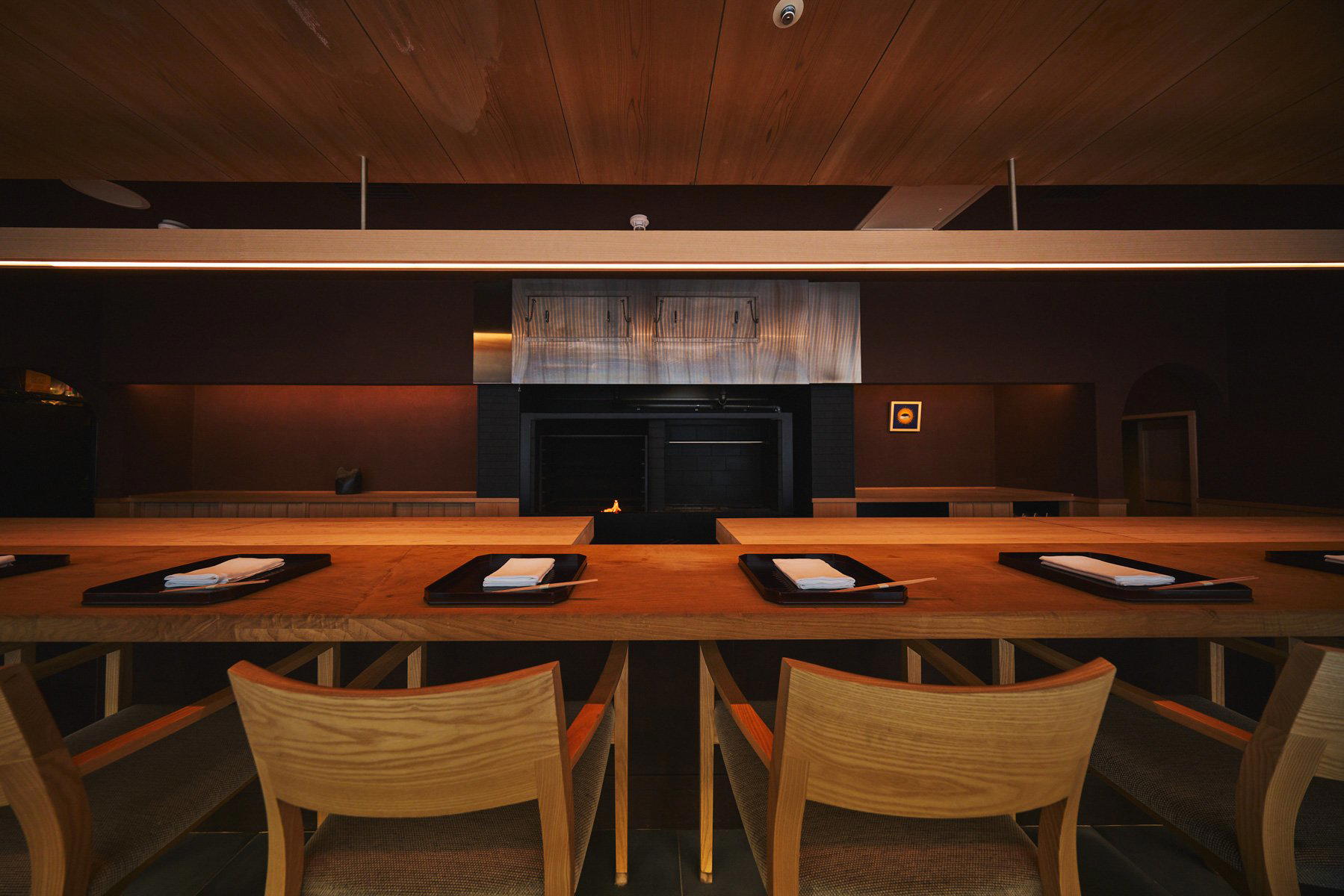
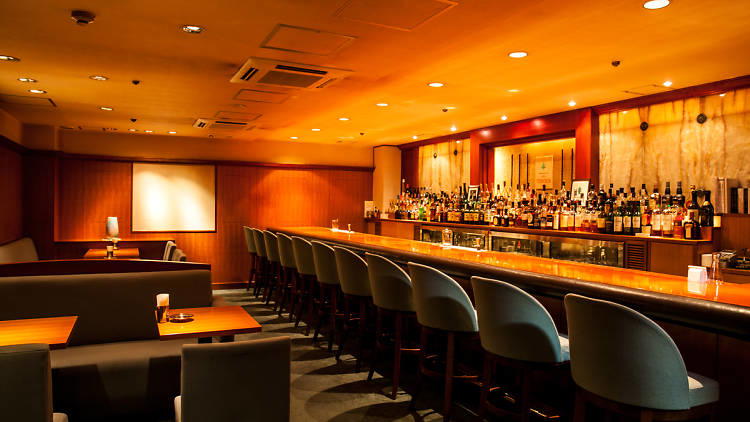
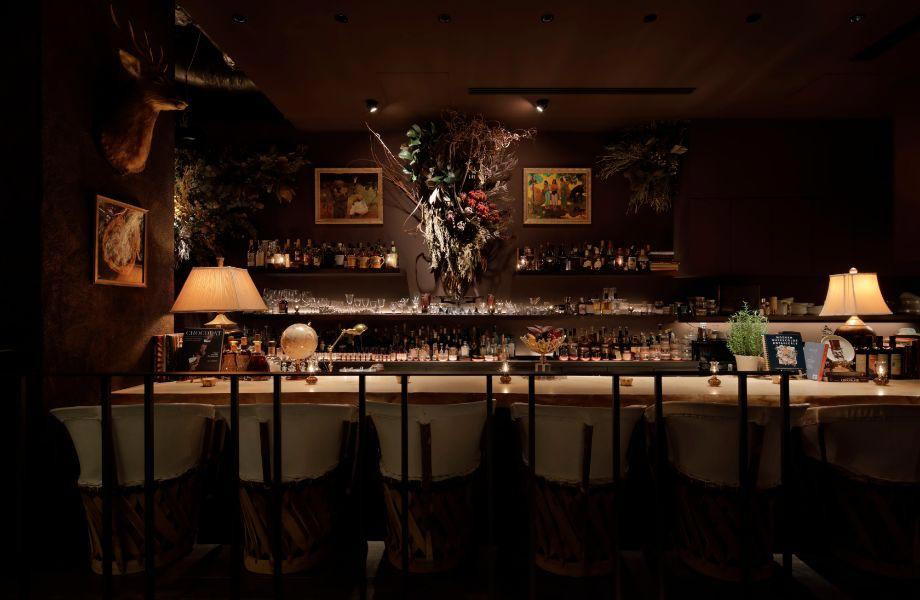
Warm and elegant interior with deep red and olive green plaster walls, creating a cozy yet sophisticated atmosphere on the 10th floor of a modern building.