Aurora occupies a residential corner of Chamartín, Madrid's northern district, where the capital's contemporary dining scene has quietly extended beyond its historic centre. Positioned among Madrid's tier of serious creative restaurants, it draws comparisons to the city's most ambitious tables through its address alone. Confirm details directly before visiting, as booking conditions and format information are best sourced at the venue.
Pearl is the En Primeur Club membership app — saves, bookings, and concierge access live there. Same editors, same standards.
- Address
- Av. de Alberto Alcocer, 32, Chamartín, 28036 Madrid, Spain
- Phone
- +34699140525
- Website
- auroramadrid.com
- Directions
- Get directions
 Saves & bookings on Pearl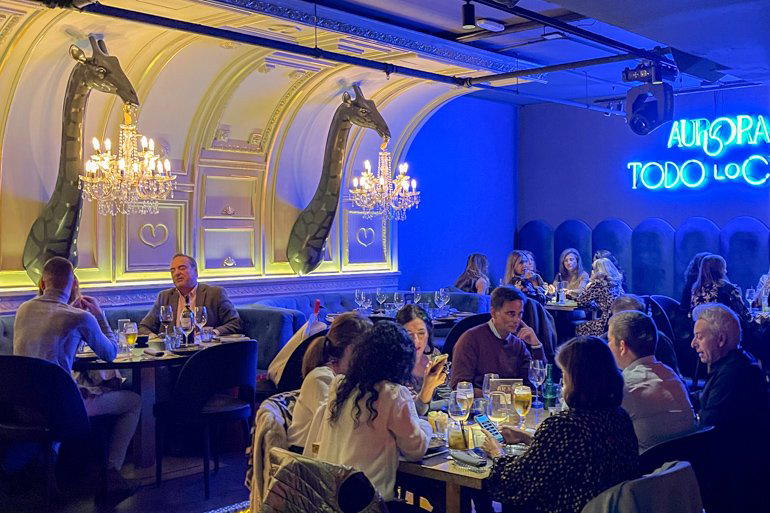
Chamartín and the Northward Drift of Madrid's Serious Dining
Madrid's gravitational centre for ambitious eating sat firmly within a triangle connecting Salamanca, the Retiro, and the streets around Gran Vía. That geography has shifted. Chamartín, the northern business district better known to commuters for its rail terminus than its restaurant scene, has accumulated a cluster of addresses that compete credibly with the capital's more celebrated dining corridors. Aurora, on Avenida de Alberto Alcocer, sits inside that drift, a residential-commercial artery where the dining room, not the neighbourhood's cultural cachet, has to carry the argument.
This matters because the venues Aurora competes with in the minds of Madrid's informed diners are not casual neighbourhood trattorie. The city's upper tier includes DiverXO, operating at a level of creative intensity that has made it Spain's most discussed restaurant of the past decade, alongside Coque, which brings Castilian tradition into contact with highly technical execution, and Deessa, the hotel-anchored project from Quique Dacosta that channels Levantine precision into Madrid's luxury tier. Within that peer group, a new address in Chamartín earns scrutiny rather than the benefit of geography. The neighbourhood does not confer prestige automatically; the kitchen has to.
Ingredient Sourcing as Editorial Argument
Spanish fine dining's most coherent thread over the past fifteen years has not been technique, every kitchen at this level has technique, but provenance. The argument about where food comes from, and why that matters to what ends up on the plate, runs through particularly significant Spanish restaurants of the current era. Aponiente in El Puerto de Santa María built its three-Michelin-star reputation on the assertion that the Bay of Cádiz's overlooked marine species deserved the same culinary attention as Iberian pork. Azurmendi in Larrabetzu made agricultural self-sufficiency a structural element of its dining experience, not an afterthought on a menu header. El Celler de Can Roca in Girona has spent decades articulating what Catalan territory tastes like when processed through Escoffier-trained sensibility.
Any serious restaurant operating in Madrid's upper tier inherits that conversation. The city itself is not a producer region in the way that the Basque Country, Catalonia, or Valencia are. Madrid cooks have historically sourced outward, to the vegetable gardens of Aranjuez, to the mountains of the Sierra de Guadarrama for trout and game, to Castile's meseta for lamb and suckling pig. This structural dependence on external sourcing is not a weakness; it is what has made Madrid kitchens historically skilled at synthesis, at assembling Spain's regional larder into a single dining room. The question for any contemporary address at this level is how deliberately it curates that sourcing and how transparently that curation appears in what reaches the table.
The Chamartín Address: Practical Context
Avenida de Alberto Alcocer runs through one of Madrid's quieter affluent zones, bookended by embassies, corporate headquarters, and residential blocks. Arriving here by Metro (Line 9, Colombia or Herrera Oria stations sit within reasonable walking distance of the 28036 postcode) means trading the visual noise of central Madrid for something more anonymous. That anonymity cuts both ways: the dining room is not competing with street-level theatre, and the clientele skews toward regulars and purposeful visitors rather than walk-in foot traffic.
For comparison, Paco Roncero and DSTAgE both operate in locations that require some deliberate navigation, DSTAgE particularly so, occupying a stripped-back space in the Justicia neighbourhood that rewards visitors who know what they are looking for. The lesson from those addresses is that Madrid's most considered cooking rooms tend to be found by people who have already decided they want to be there. Chamartín functions on the same logic.
Placing Aurora in Spain's Wider Creative Circuit
Madrid is one node in a national network that has produced more Michelin-starred restaurants per capita than almost any comparable European country. For visitors building an itinerary that reaches beyond the capital, the reference points are distributed across the country: Arzak and Martin Berasategui in the Basque Country, Quique Dacosta in Dénia, Ricard Camarena in València, Mugaritz in Errenteria, and Atrio in Cáceres. Cocina Hermanos Torres in Barcelona sits in a greenhouse-format space that has become among the more distinctive dining rooms in the country. Internationally, the closest structural analogues for what Spain's mid-sized creative restaurants attempt are venues like Le Bernardin in New York or Lazy Bear in San Francisco: rooms where a clear culinary thesis, rather than scale or spectacle, carries the experience.
Within that network, an address in Chamartín sits at the Madrid end of a long chain of sourcing decisions that Spanish kitchens have been making with increasing self-consciousness since the early 2000s.
What to Expect, and What to Confirm
Aurora's cuisine is Creative Modern Dining, and reservations are essential. At this tier of dining in Madrid, format and price point are not incidental details. They determine whether a table fits a broader itinerary, whether a visit requires a reservation weeks or months ahead, and whether dietary constraints can be accommodated with advance notice.
The price point sits around $45 per person. These are reasonable priors to carry into any inquiry. Confirming them directly with the venue before booking is the appropriate step.
Know Before You Go
- Address: Av. de Alberto Alcocer, 32, Chamartín, 28036 Madrid, Spain
- District: Chamartín, northern Madrid, residential-commercial zone, separate from the city's tourist circuits
- Getting there: Metro Line 9 serves the area; Colombia and Herrera Oria are the nearest stations
- Booking: Reservations are essential.
- Price range: About $45 per person
- Dietary requirements: Confirm vegetarian and other dietary needs with the venue at time of booking
- Hours: Mon: Closed; Tue: 8 PM-12 AM; Wed: 12-3 AM, 8 PM-12 AM; Thu: 12-3 AM, 8 PM-12 AM; Fri: 12-6 AM, 8 PM-12 AM; Sat: 12-6 AM, 8 PM-12 AM; Sun: 12-6 AM
The Minimal Set
Comparable venues nearby, for context on price, style, and recognition.
| Venue | Cuisine | Price | Notes |
|---|---|---|---|
| AuroraThis venue — the venue you are viewing | Nueva Espana, Creative Modern Dining | $$$ | Not listed |
| LE KUN | Recoletos, Ingredient-Driven Gourmet | $$$ | Not listed |
| El Coleccionista | Castellana, Gastronomic Cocktails | $$$ | Not listed |
| Mo de Movimiento | Not listed | $$ | Rios Rosas, Modern Sustainable Pizza & Sharing Plates |
| Galipán Cuatro Caminos | Bellas Vistas, Venezuelan-Style Hot Dogs | $$$ | Not listed |
| Otoro Jukusei | Chamberí, Modern Japanese Omakase Sushi | $$$ | Not listed |
Continue exploring
More in Madrid
Restaurants in Madrid
Browse all →
Bars in Madrid
Browse all →
Hotels in Madrid
Browse all →



At a Glance
- Modern
- Elegant
- Sophisticated
- Special Occasion
- Open Kitchen
- Craft Cocktails
Current opening hours
- Monday
- Closed
- Tuesday
- 8 PM–12 AM
- Wednesday
- 12–3 AM, 8 PM–12 AM
- Thursday
- 12–3 AM, 8 PM–12 AM
- Friday
- 12–6 AM, 8 PM–12 AM
- Saturday
- 12–6 AM, 8 PM–12 AM
- Sunday
- 12–6 AM
Hours can change for holidays and private events. Last verified .
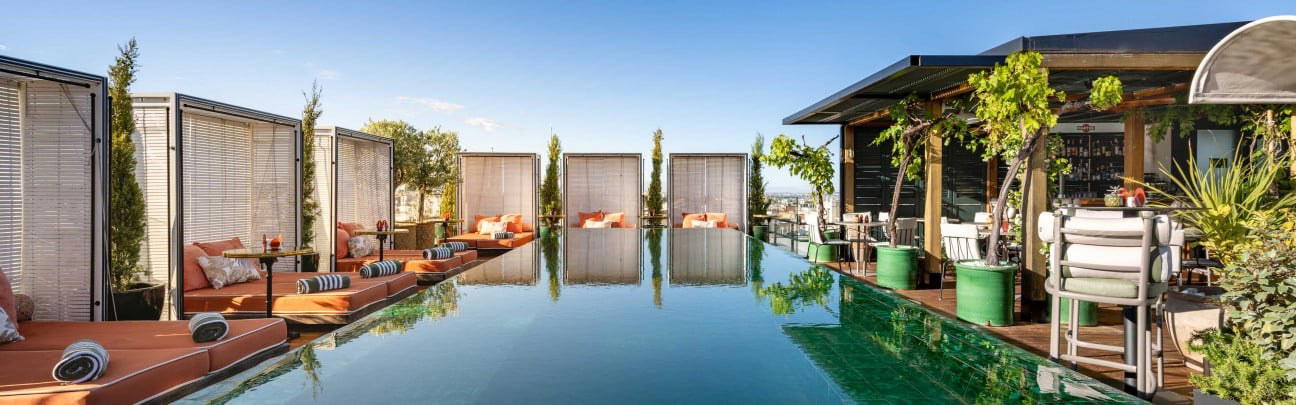
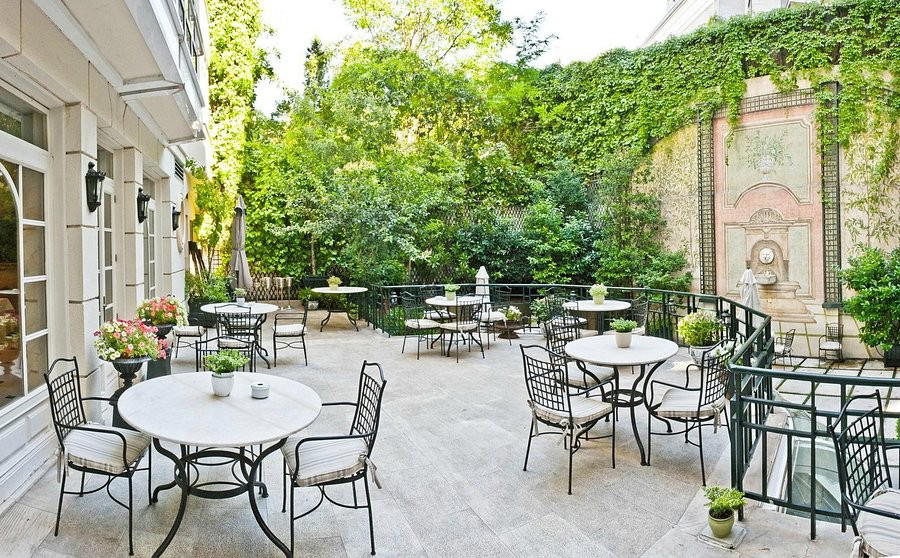
Sophisticated dining room atmosphere in a residential-commercial setting.