


2 Michelin Stars · La Liste Top Restaurants · Guía Repsol 2 Soles
Our verdict
Inside the Hyatt Regency Hesperia on Paseo de la Castellana, Smoked Room operates as a deliberately sealed-off world: a two-Michelin-star counter with just two tables and a Japanese-style bar, where the kitchen builds every course around smoke and charcoal. Chef Dani García's omakase format and La Liste recognition (84.5 points in 2025) place it among Madrid's most demanding fine-dining addresses, pitched firmly at the upper tier of the city's €€€€ bracket.

Pearl is the En Primeur Club membership app, where members save venues, book tables and use the concierge.
The menu
What to order
- Motril shrimp in brown butter
- Duck with sake-infused crêpe Suzette
- Hamachi
- Mackerel
- White truffle risotto
- Wagyu
- Smoked eel with nitro tomato
A Counter Carved Out of Castellana
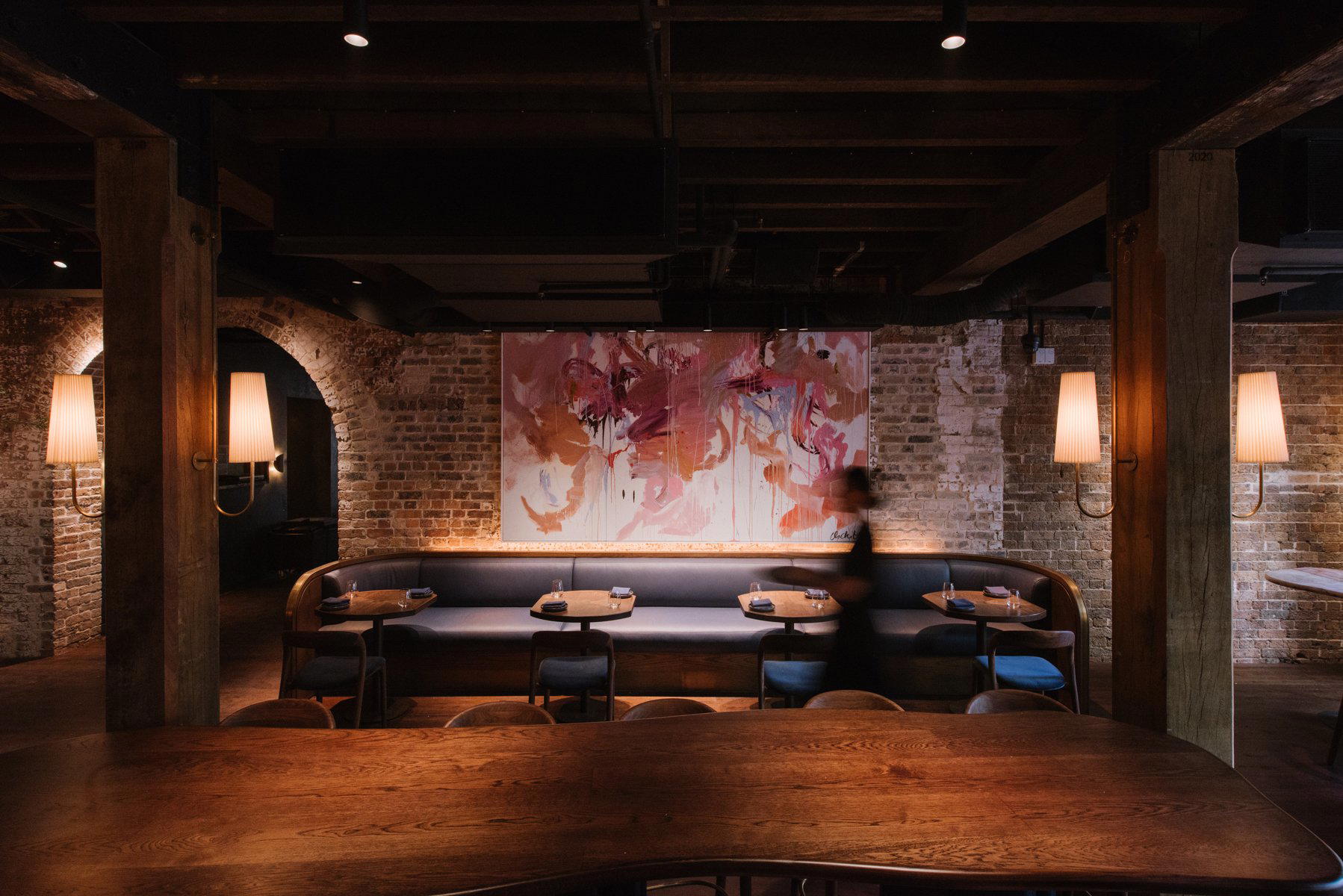
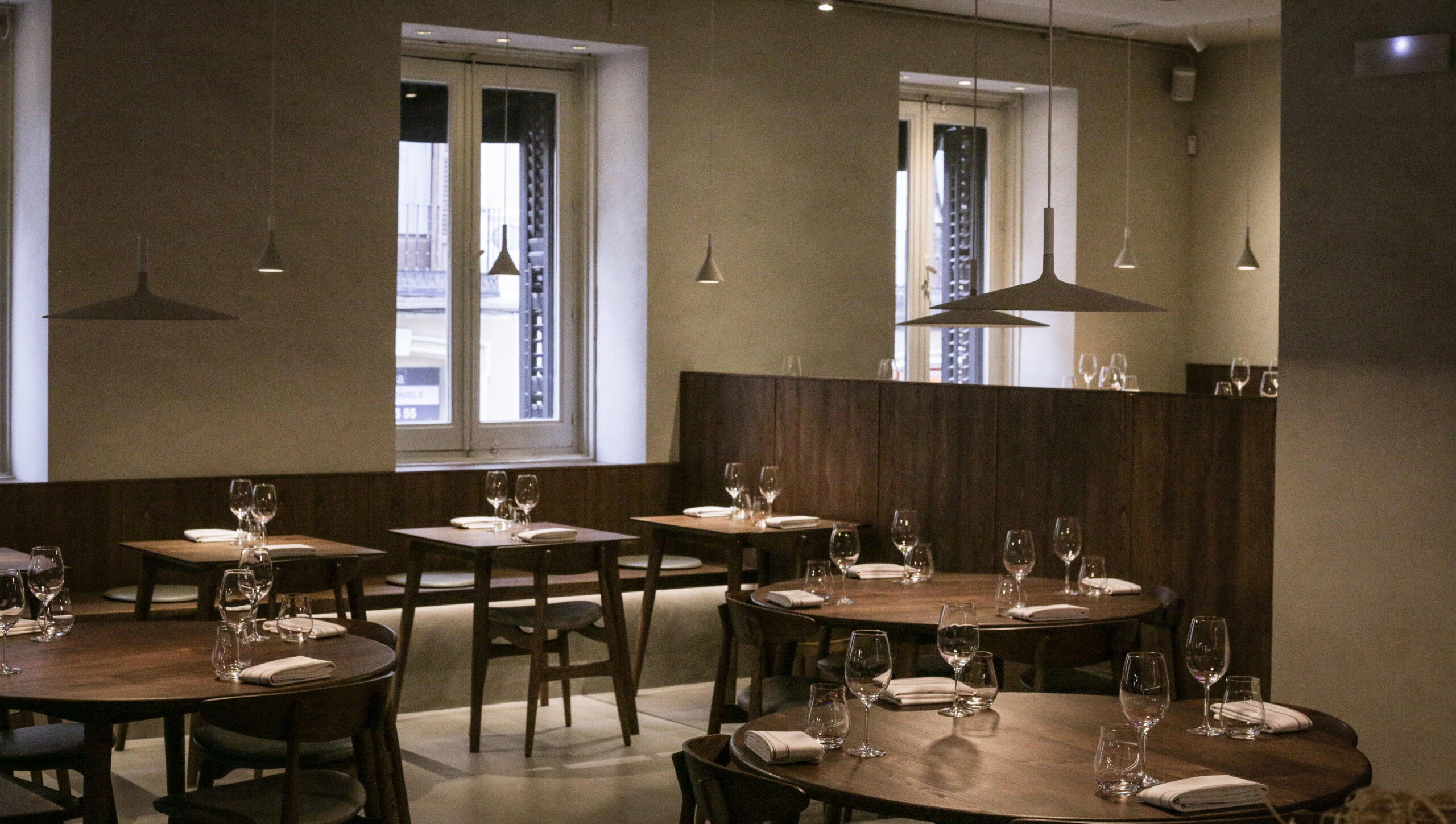
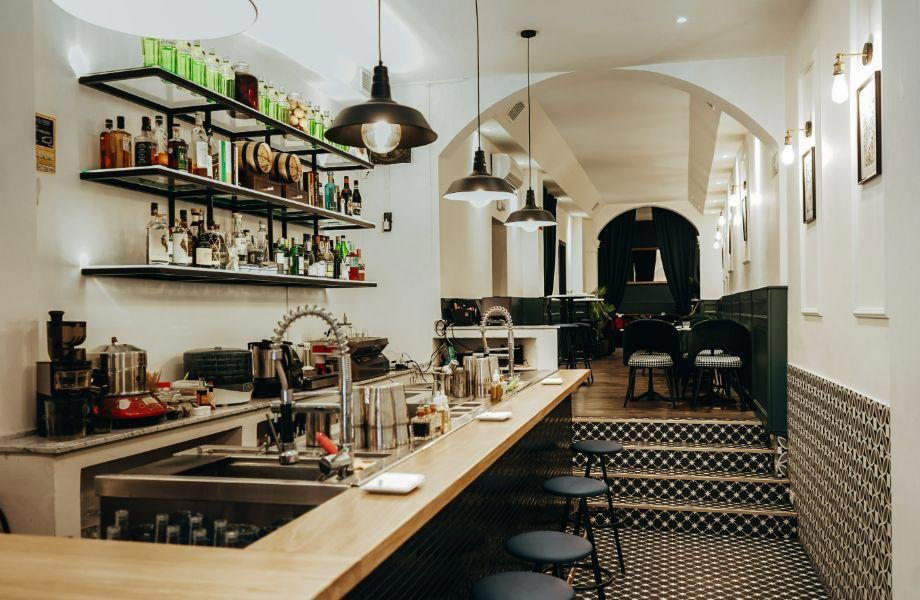
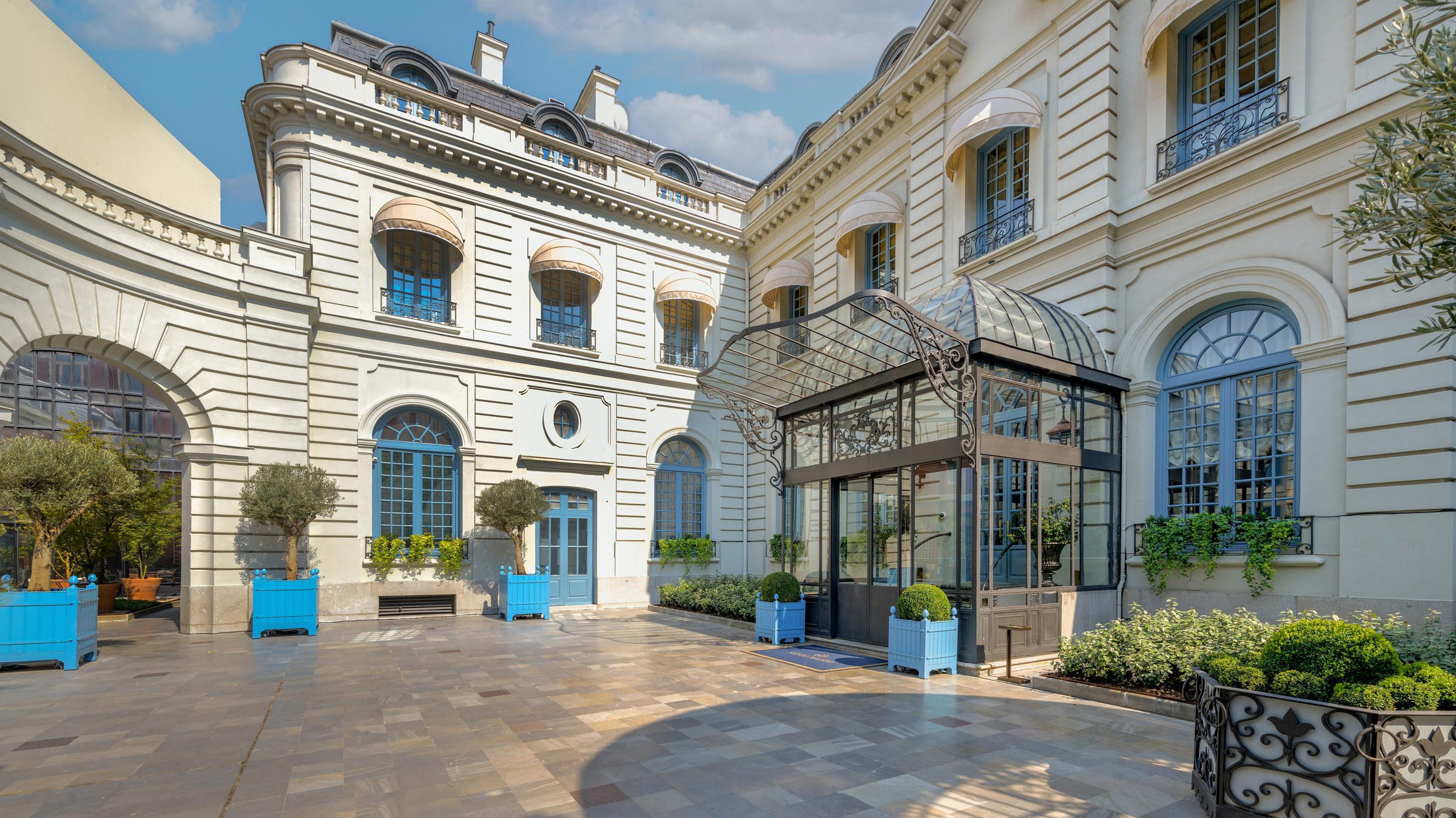
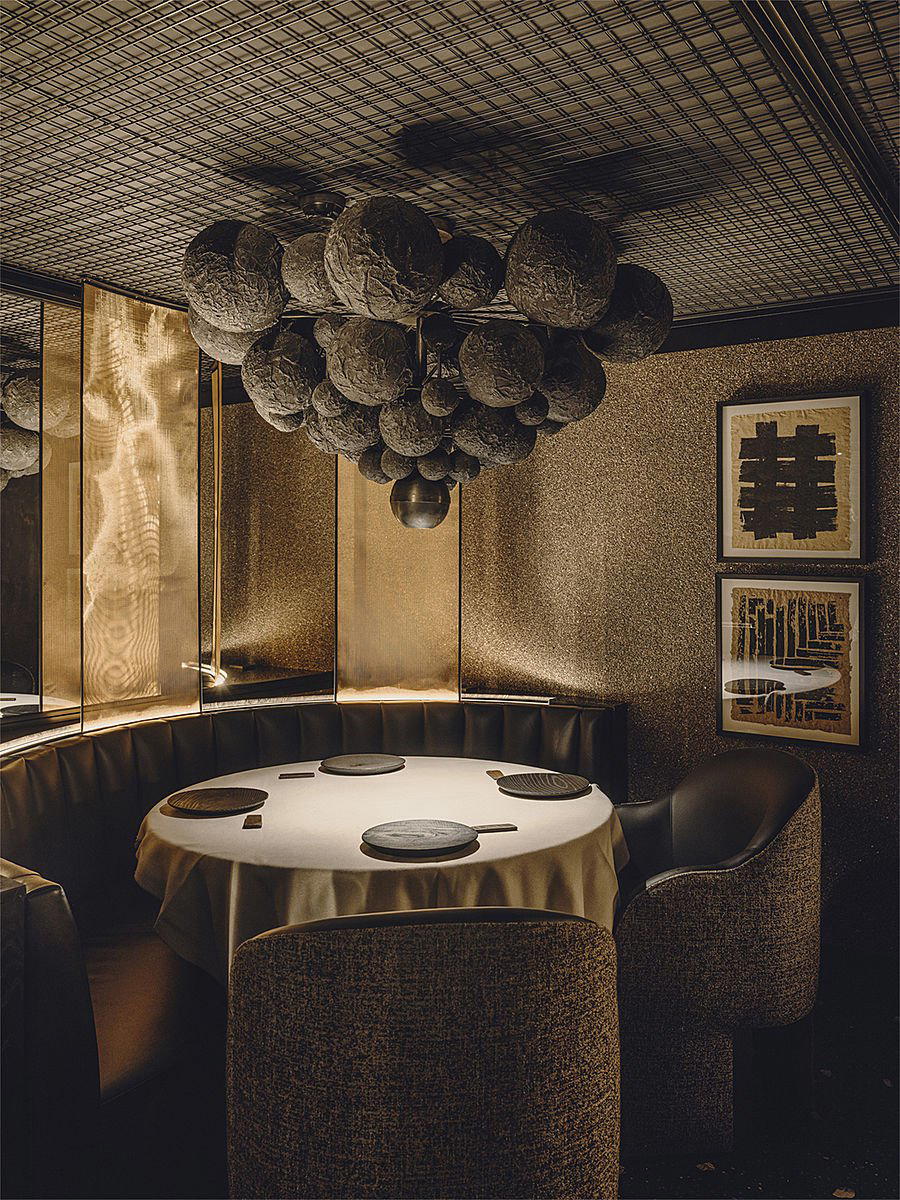
Paseo de la Castellana is Madrid's formal spine: a broad, traffic-heavy boulevard that runs north through Chamberí and on toward the corporate towers of AZCA. It is not, by instinct, the address you associate with intimate tasting-menu dining. The hotels that line it tend toward the grand and the impersonal. What Smoked Room has done, within the Hyatt Regency Hesperia at number 57, is construct something architecturally contrary to its surroundings: a sealed, near-silent space that operates on a counter format borrowed more from Tokyo than from the traditional Spanish asador it nominally references. The venue maintains its own entrance and its own valet parking, physical gestures that signal separation from the hotel lobby and from the adjoining Coque-adjacent world of large-format Spanish fine dining. It seats, at most, a handful of guests per service: two tables and a Japanese-style bar facing the kitchen. The spatial logic is the message before any food arrives.
That positioning on Castellana matters editorially. Madrid's highest-end restaurant tier has historically clustered around the old city and around the Salamanca district, where addresses like DiverXO and Deessa anchor the creative fine-dining conversation. A two-Michelin-star counter lodged inside a Paseo de la Castellana business hotel is a deliberate act of re-framing: the neighbourhood carries corporate associations, and the venue actively works against them through format, aesthetic, and guest-to-kitchen ratio.
The Omakase Asador: What the Format Actually Means
Spain's asador tradition is one of the oldest in European cooking: live fire, quality produce, minimal intervention. What Smoked Room does is extract the core principle of smoke and charcoal, strip away the communal-table conviviality, and rebuild the experience around a Japanese omakase structure. The result sits in a small but growing category of restaurants across Europe and North America that use the counter format not for theatre but for precision, where the ratio of kitchen staff to seated guests allows a degree of attention that tablecloth service in a larger room cannot replicate.
The menu runs as two omakase-style tasting sequences: Kõsei no Hi and Matsuri, both available with separate wine pairing options. Each is built around lightly smoked and charcoal-grilled dishes, incorporating seasonal produce alongside matured fish, meats, and seaweed. The global inflection is present but calibrated; this is not fusion in the aggressive sense but rather a kitchen that draws on Japanese precision and Spanish raw-material culture simultaneously. Smoke functions as connective tissue across the menu rather than as a headline technique applied to one or two courses.
The kitchen's handling of smoke is, by La Liste's account, the distinguishing technical achievement: smoky flavours and aromas that run through the meal without overwhelming the palate. That is a harder balance than it sounds. Heavy smoke is easy; smoke as a structural element that amplifies rather than dominates requires both restraint and accumulated technique. It is the same challenge that separates serious wood-fire cooking from fashionable barbecue theatre, and the two Michelin stars awarded in both 2024 and 2025 suggest the kitchen has resolved it consistently.
Where Smoked Room Sits in Madrid's Creative Fine-Dining Tier
Madrid operates a genuinely competitive two- and three-star tier. DiverXO holds three stars and commands the city's most discussed reservation. DSTAgE and Paco Roncero each operate at the €€€€ tier with strong creative programs. Deessa, also in a hotel setting, applies a different register of modern Spanish cooking.
On the La Liste ranking, Smoked Room scored 84.5 points in 2025 and 82 points in 2026, placing it within the top tier of that global list while registering a modest downward movement between cycles. For context, La Liste draws on aggregated critical sources across multiple publications and countries, making it a useful cross-reference against purely national Michelin data. The two scores together suggest a restaurant that ranks consistently in the global leading bracket without sitting at its absolute ceiling, which is an accurate description of where two-star counter dining tends to land when assessed against three-star rooms with longer track records.
Spain's broader fine-dining geography provides further context. The country's most-discussed restaurants span a range of regions: El Celler de Can Roca in Girona, Arzak in San Sebastián, Azurmendi in Larrabetzu, Quique Dacosta in Dénia, Aponiente in El Puerto de Santa María, and Disfrutar in Barcelona. Madrid has historically underperformed relative to the Basque Country and Catalonia in the global conversation about Spanish fine dining. Smoked Room, along with DiverXO, has shifted that balance in the capital's favour over the past few years.
The counter format also draws useful international comparisons. Restaurants like Atomix in New York and Le Bernardin represent different poles of the counter and tasting-menu tradition in the US context. Smoked Room's closest structural analogue, however, is probably the small-capacity Japanese-influenced counters that have become reference points in London and Paris over the same period: intimate, interaction-heavy, and built around the premise that proximity to the kitchen is itself part of the offer.
Chef Dani García and the Andalusian Thread
Spain's counter-format fine dining has frequently been driven by chefs with roots outside Madrid, and Dani García follows that pattern. His background is Andalusian, with a career that established his reputation in Málaga before the Madrid chapter. That southern Spanish reference is relevant to how smoke and grilling function in the Smoked Room kitchen: Andalusia has its own deep wood-fire and charcoal traditions, distinct from the Castilian asador lineage, and the combination of that regional technique with an omakase structure is part of what gives the restaurant its particular character.
García's name carries Michelin history from his Málaga work, which lends Smoked Room a credential depth that a newer two-star room would not have. The awards recognition here is not a first act but a continuation of a track record, which matters when assessing whether the two-star standard will hold across future cycles.
Planning a Visit
Smoked Room operates Tuesday through Saturday for both lunch (1:30–2:00 pm) and dinner (8:15–9:00 pm) only, with Monday and Sunday closed. The window for seating is narrow at each service, which reflects the capacity and the precision required; this is not a restaurant where you arrive early or linger past the designated time. Given the format and the seat count, reservations should be treated as essential and secured as far in advance as possible.
Location: Hotel Hyatt Regency Hesperia, Paseo de la Castellana 57, Chamberí, Madrid. The venue has its own entrance and valet parking, independent of the hotel's main access. The Chamberí neighbourhood is well-served by metro (Gregorio Marañón, lines 7 and 10). Reservations: Advance booking required; the format and seat count make walk-in access impractical. Budget: €€€€, in line with Madrid's two-star tier. Hours: Tuesday to Saturday, lunch 1:30–2:00 pm and dinner 8:15–9:00 pm; closed Monday and Sunday. Dress: Smart; the aesthetic is intimate and considered, and the physical space sets a formal-adjacent tone without explicit dress enforcement.
For broader Madrid planning, see our full Madrid restaurants guide, our full Madrid hotels guide, our full Madrid bars guide, our full Madrid wineries guide, and our full Madrid experiences guide.
Questions Worth Asking Before You Book
- Can I bring kids to Smoked Room?
- At €€€€ pricing with a counter-format omakase running a fixed, multi-course sequence and near-silent service, this is not a practical environment for children.
- What's the overall feel of Smoked Room?
- If you respond well to intimate counter dining where the kitchen is visible, interaction with chefs is built into the format, and the seat count keeps the room close to silent, Smoked Room will work for you. If you arrive expecting the energy of a larger Madrid fine-dining room, the format will read as austere. The two Michelin stars (2024 and 2025) and La Liste placement confirm the technical level; the experience is deliberately calibrated toward restraint rather than spectacle.
- What dish is Smoked Room famous for?
- Seek charcoal-grilled and lightly smoked courses built around matured fish, seasonal produce, and seaweed across the Kõsei no Hi or Matsuri omakase sequences. Specific dishes are not fixed in the public record, and the omakase format means the kitchen determines what arrives. The two Michelin stars and Dani García's Andalusian wood-fire background are the relevant credentials for what to expect in terms of technique.
Frequently asked questions
Can I bring kids to Smoked Room?
Smoked Room operates as a highly exclusive counter with just two tables and a Japanese-style bar seating, offering two formal omakase tasting menus with wine pairing options. The format demands sustained attention across multiple courses and significant guest-chef interaction, which makes it poorly suited to young children. Seating windows are narrow, lunch runs 1:30–2:00 pm and dinner 8:15–9:00 pm, so the pace is set firmly by the kitchen.
What's the overall feel of Smoked Room?
La Liste describes it as reminiscent of a clandestine dining space, and the physical setup reinforces that: a striking Japanese-style bar facing an open kitchen, two tables only, and its own entrance separate from the adjacent Leña Madrid restaurant. The atmosphere is deliberate and close, conversation flows between guests, chefs, and serving staff throughout the meal. For a hotel restaurant on Paseo de la Castellana, it reads more like a private chef's counter than a grand-hotel dining room.
Has Smoked Room won any awards?
Smoked Room has received recognition including: La Liste Top Restaurants (2026): 82pts; This restaurant is somewhat reminiscent of a clandestine dining space, and as such a meal here is quite the experience, where the team in the kitchen play ingeniously with smoky flavours and aromas wi….
What dish is Smoked Room famous for?
Smoked Room does not anchor its identity to a single signature dish. Both omakase menus, Kõsei no Hi and Matsuri, are built around lightly smoked and charcoal-grilled preparations that rotate with seasonal produce, matured fish and meats, and seaweed. The defining characteristic is technique rather than a fixed plate: smoke and live fire applied with enough restraint that, as La Liste notes, the palate is never overwhelmed.
What cuisine category does Smoked Room fall under?
What should I budget for a meal at Smoked Room?
Pricing at Smoked Room is listed as €€€€.
Comparable Spots, Quickly
A quick peer list to put this venue’s basics in context.
| Venue | Cuisine | Price | Awards | Notes |
|---|---|---|---|---|
| Smoked RoomThis venue (the venue you are viewing) | Modern Japanese Fire Omakase | $200–300 | 2 Michelin Stars · La Liste Top Restaurants | Not listed |
| DiverXO | Avant-Garde Spanish Tasting Menu | $300–500 | 3 Michelin Stars · World's 50 Best #4 | Progressive - Asian, Creative |
| Deessa | Modern Valencian Fine Dining | $150–200 | 2 Michelin Stars · La Liste Top Restaurants | Modern Spanish, Creative |
| Coque | Modern Spanish Fine Dining | $300–500 | 2 Michelin Stars · La Liste Top Restaurants | Spanish, Creative |
| Paco Roncero | Avant-Garde Spanish Fine Dining | $150–200 | 2 Michelin Stars · La Liste Top Restaurants | Creative |
| Chispa Bistró | Modern Fusion Bistro | $50–100 | 1 Michelin Star · Guía Repsol 1 Sol | Modern Cuisine |
Recognition history
Dated appearances from independent guides and award organizations, with the underlying list record or original source where available.
Michelin 2 Stars
Michelin
La Liste Top Restaurants
La Liste
Guía Repsol 2 Soles
Guía Repsol
Opinionated About Dining Top Restaurants in Europe Highly Recommended
Opinionated About Dining
The Best Chef Two Knives
The Best Chef
Full recognition history (8 entries)
La Liste Top Restaurants
La Liste
Michelin 2 Stars
Michelin
Michelin 2 Stars
Michelin