
Amane brings Tokyo’s wagashi culture into the tight, everyday rhythm of Kichijoji’s Harmonica Yokocho, with taiyaki and obanyaki rather than formal tea-room ceremony. Its Tabelog 100 selection for Tokyo Japanese sweets and sweets cafés in 2023 places it among the city’s recognized specialists, but the appeal is grounded in a modest takeout format and a sub-¥1,000 spend.
Pearl is the En Primeur Club membership app — saves, bookings, and concierge access live there. Same editors, same standards.
- Address
- 1 Chome-1-9 Kichijoji Honcho, Musashino, Tokyo 180-0004, Japan
- Phone
- +81 422-22-3986
- Website
- tabelog.com
 Saves & bookings on Pearl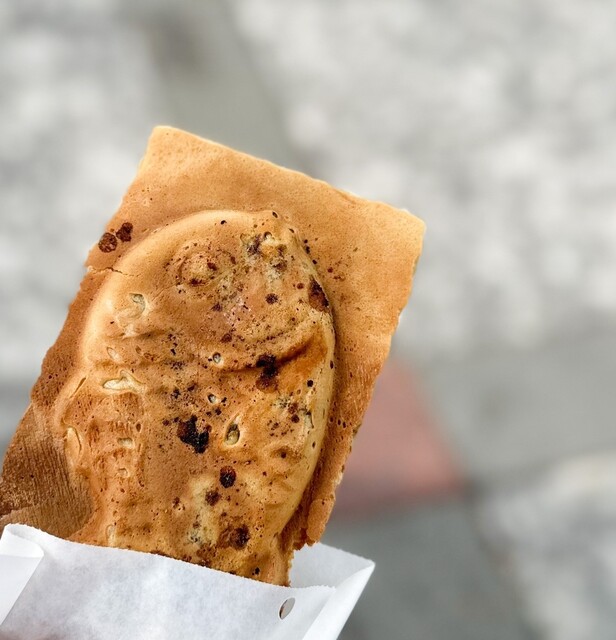
Harmonica Yokocho compresses Kichijoji into a few narrow lanes: shopfronts close to the pavement, queues forming in short bursts, and the old Tokyo habit of eating something small before the next train. In that setting, taiyaki and obanyaki make cultural sense. These are not plated desserts built for lingering; they are hand-held wagashi-adjacent snacks shaped by commuter timing, neighborhood repetition, and the Japanese preference for sweetness measured in restraint rather than excess.
Amane belongs to that lineage. Its categories are taiyaki and obanyaki, two griddled sweets that sit between street food and confectionery craft. The format matters because Tokyo’s Japanese sweets scene is split between formal counters, café-style anmitsu and seasonal wagashi, and compact takeout specialists. A 2023 Tabelog 100 selection for Japanese traditional sweets and Japanese sweets cafés in Tokyo puts Amane in the recognized specialist tier, not the luxury dining tier. That distinction is useful: this is a sweets stop where the evidence is format discipline, category focus, and local demand rather than ceremony.
Taiyaki and obanyaki in a city that treats sweets as craft
Taiyaki and obanyaki are easy to underestimate because they look casual. In Tokyo, the serious versions rely on the same principles that govern more formal wagashi: batter proportion, heat control, filling balance, and timing. Taiyaki’s fish shape has become a familiar sign of Japanese snack culture, while obanyaki, often round and griddled, belongs to the same family of flour-based sweets with sweet bean filling at the center of the tradition. The category rewards freshness and turnover, which explains why small operations can compete strongly against larger sweets cafés.
That is where Amane’s positioning becomes clear. Tokyo has many ways to spend far more on dessert, from patisserie counters to elaborate parfait cafés, yet the city also protects a lower-priced craft tier. Ozasa sits in a similar sub-¥1,000 sweets bracket, while COFFEE HALL Kugutsusou and L'EPICURIEN move into the ¥1,000–¥1,999 café-and-dessert range. Against that group, Amane reads as a tightly focused specialist rather than a place built around a longer café stay. The comparison is not about luxury; it is about how Tokyo assigns value to repetition, precision, and a product narrow enough to reveal flaws quickly.
Kichijoji strengthens that reading. The area has long operated as a bridge between central Tokyo appetite and suburban ease, with Inokashira Park, department-store food floors, independent shops, and train-station traffic feeding into the same daily rhythm. Harmonica Yokocho adds an older texture: small units, compact counters, and a browsing pattern that favors quick decisions. A takeout-only sweets shop fits that urban grain more convincingly than a formal dessert salon would.
Recognition without ceremony
The Tabelog 100 Tokyo Japanese sweets and sweets café selection in 2023 is the clearest trust signal here. Tabelog’s Hyakumeiten lists tend to reward depth inside a category, and Japanese sweets is a particularly competitive one in Tokyo because the field includes long-running wagashi houses, tea-focused cafés, taiyaki specialists, and modern sweet shops. Amane’s listed Tabelog score of 3.71 further places it in a credible range for a modest-format venue, where high scores are harder to accumulate than flashy interiors might suggest.
The useful editorial point is that recognition in this segment does not require a chef narrative. Many of Tokyo’s strongest everyday food experiences are built around narrow formats: one product, a limited service model, and a customer base that knows exactly what it came for. That is why taiyaki and obanyaki shops often function as neighborhood infrastructure. They mark a route, a pause, a small reward before or after the train. Amane’s value sits inside that pattern rather than above it.
For travelers mapping Tokyo through food, this is a reminder to balance the reservation-driven side of the city with craft at street level. A day might run from a sweets stop in Kichijoji to a more formal meal elsewhere, but the intellectual pleasure is in seeing both as part of the same food culture. Tokyo’s dining seriousness is not confined to counters with tasting menus; it also appears in cheap, fast, repeated work done within a narrow tradition.
How to fold it into a Tokyo food day
Amane works better as a precise punctuation mark than as the anchor of a long itinerary. Kichijoji rewards wandering, and Harmonica Yokocho is more compelling when treated as part of the neighborhood rather than a single-destination detour. The practical reading is simple: come for a focused Japanese sweets stop, not a seated café session, and let the surrounding area do the rest of the afternoon.
Readers building a broader Tokyo map can pair this kind of low-priced specialist with other formats across the city. For restaurants, see Our full Tokyo restaurants guide, including . 鮪と炭火焼き うお炭 秋葉原店, 12/10 Shinjuku ten, 124. KAGURAZAKA (Yakitori), 2D Cafe, and 3 Chome no Curry Ya San. For the rest of the city’s travel architecture, use Our full Tokyo hotels guide, Our full Tokyo bars guide, Our full Tokyo wineries guide, and Our full Tokyo experiences guide.
The same specialist logic extends beyond Tokyo: -Grilled beef Sukiyaki- KAMAKURA TANUKIAN 鎌倉 たぬき庵 in Kamakura.cafe in Osaka.know in Kumamoto, (Shoku) Vietnam in Kawasaki, [Curry Senmon Ten] Maruyama Kyoju. in Sapporo, [ki:] in Kyoto, Jōdo Saké Bar in Los Angeles, and Onigiri Time in Pasadena all point to the same editorial lesson: narrow formats can reveal more about a food culture than sprawling menus.
The Quick Read
Comparable venues in the metro at similar price points.
| Venue | Cuisine | Price | Notes |
|---|---|---|---|
| AmaneThis venue — the venue you are viewing | Not listed | $ | Not listed |
| Tokyo Rakkyo Brothers | Not listed | $ | Shinjuku, Hokkaido-style soup curry & Japanese curry |
| Curry no Mise Ganji | Minato, Japanese curry shop | $ | Not listed |
| Curry & Wine Bistro Beppinsha Ochanomizu ten | Chiyoda, Japanese Curry | $ | Not listed |
| Imojin | Not listed | $ | Bunkyō, Traditional Japanese sweets & ice cream café |
| Wagashi Dokoro Oosumi Tamaya Ginza ten | Chiyoda, Japanese Wagashi Shop | $ | Not listed |
Recognition history
Dated appearances from independent guides and award organizations, with the underlying list record or original source where available.
Tabelog 100 #13 · No. 13
Tabelog · Tabelog 100 - Japanese traditional sweets / Japanese sweets cafe - TOKYO - 2023
Continue exploring
More in Tokyo
Restaurants in Tokyo
Browse all →



Bars in Tokyo
Browse all →



Hotels in Tokyo
Browse all →




Wineries in Tokyo
Browse all →
At a Glance
- Cozy
- Classic
- Solo
- Family
- Casual Hangout
- After Work
- Standalone
- Street Scene
Current opening hours
- Monday
- 11 AM–6 PM
- Tuesday
- 11 AM–6 PM
- Wednesday
- 11 AM–6 PM
- Thursday
- 11 AM–6 PM
- Friday
- 11 AM–6 PM
- Saturday
- 11 AM–6 PM
- Sunday
- 11 AM–6 PM
Hours can change for holidays and private events. Last verified .
A tiny, bustling takeout-only stall inside Harmonica Yokocho, with a classic shotengai feel, constant foot traffic from Kichijoji Station, and the warm, nostalgic aroma of griddled Japanese sweets rather than sit-down cafe comforts.