
CHEF'S belongs to Tokyo’s serious Chinese dining tier rather than the city’s hotel-led banquet circuit. The Shinjuku Gyoenmae room is compact, table-based, and recognised in the Tabelog 100 for Chinese cuisine in Tokyo in 2026, with Shanghai crab season from October to December adding a clear calendar reason to plan ahead.
Pearl is the En Primeur Club membership app — saves, bookings, and concierge access live there. Same editors, same standards.
- Address
- Japan, 〒160-0022 Tokyo, Shinjuku City, Shinjuku, 1 Chome−24−1 1F
- Phone
- +81 3-3352-9350
- Website
- tabelog.com
 Saves & bookings on Pearl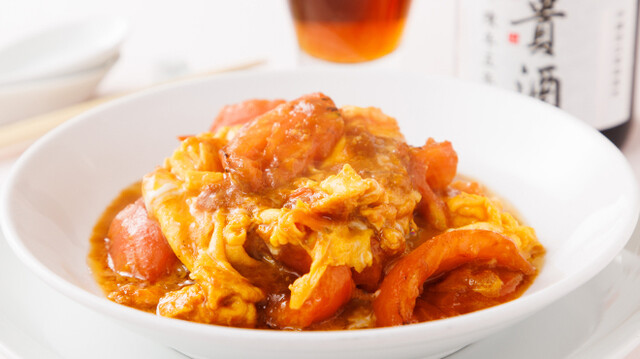
Shinjuku Gyoenmae shifts quickly: office blocks, apartment entrances, side-street dining rooms, then the clipped calm around the park. CHEF'S fits that rhythm. It is not built around theatre or counter choreography; the ritual is quieter, table-led, and close to the Japanese reading of Chinese cooking as sequence, sharing, timing, and restraint.
Tokyo’s Chinese dining scene divides into several lanes: luxury hotel dining rooms built for ceremony, Sichuan specialists built around heat, casual gyoza-and-noodle addresses, and compact restaurants where regional cooking is treated with the seriousness Tokyo gives sushi or tempura. CHEF'S sits in that last lane. Its inclusion in the Tabelog 100 for Chinese cuisine in Tokyo in 2026 places it in a competitive citywide conversation, not just a neighbourhood one.
Shanghai cooking, Tokyo pacing, and the table as the centre of the meal
The useful way to read this restaurant is through meal structure. Chinese dining in Japan often rewards groups because the table carries the logic: several preparations, shared portions, a move from lighter dishes into richer ones, and drinks that can cross from beer and wine to shochu or nihonshu without one fixed script. The listing notes sake, shochu, wine, and cocktails, saying as much about Tokyo as the cuisine: Chinese food interpreted for a city where drink pairing is flexible.
The public description frames the cooking as simple Shanghai home cooking that emphasises natural flavours. That matters because Shanghai cuisine is not only sweetness or soy-dark braises, the easy shorthand outside China. It is also seasonality, texture, river and coastal ingredients, and measured richness. The restaurant’s October-to-December Shanghai crab availability gives the calendar a defined peak. In Tokyo, where seasonal eating is a civic habit, that short window gives Chinese dining a timing logic usually associated with sushi counters, kappo rooms, and tempura specialists.
Price clarifies the position. Dinner sits in the JPY 10,000 to JPY 14,999 band, while lunch is JPY 1,000 to JPY 1,999. That spread is common in Tokyo’s serious small restaurants: lunch is a lower-risk entry point, dinner carries the fuller kitchen ambition. TAIZEN, by comparison, is listed at JPY 6,000 to JPY 7,999 for dinner, while Takumi Tatsuhiro belongs to a far higher sushi bracket. CHEF'S is upper-mid Chinese dining, not luxury ceremony or casual neighbourhood eating.
A compact Shinjuku room with recognition that travels beyond the postcode
The room is small by Tokyo standards but not counter-small: 20 table seats, no private rooms, and private use available up to 20 people. The experience is more social than chef-facing, suited to diners who see the meal as conversation around dishes rather than observation of a craftsperson. In a city where prestige often attaches to eight-seat counters, that distinction matters. Here, the ritual is not watching hands work at arm’s length; it is pacing the table properly.
Tabelog’s 3.72 score and selection for the Chinese cuisine Tokyo 100 in 2026 give the restaurant an external signal in a category English-language visitors often under-read. Tokyo Chinese dining can be hard to parse from abroad because many serious rooms have modest façades, limited English storytelling, and less international award exposure than sushi or French restaurants. A Tabelog 100 selection narrows the field. It does not make the meal formal by default, but it shows Japanese diners place it in a recognised tier.
The Shinjuku address also shapes the use case. This is not neon Shinjuku or a late-night drinking crawl. Shinjuku Gyoenmae is more measured, close to the park and slightly removed from the station-district crush. Diners can pair it with the area’s quieter afternoon tempo rather than treating it as a post-midnight stop. For adjacent city context, compare the neighbourhood pull of 12/10 Shinjuku ten or the more graphic cafe culture around 2D Cafe.
The editorial case is strongest for diners who want Chinese cuisine in Tokyo without banquet-room formality. Families are explicitly accommodated, children and strollers included, which is not a small detail in a city where compact dining rooms can be restrictive. The room is non-smoking, parking is not provided, and coin parking is nearby. English-speaking staff are noted, practical for ordering and reservations when the meal involves shared dishes or an advance course request.
Know Before You Go
- Recognition: Selected for Tabelog 100, Chinese cuisine, Tokyo, 2026.
- Format: Chinese restaurant with table seating rather than a counter format.
- Seats: 20 table seats; private use available for up to 20 people.
- Price signal: Dinner JPY 10,000 to JPY 14,999; lunch JPY 1,000 to JPY 1,999.
- Course note: Evening course starts from JPY 8,800 including tax, plus a 5% service charge.
- Seasonal note: Shanghai crab is listed for October to December; Tuesday lunch is unavailable during that period.
- Reservations: Available; parties of three or more and course meals require phone contact in advance.
- Access: Shinjuku Gyoenmae Station is the nearest station, with the restaurant listed as a 5-minute walk from the Oikido Gate exit.
- Payment: Credit cards accepted; electronic money and QR code payments are not accepted.
For planning across the city, use Our full Tokyo restaurants guide, then cross-reference nearby or contrasting formats such as . 鮪と炭火焼き うお炭 秋葉原店, 124. KAGURAZAKA (Yakitori), and 3 Chome no Curry Ya San. Broader Tokyo planning sits in Our full Tokyo hotels guide, Our full Tokyo bars guide, Our full Tokyo wineries guide, and Our full Tokyo experiences guide.
For a wider Japan and overseas comparison set, see -Grilled beef Sukiyaki- KAMAKURA TANUKIAN 鎌倉 たぬき庵 in Kamakura,.cafe in Osaka,.know in Kumamoto, (Shoku) Vietnam in Kawasaki, [Curry Senmon Ten] Maruyama Kyoju. in Sapporo, [ki:] in Kyoto, Jōdo Saké Bar in Los Angeles, and Onigiri Time in Pasadena.
Quick Comparison
Comparable venues at the same tier for side-by-side context.
| Venue | Cuisine | Price | Awards | Notes |
|---|---|---|---|---|
| CHEF'SThis venue — the venue you are viewing | Traditional Shanghai Chinese with a “subtractive” philosophy | $$$ | , | |
| NOGI | Chinese | $$$ | , | Minato |
| Chinese Sai ARATA | Modern Sichuan Chinese with Japanese wine pairings | $$$ | , | Chūō |
| Rouhoutoi | Intimate Modern Chinese Small-Plate Restaurant | $$$ | , | Minato |
| Chinese Raika Shikunshiso | Seasonal Nouvelle Chinese with Shanghai crab and shark fin specialties | $$$ | , | Chiyoda |
| Matsushima | Modern regional Chinese (Yunnan-influenced) | $$$ | , | Shibuya |









At a Glance
- Cozy
- Hidden Gem
- Intimate
- Classic
- Business Dinner
- Group Dining
- Family
- Casual Hangout
- After Work
- Special Occasion
- Standalone
- Extensive Wine List
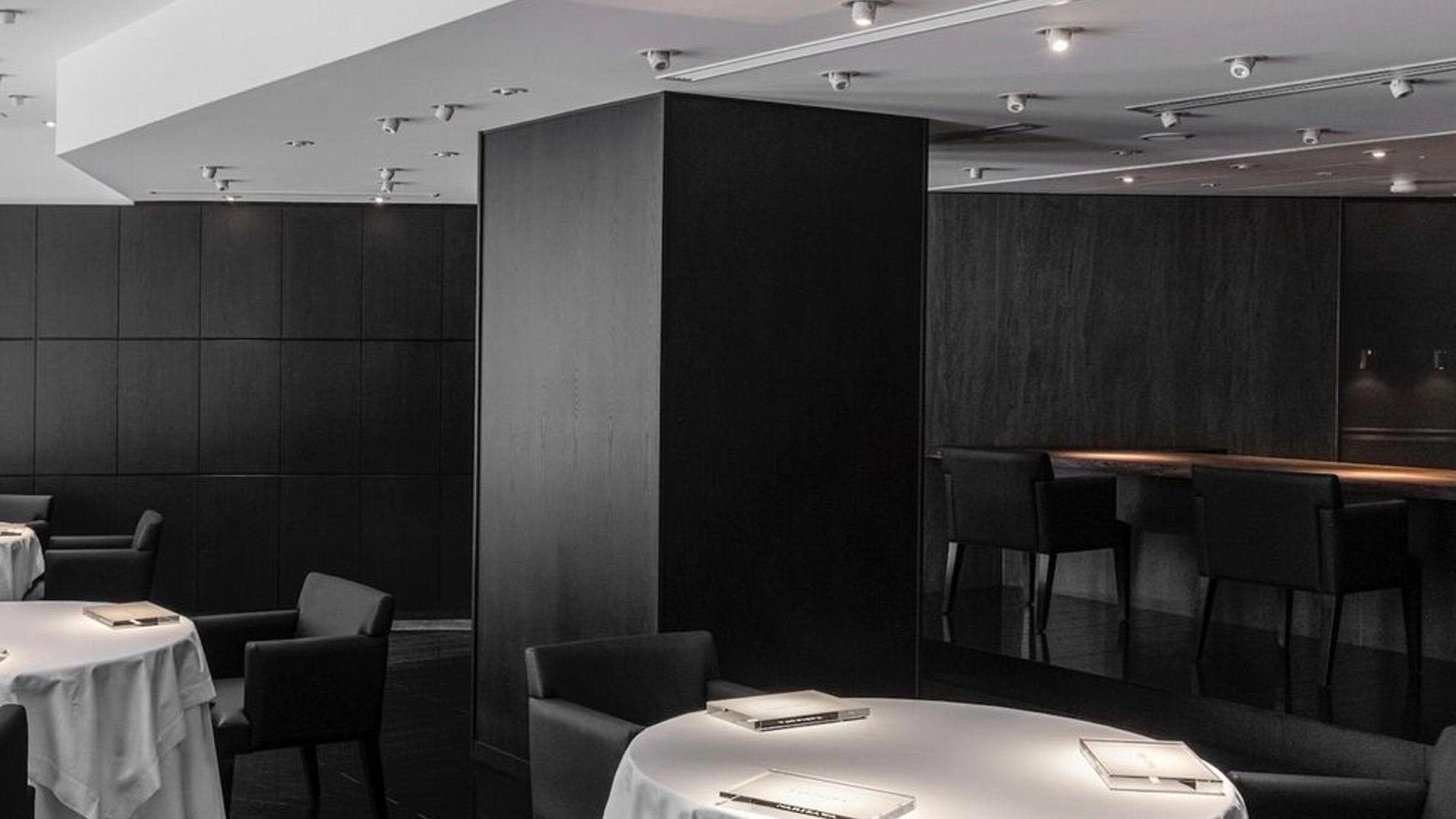
A simple, understated dining room with a relaxed, non-smoking atmosphere; lighting and decor are minimalist and unpretentious, creating a cozy hideout feel suitable for families, friends, and regulars rather than a formal setting.